
Reviewed · TSUKIJI & TOYOSU MARKET TOURS
Private Tsukiji Market Visit and Cooking Class in Junko’s Home
Tsukiji’s outer market is only the opening act here. The real treat is following Junko home, learning to cook in her small Tokyo apartment, and then eating the meal you helped make. You may shop for fresh shrimp or fish, see unfamiliar Japanese ingredients, and learn why season and timing matter in Japanese cooking.
I like the private format, since Junko can adjust the lesson to your pace and answer the small questions that get lost in a large class. I also like the direct link between market and table: you see the ingredients, prepare them, and eat them the same day. The main consideration is space. Junko’s apartment is small and simple, and the market portion is not a tour of the former inner fish market.
In This Review
- Key Points to Know Before Booking
- Why This Tokyo Food Experience Feels Personal
- Starting at Tsukiji’s Outer Market
- From Market Shopping to Junko’s Home
- Cooking Three or Four Japanese Dishes
- Sharing Lunch in a Tokyo Apartment
- How the Route Fits Into a Tokyo Day
- Is $104 a Fair Price?
- Dietary Needs, Age Limits, and Practical Details
- Who Will Get the Most From This Experience?
- Should You Book Junko’s Tsukiji Cooking Class?
- FAQ
- Where does the market tour begin?
- Where does the cooking-only option begin?
- Is this a tour of the original inner Tsukiji fish market?
- How long does the experience last?
- What dishes might I learn to cook?
- Can I cancel for a full refund?
Key Points to Know Before Booking
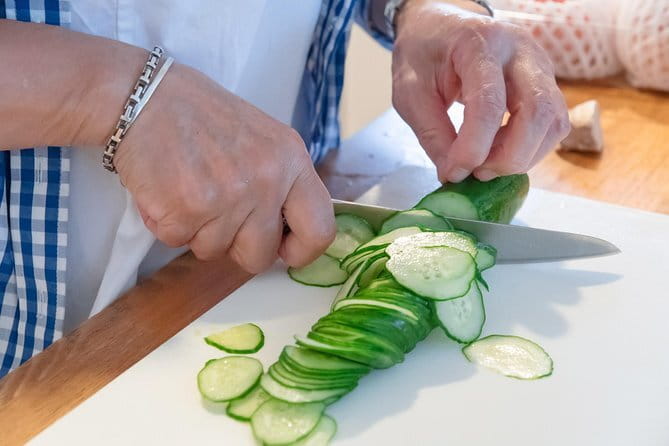
- Junko leads both parts: She guides the optional Tsukiji visit and teaches the private cooking class at home.
- The market is Tsukiji’s outer market: The old inner fish market moved to Toyosu, so this is a street-level food and shopping visit.
- You cook three or four dishes: Possible recipes include teriyaki chicken, eggplant with dengaku miso, tamagoyaki, miso soup, and mocha.
- Lunch is part of the lesson: After cooking for about 1.5 hours, you sit down with Junko to eat what you prepared.
- The experience lasts about 3.5 hours: Allow time for the market, transport, cooking, and meal.
- This is best for food-focused adults and older children: The Tsukiji portion is not suitable for children under 10.
Why This Tokyo Food Experience Feels Personal
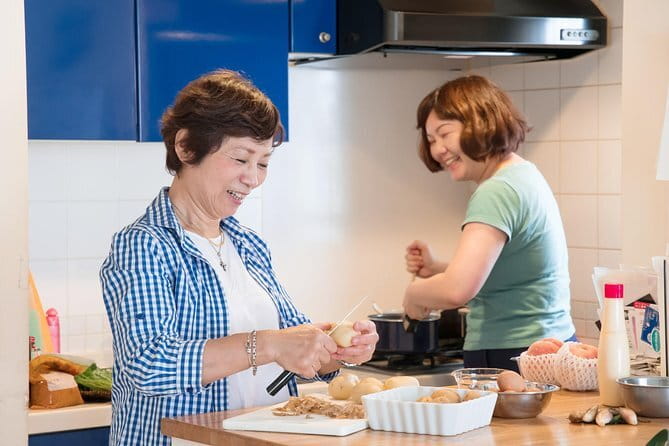
Many Tokyo food tours keep you on the sidelines. You watch a guide point out ingredients, taste a few samples, and move on. This experience asks you to take part. You shop with Junko, travel with her to the cooking class, prepare several dishes, and share the final meal at her table.
That private setup matters. Japanese cooking has plenty of small steps: how ingredients are cut, when seasoning is added, how a rolled omelet takes shape, and how miso is handled. With only your group present, Junko can offer individual help instead of giving the same speech to a crowd.
Junko is described as fun-loving and patient, with a teaching style that suits beginners. You should not expect a formal culinary-school kitchen or a polished restaurant demonstration. You should expect a local host showing you how she cooks at home, using seasonal ingredients and familiar Japanese methods.
The meal is not an extra tacked onto the end. It is the payoff and part of the lesson. You will sit down with Junko and eat the food you prepared together, which gives the class a warm, social finish.
More market mornings in Tokyo:
- Tokyo Tsukiji Fish Market Food and Culture Walking Tour
★ 5.0 · 3,184 reviews - Tokyo: Tsukiji Fish Market Food and Walking tour
★ 5.0 · 1,724 reviews - Tokyo: Tsukiji Fish Market Guided Walking Tour
★ 4.9 · 1,397 reviews
Starting at Tsukiji’s Outer Market
If you choose the market option, meet Junko at 4-chōme-8-4 Tsukiji, Chuo City, at the listed starting point. The visit takes place in Tsukiji’s outer market, the area that remains open after the inner wholesale fish market moved to Toyosu.
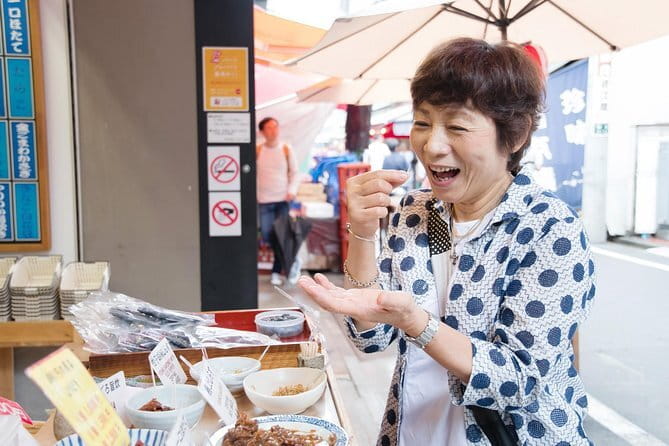
That distinction is important. If you expect to enter the famous wholesale tuna auction or walk through the old inner market, this is not that experience. Junko instead shows you the outer market’s shops and food trade, including vegetables, fruit, seafood, knives, ceramics, and other goods used in Japanese kitchens.
You may also visit a seafood facility designed to imitate the old Tsukiji Market. It gives you a look at the fish trade, but it is not the original inner market. Keeping that difference clear will help you arrive with the right expectations.
Junko also takes you to Namiyoke Shrine, the guardian deity of Tsukiji Market. This adds a useful cultural note to what could otherwise be only a shopping walk. The shrine helps explain the respect many people in the market have for the area and its work.
The market visit is most useful when you treat it as preparation for lunch. Junko can point out ingredients you might not recognize and help select items for the cooking class. A stop to buy fresh shrimp or fish can turn a general sightseeing walk into a clear lesson in Japanese shopping and cooking.
You will also see the practical side of Japanese food culture. Knives and ceramics sit alongside seafood and produce, showing that the meal is shaped not just by recipes but by tools, presentation, and the quality of what is in season.
From Market Shopping to Junko’s Home
After Tsukiji, you take the subway or bus with Junko to her home. Hotel pickup and drop-off are not included, but the public transport connection is part of the experience. You are not left to find the cooking class alone after the market.
Her home is in a simple, small apartment. That setting is central to the character of the class, but it also creates a practical limit. This is not a spacious studio designed for large groups, and you should be comfortable working in a compact domestic kitchen.
For many people, the apartment is an advantage. You see how Japanese food is prepared in an ordinary home rather than in a commercial school. The lesson feels tied to daily life, and you can ask about the habits and ingredients that make a home meal different from a restaurant dish.
If you choose the cooking-only option, the meeting point changes. You meet Junko outside the ticket gate of Tsukishima Station on the Toei Oedo Line, rather than at Tsukiji. Check the option you book carefully so you go to the correct location.
Cooking Three or Four Japanese Dishes
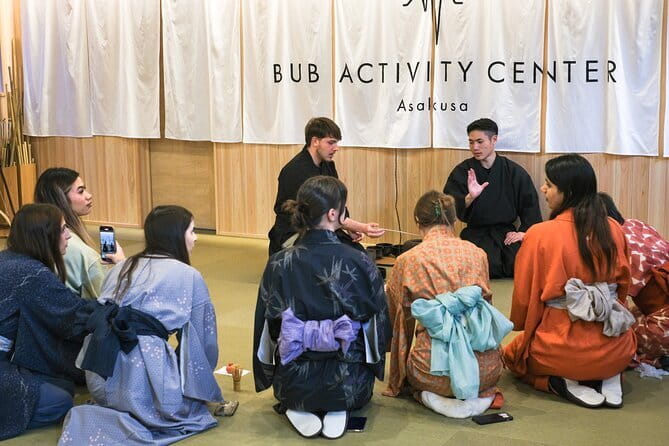
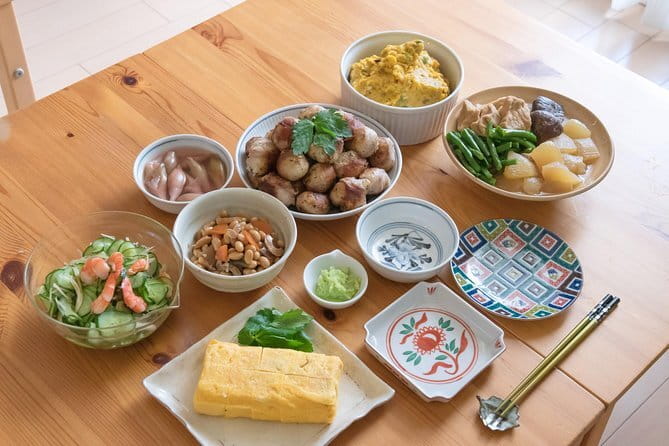
The cooking class takes about 1.5 hours. Junko demonstrates the recipes, then helps you prepare them from scratch. The exact menu changes with the season, so you should not expect every dish listed below on every visit.
Possible dishes include:
- Teriyaki chicken
- Eggplant with dengaku miso
- Tamagoyaki, a Japanese rolled omelet
- Miso soup made with homemade miso
- Mocha
The class gives you a good spread of Japanese home cooking. Teriyaki chicken introduces a familiar sweet-savory flavor. Eggplant with dengaku miso shows how a simple vegetable can carry a strong glaze. Tamagoyaki requires technique and patience, while miso soup offers a lesson in one of Japan’s most common everyday foods.
The homemade miso is a particularly personal touch. Miso soup can seem simple in a restaurant, but preparing it with homemade miso shows how much flavor depends on the base ingredient. You get a better sense of Japanese cooking as a system of carefully chosen components, not just a list of sauces.
Mocha is included among the possible menu items, though the experience is mainly presented as a savory cooking class. If a particular dish matters to you, ask about the seasonal menu when booking rather than assuming it will appear.
You do not need to arrive as a cook. The point is to learn through demonstrations and hands-on work. Junko’s patient approach should help if you are new to Japanese ingredients or techniques. At the same time, you will get more from the class if you take an active role instead of simply watching.
More cooking classes in Tokyo:
- Ramen & Gyoza Cooking Class in Tokyo with Local Supermarket Visit
★ 5.0 · 823 reviews - Tokyo: Easy Ramen Cooking Experience in Kabukicho, Shinjuku
★ 4.6 · 321 reviews - Ramen and Sushi Cooking Class with Sake Pairing Set in Tokyo
★ 5.0 · 291 reviews - Tokyo: Wagyu and 7 Japanese Dishes Cooking Class
★ 4.9 · 273 reviews
Sharing Lunch in a Tokyo Apartment
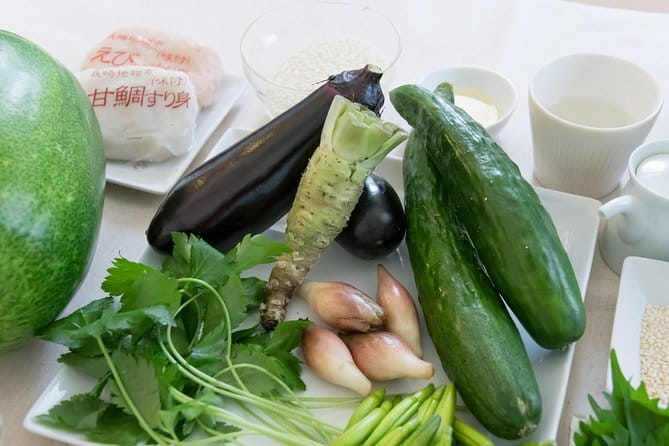
Once the cooking is finished, you sit down with Junko to eat lunch. The menu is made from the food prepared during the lesson, with ingredients that may have been selected at Tsukiji earlier that day.
This shared meal is where the experience earns its private-tour price. You are not just paying for instruction. You are paying for a local connection, a meal in a home setting, and the chance to ask questions while the food is still in front of you.
The atmosphere is likely more relaxed than a restaurant meal, but it is also less polished. The apartment is small and simple, and the experience is built around hospitality rather than presentation. That will appeal to you if you want a personal introduction to Japanese food. It may not suit you if you prefer a professional kitchen, a formal chef-led class, or a large menu with many choices.
Junko can also offer local recommendations. The included suggestions for must-do activities are useful if you are still planning your Tokyo days. Since her home is close to Ginza and the Imperial Palace, you can pair the class with sightseeing in central Tokyo, though those attractions are not included in the cooking lesson.
How the Route Fits Into a Tokyo Day
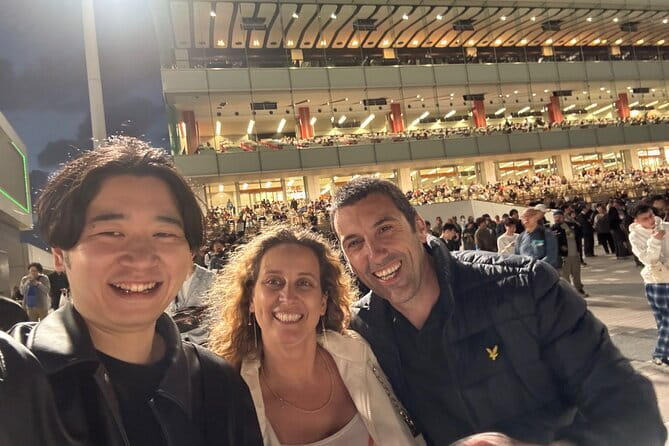
The experience begins in Tsukiji and ends back at the meeting point listed for your chosen option. The supplied route also names teamLab Planets TOKYO, Hama Rikyu Gardens, and Ginza, but you should not read that as a promise of admission or a guided visit inside each attraction.
The practical takeaway is that this experience fits well with nearby sightseeing. Tsukiji is close to Ginza and Hama Rikyu Gardens, while Junko’s home is also near central Tokyo sights. You can plan another activity before or after, but leave enough time for the full cooking visit and public transport.
Do not book this immediately before a timed attraction unless you have a generous cushion. The experience lasts about three and a half hours, and the market, transit, cooking, and meal each need their share of the schedule.
The meeting point is not hotel pickup, so you should also allow time to reach Tsukiji or Tsukishima Station. A mobile ticket is provided, which makes access simple, but it does not remove the need to check the correct meeting point for your selected option.
Is $104 a Fair Price?
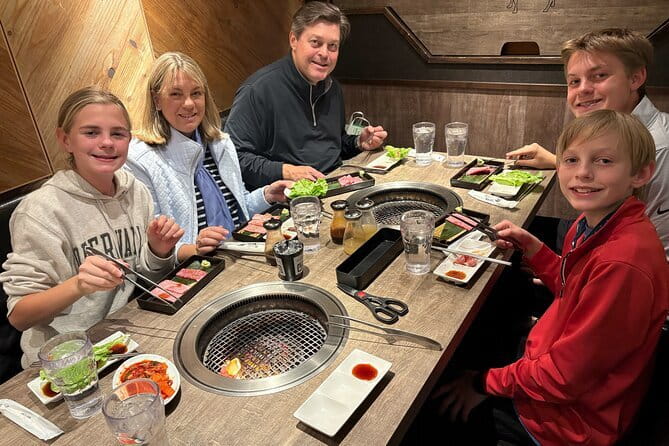
At $104 per person, this is not the cheapest way to eat in Tokyo. You can buy an excellent meal for less, and a market walk without a private host will cost less still.
The value comes from combining several services in one private experience. You receive a market visit if you select that option, a guided shopping lesson, transport with Junko to her home, hands-on instruction, lunch, and personal recommendations. A private class also means your group does not share the lesson with strangers.
I would consider the price reasonable if you place a high value on personal contact and active learning. The experience is less convincing for someone who only wants to sample Japanese food or see Tsukiji briefly. In that case, a market visit and restaurant meal may offer better value.
The price also makes more sense for couples, families with older children, or small groups who want an activity built around conversation. Since this is private, you are paying for an experience shaped around your group rather than a standard class with a fixed audience.
Dietary Needs, Age Limits, and Practical Details
Tell the provider about allergies, dietary restrictions, and cooking preferences at the time of booking. The menu can change with the season, and early notice gives Junko the best chance to plan around your needs.
The Tsukiji market experience is not suitable for children under 10. Most older participants can take part, and service animals are allowed. The activity is near public transportation, but hotel pickup and drop-off are not included.
Confirmation is sent within 48 hours of booking, subject to availability. The activity offers free cancellation if you cancel at least 24 hours before the start time. Cancellations or changes made later are not accepted for a refund, and the cut-off follows Tokyo local time.
Because the class takes place in a home, think about comfort as well as age. You will spend time in a compact apartment and take public transportation after the market. That is manageable for most people, but it may not suit anyone who needs a large, highly accessible cooking space.
Who Will Get the Most From This Experience?
I would recommend this to you if you want to understand Japanese food beyond sushi bars and ramen counters. The market introduces ingredients and tools, while the class shows how those ingredients become an everyday meal.
It is especially well suited to:
- First-time visitors who want a local food introduction
- Couples and small groups who value private attention
- Beginner cooks who prefer patient instruction
- People interested in seasonal Japanese ingredients
- Visitors staying near Ginza, Tsukiji, or the Imperial Palace
- Families with children aged 10 or older who enjoy hands-on activities
I would hesitate if your main goal is to see the former inner fish market, since this visit focuses on Tsukiji’s outer market. I would also think twice if you want a roomy cooking school or a fixed menu. The seasonal menu and home setting are part of the charm, but they also mean less predictability.
The small number of published ratings should also temper your expectations. The available feedback is strongly positive, especially about Junko’s patient teaching, the market walk, and the meal. Still, the experience is personal and home-based, so it depends on enjoying conversation, simple surroundings, and a flexible menu.
Should You Book Junko’s Tsukiji Cooking Class?
Book it if you want more than a tasting. Junko’s experience connects shopping, cooking, and eating in a way that makes Japanese food easier to understand. The market visit gives context, the private class gives you something to do with that context, and lunch lets you enjoy the result with your host.
Choose the market option if you want the full food story and are interested in seafood, produce, knives, ceramics, and Namiyoke Shrine. Choose the cooking-only option if you have already seen Tsukiji or want a shorter route to the home lesson.
The best reason to book is Junko herself. Her patient, personal teaching style is the heart of the experience. The clearest reason not to book is practical: the outer market is not the old inner fish market, the apartment is small, and the price is higher than simply eating lunch.
For a food-focused day in Tokyo, I would book this when you want to meet a local, learn a few dishes you can remember, and leave with more than a full stomach.
FAQ
Where does the market tour begin?
The market option begins at 4-chōme-8-4 Tsukiji, Chuo City, Tokyo 104-0045, Japan.
Where does the cooking-only option begin?
If you choose the cooking class without the market tour, meet Junko outside the ticket gate of Tsukishima Station on the Toei Oedo Line.
Is this a tour of the original inner Tsukiji fish market?
No. The experience visits Tsukiji’s outer market. The former inner fish market closed and moved to Toyosu. The host also visits a facility that imitates Tsukiji Market and includes a seafood section.
How long does the experience last?
The full experience lasts about three hours and 30 minutes. The cooking class itself takes about 1.5 hours.
What dishes might I learn to cook?
The seasonal menu may include teriyaki chicken, eggplant with dengaku miso, tamagoyaki, miso soup made with homemade miso, and mocha. The exact dishes can vary.
Can I cancel for a full refund?
Yes, if you cancel at least 24 hours before the experience start time. Cancellations or changes made less than 24 hours before the start are not refunded or accepted.
More Shopping Tours in Tokyo
- Tokyo: Tsukiji Fish Market Sushi Making Class with Pro Chef
★ 4.9 · 506 reviews - Tokyo Food Tour Taste Fresh Delights at Tsukiji Market
★ 5.0 · 429 reviews - Tokyo Tsukiji Fish Market Tour and Sushi Making Lesson
★ 5.0 · 390 reviews - Tsukiji Fish Market: Street Food & Culture Walking Tour
★ 4.8 · 259 reviews
More Markets in Tokyo
- Tsukiji Fish Market Guided Tour and Sushi Making with Pro Chef
★ 5.0 · 775 reviews - Tokyo: Tsukiji Fish Market Food and Culture Walking Tour
★ 4.7 · 757 reviews - Tsukiji Fish Market: Street Food & Culture Walking Tour
★ 5.0 · 669 reviews - Tsukiji Fish Market Small-Group Food Walking Tour
★ 5.0 · 621 reviews
New on our Tokyo list
- Sumi-e Experience in a relaxing green tea shop in Tokyo★ 5.0 · 3 reviews
- Tokyo : Kamikaze Street Drift Ride★ 5.0 · 3 reviews
- Private Zen Meditation in English in Shinjuku, Tokyo★ 5.0 · 3 reviews
- Onsen Spa in Tokyo and Asakusa Bar Hopping with Local Guide★ 5.0 · 3 reviews
- Easy for everyone! Now you can play handmade mini shamisen and show off to everyone! Musical instruments, sweets and live music★ 5.0 · 3 reviews
- Tokyo: Private Tsukiji Street Food & Sake with Local Guide★ 5.0 · 3 reviews
- Mt Fuji Exploration Tour with Free Japanese Kusa Mochi from Tokyo★ 4.5 · 3 reviews
- Tokyo Tsukiji Fish Market Walking and Exploring Hidden Gems Tour★ 5.0 · 3 reviews
Tsukiji & Toyosu Market Tours, compared.
Tokyo Tsukiji Fish Market Food and Culture Walking Tour
Read our review →
Tokyo Sushi Making Class in Tsukiji with Professional Chef
Read our review →
Tsukiji Fish Market Guided Tour and Sushi Making with Pro Chef
Read our review →Tsukiji Fish Market Food and Culture Walking Tour
Read our review →
Tsukiji Fish Market: Street Food & Culture Walking Tour
Read our review →
Tsukiji Fish Market Small-Group Food Walking Tour
Read our review →Browse the lists this tour appears in