
Reviewed · SUMO EXPERIENCES
The SUMO Show & Experience with Hot pot lunch
The best part of this experience is that you do not just watch sumo from a distance. You see the rituals, step onto a real clay dohyo, and feel what happens when a padded amateur meets a 160-kilogram wrestler. The lesson stays light and funny, but it gives you a real sense of sumo’s force.
I like the hands-on format and the fact that the whole program runs in English with a bilingual MC. I also like the family-friendly meal setup, including vegetarian, vegan, halal, and allergy-conscious options when requested at least 48 hours ahead. The main consideration is the price: at $97.55 per person, this is a special-event lunch rather than a cheap meal or a standard sightseeing stop.
In This Review
- Key points at a glance
- Why this sumo experience feels different
- The 10 a.m. start in Ryogoku
- Shiko, teppen, and suriashi explained
- The live match brings the lesson to life
- The padded-suit challenge with a 160kg wrestler
- Photo time beside the wrestlers
- Chanko nabe makes a satisfying finish
- What the $97.55 price really covers
- Who should book this morning
- Timing, cancellation, and practical planning
- My booking verdict
- FAQ
- Where does the sumo experience take place?
- What time does the activity start?
- How long does the experience last?
- Does the activity end at the meeting point?
- Is lunch included?
- Can dietary requests be accommodated?
- Is alcohol included?
- Do children under five receive lunch?
- Can I participate in the sumo activities?
- What happens if I need to cancel?
Key points at a glance
- Real clay dohyo in Ryogoku: Learn and practice sumo on a proper ring in Tokyo’s sumo district.
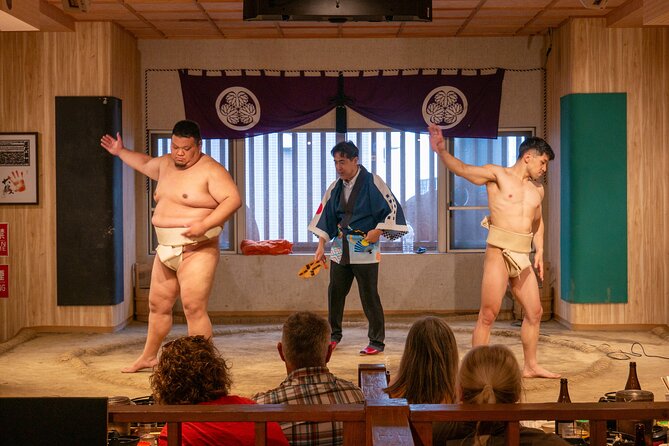
- Two former wrestlers demonstrate: See shiko leg stomps, teppen push drills, and suriashi sliding footwork up close.
- A 160kg padded-suit challenge: Volunteer to push a large wrestler and discover how little force seems to matter.
- Good for families: Children, teens, older adults, and parents who prefer to watch can all take part at their own comfort level.
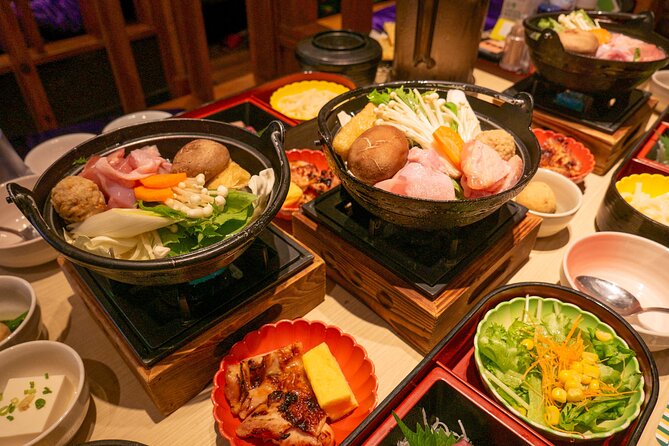
- Mini chanko hotpot included: The protein-rich lunch is designed around the food associated with sumo wrestlers.
- Short and easy to fit into a Tokyo day: The program begins at 10 a.m., lasts about two hours, and returns to the starting point.
Why this sumo experience feels different
Sumo is easy to reduce to two huge men pushing each other out of a ring. This workshop gives you the missing pieces. You learn why wrestlers toss salt, what the shiko stomp means, and how the slow sliding step called suriashi prepares the body for movement inside the ring.
That context matters. The rituals are not decoration added for tourists. They are part of how sumo presents discipline, respect, purification, and readiness. You will not become a sumo expert in two hours, but you will leave with more than a photograph of a wrestler.
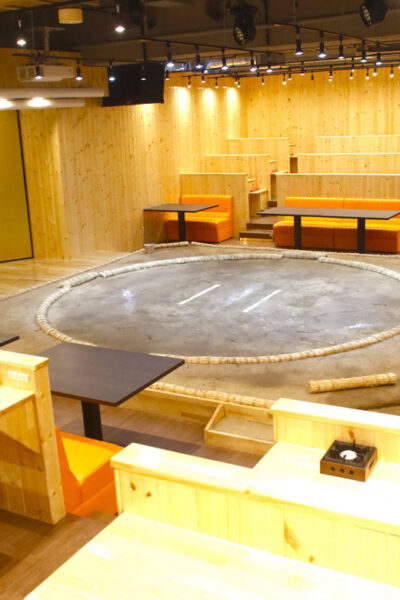
The activity takes place at Hana no Mai Edo Tokyo Museum, at 1-chōme-1-15 Kamezawa in Sumida City. The restaurant has a sumo theme and a genuine clay ring, so you get a clear setting for both the demonstrations and the audience participation.
A bilingual MC guides the program. The supplied information does not name the MC or the two former wrestlers, so do not expect to book a particular personality. What you can expect is an English-supported presentation, which makes the rituals easier to follow if you do not speak Japanese.
More sumo mornings:
- Tokyo: Sumo Show Experience with Chicken Hot Pot and a Photo
★ 4.8 · 6,678 reviews - Tokyo: Sumo Show and Dining Experience
★ 4.8 · 2,742 reviews - the SUMO show
★ 5.0 · 1,960 reviews
The 10 a.m. start in Ryogoku
The 10 a.m. start time is useful if you want to keep the rest of the day open. You meet at the restaurant and finish back at that same point, with no separate return transfer to arrange.
Ryogoku is the natural setting for a sumo activity. Even without adding another attraction, being in Tokyo’s sumo district gives the morning a stronger sense of place than a generic stage show in another part of the city.
The group can include up to 40 people. That is not an intimate private lesson, and some sightlines may depend on where you are seated or standing. Still, the ring, live demonstrations, and volunteer challenges give the session a shared energy that suits families and groups of friends.
The activity is near public transportation, though the supplied details do not specify which station exit or train route is best. I would check the exact meeting instructions before leaving your hotel, especially if you are coordinating a stroller, an older family member, or several children.
Shiko, teppen, and suriashi explained
The demonstration begins with the basic movements that make sumo look so deliberate. Shiko is the familiar leg lift and stomp. It demands balance and control, and its traditional purpose includes warding off evil spirits.
Suriashi is the sliding footwork. The wrestler keeps the feet close to the ground rather than taking ordinary steps. It looks simple until you try it, which is part of the fun. The movement teaches you how sumo wrestlers stay stable while preparing to drive forward.
Teppen is presented as a push drill. You see how sumo depends on timing, posture, and the ability to use the whole body, not just the arms. The former wrestlers demonstrate these techniques before inviting participants to join in.
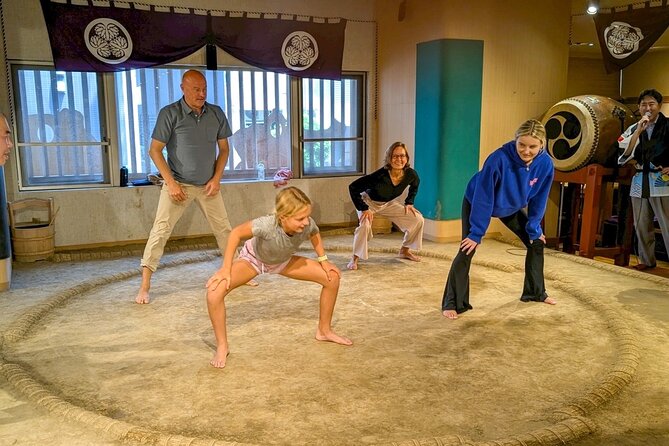
You can enter the dohyo for the exercises or remain outside and watch. That choice is important. This is not a test of athletic ability, and parents can observe while children participate. The program also suits older adults who may prefer the cultural explanation and photo session to the physical challenge.
The atmosphere is designed to be funny and welcoming rather than intimidating. Children and teenagers can interact directly with the wrestlers, while the wrestlers are described as gentle with younger participants. Still, you should follow the MC’s instructions and use good judgment if a child is nervous about entering the ring.
The live match brings the lesson to life
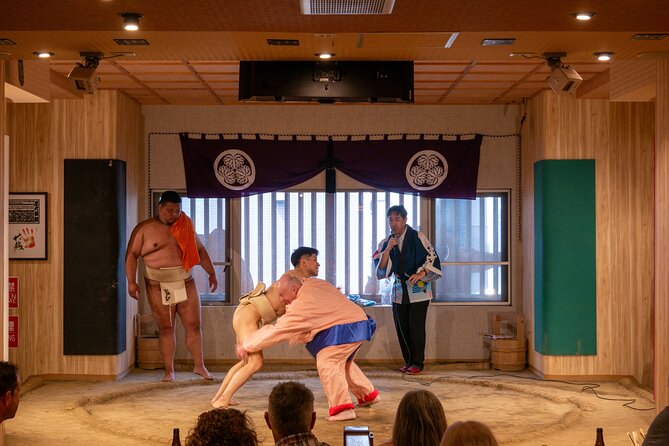
After the basic instruction, you watch a live match between professional wrestlers. This is the point where the earlier movements make more sense. You have seen the stance and footwork, and now you can watch those ideas used under pressure.
The sound is part of the appeal. Sumo produces a blunt, physical collision, and the show lets you hear that impact at close range. The demonstration gives you the ceremony, while the match gives you the raw contest.
Do not expect a full tournament-day experience. This is a compact workshop with a match included, not a replacement for attending a major sumo tournament. The advantage is access and explanation. You get interaction, guided context, and a chance to enter the ring rather than simply taking a seat in a large arena.
For children around middle-school age, the balance is especially strong. A 12-year-old or 15-year-old can understand the basic rules, enjoy the physical comedy, and take part in a direct challenge. Younger children may focus more on the wrestlers, costumes, and photos than on the finer points of the sport.
A few more Tokyo bookings worth comparing
- Tokyo: Mt.Fuji & Lake Kawaguchiko 1-Day Bus Tour w/Optional Lunch
★ 4.5 · 839 reviews - Tokyo: Sumo Experience and Chanko Nabe Lunch
★ 4.8 · 257 reviews - Tokyo: Tsukiji Fish Market Tour with 6 Stops & Seafood Lunch
★ 4.5 · 165 reviews - Tokyo: 1 Day Bus Tour with Meiji-Jingu,Odaiba,lunch&Skytree
★ 4.6 · 156 reviews
The padded-suit challenge with a 160kg wrestler
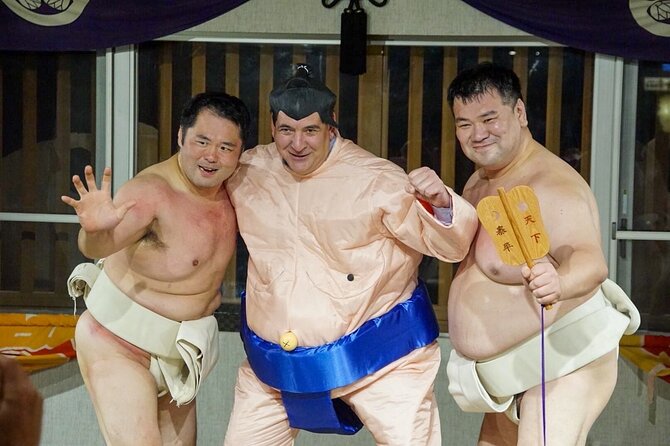
The final challenge is the event’s biggest laugh. A volunteer puts on a padded suit and tries to push a wrestler weighing about 160 kilograms.
The suit makes this safe and playful, but it does not make the wrestler easy to move. You quickly see why size alone does not explain sumo. Balance, stance, momentum, and leg drive all matter, and the wrestler can resist with surprising ease.
You can volunteer, but participation is not required. If you do not want to wrestle, you still get a good view of the attempt and can take photos. This makes the experience work for mixed groups, where one person wants the spotlight and another prefers to stay behind the camera.
The challenge is also a useful reality check. Television can make sumo look slow, but the physical difference between a trained wrestler and an untrained person becomes obvious here. The humor comes from the contrast, not from making the participant feel foolish.
Photo time beside the wrestlers
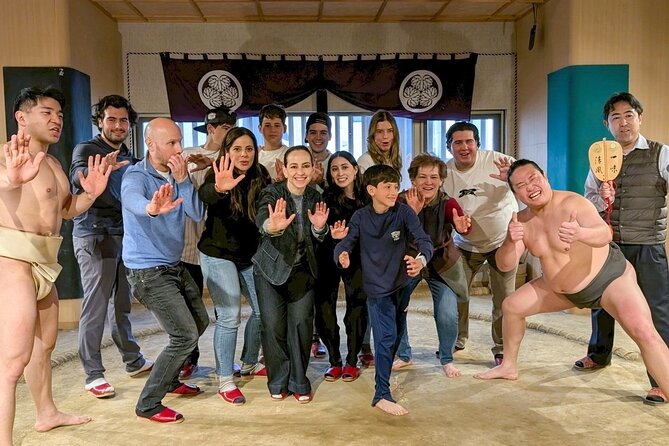
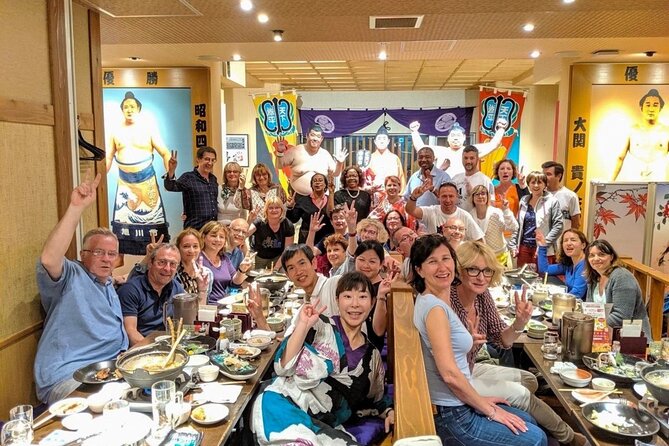
The photo session follows the physical demonstrations and match. This is your chance to stand beside the wrestlers and understand their scale without the action moving past you.
Bring a phone or camera that is ready to use. The tour includes the encounter, but the supplied details do not specify a professional photographer or a set number of photographs. You should plan to have someone in your group take the picture.
For families, this may be the most lasting part of the morning. Children can stand beside the wrestlers, teens can record the challenge, and adults can get a clear portrait that is much harder to arrange during a regular Tokyo visit.
The photo session also gives you a quiet pause before lunch. After the noise and movement of the dohyo, you have time to appreciate the size and presence of the wrestlers without needing to rush away.
Chanko nabe makes a satisfying finish
The included meal is a mini chanko nabe, the hotpot associated with sumo wrestlers. It is protein-rich and served with fresh ingredients. The format fits the theme: after learning how wrestlers train and compete, you eat a dish linked with the food that supports their bodies.
The meal is described as a full chanko nabe lunch set, though the itinerary also calls it a mini hotpot. Expect a substantial themed lunch, but do not book this solely as a large restaurant feast. Alcohol and extra menu items cost more and are ordered on site.
The food can be adapted for several needs if you give notice at least 48 hours before the activity. Vegetarian, vegan, halal, and allergy-friendly requests are accepted, and the experience has also accommodated gluten-free diners by changing ingredients. A vegetarian meal was arranged for one family, and a chicken hotpot was provided for another group.
That advance notice is essential. Do not wait until you arrive and assume the kitchen can change everything at the last minute. Children under five who are booked at the child rate do not receive a meal. If you need lunch for a child under five, the adult rate is required.
Some meal arrangements have also included sashimi, but the core included item is the chanko hotpot. Alcoholic drinks and extra dishes are separate, so check the menu on site if you want more than the set meal.
What the $97.55 price really covers
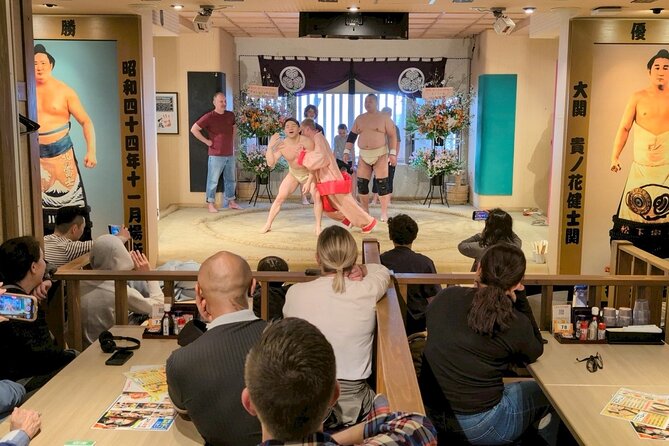
At $97.55 per person, the cost is high compared with an ordinary Tokyo lunch. The value comes from combining several elements that would be difficult to arrange independently: an English-supported introduction, former wrestlers demonstrating techniques, a live match, participation in the dohyo, a padded-suit challenge, photos beside the wrestlers, and lunch.
I would judge the price by the people in your group. For a family with children who want to participate, the direct contact and clear two-hour structure can justify the expense. For an adult who only wants to see a professional sumo match, a tournament ticket or a simpler cultural visit might be a better fit, depending on availability.
The activity is also efficient. You do not lose half a day moving between a demonstration, a meal, and another neighborhood. Everything happens at one location and ends where it began.
A listed rating of 4.8 from four ratings suggests strong early satisfaction, but the sample is small. I would treat that as encouraging rather than conclusive. The practical strengths are clear: English support, family participation, dietary flexibility, and a meal included in the price.
Who should book this morning
I would recommend it most strongly to families with school-age children and teenagers. The combination of movement, comedy, photos, and food gives different ages something to enjoy. A child who has little interest in a formal museum may still remember the moment a 160kg wrestler refused to move.
It also suits groups of friends. One person can enter the ring, another can film, and someone else can focus on the lunch. The program does not force everyone to take the same level of physical involvement.
Older adults can participate as well, and the format allows you to watch rather than wrestle. The positive details about senior-friendly participation make this a practical choice for a multigenerational group, provided everyone can manage the venue and local transportation.
It is less suitable if you want a quiet, private cultural lesson. The group limit is 40, the challenge is meant to create laughs, and the show has a lively performance element. You should also look elsewhere if your priority is a long, formal lecture on sumo rules or a full tournament atmosphere.
Timing, cancellation, and practical planning
The activity lasts about two hours, beginning at 10 a.m. You return to the meeting point at the end. Confirmation arrives when you book, and mobile tickets are supported.
Most people can participate, and the venue is near public transportation. The information does not give detailed accessibility specifications, so contact the provider before booking if you need specific assistance with seating, the ring, or movement inside the restaurant.
Free cancellation is available until 24 hours before the start time for a full refund. Cancellations or changes made inside that window are not refunded or accepted. Cutoff times use Tokyo local time.
The activity requires good weather and a minimum number of participants. If poor weather or low enrollment causes cancellation, you are offered another date or experience, or a full refund. That policy is worth noting even though the program is held at a restaurant, since the operator still lists weather as a condition.
My booking verdict
Book this sumo workshop if you want interaction, an English-supported explanation, and a family-friendly morning that ends with hotpot. The strongest reasons are the real clay dohyo, the former wrestlers’ demonstrations, and the chance to test yourself against a 160kg pro in a padded suit.
Skip it if $97.55 feels too steep for a two-hour activity or if you want only a serious match with no audience participation. For most families, though, the mix of sport, ritual, humor, photographs, and chanko nabe gives the morning enough substance to earn its place in a Tokyo itinerary.
FAQ
Where does the sumo experience take place?
It takes place at Hana no Mai Edo Tokyo Museum, 1-chōme-1-15 Kamezawa, Sumida City, Tokyo 130-0014, Japan.
What time does the activity start?
The scheduled start time is 10 a.m.
How long does the experience last?
The experience lasts approximately two hours.
Does the activity end at the meeting point?
Yes. The activity ends back at the starting location.
Is lunch included?
Yes. A mini chanko hotpot lunch is included.
Can dietary requests be accommodated?
Vegetarian, vegan, halal, and allergy-friendly options are available when requested at least 48 hours before the activity. Gluten-free substitutions have also been accommodated.
Is alcohol included?
No. Alcoholic beverages and additional menu items are not included and can be ordered separately on site.
Do children under five receive lunch?
Children under five booked at the child rate do not receive a meal. If you need a meal for a child under five, book the adult rate.
Can I participate in the sumo activities?
Yes. You can join demonstrations in the ring, try traditional footwork, and volunteer for the padded-suit challenge. You may also watch instead of participating.
What happens if I need to cancel?
You receive a full refund if you cancel at least 24 hours before the start time. Cancellations or changes made less than 24 hours ahead are not refunded or accepted.
More Show in Tokyo
- Mt Fuji & Hakone Cruise, Drum Show Bullet Train 1 Day from Tokyo
★ 4.0 · 7,413 reviews - Tokyo Shinjuku Sumo Show & Experience with Photo
★ 5.0 · 1,750 reviews - Mt Fuji & Hakone Cruise, Drum Show Bus 1 Day from Tokyo
★ 4.0 · 1,287 reviews - Tokyo: Sumo Show and Experience in Shinjuku
★ 4.8 · 1,001 reviews
New on our Tokyo list
- Tokyo : Kamikaze Street Drift Ride★ 5.0 · 3 reviews
- Private Zen Meditation in English in Shinjuku, Tokyo★ 5.0 · 3 reviews
- Sumi-e Experience in a relaxing green tea shop in Tokyo★ 5.0 · 3 reviews
- Onsen Spa in Tokyo and Asakusa Bar Hopping with Local Guide★ 5.0 · 3 reviews
- Easy for everyone! Now you can play handmade mini shamisen and show off to everyone! Musical instruments, sweets and live music★ 5.0 · 3 reviews
- Tokyo: Private Tsukiji Street Food & Sake with Local Guide★ 5.0 · 3 reviews
- Mt Fuji Exploration Tour with Free Japanese Kusa Mochi from Tokyo★ 4.5 · 3 reviews
- Tokyo Tsukiji Fish Market Walking and Exploring Hidden Gems Tour★ 5.0 · 3 reviews
Sumo Experiences, compared.
Sumo Show Experience with Chicken Hot Pot and a Photo
Read our review →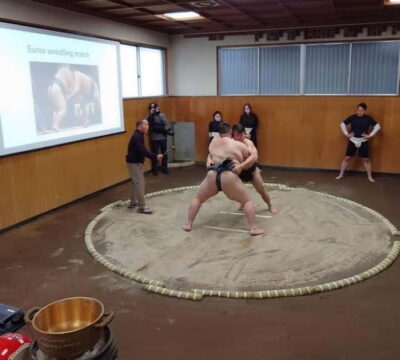
Tokyo Shinjuku Sumo Show & Experience with Photo
Read our review →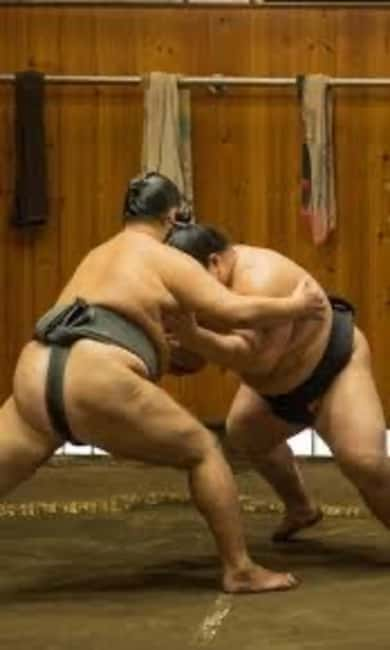
Authentic Sumo Experience in Tokyo: Enter the Sanctuary
Read our review →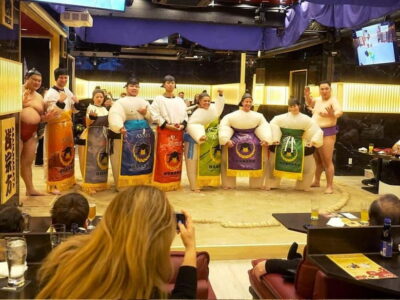
Luxury Sumo Show Experience & Japanese cuisine & Drink
Read our review →
Browse the lists this tour appears in