
Reviewed · TEMPLE & SHRINE TOURS
Tokyo: Asakusa Temple & Shrine Walking Tour with Local Guide
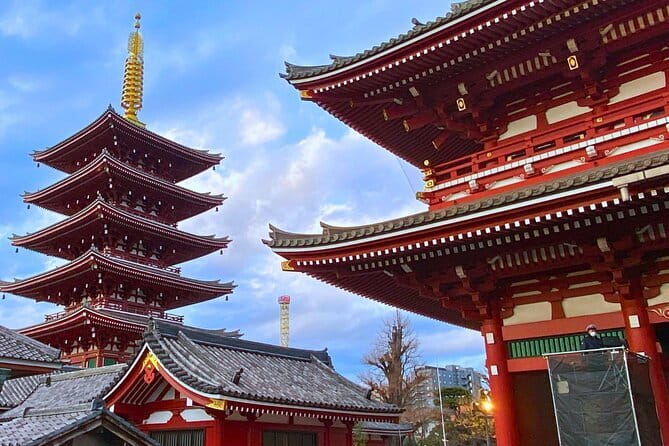
Asakusa is where Tokyo’s old soul is easiest to find, and this two-hour walk explains what you are seeing instead of leaving you to admire the red gates and giant lanterns on your own. You begin by the Sumida River, spot the Tokyo Skytree and the famous golden rooftop sculpture locals call the golden poop, then approach Sensoji through its grand entrance.
I like the small group size, capped at eight, because it gives you room to ask questions and move at a sensible pace. I also like the practical cultural guidance: your guide shows you how to wash your hands, use incense, read an omikuji fortune, and pray at a Buddhist temple and a Shinto shrine.
The main drawback is physical rather than cultural. This is a continuous walking tour in crowded, sometimes hot streets, and it is not suitable for wheelchair users, people with mobility impairments, or those with a low level of fitness.
In This Review
- Key points to know before you book
- Why Asakusa works so well for a first Tokyo walk
- Beginning at the Sumida River and Azuma Bridge
- The best city view costs you no extra time
- Kaminarimon explains the gateway to Sensoji
- Nakamise Street mixes souvenirs with useful lessons
- Hozomon Gate and the smaller religious sites
- Sensoji gives you the Buddhist side of the story
- Asakusa Shrine shows a different set of customs
- How the guides shape the experience
- The $30 price and what you get for it
- Heat, rain, crowds, and walking pace
- Who should book this Asakusa walk
- Should you book it?
- FAQ
- How long does the Asakusa Temple and Shrine Walking Tour last?
- How many people are in the group?
- Which languages are available?
- Which major sites does the tour visit?
- Can I take part in Japanese religious rituals?
- Is there a dress code?
- What should I bring?
- Is the tour accessible for wheelchair users?
Key points to know before you book
- Two useful viewpoints: Start with riverside Skytree views, then look down over the Sensoji grounds from the Asakusa Culture Tourist Information Center.
- Rituals are part of the walk: You can try temizu hand washing, incense rituals, omikuji fortune telling, and Buddhist and Shinto prayer customs.
- A genuinely small group: The tour is limited to eight people, with some departures feeling nearly private when bookings are light.
- Guides make the difference: Nicolas, Erik, Nana, Lino, Diane, Ayaka, and others are praised for patient explanations and thoughtful help.
- Good for first-time Tokyo visitors: You learn basic temple manners that make later visits across Japan easier.
- Plan for the weather: Wear comfortable shoes, carry water, and expect the tour to operate in rain or shine.
Why Asakusa works so well for a first Tokyo walk
Asakusa gives you a clear introduction to two major Japanese religious traditions in one compact area. Sensoji is Buddhist, while nearby Asakusa Shrine is Shinto. The buildings sit close together, but the customs differ, and a guide can explain those differences without turning the walk into a lecture.
I especially value this kind of introduction early in a Japan trip. Many first-time visitors see people bowing, washing their hands, burning incense, or tossing coins into offering boxes, but they are not sure what each action means. Here, you get a chance to try the rituals with guidance and then recognize them elsewhere.
The setting also gives you a useful contrast. Modern towers rise behind old gates, shopping streets lead toward sacred grounds, and ordinary local life continues around major monuments. Asakusa is not a museum frozen in the past. It is a working neighborhood where worship, shopping, food, and sightseeing share the same streets.
More temples and shrines near Tokyo:
- Tokyo: Meiji Shrine, Asakusa, Skytree Bus Tour and Cruise
★ 4.7 · 1,986 reviews - Tokyo: Asakusa Walking Tour with Sensoji Temple Visit
★ 4.8 · 1,583 reviews - Nikko: Kegon Falls, Lake Chuzenji & Toshogu Temple
★ 4.6 · 1,577 reviews
Beginning at the Sumida River and Azuma Bridge
The meeting point is near Burger King Asakusa Azumabashi, though the exact meeting arrangement can vary with the option you book. From there, the walk begins at Azuma Bridge, where you get about ten minutes for a guided introduction and photographs.
This is a smart opening. The river gives you space before you enter the tight streets around Sensoji, and the Tokyo Skytree provides an easy visual reference. You also see the unusual gold sculpture on the Asahi Beer building, a piece of Tokyo visual humor that locals commonly call the golden poop.
Your guide uses this first stop to place Asakusa within modern Tokyo. It is a short pause, not a long riverside walk, so do not book this experience expecting a full tour of the Sumida waterfront. Its purpose is to set the scene and give you an immediate photo opportunity.
The best city view costs you no extra time
Next comes the Asakusa Culture Tourist Information Center, opposite the Kaminarimon Gate. The group goes to the top for around fifteen minutes and looks across the temple area from above.
This view is more useful than it may sound. At street level, Kaminarimon, Nakamise Street, Hozomon Gate, and Sensoji can blend into one busy procession. From above, you can understand how the approach is arranged and see the relationship between the shopping street and the temple grounds.
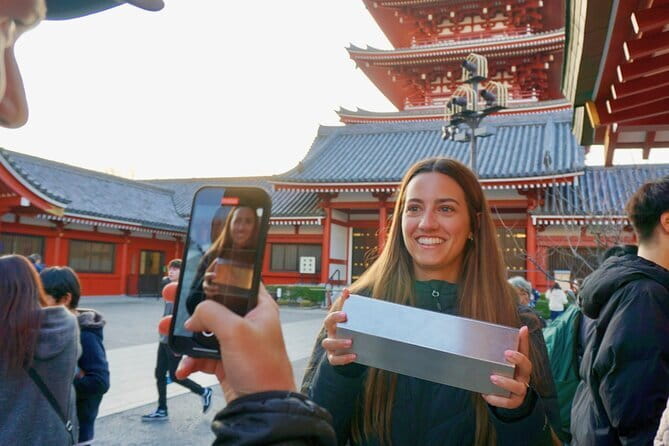
I would bring a phone or camera ready for this stop. The tour description specifically points to lesser-known photo angles, and several guides are happy to take pictures for you. The center is also a helpful orientation point if you plan to return to Asakusa later on your own.
Kaminarimon explains the gateway to Sensoji
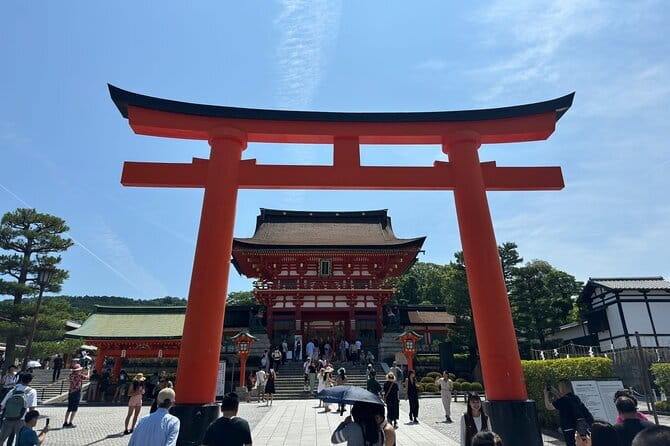
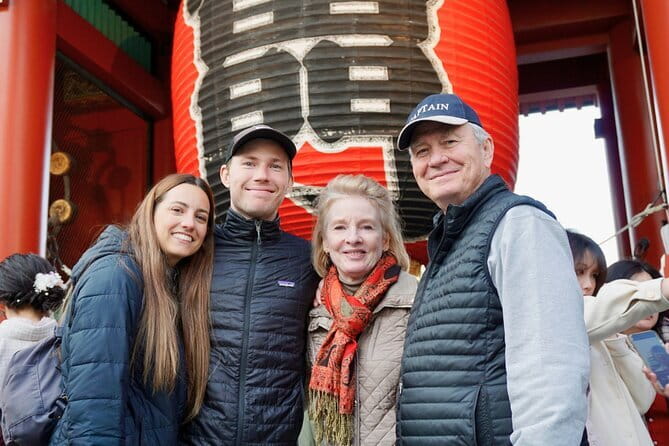
The Kaminarimon, or Thunder Gate, is the dramatic entrance to Sensoji. The huge red lantern weighs about 700 kilograms, and your guide explains both its story and the meaning of the gate’s name.
This is one of those places where a short explanation changes the experience. Without context, you see a giant lantern and a famous photo backdrop. With context, the gate becomes the beginning of a religious approach, not just a landmark to check off.
Expect roughly ten minutes here for photographs and commentary. The area can be crowded, so your guide may help position the group and keep the explanation moving. If you want a particular picture, ask directly. Photo help is one of the tour’s stated strengths, but it works best when you tell the guide what you want.
More Asakusa visits:
- Tokyo: Japanese Dance Cabaret Theater Asakusa-Kaguwa Ticket
★ 4.8 · 2,270 reviews - Tokyo: Roll and Authentic Sushi Making Class in Asakusa
★ 4.9 · 1,957 reviews - Tokyo Asakusa Rickshaw Tour
★ 5.0 · 1,375 reviews - Tokyo Panoramic 1 Day: Meiji Shrine, Asakusa, Odaiba and SKYTREE®
★ 4.5 · 1,222 reviews
Nakamise Street mixes souvenirs with useful lessons
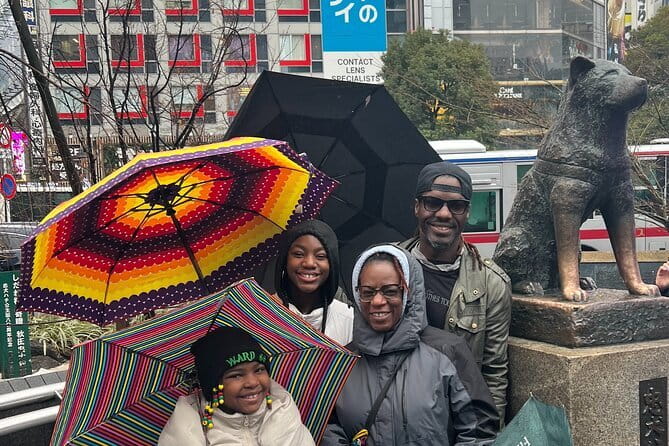
From Kaminarimon, you walk along Nakamise Shopping Street for about fifteen minutes. This is the traditional commercial approach to Sensoji, lined with snacks, small gifts, and seasonal items.
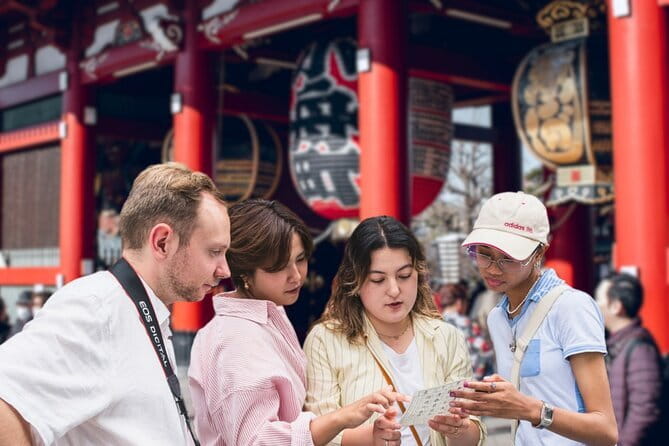
The value here is not simply shopping time. Your guide explains the cultural background of the treats and souvenirs, points out better places to buy them, and can help with translation if you need it. That is useful when labels or sales conversations become confusing.
Keep your expectations sensible. Nakamise is a popular shopping street, so it is not a quiet local lane. It can also be difficult to stop for long when foot traffic is heavy. The tour includes sightseeing and a guided visit, not a dedicated shopping session. If something catches your eye, note the location and return after the walk.
Hozomon Gate and the smaller religious sites
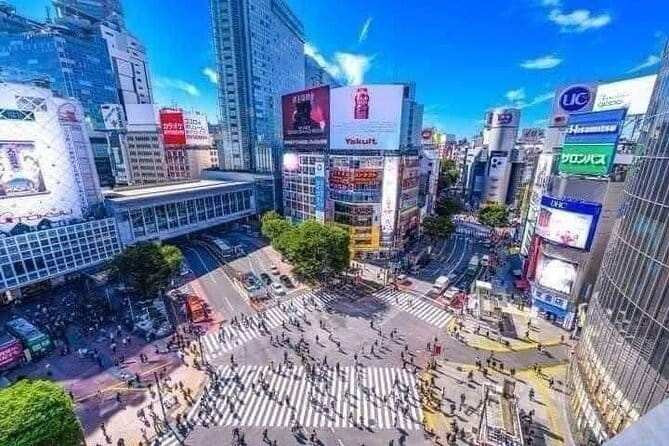
Hozomon Gate marks the next major entrance toward Sensoji. The walk includes about ten minutes for photographs, a visit, and explanation here.
The schedule also includes two additional temple or shrine stops, each lasting about ten minutes. Their names are not specified in the supplied details, but their role is clear: they take you beyond the best-known monuments and show you smaller religious sites that many people pass without understanding.
This is where the small group matters most. A guide can pause beside a modest altar or side shrine and explain what makes it important. You are not simply following a flag through the main route. You have the chance to ask why a particular object is present, how locals use the site, or how it relates to the larger Sensoji complex.
The exact order of these smaller stops may vary. Crowds, weather, and local conditions can affect the pace, so think of them as part of the cultural route rather than fixed attractions with guaranteed names and timings.
Sensoji gives you the Buddhist side of the story
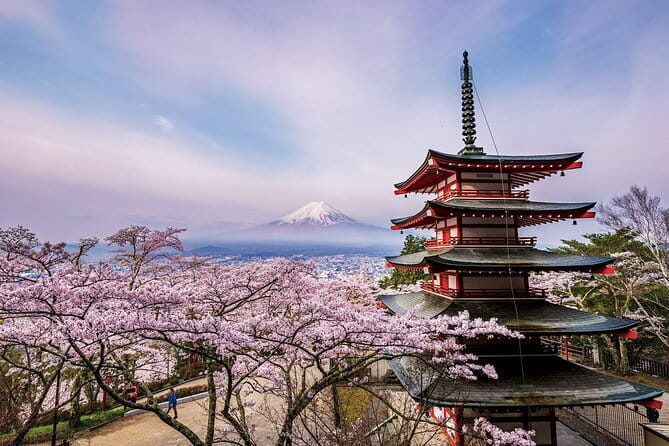
The tour allows about thirty minutes at Sensoji Temple, the centerpiece of the walk. This is the longest stop, and rightly so. Your guide explains the temple’s history and architecture, then shows you how to pray in the Buddhist style.
You also learn how to approach the ritual area, use the offering box, and bow correctly. The hand-washing ritual, called temizu, is explained as a way to prepare before prayer. You may also try incense, traditionally associated here with healing for the body and mind.
The guide’s role is especially useful because etiquette can feel intimidating when you are surrounded by people who already know what to do. The tour presents these actions as respectful cultural participation, not a test you can fail. You can ask questions and take part at your own comfort level.
One practical tip: some guides have helped people who did not have small coins available, and Erik was specifically praised for providing coins and explaining proper temple manners. Do not count on this as a promised inclusion, but asking your guide for help is reasonable.
Asakusa Shrine shows a different set of customs
After Sensoji, the walk continues to Asakusa Shrine for about fifteen minutes. This is the Shinto part of the experience and a key reason to choose this tour over a simple temple visit.
Your guide explains the difference between Buddhist and Shinto practice, including how prayer changes from one site to the other. You also learn how to bow, where to walk through torii gates, and how Shinto customs coexist beside Buddhist traditions.
That shared setting is one of Asakusa’s most valuable lessons. Japan’s religious life does not always fit into neat modern categories, and the close relationship between these sites makes the point in a direct way. You can see two traditions operating side by side rather than trying to understand them from a museum panel.
The explanation is aimed at ordinary visitors, not specialists. Guides such as Nicolas have been praised for making the subject clear and easy to follow, while Nana has been especially patient with children. If you are traveling with an eight-year-old or a five-year-old, the activity can work well when the children enjoy asking questions and walking.
How the guides shape the experience
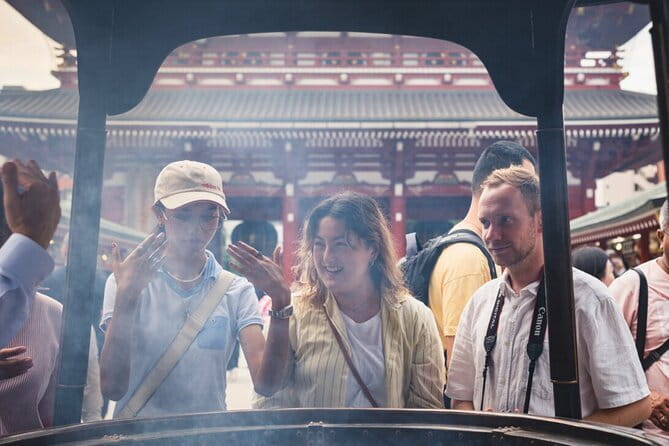
The tour is sold around the route, but the guide is the real variable. The available guide team includes English and French speakers, with names appearing in past departures such as Nicolas, Erik, Nana, Lino, Diane, Ayaka, Arief, Ariel, Somi, and Joe.
The strongest pattern is a relaxed, personal style. Nicolas is repeatedly praised for answering questions, explaining Buddhism and Shinto in plain English, and sharing a personal connection to Asakusa. Erik has helped with photographs, coins, temple manners, and onward directions. Lino was praised for making a small departure feel like exploring with a local friend.
Those details matter because two hours can feel rushed if the guide delivers a memorized speech and keeps moving. Here, the pace appears flexible when the group is small. One person even received help finding a restaurant and directions toward Kappabashi Street after the tour, while another group was shown the way to Kappabashi for shopping.
That extra help is not guaranteed, but it shows how to use the tour well. Bring a short list of Tokyo questions. They do not have to relate directly to temples.
The $30 price and what you get for it
At $30 per person, this is reasonably priced for a two-hour guided walk in central Tokyo. You are paying for a live guide, a group limited to eight, cultural interpretation, two viewpoints, and access to the smaller sites that are easy to overlook.
You are not paying for food, souvenirs, transport, or a private tour. Personal purchases on Nakamise Street cost extra, and the route finishes back near the starting point rather than carrying you to another Tokyo district.
The value improves if this is your first visit to Japan. Learning the basic customs here can make every later temple and shrine visit more comfortable. The value is also strong for solo visitors, since a small group gives you company without the cost of hiring a private guide.
If you already know Japanese religious etiquette and have spent time in Asakusa, the tour may feel more introductory. In that case, choose it for the guide’s local recommendations and smaller sites, not because it covers attractions you could not find on a map.
Heat, rain, crowds, and walking pace
The route takes two hours and operates in all weather. Comfortable shoes are essential, and water is a good idea on hot days. Vending machines are available during the tour, but bringing your own bottle makes things easier.
Summer heat can make the walk tiring, especially around open temple grounds. Rain can also slow the group, though Ayaka and Joe have been praised for keeping tours enjoyable and complete in wet conditions. Dress for the forecast and bring suitable rain protection rather than assuming the tour will be postponed.
Asakusa is a popular part of Tokyo, so expect crowds at Kaminarimon, Nakamise, and Sensoji. The guide can adjust the pace and help the group avoid the worst congestion when possible, but no short walking tour can make these famous places empty.
The activity is not suitable for wheelchair users or people with mobility impairments. The low-fitness warning should be taken seriously if you are uncomfortable walking for two hours or standing at several stops.
Who should book this Asakusa walk
I would choose this tour for a first Tokyo day, especially if you want culture explained in a friendly, practical way. Couples and solo visitors get plenty of time for questions, while families can benefit from guides who know how to make rituals and history understandable for children.
It also suits photographers. The riverside view, high viewpoint, Kaminarimon, temple gates, and guide-suggested angles give you several chances to take better pictures than you might manage by simply following the main crowd.
The tour is less suitable if you want a quiet spiritual retreat, a food tour, or a long shopping stop. It is also not the right pick for anyone who needs step-free access or cannot comfortably walk outdoors in changing weather.
You can ask about kimono rental before booking. The operator partners with a kimono shop about two minutes from the meeting point, so this may be useful if you want to combine the walk with traditional dress.
Should you book it?
Book this tour if you want Sensoji and Asakusa Shrine to make sense, not just look pretty in photographs. The strongest reasons are the eight-person limit, the hands-on rituals, the second viewpoint, and the guides’ willingness to answer questions and offer practical Tokyo advice.
Skip it if you already know the religious customs, need accessible routes, or would rather explore Nakamise and Sensoji at your own slow pace. For most first-time visitors who can manage two hours of walking, $30 is a fair price for a clear introduction to one of Tokyo’s most important old neighborhoods.
FAQ
How long does the Asakusa Temple and Shrine Walking Tour last?
The tour lasts two hours, with starting times available based on the date you choose.
How many people are in the group?
The small group is limited to eight participants.
Which languages are available?
Live guiding is available in English and French.
Which major sites does the tour visit?
The route includes Sensoji Temple, Asakusa Shrine, Kaminarimon Gate, Nakamise Shopping Street, Hozomon Gate, the Asakusa Culture Tourist Information Center, Azuma Bridge, and smaller temple or shrine sites.
Can I take part in Japanese religious rituals?
Yes. The tour includes guided opportunities to try temizu hand washing, omikuji fortune telling, incense rituals, Buddhist prayer, and Shinto prayer customs.
Is there a dress code?
No. You can wear what suits you, and tattoos are welcome.
What should I bring?
Wear comfortable walking shoes and bring water, especially on a hot day. Dress for the weather because the tour operates in rain or shine.
Is the tour accessible for wheelchair users?
No. The activity is not suitable for wheelchair users, people with mobility impairments, or people with a low level of fitness.
More Walking Tours in Tokyo
- Tokyo Tsukiji Fish Market Food and Culture Walking Tour
★ 5.0 · 3,184 reviews - Tokyo: Imperial Palace and Shogun Historical Walking Tour
★ 5.0 · 2,251 reviews - Tokyo: Shinjuku Local Bar and Izakaya Guided Walking Tour
★ 4.9 · 1,794 reviews - Tokyo: Tsukiji Fish Market Food and Walking tour
★ 5.0 · 1,724 reviews
New on our Tokyo list
- From Tokyo: Mount Fuji & Hakone Full Day Private Tour★ 4.9 · 25 reviews
- Tokyo Spectacular View Day-Cruise in 90 Minutes★ 5.0 · 25 reviews
- Real Tokyo Runner Club : Daikoku Car Meet Night Tour with JDM Car★ 5.0 · 25 reviews
- 2.5 Hour-Guided Cycle Tour in the Central Tokyo★ 5.0 · 25 reviews
- Ramen Making from Scratch +Akihabara Tour –Cooking Class★ 5.0 · 25 reviews
- [Self-Drive] Tokyo & Daikoku Custom Car Driving Tour★ 4.9 · 25 reviews
- Tokyo: 2-Hour Night Bike Tour of the City’s Hidden Gems★ 4.9 · 25 reviews
- Samurai themed Entertainment show in Shinjuku★ 4.5 · 25 reviews
Temple & Shrine Tours, compared.
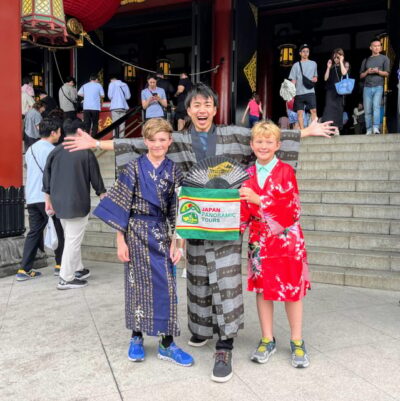
Meiji Shrine, Asakusa, Skytree Bus Tour and Cruise
Read our review →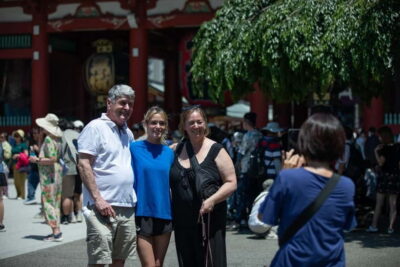
Asakusa Walking Tour with Sensoji Temple Visit
Read our review →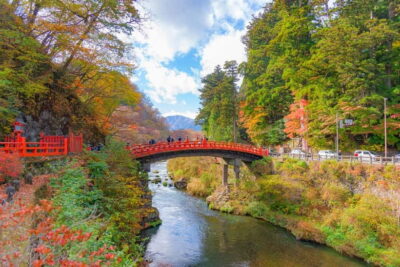
Kamakura & Enoshima Day Trip including Temple Tickets
Read our review →
Nikko Toshogu Shrine and Kegon Waterfall Tour
Read our review →
Tokyo Panoramic 1 Day: Meiji Shrine, Asakusa, Odaiba and SKYTREE®
Read our review →
Mt. Fuji Heritage Tour: Traditional Villages, Lakes & Shrine
Read our review →Browse the lists this tour appears in