
Reviewed · TEMPLE & SHRINE TOURS
Tokyo: Asakusa Walking Tour -Sumida River to Senso-ji Temple
The best part of this Tokyo tour is the change of viewpoint. You begin on the Sumida River, looking back at Tokyo Skytree and Kaminarimon Gate from the water, then finish on foot inside Senso-ji, Asakusa’s great Buddhist temple. It gives you both the city’s modern profile and its old ceremonial heart in only 90 minutes.
I like the river cruise because it offers a calm start and a different angle on familiar sights. I also like the personal scale: the group is capped at 10, and guides such as Nori and Naoko have time to explain temple etiquette, Edo-era Tokyo, and the meaning behind what you see. The main thing to consider is the short running time. You get a useful introduction, not an unhurried exploration of every corner of Asakusa.
In This Review
- Key points at a glance
- Why begin with the Sumida River
- Arriving at Kuramae Police Box
- Entering Senso-ji through Kaminarimon Gate
- Understanding the main hall and temple customs
- Drawing a fortune at Senso-ji
- What the $43 price delivers
- Who will get the most from this tour
- Practical details before you book
- Should you book the Sumida River and Senso-ji tour?
- FAQ
- How long does the Tokyo Asakusa walking tour last?
- How much does the tour cost?
- Where does the tour begin?
- Where does the tour end?
- Is the Sumida River cruise included?
- Is a fortune at Senso-ji included?
- How large is the group?
- Can I cancel for a full refund?
Key points at a glance
- A 30-minute Sumida River cruise: See Tokyo Skytree and Kaminarimon Gate from the water before walking into Asakusa.
- Senso-ji with cultural context: The guide explains customs, rituals, and religious traditions instead of simply pointing out buildings.
- A fortune included: You can draw a fortune at Senso-ji as part of the experience.
- Small group, maximum 10 people: The size allows for questions, photographs, and a more direct exchange with your guide.
- Strong guide-to-guest connection: Nori and Naoko are specifically praised for their humor, warmth, clear explanations, and personal attention.
- Easy finish at Asakusa Station: The tour ends beside a useful train station, with the guide able to help you work out your next connection.
Why begin with the Sumida River
Tokyo can feel like a wall of buildings when you first arrive. The Sumida River gives you breathing room and helps you understand how the eastern side of the city fits together.
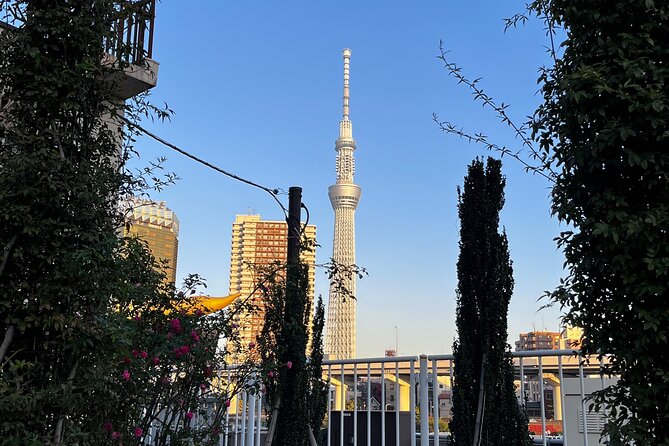
The cruise lasts about 30 minutes. From the boat, you can look toward Tokyo Skytree and see Kaminarimon Gate from an unusual angle. That matters because Asakusa is often viewed only from street level, with the temple crowds and shops filling your attention. On the river, the district reads more clearly as part of a larger city.
I like this opening because it is gentle. You are not asked to absorb a dense lesson while crossing a busy street or squeezing through a shopping lane. Instead, you get time to look, take photographs, and hear about the area before reaching the temple complex.
The river portion is also a good fit for a first day in Tokyo. One guide, Nori, is praised for explaining the Edo period while walking beside the river. That historical frame can help you see Asakusa as more than a photogenic temple stop. The area connects present-day Tokyo with the city that existed before its modern towers and rail network.
Do not expect a long sightseeing cruise or a full tour of Tokyo’s waterfront. Thirty minutes is enough to set the scene, but not enough to cover every landmark in detail. The boat ride is best understood as a scenic introduction and a change of pace before the walking section.
More temples and shrines near Tokyo:
- Tokyo: Meiji Shrine, Asakusa, Skytree Bus Tour and Cruise
★ 4.7 · 1,986 reviews - Tokyo: Asakusa Walking Tour with Sensoji Temple Visit
★ 4.8 · 1,583 reviews - Nikko: Kegon Falls, Lake Chuzenji & Toshogu Temple
★ 4.6 · 1,577 reviews
Arriving at Kuramae Police Box
The meeting point is Kuramae 2-chōme Police Box, at 2-chōme-15-8 Kuramae, Taito City. The tour begins there and ends at Asakusa Station, so the route moves in one direction rather than sending you back to where you started.
That arrangement is useful if you are building a day around Asakusa. You can continue from the station after the tour instead of retracing your steps. The details say the meeting point is near public transportation, but you should still allow enough time to find the police box and arrive ready to start.
The route is particularly practical for someone who wants a compact introduction without arranging a river ticket, a temple walk, and a route between the two areas separately. The guide handles the sequence, while you focus on the sights and explanations.
The tour has a maximum of 10 people. That does not guarantee a private tour, but it is small enough to make questions realistic. If you want to stop for a photograph or ask about a ritual, you are less likely to disappear into a large crowd.
Entering Senso-ji through Kaminarimon Gate
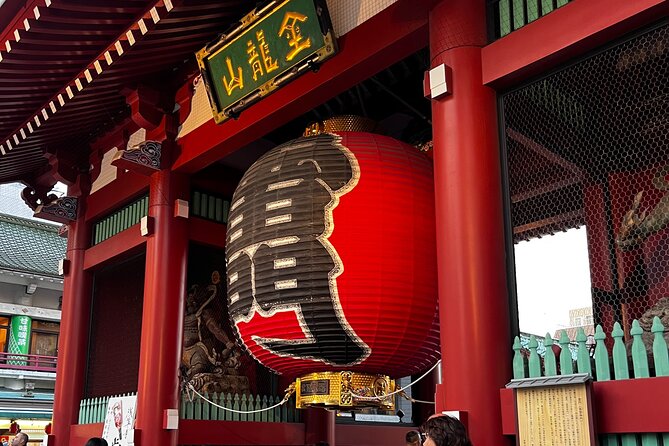
The walking portion lasts about one hour and centers on Senso-ji Temple. The approach includes Kaminarimon Gate, the huge entrance associated with Asakusa, followed by Nakamise-dori and the temple’s main hall.
Kaminarimon is not just a photo backdrop. It marks the transition from ordinary city streets into a ceremonial space. A guide can help you notice how the gate, the approach, and the movement toward the main hall work together.
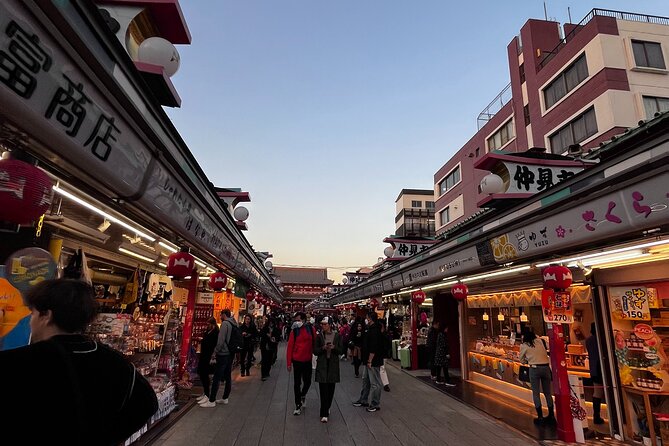
From there, Nakamise-dori leads toward the temple. This shopping street is part of the Asakusa experience, but it can also distract from the religious setting. You will see shops and souvenirs along the route, while the guide explains the customs and traditions connected with the temple complex.
That balance is one of the tour’s strongest features. You are not simply marched from gate to hall for a quick photograph. The guide explains Japanese culture and religion, including etiquette at shrines and temples. One direct account of the tour describes it as especially useful on the first day in Japan because it provides context for how to behave in these places.
That advice has practical value. Temple visits often involve small actions that are easy to miss when you are on your own. Knowing what you are looking at, and how the space is used, makes the visit feel less like a checklist.
Understanding the main hall and temple customs
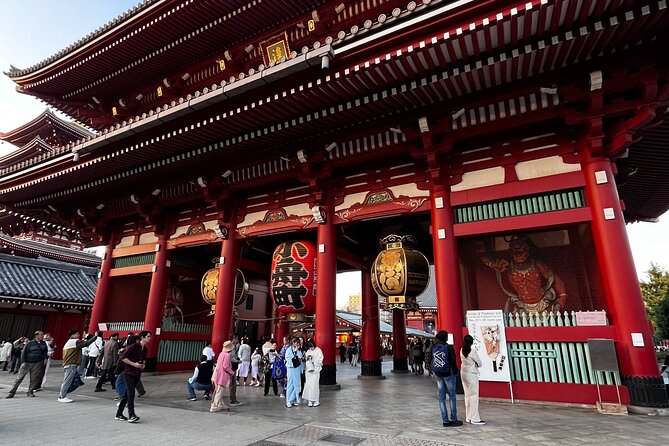
The main hall is the heart of the Senso-ji visit. The guide discusses Japan’s religious traditions and the role of rituals within the temple complex. The supplied details do not specify every ritual covered, so you should think of this as a guided cultural introduction rather than a formal religious lecture.
Naoko is praised for being funny, informed, and attentive. Her approach included time for questions, exploration, and photographs. That detail is important because a good temple tour needs room for both explanation and quiet observation. If every minute is filled with speech, the site can lose its atmosphere.
I also like that the tour is designed to answer the questions that usually arise after you have already left. Why are people making a particular gesture? What is the difference between a temple and a shrine? What does a fortune mean in this setting? The provided information confirms explanations of etiquette, rituals, and traditions, though the exact topics may vary by guide.
The experience is not presented as a museum visit with a fixed display route. Senso-ji remains an active religious place, and the value lies partly in learning how to look and act there. You should be prepared for a public site where other people are also present, rather than expecting a quiet private setting.
More Asakusa visits:
- Tokyo: Japanese Dance Cabaret Theater Asakusa-Kaguwa Ticket
★ 4.8 · 2,270 reviews - Tokyo: Roll and Authentic Sushi Making Class in Asakusa
★ 4.9 · 1,957 reviews - Tokyo Asakusa Rickshaw Tour
★ 5.0 · 1,375 reviews - Tokyo Panoramic 1 Day: Meiji Shrine, Asakusa, Odaiba and SKYTREE®
★ 4.5 · 1,222 reviews
Drawing a fortune at Senso-ji
A fortune is included in the price. The tour description says you can get your fortune told or draw fortunes at Senso-ji, making this more than a standard outside-only temple walk.
This is a small feature, but it gives the visit a memorable personal moment. It also connects the tour’s explanations with something you can take part in rather than only observe. Your guide can provide the setting and context, while you experience the fortune tradition for yourself.
The information does not explain the exact fortune procedure or what happens if you receive an unfavorable result. Do not book this solely for a detailed fortune-reading session. Treat it as one included cultural activity within a broader tour of Asakusa and Senso-ji.
What the $43 price delivers
At $43 per person, this is not the cheapest way to walk around Asakusa. You can see Kaminarimon Gate, Nakamise-dori, and the outside of Senso-ji without paying for a guide. The value comes from combining the river cruise with interpretation at the temple, plus the included fortune activity.
I would consider the price reasonable if you are new to Tokyo, want cultural background, or prefer not to work out the route yourself. You are paying for a short, organized experience that connects two sights and leaves you at Asakusa Station.
The value is weaker if you already know Senso-ji well, have visited Asakusa several times, or mainly want free time for shopping and photographs. The tour moves through the area on a set schedule, and 90 minutes is brief for a district with plenty to see.
The small group improves the calculation. With no more than 10 people, the guide can respond to questions and offer a more direct explanation. The positive feedback about Nori and Naoko also points to the human side of the price: the quality depends heavily on the guide leading your departure.
Who will get the most from this tour

I would recommend this experience to first-time visitors who want Tokyo explained in plain terms. It suits anyone interested in Japanese religious customs, temple etiquette, and the link between old Asakusa and modern Tokyo.
It is also a good choice for people who like variety. The river gives you a seated scenic segment, while Senso-ji provides the walking and cultural focus. Families and mixed-interest groups may appreciate that the experience does not spend the entire time inside a religious complex.
The tour may work well early in your trip. The feedback about using it on day one makes sense because the etiquette and cultural background can help with later visits to temples and shrines around Japan.
I would be more cautious if you need a slow pace, extensive photography time, or detailed architectural study. The walking portion is only about one hour, and the tour includes several major points: the gate, shopping street, main hall, cultural explanations, and a fortune.
Practical details before you book
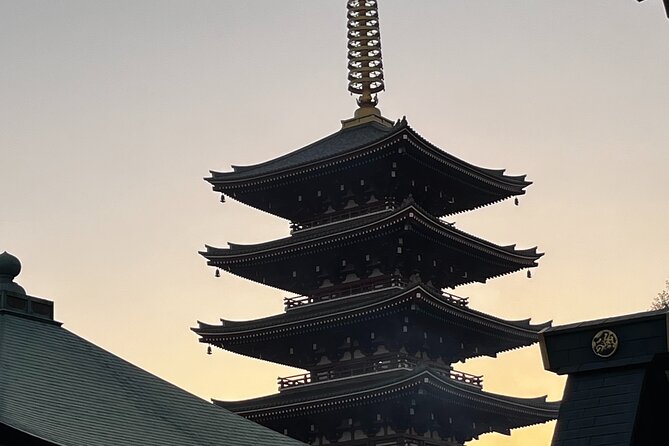
The tour lasts approximately one hour and 30 minutes. It starts at Kuramae 2-chōme Police Box and ends at Asakusa Station, 1-chōme-1-3 Asakusa, Taito City. The end point is helpful for continuing your day, and the guide can help you work out how to get home.
A mobile ticket is provided, and confirmation comes at booking. The experience is near public transportation, and the information says most people can participate.
Weather matters because the river cruise is part of the plan. If poor weather forces a cancellation, you are offered another date or a full refund. The tour also requires a minimum number of participants, so a cancellation for that reason brings the same choice of another date or a full refund.
You can cancel for a full refund up to 24 hours before the start time. Changes or cancellations inside that 24-hour window are not accepted for a refund, and cut-off times use Tokyo local time.
Should you book the Sumida River and Senso-ji tour?
Book it if you want a compact, guided introduction to Asakusa that combines scenery with cultural explanation. The river cruise gives you a useful city view, while Senso-ji supplies the rituals, history, and atmosphere. The small group and guides such as Nori and Naoko are a real part of the appeal.
Skip it if you want to explore Asakusa independently, spend hours shopping along Nakamise-dori, or study Senso-ji at your own pace. At $43, the tour earns its price through convenience, interpretation, the cruise, and the included fortune, not through a long schedule.
For a first visit, I see it as a smart orientation. You finish at Asakusa Station with a better sense of the district and a foundation for exploring more of Tokyo on your own.
FAQ
How long does the Tokyo Asakusa walking tour last?
The experience lasts approximately one hour and 30 minutes. The Sumida River portion takes about 30 minutes, followed by about one hour at Senso-ji Temple.
How much does the tour cost?
The listed price is $43 per person.
Where does the tour begin?
The meeting point is Kuramae 2-chōme Police Box, at 2-chōme-15-8 Kuramae, Taito City, Tokyo 111-0051, Japan.
Where does the tour end?
The tour ends at Asakusa Station, at 1-chōme-1-3 Asakusa, Taito City, Tokyo 111-0032, Japan.
Is the Sumida River cruise included?
Yes. The experience includes a 30-minute cruise along the Sumida River, with views of Tokyo Skytree and Kaminarimon Gate.
Is a fortune at Senso-ji included?
Yes. The tour includes the opportunity to get your fortune told or draw a fortune at Senso-ji Temple.
How large is the group?
The maximum group size is 10 people.
Can I cancel for a full refund?
Yes. You can cancel at least 24 hours before the start time for a full refund. Cancellations or changes made less than 24 hours before the start are not refunded or accepted.
More Walking Tours in Tokyo
- Tokyo Tsukiji Fish Market Food and Culture Walking Tour
★ 5.0 · 3,184 reviews - Tokyo: Imperial Palace and Shogun Historical Walking Tour
★ 5.0 · 2,251 reviews - Tokyo: Shinjuku Local Bar and Izakaya Guided Walking Tour
★ 4.9 · 1,794 reviews - Tokyo: Tsukiji Fish Market Food and Walking tour
★ 5.0 · 1,724 reviews
New on our Tokyo list
- Sumi-e Experience in a relaxing green tea shop in Tokyo★ 5.0 · 3 reviews
- Tokyo : Kamikaze Street Drift Ride★ 5.0 · 3 reviews
- Private Zen Meditation in English in Shinjuku, Tokyo★ 5.0 · 3 reviews
- Onsen Spa in Tokyo and Asakusa Bar Hopping with Local Guide★ 5.0 · 3 reviews
- Easy for everyone! Now you can play handmade mini shamisen and show off to everyone! Musical instruments, sweets and live music★ 5.0 · 3 reviews
- Tokyo: Private Tsukiji Street Food & Sake with Local Guide★ 5.0 · 3 reviews
- Mt Fuji Exploration Tour with Free Japanese Kusa Mochi from Tokyo★ 4.5 · 3 reviews
- Tokyo Tsukiji Fish Market Walking and Exploring Hidden Gems Tour★ 5.0 · 3 reviews
Temple & Shrine Tours, compared.
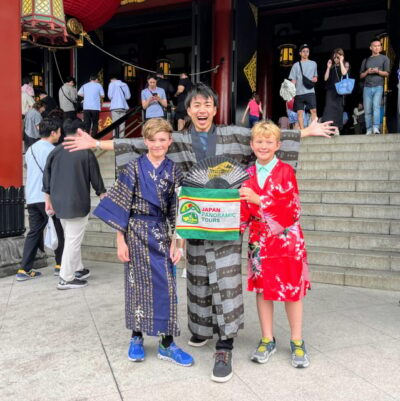
Meiji Shrine, Asakusa, Skytree Bus Tour and Cruise
Read our review →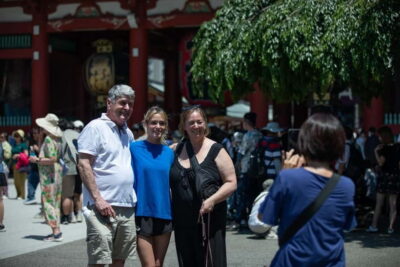
Asakusa Walking Tour with Sensoji Temple Visit
Read our review →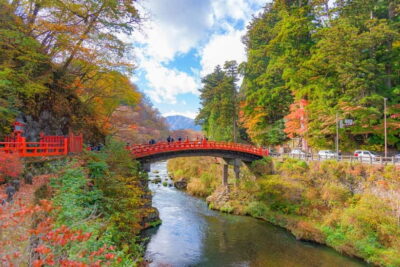
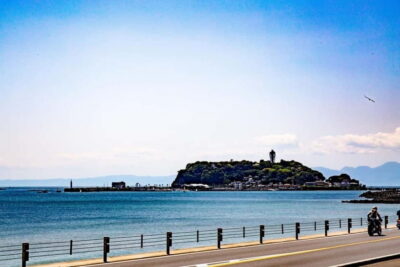
Kamakura & Enoshima Day Trip including Temple Tickets
Read our review →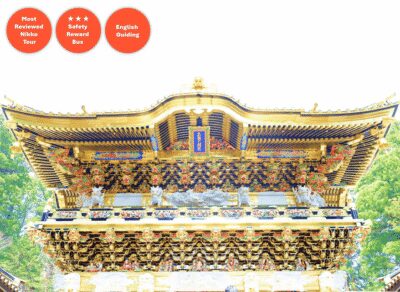
Nikko Toshogu Shrine and Kegon Waterfall Tour
Read our review →
Tokyo Panoramic 1 Day: Meiji Shrine, Asakusa, Odaiba and SKYTREE®
Read our review →
Mt. Fuji Heritage Tour: Traditional Villages, Lakes & Shrine
Read our review →Browse the lists this tour appears in