
Reviewed · JAPANESE CULTURE WORKSHOPS
Tokyo’s Authentic and Finest Taiko Drumming Workshop
Taiko drumming gets you into Japanese culture with both hands, both feet, and a fair bit of concentration. In this 90-minute class, instructor Eva Kestner teaches the basic stance, strikes, rhythms, and movements before guiding you through a traditional or contemporary piece.
I like the small-group format, which gives Eva time to adjust the lesson for beginners, families, teens, and even a left-handed player. I also like the personal video, a useful souvenir that captures more than a quick photo ever could.
The catch is physical and practical: taiko is loud, active work, and some people have developed blisters. Wear breathable clothes, bring water, and do not expect a quiet cultural lecture with a little drumming added on.
In This Review
- Key points to know before booking
- Why this taiko class feels different from a stage show
- Starting at the Daikanyama studio
- Foundation training: stance, sticks, and first beats
- Rhythm practice turns into a group performance
- Eva’s demonstration adds context and scale
- The personal video is a practical souvenir
- A physical activity, not a passive cultural stop
- Why beginners and families fit this class well
- Is $120 a fair price?
- Booking timing and cancellation details
- Should you book the Eva Kestner taiko workshop?
- FAQ
- Where does the taiko workshop take place?
- How long does the activity last?
- Who teaches the class?
- Is the workshop taught in English?
- Do I need previous drumming experience?
- Are drums and sticks provided?
- Do I receive a recording of the class?
- How many people can join the class?
- Can I cancel for a full refund?
Key points to know before booking
- You play almost at once: The class moves quickly from basic instruction to hands-on drumming.
- Eva teaches in English: Japanese support is also available, making the workshop easy to follow.
- Every participant gets equipment: Taiko drums and drumsticks are supplied.
- The class is a real workout: Expect leg movement, concentration, and repeated strikes.
- You receive a personal video: Your performance becomes part of the experience and the souvenir.
- The meeting point is in Daikanyama: The central Tokyo setting makes it easy to continue exploring afterward.
Why this taiko class feels different from a stage show
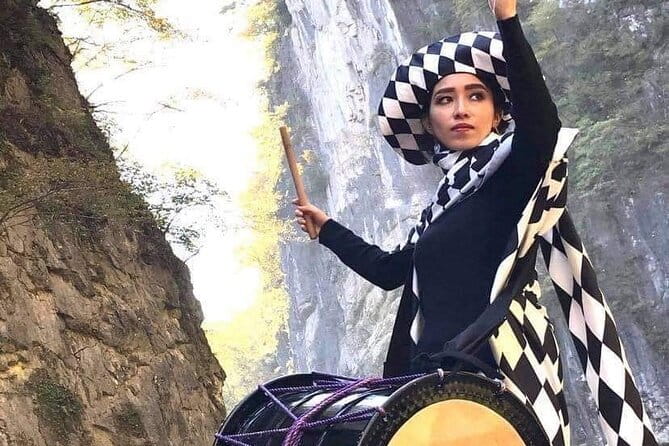
A taiko performance lets you admire Japanese drumming from a seat. This workshop asks you to learn the posture, make the sound, remember the pattern, and perform as part of a group. That shift from watching to doing is the main reason this experience earns its price.
Taiko is not simply a large drum played as hard as possible. The sound comes from timing, body position, controlled strikes, and coordinated movement. You learn how the rhythm fits together, then try to hold your part while everyone else plays around you.
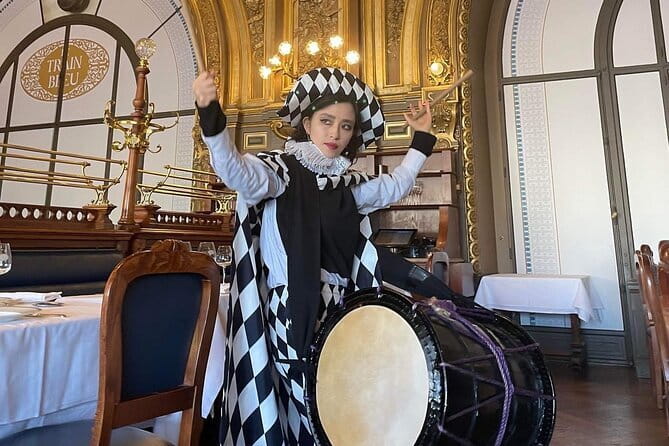
Eva Kestner leads the class. Her background includes founding and serving as the first musical director of Cornell University’s taiko group, receiving an excellence award from the Tokyo University of the Arts New Artists Competition, and publishing original music through Harper Collins and the Cambridge International Curriculum.
Those details matter because the class is not built around a casual demonstration followed by a few souvenir hits. Eva brings formal musical experience and teaching practice to a short lesson designed for people who may have never touched a taiko drum.
More craft workshops in Tokyo:
- Tokyo Shinjuku Chopsticks Making Class
★ 5.0 · 1,763 reviews - Kintsugi Experience: Art of Golden Joinery in Tokyo
★ 5.0 · 467 reviews - Authentic Pure Gold Kintsugi Workshop with Master Taku in Tokyo
★ 5.0 · 217 reviews
Starting at the Daikanyama studio
The class begins at Eva Kestner International Taiko Drum Academy, at Japan, 150-0032 Tokyo, Shibuya, Uguisudanichō, 111 太洋レジデンス代官山. The activity ends at the same meeting point.
The location is near public transportation and sits in a useful part of Tokyo for adding another stop before or after class. The central setting is one of the better features of the experience. You do not need to give up half a day for a remote cultural activity.
Allow time to find the exact building. The address can be a little hard to spot through a booking app, so checking the location on Google Maps before leaving is sensible. This is a small urban studio rather than a major tourist attraction with a large street entrance.
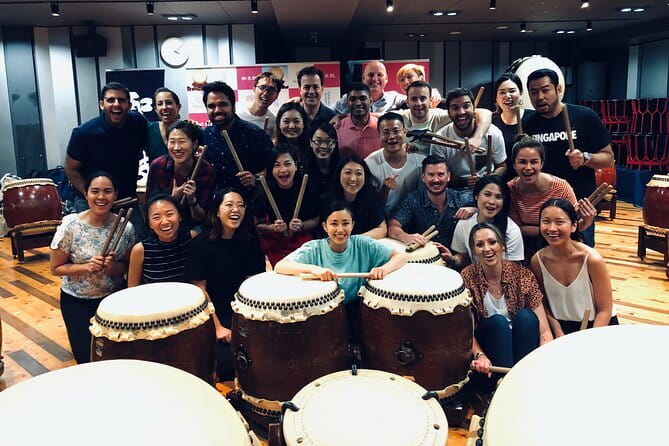
The class can hold a maximum of 15 people. That is large enough to create a group sound but still small enough for individual help. A smaller booking may feel more personal, while a fuller class can make the final performance sound bigger.
Groups of more than 20 people need to reserve a large-group time slot. That version takes place about 20 minutes from Shibuya, so large parties should not assume they will use the Daikanyama meeting point.
Foundation training: stance, sticks, and first beats
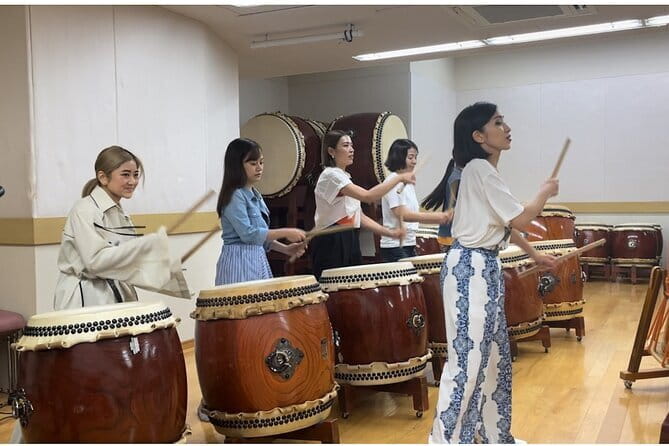
Eva begins with the foundation of taiko drumming. You receive a drum and taiko sticks, then work on how to stand, how to hold the sticks, and how to strike with control.
The early instruction matters more than it may seem. Beginners often focus on making a loud sound, but taiko also depends on balance and repeatable motion. You need to stay in position while keeping the beat, and the body position helps you do that.
The class is taught in English, with English and Japanese support available. That makes the technical instruction easier to follow, especially when Eva begins combining spoken counts, physical gestures, and drum patterns.
You will not need to bring equipment. The academy supplies the drums and sticks, so you can arrive with only yourself and suitable clothing.
Rhythm practice turns into a group performance
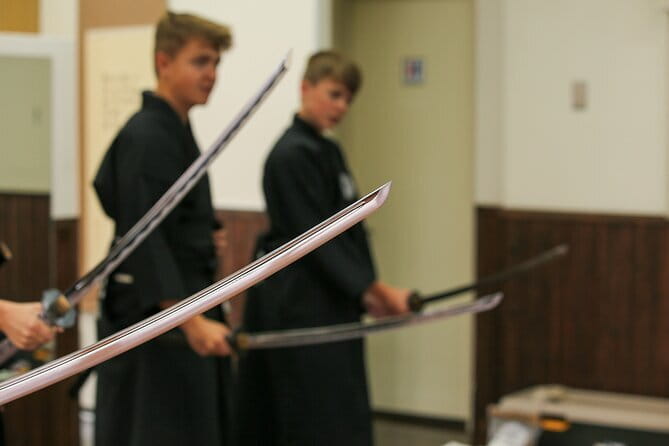
Once the basics are in place, the class moves into rhythm training. You learn short patterns, repeat them, and gradually join them into a piece of music.
The structure keeps the lesson active. You do not spend most of the 90 minutes listening to a history talk. Several people have found that they began playing almost immediately, with time for questions after the main instruction.
The format may include a practice number followed by a traditional drum piece. You learn the pattern first, then play it again as a group with more confidence. The final result depends on listening as much as striking. If you rush your own part, the group sound can quickly come apart.
This is also where the class becomes more demanding. Taiko uses more than the arms. The stance and repeated movement can work your legs, and the need to remember a sequence keeps your attention fully occupied.
The activity suits complete beginners, but it is not effortless. Even people with percussion experience can find the coordinated movements challenging. The class can also work for people with some previous rhythm training, since Eva can teach novice to intermediate patterns.
A few more Tokyo bookings worth comparing
- Sushi Making Tokyo Roll and Authentic Japanese Sushi Class
★ 5.0 · 3,971 reviews - Tokyo: Roll and Authentic Sushi Making Class in Asakusa
★ 4.9 · 1,957 reviews - Tokyo: Sushi Making Class in a Happi Coat near a Famous Spot
★ 4.9 · 1,377 reviews - Chopstick Making Workshop in Ginza
★ 4.8 · 1,366 reviews
Eva’s demonstration adds context and scale
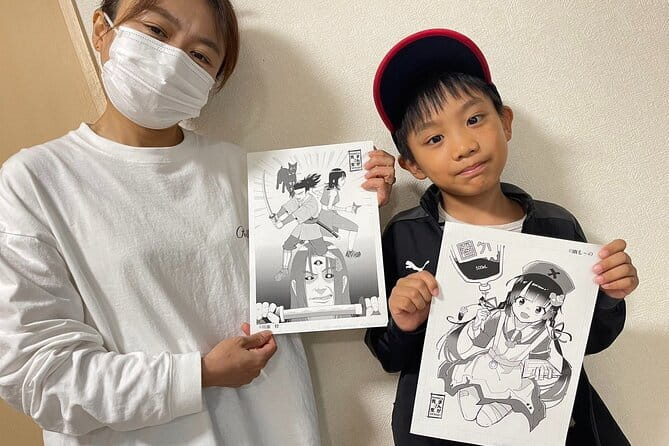
At some point during the workshop, Eva gives a demonstration performance and explains the background of taiko drumming. This balances the hands-on work with a clearer sense of what the instruments can do in the hands of a professional.
Her performance helps you hear the gap between your first practice beats and polished taiko. That is not a reason to feel discouraged. It gives the class a useful reference point and shows why posture, timing, and group awareness matter.
The cultural explanation is brief, according to the structure of the activity. If you want a long academic lecture on regional drum traditions, this is not that kind of program. The value comes from linking a small amount of context to the physical act of playing.
I like this balance. You learn enough to understand what you are doing, then spend your time making the sound yourself.
The personal video is a practical souvenir
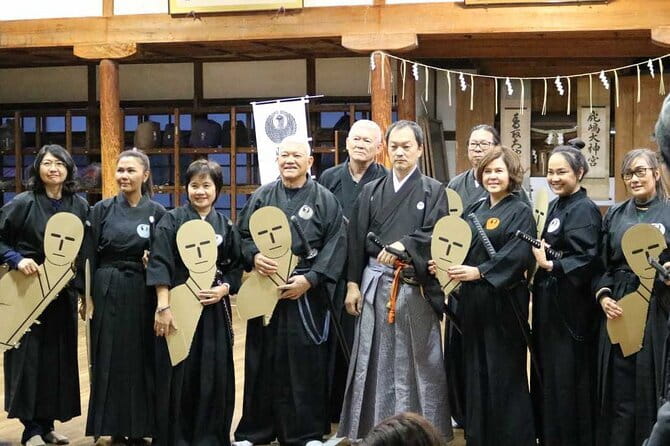
You receive a personalized video of yourself playing taiko. This is one of the stronger inclusions because it records the full experience rather than reducing it to a posed image beside a drum.
A video also helps you see details you may miss while concentrating. You can watch your stance, timing, and movement afterward, and it gives family members or friends a better idea of what the activity involved.
Do not treat it as a professional concert recording. The main value is personal: you have a lasting record of learning and performing a taiko piece in Tokyo.
A physical activity, not a passive cultural stop
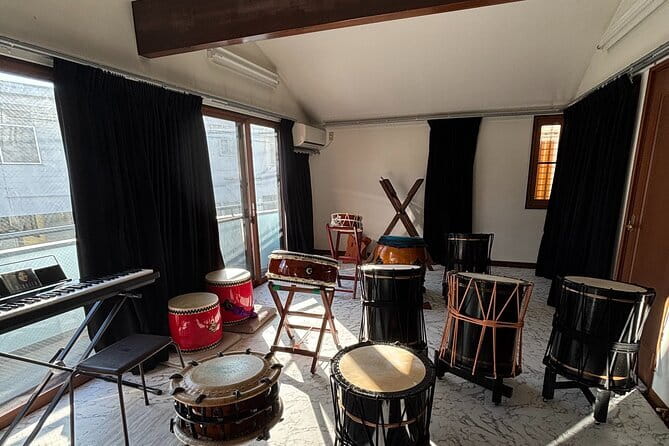
You should plan this workshop as exercise with cultural content. The repeated strikes, leg position, and choreographed movements can raise your energy level and leave you warm by the end.
Wear comfortable, breathable clothing. Tight or restrictive clothes will make the stance and movement less pleasant, while casual athletic clothing should make the session easier to manage.
Bring water. The class is only about an hour and a half, but the effort is steady. Hand protection may also be worth considering. One young participant developed blisters, so packing Band-Aids is a sensible small precaution.
The sound is loud. That is part of taiko’s appeal, but it may be uncomfortable if you are sensitive to volume. The supplied information notes support for visual, audio, mobility, and neurodivergent needs, so contact the provider before booking if you need to discuss a particular accommodation.
A moderate level of physical fitness is recommended. You do not need musical experience, but you should be comfortable standing, moving, and repeating drum strokes for the duration of the lesson.
Why beginners and families fit this class well
The workshop is built for people who may start with no experience. Eva explains the steps patiently and can adjust the teaching for different ages and skill levels.
Families with teenagers and a younger child can find this a useful shared activity because everyone has a clear role. It is also energetic enough to use up some holiday restlessness. The class gives children and teens something active to focus on, rather than asking them to stand quietly and absorb information.
Adults who already play percussion may appreciate the technical side, especially the combination of rhythm and movement. The class is not only for musicians, though. You can take part without knowing how to read music or having played a Japanese instrument before.
It also works well for couples and small groups. Each person can play, and the group piece gives you a shared goal. Since the class has a maximum of 15 participants, it should feel more personal than a large bus-group activity.
The lesson may be less suitable if you want a calm, low-effort cultural experience. It is also not the best pick for someone who dislikes loud environments or finds repetitive movement uncomfortable.
Is $120 a fair price?
At $120 per person, this is not a bargain-bin Tokyo activity. The price needs to be judged against what you receive: 90 minutes of instruction, use of a drum and sticks, a demonstration, cultural explanation, small-group teaching, and a personal video.
You are paying for direct access to an accomplished instructor, not just admission to a performance. That makes the cost easier to justify if you want an activity you actively take part in and remember through a skill learned.
The small-group setup adds value. Eva can watch how you hold the sticks, correct your movement, and help the group stay together. In a cheaper, larger class, you might spend more time copying from a distance and less time getting individual help.
The value is weaker if you only want to hear taiko. A performance ticket would suit that goal better, assuming you are comparing experiences rather than seeking a lesson. This workshop is worth the money for participation, instruction, and the personal recording.
It is also a good choice when you are planning a Tokyo day around neighborhoods in and near Shibuya. The studio’s location allows you to continue exploring after class instead of traveling far out of the city.
Booking timing and cancellation details
The experience is often reserved about 31 days ahead, so advance planning is sensible, especially if you need a particular date for a family itinerary. Confirmation arrives at the time of booking, and the ticket is mobile, which means you can keep the booking on your phone.
Free cancellation is available until 24 hours before the start time for a full refund. Cancellations or changes made less than 24 hours before the start are not accepted for a refund, and the cut-off uses Tokyo local time.
The activity ends where it begins. That makes the timing easy to manage, but remember to build in extra time for locating the studio at the start.
Should you book the Eva Kestner taiko workshop?
Book it if you want to do something in Tokyo that combines music, movement, and Japanese cultural context. It is especially well suited to beginners, families with teens, couples, and anyone who would rather participate than watch.
The strongest reasons to choose it are Eva’s patient English instruction, the intimate group size, the quick move into playing, and the personal video. You also get a real sense of how much coordination goes into taiko, including the physical work often hidden behind a polished performance.
Think twice if loud sounds, standing activity, or possible hand soreness will spoil the experience. For everyone else, $120 is a reasonable spend for a focused 90-minute workshop led by a professional drummer, with equipment included and no musical background required.
FAQ
Where does the taiko workshop take place?
The meeting point is Eva Kestner International Taiko Drum Academy in Daikanyama, at Japan, 150-0032 Tokyo, Shibuya, Uguisudanichō, 111 太洋レジデンス代官山.
How long does the activity last?
The workshop lasts approximately 1 hour and 30 minutes.
Who teaches the class?
Eva Kestner teaches the workshop. She is a professional taiko drummer and instructor, a former founder and first musical director of Cornell University’s taiko group, and an award-winning musician.
Is the workshop taught in English?
Yes. Eva teaches the taiko workshop in English, and English and Japanese support are available.
Do I need previous drumming experience?
No. The class teaches foundation training, rhythm training, and a traditional or contemporary piece, so beginners can take part.
Are drums and sticks provided?
Yes. Taiko drums and taiko drumming sticks are provided for the activity.
Do I receive a recording of the class?
Yes. You receive a personalized video of yourself playing taiko drums.
How many people can join the class?
The activity has a maximum capacity of 15 travelers. Groups larger than 20 people need to book the large-group slot, which takes place about 20 minutes from Shibuya.
Can I cancel for a full refund?
Yes. You can cancel at least 24 hours before the experience start time for a full refund. Cancellations or changes made less than 24 hours before the start time are not accepted for a refund.
New on our Tokyo list
- Sumi-e Experience in a relaxing green tea shop in Tokyo★ 5.0 · 3 reviews
- Tokyo : Kamikaze Street Drift Ride★ 5.0 · 3 reviews
- Private Zen Meditation in English in Shinjuku, Tokyo★ 5.0 · 3 reviews
- Easy for everyone! Now you can play handmade mini shamisen and show off to everyone! Musical instruments, sweets and live music★ 5.0 · 3 reviews
- Onsen Spa in Tokyo and Asakusa Bar Hopping with Local Guide★ 5.0 · 3 reviews
- Tokyo: Private Tsukiji Street Food & Sake with Local Guide★ 5.0 · 3 reviews
- Mt Fuji Exploration Tour with Free Japanese Kusa Mochi from Tokyo★ 4.5 · 3 reviews
- Tokyo Tsukiji Fish Market Walking and Exploring Hidden Gems Tour★ 5.0 · 3 reviews
Japanese Culture Workshops, compared.
Kintsugi Experience: Art of Golden Joinery in Tokyo
Read our review →
Authentic Pure Gold Kintsugi Workshop with Master Taku in Tokyo
Read our review →
KABUKI Show at Kabukiza Theatre Admission Ticket
Read our review →
KABUKI, BUNRAKU, etc. presented by National Theatre
Read our review →
Kintsugi Workshop Class in Shibuya, Tokyo with mon cadeau
Read our review →
Browse the lists this tour appears in