
Reviewed · TOKYO FOOD TOURS
Ebisu Food Tasting Experience with Japanese Cooking Class
The best part of this Ebisu experience is its small, personal scale. Mari and Ayumi take you from a local supermarket to their home kitchen, where you prepare familiar Japanese dishes and sit down to eat together. I especially like the mother-daughter teaching team and the chance to see everyday ingredients before they reach the plate.
I also like that the class is taught entirely in English and accepts complete beginners. You can choose temaki sushi, with tamagoyaki and teriyaki chicken, or Japanese hamburger steak with potato salad and miso soup. The main consideration is the four-person limit: it feels intimate, but dates may fill early, especially since bookings are commonly made about 22 days ahead.
In This Review
- Key points at a glance
- Starting at Ebisu Station and Ebisu Garden Place
- Learning Japanese ingredients at a local supermarket
- Choosing between temaki sushi and Japanese hambāgu
- Cooking in Mari and Ayumi’s home kitchen
- Eating together and asking for Tokyo advice
- What the $78.04 price includes in practical terms
- Who will enjoy this class most
- Booking, timing, and cancellation advice
- Is the Ebisu cooking class worth booking?
- FAQ
- Where does the Ebisu cooking experience begin?
- Where does the experience finish?
- How long does the cooking class last?
- Is the class taught in English?
- Do I need cooking experience?
- What dishes can I prepare?
- Are vegetarian options available?
- How many people can join?
- Can I cancel for a full refund?
Key points at a glance
- A supermarket visit comes first: You learn about Japanese ingredients and products before cooking.
- Mari and Ayumi lead the class: Mari brings professional culinary experience, while Ayumi provides bilingual help.
- Two distinct menus are available: Choose temaki sushi or a Japanese-style hamburger steak set meal.
- The group is capped at four people: This is a close, home-based lesson rather than a large demonstration.
- Vegetarian diners have one clear choice: The temaki sushi course offers vegetarian options, but the hambāgu course does not.
- The meal includes cultural conversation: You can ask for Tokyo tips and help planning the rest of your trip.
Starting at Ebisu Station and Ebisu Garden Place
Your meeting point is the police box at Ebisu Station, at 1-chōme-5-5 Ebisuminami in Shibuya. The itinerary also identifies Ebisu Garden Place, one of the area’s recognizable landmarks, as the first stop.
This meeting arrangement is useful in a city where a home address can be harder to find than a station landmark. Look for the police box, not a restaurant or hotel. The activity ends back at the meeting point, so you do not need to arrange a second pickup location.
Ebisu is a good setting for a food class. It gives you a change from the major sightseeing districts and places the experience in an ordinary Tokyo neighborhood. You are not simply shown a finished dish in a restaurant. You are introduced to the food through shopping, preparation, and a shared meal.
The activity lasts about three hours. That is long enough for a supermarket visit, hands-on cooking, and lunch or dinner without taking over your whole day. I would leave some space around the class, though, since cooking pace can vary and you will likely want time for conversation at the table.
More cooking classes in Tokyo:
- Ramen & Gyoza Cooking Class in Tokyo with Local Supermarket Visit
★ 5.0 · 823 reviews - Tokyo: Easy Ramen Cooking Experience in Kabukicho, Shinjuku
★ 4.6 · 321 reviews - Ramen and Sushi Cooking Class with Sake Pairing Set in Tokyo
★ 5.0 · 291 reviews
Learning Japanese ingredients at a local supermarket
The supermarket visit is one of the most useful parts of the experience. Mari and Ayumi explain the ingredients and products you see, giving you a practical introduction to the food you may encounter elsewhere in Japan.
This is more useful than a short lecture on Japanese cuisine because it connects directly to the dishes you will prepare. You can see the products in their everyday setting and ask about anything that catches your eye. The experience can also help you feel more comfortable shopping for Japanese food on your own later.
A particularly helpful detail is the flexibility shown by the guides. One participant’s experience included extra stops at nearby stores to look for specific items. That suggests the shopping portion can respond to your curiosity instead of following a rigid script. Still, do not treat extra shopping as a guaranteed part of every booking. The confirmed plan is a local supermarket visit.
The shopping stop also gives you a better sense of home cooking in Japan. You are learning about the ingredients people use in ordinary meals, not only the specialty foods presented to tourists. For me, that makes the class feel more connected to daily life in Tokyo.
Choosing between temaki sushi and Japanese hambāgu
You have two course choices, and they offer quite different introductions to Japanese home cooking.
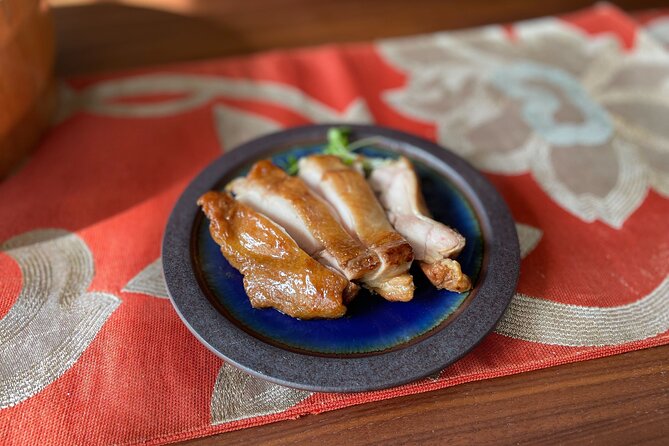
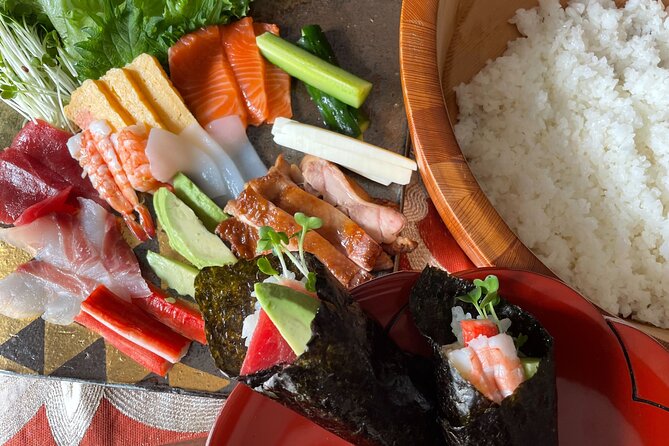
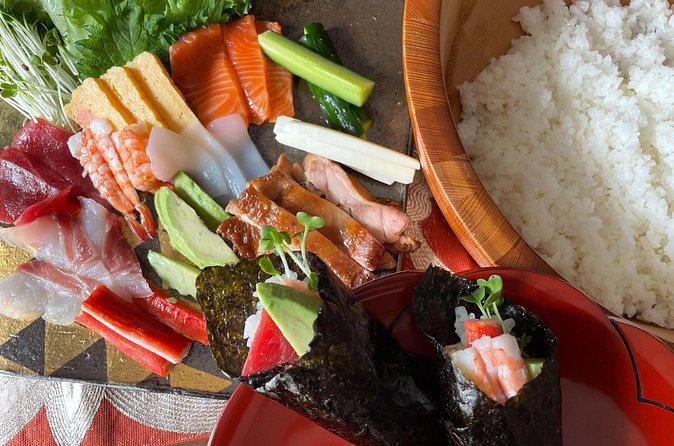
The temaki sushi course begins with sushi rice, tamagoyaki, and teriyaki chicken. You then roll your own hand-shaped sushi with fresh fish, vegetables, or tofu. This course offers more room for personal choice, since you can select different fillings and build each roll yourself.
It is also the better choice for vegetarians. Vegetarian options are available in the temaki sushi course. If you do not eat meat or fish, confirm the suitable selection when booking so the hosts can guide you clearly through the available ingredients.
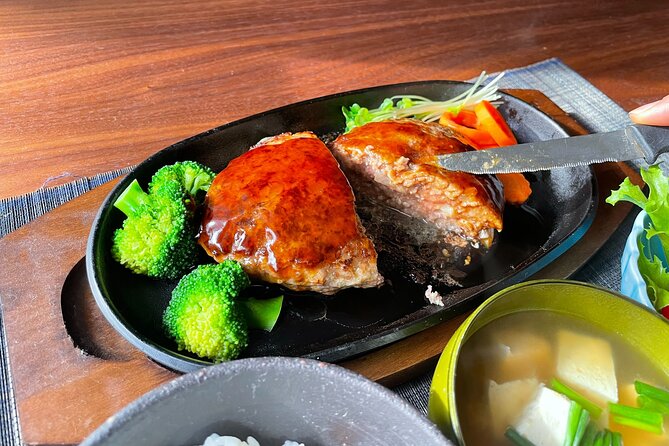
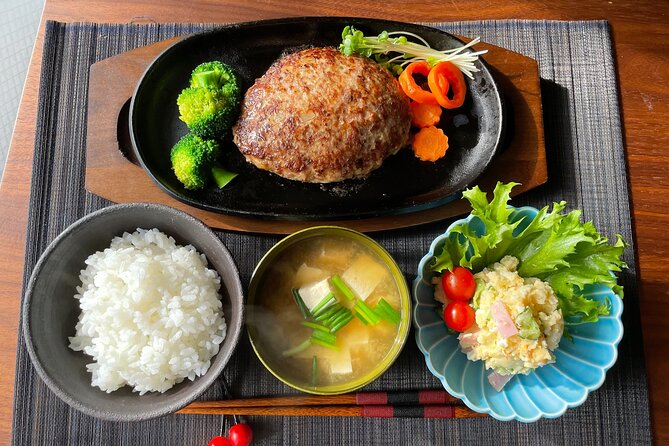
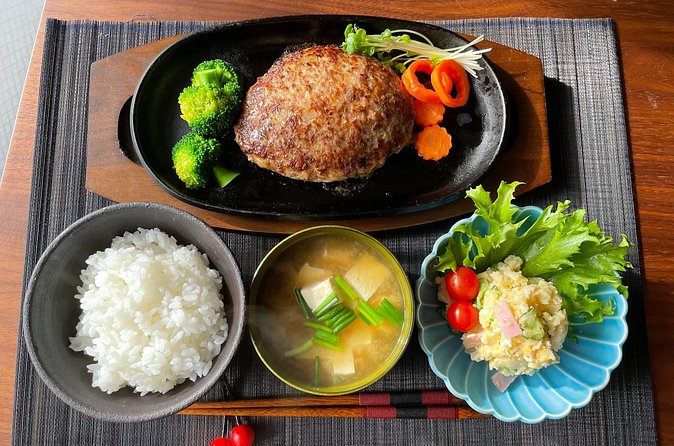
The Japanese hamburger steak course gives you a full set meal. You prepare juicy hambāgu, Japanese-style hamburger steak, along with potato salad and miso soup. This is a good option if you want a cooked meal with familiar comfort-food appeal, but it is important to know that no vegetarian version is available.
The two menus also suit different moods. Sushi gives you an interactive meal with many small choices at the table. Hambāgu gives you a more structured set meal and a chance to see how a Western-style idea has been adapted to Japanese home cooking.
Optional drinks include sake and craft beer. These are not described as part of the base price, so plan on paying extra if you choose them. They can make the shared meal feel more festive, but you do not need them to take part in the cooking or dining.
Cooking in Mari and Ayumi’s home kitchen
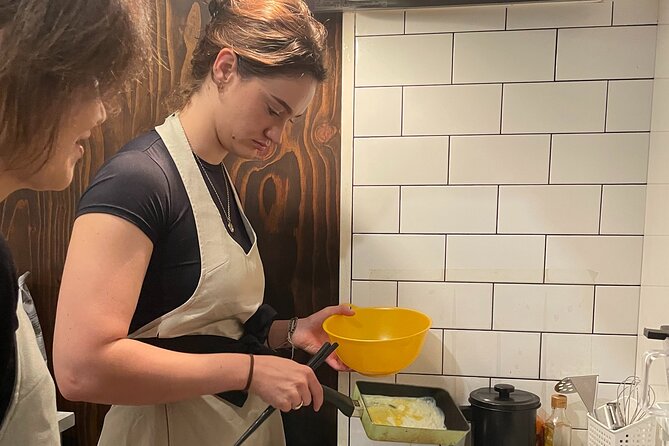
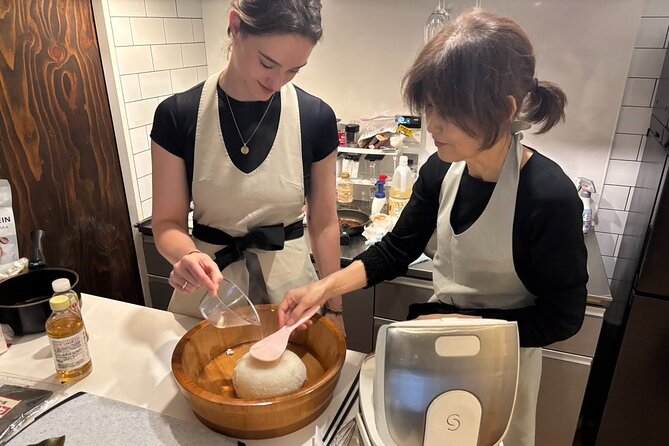
After shopping, you return to the home kitchen and cook with Mari and Ayumi. Mari is a professional culinary expert who has appeared on television programs and in magazines. Her daughter Ayumi works as a bilingual interpreter and assistant, and the whole class is conducted in English.
That language point matters. Cooking instructions can become confusing when measurements, timing, and food safety are explained through gestures alone. Here, you can ask questions directly and receive step-by-step help. You do not need prior cooking experience.
The small group size is another major advantage. With a maximum of four people, you should have a real chance to participate rather than watch from the back of a crowded room. The exact amount of individual hands-on time can vary, but the format is designed around cooking together.
I would still keep your expectations sensible. This is a home cooking lesson, not a professional chef certification course. You will learn how to prepare the selected dishes and gain insight into Japanese ingredients, but the three-hour format does not promise advanced culinary training.
The home setting is the heart of the experience. It gives the class a relaxed feel and creates natural time for conversation. A cooking school can teach technique well, but a home kitchen can show you how food connects to family routines and social life. That personal setting is likely to matter most if you enjoy meeting local people as much as collecting recipes.
More Tokyo food crawls:
- Tokyo: Shinjuku Food Tour (13 Dishes at 4 Local Eateries)
★ 5.0 · 6,603 reviews - Tokyo: Shinjuku Food Tour (15 Dishes and 4 Eateries)
★ 4.9 · 2,033 reviews - Best of Shinjuku: Izakaya Food Tour (4 Stops, 14+ Tastings)
★ 5.0 · 1,863 reviews - Tokyo Night Foodie Tour in Shinjuku – Seasonal Sushi, Wagyu Beef
★ 5.0 · 1,161 reviews
Eating together and asking for Tokyo advice
Once the dishes are ready, you sit down and share the meal with the hosts. This is not a quick tasting followed by a polite goodbye. The meal is part of the activity, and the hosts are happy to talk about Tokyo and help with trip planning.
Use this time well. Bring a short list of questions about neighborhoods, food, or the rest of your itinerary. Mari and Ayumi have lived in Tokyo for more than 15 years, so their local suggestions can help you make better choices after the class.
The conversation is also what gives the experience its family feel. One particularly warm account described feeling like part of the family, or ohana. That feeling comes from the complete sequence: shopping together, cooking side by side, and eating at the same table. It is not only the food that creates the connection.
Of course, personal chemistry always matters in a small-group activity. Some people want a quiet lesson with precise instruction and little conversation. If that sounds like you, the social side may feel more prominent than expected. If you enjoy asking questions and sharing a meal, the format should suit you well.
What the $78.04 price includes in practical terms
At $78.04 per person, the price should be judged against the full experience rather than the meal alone. You are paying for roughly three hours of instruction, ingredient guidance at a supermarket, cooking help, the food you prepare, and time at the table with the hosts.
That makes the cost reasonable for someone who values local contact and active participation. A restaurant meal may cost less, but it will not usually show you how the food is prepared or give you direct access to a Tokyo family’s advice. A formal cooking school may offer more equipment and a larger curriculum, but it may not provide the same personal setting.
The four-person maximum improves the value for couples, families, and friends who want attention from the instructors. For a solo participant, the price is higher than simply buying a meal, but the class also provides a planned activity and an easy way to meet local hosts.
The optional sake and craft beer should be treated as extras. The supplied details do not state their price or how many servings are available, so ask before ordering if you are watching your budget.
The perfect score attached to four published ratings is encouraging, but the sample is small. I would take it as a sign that the warm teaching style is a central strength, not as proof that every person will have the same experience. Your best match depends on whether you want cultural exchange, not just food preparation.
Who will enjoy this class most
This experience fits solo visitors who want a friendly introduction to Tokyo life. A small class gives you a natural setting for conversation, and the hosts can help you decide what to do next in the city.
It also works well for couples and small groups. The activity can become a shared holiday memory because everyone shops, cooks, and eats together. Families may appreciate the clear English instruction and the fact that no cooking background is required, though the available details do not give a minimum age or specific child policy.
Food-focused visitors will get the most from the supermarket portion and the chance to work with several Japanese ingredients. First-time visitors can use the meal conversation to ask for local guidance, while repeat visitors may prefer the home-style angle over another standard sightseeing stop.
Vegetarians should choose the temaki sushi course. The hambāgu course has no vegetarian option, so this is not a flexible menu for mixed dietary needs unless the non-vegetarian members select a different course.
This is less suitable if you want a large class, a formal restaurant kitchen, or a broad menu with many dietary substitutions. You should also avoid booking the hambāgu option if anyone in your group needs a vegetarian meal.
Booking, timing, and cancellation advice
The class accepts mobile tickets and is near public transportation. Confirmation is provided when you book, and the activity returns to the starting point at Ebisu Station.
Since it is capped at four people and is often booked around 22 days in advance, reserve early if your Tokyo dates are fixed. This matters even more for couples or small groups who need the same session.
Free cancellation is available until 24 hours before the experience begins. If you cancel or request a change inside that 24-hour window, the payment is not refunded and changes are not accepted. The deadline follows local Tokyo time, so check the exact start time before making plans.
The meeting point is specific enough to be practical, but you should still arrive with a little margin. Ebisu Station can be busy, and finding the correct exit and police box may take a few minutes if you are unfamiliar with the area.
Is the Ebisu cooking class worth booking?
I would book this class if you want to cook, eat, and talk with Tokyo locals in a very small group. The strongest reasons are Mari’s professional background, Ayumi’s English support, the supermarket introduction, and the warm family-style meal afterward.
Choose temaki sushi if you want flexibility or need vegetarian options. Choose hambāgu if you prefer a cooked Japanese set meal and do not need a meat-free menu.
At $78.04, this is not the cheapest way to eat in Tokyo. It is a fair price for a three-hour cultural activity that includes food, instruction, shopping guidance, and local conversation. Book it for the personal connection and practical food knowledge, not simply for the amount of food on the plate.
FAQ
Where does the Ebisu cooking experience begin?
It begins at the Ebisu Station Police Box at 1-chōme-5-5 Ebisuminami, Shibuya, Tokyo 150-0022, Japan.
Where does the experience finish?
The activity ends back at the meeting point near Ebisu Station.
How long does the cooking class last?
The experience lasts approximately three hours.
Is the class taught in English?
Yes. Mari and Ayumi conduct the lessons entirely in English, with Ayumi serving as a bilingual interpreter and assistant.
Do I need cooking experience?
No. The class is designed for people with no cooking experience, and the hosts guide you through each step.
What dishes can I prepare?
You can choose a temaki sushi course with sushi rice, tamagoyaki, teriyaki chicken, and sushi fillings, or a Japanese hamburger steak course with hambāgu, potato salad, and miso soup.
Are vegetarian options available?
Vegetarian options are available for the temaki sushi course. The Japanese hamburger steak course does not offer a vegetarian option.
How many people can join?
The activity has a maximum of four travelers.
Can I cancel for a full refund?
Yes. You can receive a full refund if you cancel at least 24 hours before the experience start time. Cancellations or changes made less than 24 hours before the start are not accepted for a refund.
More Workshops in Tokyo
- Sushi Making Tokyo Roll and Authentic Japanese Sushi Class
★ 5.0 · 3,971 reviews - Tokyo: Roll and Authentic Sushi Making Class in Asakusa
★ 4.9 · 1,957 reviews - Tokyo Shinjuku Chopsticks Making Class
★ 5.0 · 1,763 reviews - Tokyo: Sushi Making Class in a Happi Coat near a Famous Spot
★ 4.9 · 1,377 reviews
New on our Tokyo list
- Sumi-e Experience in a relaxing green tea shop in Tokyo★ 5.0 · 3 reviews
- Tokyo : Kamikaze Street Drift Ride★ 5.0 · 3 reviews
- Private Zen Meditation in English in Shinjuku, Tokyo★ 5.0 · 3 reviews
- Easy for everyone! Now you can play handmade mini shamisen and show off to everyone! Musical instruments, sweets and live music★ 5.0 · 3 reviews
- Onsen Spa in Tokyo and Asakusa Bar Hopping with Local Guide★ 5.0 · 3 reviews
- Tokyo: Private Tsukiji Street Food & Sake with Local Guide★ 5.0 · 3 reviews
- Mt Fuji Exploration Tour with Free Japanese Kusa Mochi from Tokyo★ 4.5 · 3 reviews
- Tokyo Tsukiji Fish Market Walking and Exploring Hidden Gems Tour★ 5.0 · 3 reviews
Tokyo Food Tours, compared.
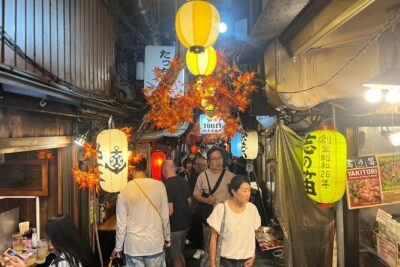
Shinjuku Food Tour (13 Dishes at 4 Local Eateries)
Read our review →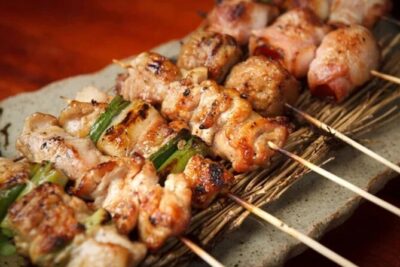
Shinjuku Food Tour (15 Dishes and 4 Eateries)
Read our review →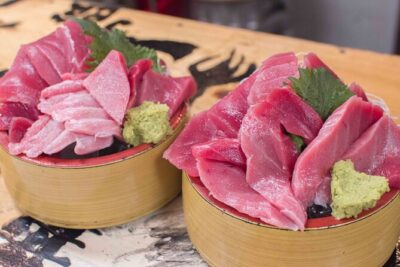
Best of Shinjuku: Izakaya Food Tour (4 Stops, 14+ Tastings)
Read our review →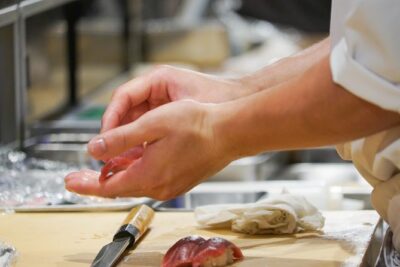
Tokyo Night Foodie Tour in Shinjuku – Seasonal Sushi, Wagyu Beef
Read our review →
Eat and Drink Like a Local: Tokyo Ueno Food Tour-Taverns&Ramen
Read our review →
Tsukiji Fish Market: Street Food & Culture Walking Tour
Read our review →Shinjuku Food Tour – 15 Dishes, 3 Drinks, 4 Eateries
Read our review →Browse the lists this tour appears in