
Reviewed · JAPANESE COOKING CLASSES
Experience Big soba knife Soba Making Class in Tokyo Kappabashi
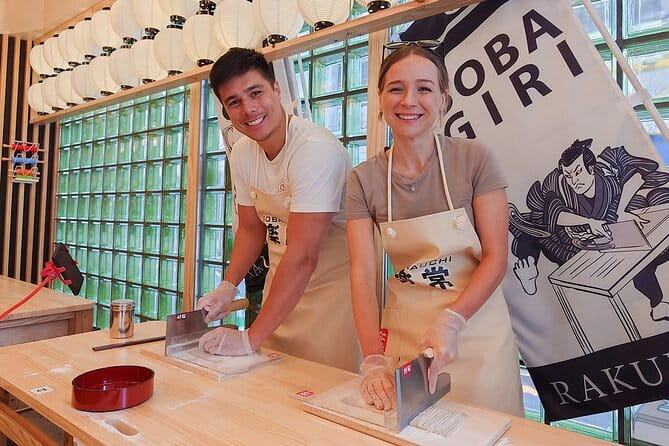
Making soba with a large traditional soba knife is the heart of this short Tokyo class. At Open Kitchen Studio in Kappabashi, you work with Nagano buckwheat flour, shape the dough through four clear steps, and finish by cutting long noodles with a tool that feels far more serious than an ordinary kitchen knife.
I like two things right away: you get to eat the noodles you made, and the class stays small, with no more than 15 people. The instructor keeps the process organized and playful, using gestures and demonstrations well even when English is limited. The main consideration is timing: 50 minutes goes by quickly, so this is an introduction rather than a full lesson in the craft.
In This Review
- What makes this class worth your time
- Kappabashi puts your noodle lesson in the right place
- Four steps turn flour and water into soba
- The large knife makes the short class memorable
- Your handmade noodles become the best part of lunch
- Matcha soba and sake add a local twist
- The 50-minute format suits a busy Asakusa day
- Who will get the most from this soba class
- Is $51.33 a fair price?
- Practical planning before you book
- My verdict: book it for the experience, not just the noodles
- FAQ
- Where does the soba-making class take place?
- How long does the experience last?
- What steps will I learn?
- Can I eat the soba I make?
- Can I take the noodles home?
- Are aprons and gloves provided?
- Is the class suitable for someone with a buckwheat allergy?
- How many people can join the class?
- Are there extra-cost menu options?
What makes this class worth your time
- A real Kappabashi setting: You make soba in Tokyo’s famous kitchen-equipment district, about 25 minutes from Sensoji Temple.
- Four practical steps: You add water, knead, stretch, and cut the dough in roughly 30 minutes of instruction.
- The big knife is part of the fun: You use a special soba-cutting knife to create thin, long noodles.
- Your work becomes a meal: The chef cooks the noodles so you can taste what you made.
- Useful for families and couples: Aprons and gloves come in different sizes, and the open ground-floor space can accommodate groups.
- Optional extras are available: You can add matcha soba for 700 yen or a three-sake comparison for 1,500 yen.
Kappabashi puts your noodle lesson in the right place
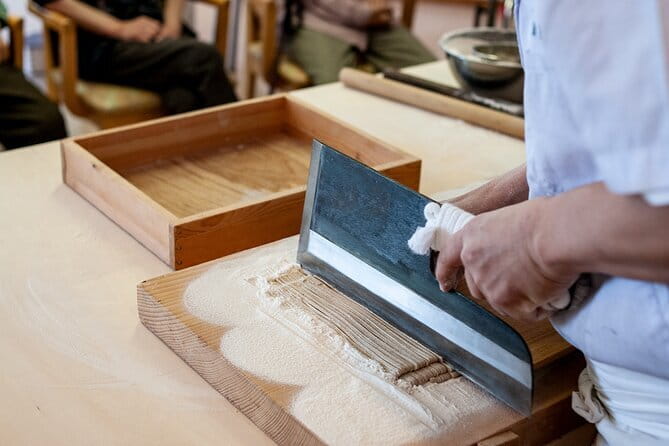
Kappabashi, also called Kappabashi Dogugai, is Tokyo’s kitchen town. Its specialty shops supply restaurants and home cooks with tools, dishes, knives, plastic food displays, and other cooking equipment. That makes this a better setting for a food lesson than a generic classroom.
The meeting point is at Matsugaya Center Building in Taito City, near Asakusa. The activity begins and ends there, so you can pair it with time at Sensoji Temple or a walk along Kappabashi Street before or after class.
The studio is about 25 minutes from Sensoji Temple. That distance matters when you plan your day. You can visit the temple first, walk toward Kappabashi, make soba, and then continue browsing the cooking shops. The class itself does not provide a separate walking tour of the district, so allow extra time if you want to shop or look around.
Kappabashi gives the activity a useful sense of place. You are not simply making noodles in a room somewhere in Tokyo. You are doing it in the part of town where professional cooks come to source the tools of their trade.
More cooking classes in Tokyo:
- Ramen & Gyoza Cooking Class in Tokyo with Local Supermarket Visit
★ 5.0 · 823 reviews - Tokyo: Easy Ramen Cooking Experience in Kabukicho, Shinjuku
★ 4.6 · 321 reviews - Ramen and Sushi Cooking Class with Sake Pairing Set in Tokyo
★ 5.0 · 291 reviews
Four steps turn flour and water into soba
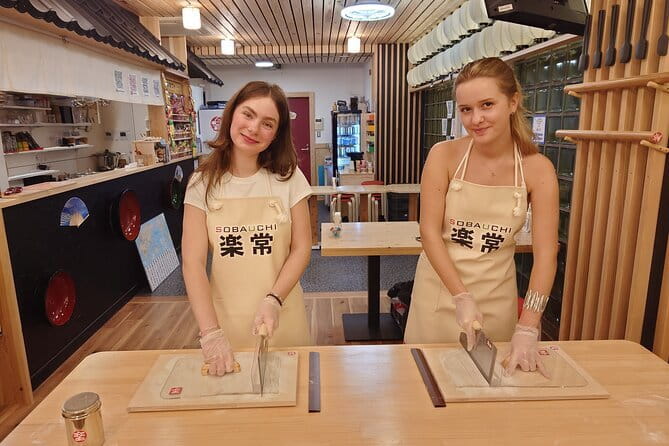
The lesson uses buckwheat flour from Nagano Prefecture and follows four main stages. The work is done by hand, with the instructor showing you what to do before you try it yourself.
First comes adding water. This sounds simple, but the amount and distribution of water affect the dough. The class presents the task in a clear, practical way rather than asking you to memorize a long explanation.
Next, you knead the mixture. This is where the dry flour begins to become a workable mass. Soba dough does not behave exactly like wheat dough, and the class gives you a quick chance to feel that difference for yourself.
You then stretch the dough. The goal is an even sheet that can be folded and cut. In a 30-minute lesson, you will not become a master soba maker, but you will see why consistency matters.
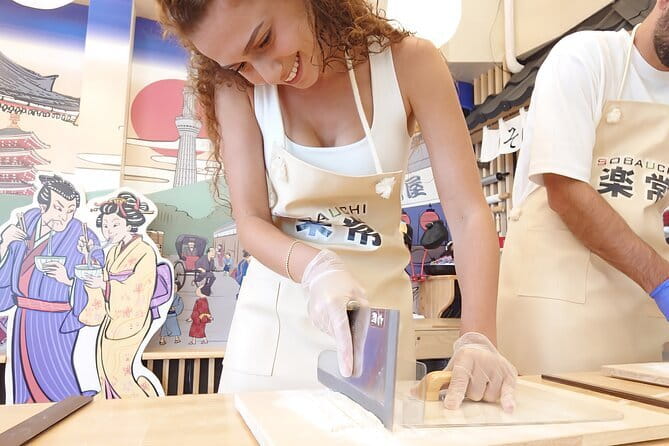
The final step is cutting. This is the moment most people remember. You use a large knife designed for soba and work toward long, thin strands. It is an unusual kitchen tool, and it gives the activity a stronger connection to Japanese noodle-making than simply mixing ingredients in a bowl.
The class describes its method as smart technology, but the key point is hands-on simplicity. The noodle-making itself uses flour, water, traditional tools, and your own effort. The process also avoids dependence on electricity, which gives the activity a low-tech, old-fashioned feel.
The large knife makes the short class memorable
Many cooking classes give you familiar tools. This one gives you a soba knife that immediately changes the mood of the room. It is large, purpose-built, and used to slice the folded dough into narrow strands.
You should expect the instructor to guide your hand and show the correct motion. The available feedback suggests that the teaching is structured and easy to follow, with demonstrations doing much of the work when language is not enough. The instructor is not identified by name, so you should not book this expecting a named celebrity chef or a lecture from a famous specialist.
Instead, the appeal is direct participation. You handle the dough, try the techniques, and see the noodles take shape. The instructor’s style is described as funny and generous, with a talent for making the process feel approachable. That matters in a class where a nervous first attempt at cutting can otherwise feel awkward.
Because the class is short, pay close attention during the demonstration. You will have time to try each stage, but not much time for repeated experiments or detailed troubleshooting. If you want a slow, highly technical soba apprenticeship, this is not it. If you want a lively first look at the craft, the pace works well.
Your handmade noodles become the best part of lunch
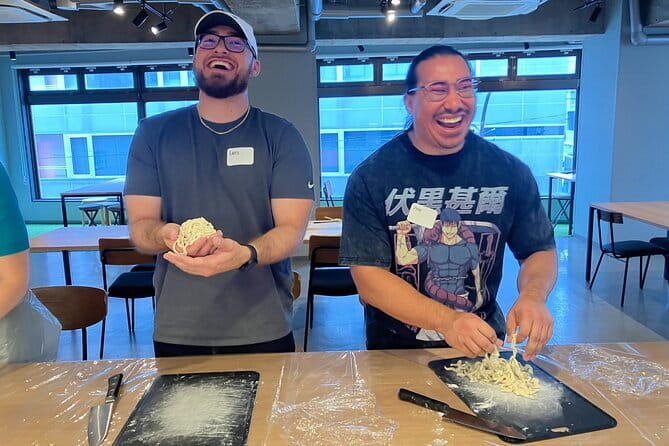
At the end, the chef cooks the soba you cut. You can eat it as a meal or a snack, depending on the portion and your plans for the day. This finish gives the lesson a clear payoff: you do not leave with a handful of uncooked dough and a vague memory of what it might taste like.
The food is not just a sample added to the booking. It is the result of your work. That makes uneven noodles part of the story rather than a problem. Some strands may be thinner or thicker than others, but you can still see how the cutting stage affects the final bowl.
The class also offers different flavors for the noodles. The supplied details do not list each standard flavor, so you should ask at the studio if a specific taste matters to you. A vegan or no-pork flavor choice costs an additional 500 yen.
You may also take out the noodles you made. That is useful if you are already full, if you have plans for lunch afterward, or if you want to share the result with someone who did not join the class. The activity includes a snack tasting, but the exact takeaway arrangements and portions are best confirmed at the studio.
A few more Tokyo bookings worth comparing
- Sushi Making Tokyo Roll and Authentic Japanese Sushi Class
★ 5.0 · 3,971 reviews - Tokyo: Roll and Authentic Sushi Making Class in Asakusa
★ 4.9 · 1,957 reviews - Tokyo Shinjuku Chopsticks Making Class
★ 5.0 · 1,763 reviews - Tokyo: Sushi Making Class in a Happi Coat near a Famous Spot
★ 4.9 · 1,377 reviews
Matcha soba and sake add a local twist
For an additional 700 yen, you can make matcha soba by mixing green tea into the soba flour. This option changes the flavor and color of the noodles while keeping the same basic activity. It is a good choice if you have already tried plain soba or want a slightly more unusual food memory from Tokyo.
There is also a three-sake option for 1,500 yen. The owner selects the sake for comparison, giving you a chance to taste three styles alongside the noodles. The available information does not specify the brands, serving sizes, or whether the sake option is offered to every age group, so ask before adding it if those details affect your plans.
These extras are optional, not required to enjoy the basic class. I would treat matcha soba as the more natural add-on for families and non-drinkers. The sake comparison suits adults who want to turn a quick noodle lesson into a longer food stop.
The 50-minute format suits a busy Asakusa day
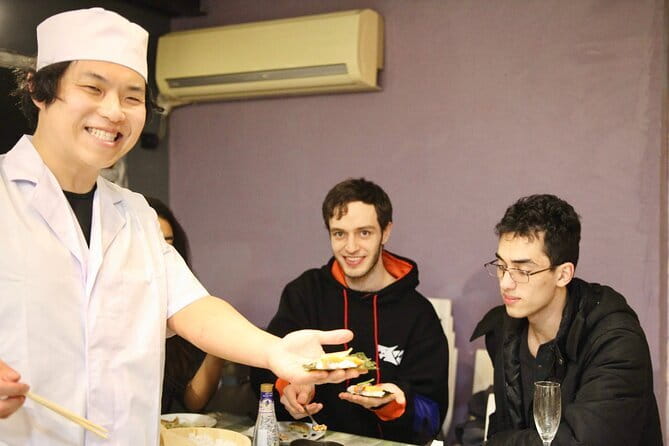
The full experience lasts about 50 minutes. The noodle-making portion is presented as roughly 30 minutes, leaving time for cooking, tasting, and handling the class before you return to the meeting point.
That short format is useful in Tokyo. You can fit it between temple visits, shopping, or other activities without giving up half a day. It also works well for children who may lose interest during a long cooking lesson.
The tradeoff is depth. You will learn the basic sequence, but not every detail of soba production. There is little room for a long introduction to buckwheat, extended practice, or a leisurely meal. Think of the class as a focused taste of the craft.
The small-group limit is 15 people. That is large enough for a social setting but still more manageable than a mass demonstration. The ground-floor restaurant itself can hold up to 30 people, so larger groups may have space to relax around the venue even though this activity is capped at 15 participants.
Who will get the most from this soba class
I would recommend this activity to couples, families with children, and groups of four or more friends. The class is active without being physically demanding, and the final tasting gives children a clear reason to stay engaged.
It also suits anyone curious about Japanese food beyond sushi and ramen. Soba is made from buckwheat, and this lesson lets you see the work behind a food that often arrives at the table looking effortless.
The class may be less suitable if you have a buckwheat allergy. People with buckwheat allergies are not permitted to enter the restaurant, so this is a firm safety restriction rather than a matter of choosing a different menu.
The activity may also frustrate you if you need extensive English instruction. One strong point of the teaching is that demonstrations, humor, and physical guidance help carry the lesson even when the instructor does not speak English. Still, the information provided does not promise an English-speaking guide, interpreter, or translated recipe.
Service animals are allowed, and the studio is near public transportation. Aprons and gloves are supplied in various sizes, which removes some of the usual fuss from a hands-on cooking activity.
Is $51.33 a fair price?
At $51.33 per person, this is not the cheapest way to eat soba in Tokyo. You can buy a bowl of noodles for much less. The value comes from combining a meal or snack with instruction, equipment, a Kappabashi location, and the chance to make the noodles yourself.
The price includes all fees and taxes, the soba tasting, and the use of aprons and gloves. You are paying for an activity rather than only for food. For a first visit to Tokyo, that can be worthwhile because the class adds context to a familiar Japanese dish.
The value is strongest if you enjoy doing rather than simply watching. If your main goal is a large meal, the price will feel high. If you want a compact cultural activity that fits into an Asakusa schedule and leaves you with a skill to remember, it is easier to justify.
Five or more bookings were made in the previous month, and the class has a maximum of 15 people. Those figures suggest a small operation rather than a large daily attraction, so booking ahead is sensible if your Tokyo dates are fixed.
Practical planning before you book
The activity offers a mobile ticket, which keeps check-in simple. Confirmation arrives at booking. The meeting point is in Tokyo’s Taito City, at 3-chome Matsugaya, and the activity returns to that same location.
Build in enough time to reach Kappabashi. Sensoji Temple is about 25 minutes away, but your exact walking or transit time will depend on where you start and how quickly you move through Asakusa. Do not treat the 50-minute class as including temple sightseeing or shopping.
Cancellation is free up to 24 hours before the local start time. Canceling or changing the booking less than 24 hours ahead does not qualify for a refund, and changes inside that period are not accepted.
For food planning, remember that the class includes tasting the soba you cut, not necessarily a large restaurant meal. If you want a vegan or no-pork flavor, budget another 500 yen. Matcha soba and the sake comparison also cost extra.
My verdict: book it for the experience, not just the noodles
I would book this soba class if you want a short, hands-on activity in Asakusa that connects food with Kappabashi’s cooking culture. The large soba knife, the simple four-step method, and the chance to eat your own noodles give the lesson a clear identity.
It is especially good for families, couples, and friends who prefer a shared activity to another sightseeing stop. The friendly teaching style and small-group limit help, while the 50-minute schedule keeps the commitment modest.
I would skip it if you have a buckwheat allergy, need guaranteed English instruction, or want a long technical cooking course. For everyone else, the price is fair when you count the lesson, the tasting, the equipment, and the location. Add matcha soba if you want something different, and save the sake option for an adults-only food stop.
FAQ
Where does the soba-making class take place?
The class takes place at Open Kitchen Studio in Kappabashi, Tokyo. The meeting point is Japan, 111-0036 Tokyo, Taito City, Matsugaya, 3-chome, at Matsugaya Center Building.
How long does the experience last?
The full activity lasts approximately 50 minutes. The soba-making process itself takes about 30 minutes, followed by cooking and tasting.
What steps will I learn?
You will work through four steps: adding water, kneading the dough, stretching it, and cutting the noodles with a large soba knife.
Can I eat the soba I make?
Yes. The chef cooks the noodles you cut, and tasting them is included. You may eat them as a meal or snack.
Can I take the noodles home?
Yes. You can take out the noodles you made.
Are aprons and gloves provided?
Yes. Aprons and gloves are available in various sizes and are included in the activity.
Is the class suitable for someone with a buckwheat allergy?
No. People with buckwheat allergies are not permitted to enter the restaurant. The soba is made with buckwheat flour from Nagano Prefecture.
How many people can join the class?
The activity has a maximum of 15 participants. The restaurant space itself can accommodate up to 30 people.
Are there extra-cost menu options?
Yes. Matcha soba costs 700 yen, a three-sake comparison costs 1,500 yen, and a vegan or no-pork flavor option has an additional charge of 500 yen.
New on our Tokyo list
- From Tokyo: Mount Fuji & Hakone Full Day Private Tour★ 4.9 · 25 reviews
- Tokyo Spectacular View Day-Cruise in 90 Minutes★ 5.0 · 25 reviews
- Real Tokyo Runner Club : Daikoku Car Meet Night Tour with JDM Car★ 5.0 · 25 reviews
- 2.5 Hour-Guided Cycle Tour in the Central Tokyo★ 5.0 · 25 reviews
- Tokyo: 2-Hour Night Bike Tour of the City’s Hidden Gems★ 4.9 · 25 reviews
- Ramen Making from Scratch +Akihabara Tour –Cooking Class★ 5.0 · 25 reviews
- [Self-Drive] Tokyo & Daikoku Custom Car Driving Tour★ 4.9 · 25 reviews
- Samurai themed Entertainment show in Shinjuku★ 4.5 · 25 reviews
Japanese Cooking Classes, compared.
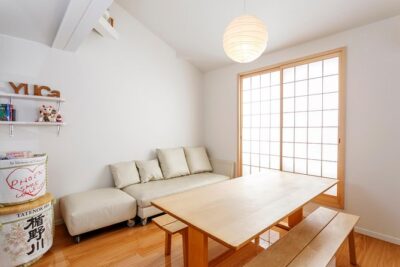
Ramen & Gyoza Cooking Class in Tokyo with Local Supermarket Visit
Read our review →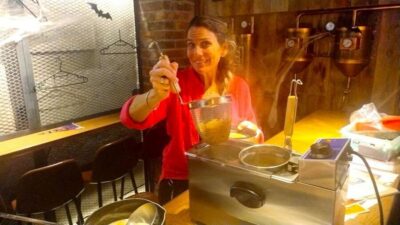
Easy Ramen Cooking Experience in Kabukicho, Shinjuku
Read our review →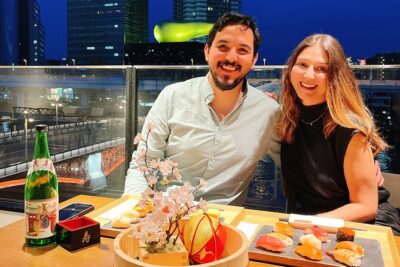
Ramen and Sushi Cooking Class with Sake Pairing Set in Tokyo
Read our review →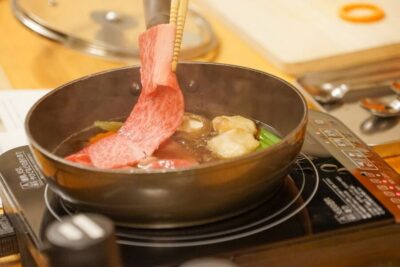
Tokyo Washoku 4-hour Cooking Class: From Market to Table
Read our review →
TokyoSumoShow, ChickenHotPot, and Mochi-Pounding by Pro Wrestlers
Read our review →
Professional Ramen & Gyoza with Ramen Chef in a restaurant!
Read our review →
Small-Group Wagyu Beef and 7 Japanese Dishes Tokyo Cooking Class
Read our review →Browse the lists this tour appears in