
Reviewed · KIMONO EXPERIENCES
Guided Tour of Walking and Photography in Asakusa in kimono
Asakusa becomes a photo studio when you are dressed in a kimono. This four-hour walk combines the practical fun of choosing an outfit with classic Tokyo views, and guide Emiko helps turn a simple rental into a smoother cultural experience. She can take photos and videos with your camera, suggest flattering spots, and explain how the setting fits the clothing.
I like the small group size, limited to seven people, and I like that your guide has both kimono-dressing and domestic travel qualifications. The biggest consideration is timing: dressing, hair styling, walking, and photography fill the four hours quickly. Also, one booking had a serious 45-minute wait after the guide missed the reservation, so confirm details before the day and arrive early.
In This Review
- Key points at a glance
- Why a kimono walk changes your Asakusa visit
- The first hour: choosing a kimono at the shop
- Kaminarimon Gate and the first Asakusa photographs
- Nakamise Shopping Street, with time to browse
- Senso-ji Temple and the five-story pagoda
- Sumida River Terrace and Tokyo Skytree views
- Returning the kimono and the next-day option
- What the $116 price includes
- Who will enjoy this experience most
- Practical tips for a smoother morning or afternoon
- Should you book this Asakusa kimono walk?
- FAQ
- How long does the kimono Asakusa tour last?
- Where do I meet the guide?
- Who is the guide?
- What languages are available?
- Is the kimono rental included?
- Does the guide take photographs?
- Which places does the tour visit?
- Can I keep the kimono after the tour?
- Can I cancel the booking?
Key points at a glance
- Kimono selection takes about one hour, including outfit choice, hair selection, and adjustments.
- Emiko provides personal help, including photo suggestions, cultural context, and assistance with souvenir shopping.
- Classic Asakusa is the backdrop, with Kaminarimon Gate, Nakamise Shopping Street, Senso-ji Temple, and its five-story pagoda.
- Sumida River Terrace adds Tokyo Skytree views, with cherry blossoms included in the planned photo compositions when in season.
- You use your own camera, while the guide takes your pictures and videos for you.
- Next-day kimono return is available as an option, allowing you to keep sightseeing after the guided walk.
Why a kimono walk changes your Asakusa visit
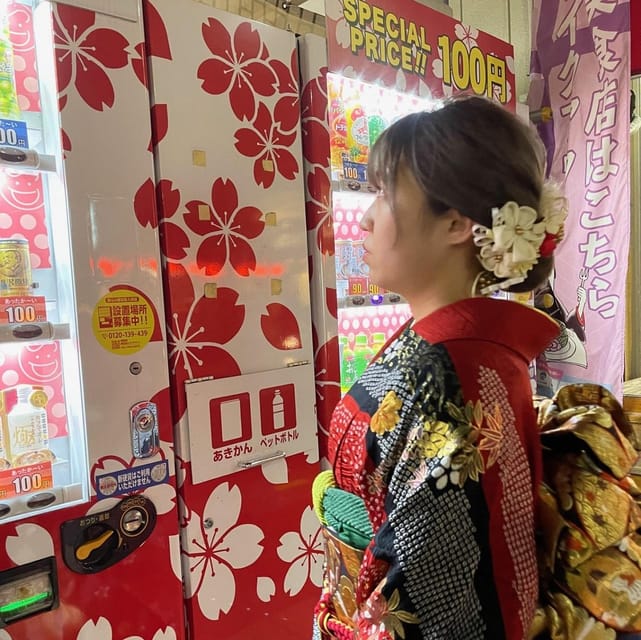
Asakusa is one of Tokyo’s best places for old-style atmosphere. The district gives you temple gates, souvenir stalls, traditional architecture, and broad views toward Tokyo Skytree. Wearing a kimono makes the visit feel less like checking off sights and more like taking part in the scene, even if only for an afternoon.
The appeal is visual, but it is not only visual. A guide who understands both kimono dressing and Japanese culture can explain small choices that are easy to miss on your own, such as how to select an outfit that suits the setting. You are not simply handed a costume and sent outside. The guide helps with the choice, fit, hairstyle, and photo locations.
This is especially useful if you want good pictures but do not want to rely on strangers or a selfie stick. Bring your own phone or camera, and Emiko can take the photos and videos. That simple service matters. It lets you pose together as a couple, include your children, or capture a full outfit without cutting off the sleeves or sandals.
The experience has a rating of 4.3 from five reviews, with four five-star ratings and one one-star rating. The praise centers on Emiko’s kindness, photo skills, cultural explanations, and help with choosing a kimono. The lone poor experience involved a missed reservation and a 45-minute wait, which makes punctual communication worth taking seriously.
More kimono fittings and strolls:
- Let’s make kimono !(Kimono is a gift for you
★ 5.0 · 252 reviews - Tokyo: Matcha and Kimono Experience
★ 4.7 · 219 reviews - Tokyo: Asakusa Kimono Dressing and Matcha Experience
★ 4.9 · 173 reviews
The first hour: choosing a kimono at the shop
Meet at Gate 1 of Asakusa Station on the Ginza Line. Look for the guide holding the company’s orange LightSpeedStar sign. From there, it is about a five-minute walk to the kimono shop.
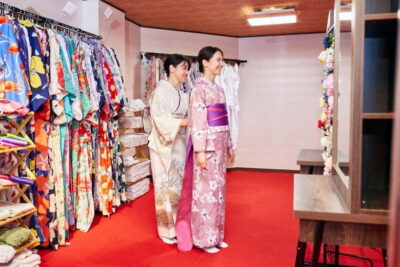
The selection process takes around an hour. You choose the kimono, select a hairstyle, and have the outfit adjusted to fit. The standard kimono fee is included, but optional extras are not. Hair arrangements and other choices may cost more, so ask about the price before adding anything.
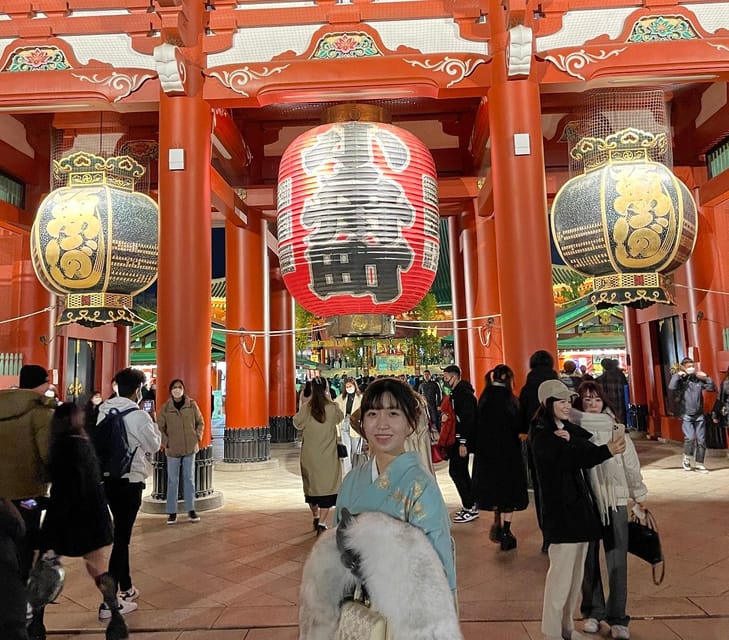
The shop has a range of kimono choices, and Emiko helps you pick an outfit from a Japanese cultural point of view. That guidance is more useful than it may sound. A kimono that looks attractive on a hanger may not produce the best result against temple gates, red lanterns, or river views. Your guide can steer you toward colors and patterns that work well in photographs.
The dressing itself is part of the experience. It is not a quick change into ordinary streetwear, so plan to remain patient while the clothing is fitted. Tight layers and formal footwear may feel unfamiliar, especially for young children. One family found the experience manageable with a two-year-old, and Emiko was praised for being helpful throughout. Still, families should allow extra time and keep expectations flexible.
Men and children can also take part if suitable outfits are available through the booking arrangement. The activity description specifically presents kimono dressing for both women and men, with the clothing intended to give women a cute appearance and men a more masculine look.
Kaminarimon Gate and the first Asakusa photographs
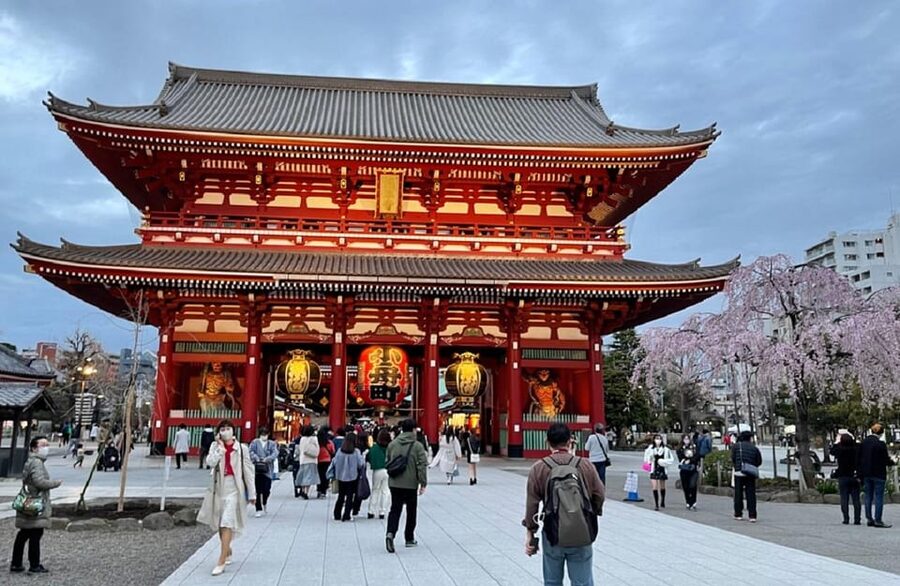
Once dressed, you walk about five minutes to Kaminarimon Gate, the main entrance to Senso-ji. Its full name is Kaminari Gate, but most people know it by the shorter name. The large gate and lantern make an immediate backdrop for kimono photographs.
You have about ten minutes listed for the first visit, but the wider route includes another 30-minute period around Kaminarimon later. This gives you time to take the obvious entrance pictures first and then enjoy the area with fewer demands to pose.
A guide earns their fee here by knowing where to place you. The best photo is not always directly beneath the gate or in the middle of the crowd. Emiko can suggest angles that show the kimono clearly while keeping the gate recognizable behind you. If you are taking pictures with a phone, give her a quick lesson on your camera before leaving the shop.
The gate is also a useful point for checking how the kimono feels outdoors. If your sleeves, footwear, or hair need attention, say so early. You still have several stops ahead, and minor discomfort becomes more noticeable after an hour of walking.
Nakamise Shopping Street, with time to browse
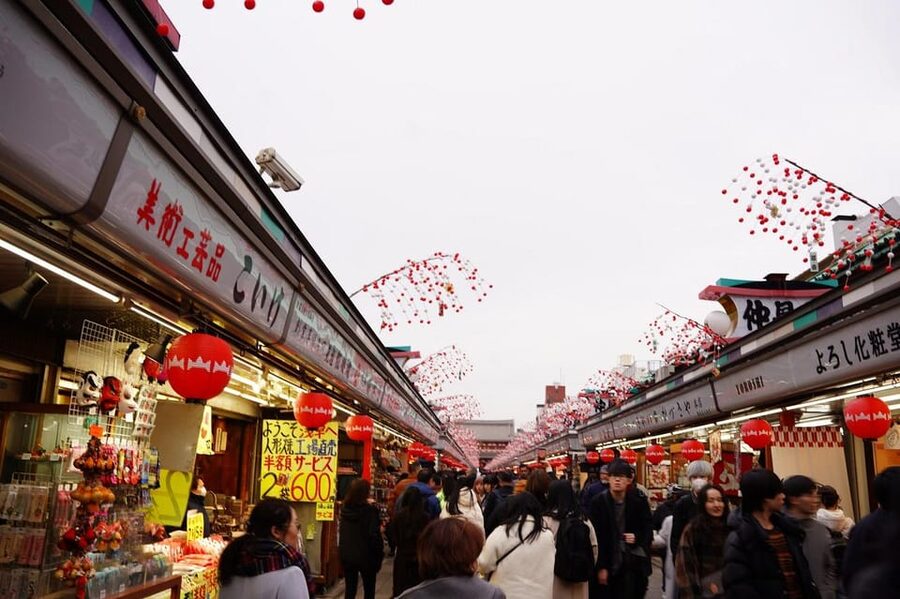
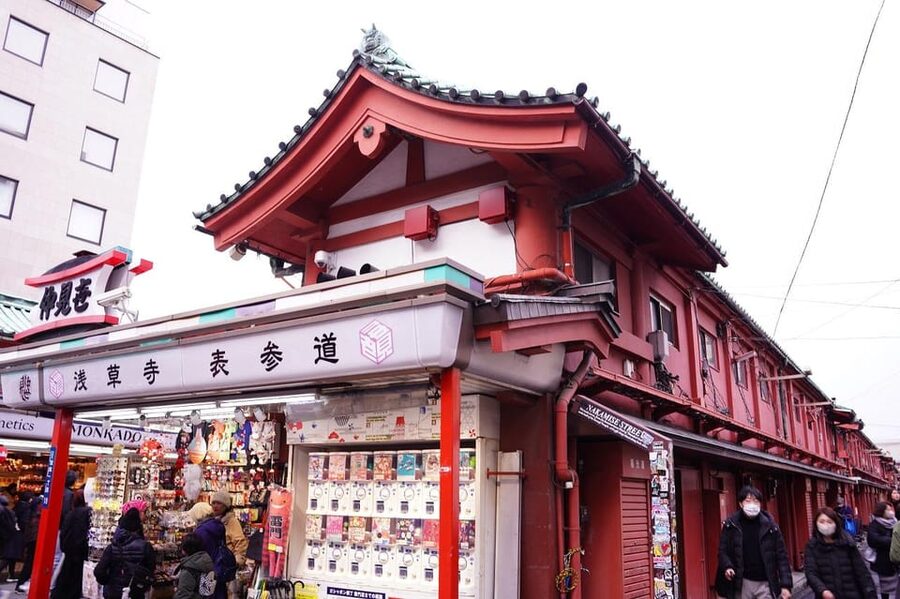
From Kaminarimon, you continue along Nakamise Shopping Street. This old shopping lane leads toward Senso-ji and is lined with established shops, snacks, and souvenirs. The planned visit lasts about 15 minutes, so treat it as a taste rather than a full shopping session.
I would use this section for small purchases and photos, not for a long meal or a serious hunt for gifts. The guide can help with souvenir shopping, which is useful if you want to understand what an item is or need help choosing between similar products.
Kimono sleeves and crowded shopfronts require a little care. Keep your belongings compact, watch the hem of your outfit, and avoid planning a large purchase that you will have to carry for the rest of the walk. Food and drinks are not included, so anything you buy is your own expense.
The street works well photographically because it connects the red gate with the temple precinct. You get a sense of movement from the shop signs and stalls, while the kimono gives your pictures a clear local connection.
More Tokyo photo sessions:
- Tokyo Ryogoku Sumo Morning Practice + Photo Shoot with Wrestlers
★ 4.5 · 277 reviews - Tokyo by Night Photography Tour (Private Option Available)
★ 5.0 · 151 reviews - Tokyo Sumo Morning Practice Tour w/ Ring-Side Seat + Photo Shoot
★ 5.0 · 93 reviews - Tour with Pro Tokyo Photographer and take Edgy Unique Portraits
★ 5.0 · 80 reviews
Senso-ji Temple and the five-story pagoda
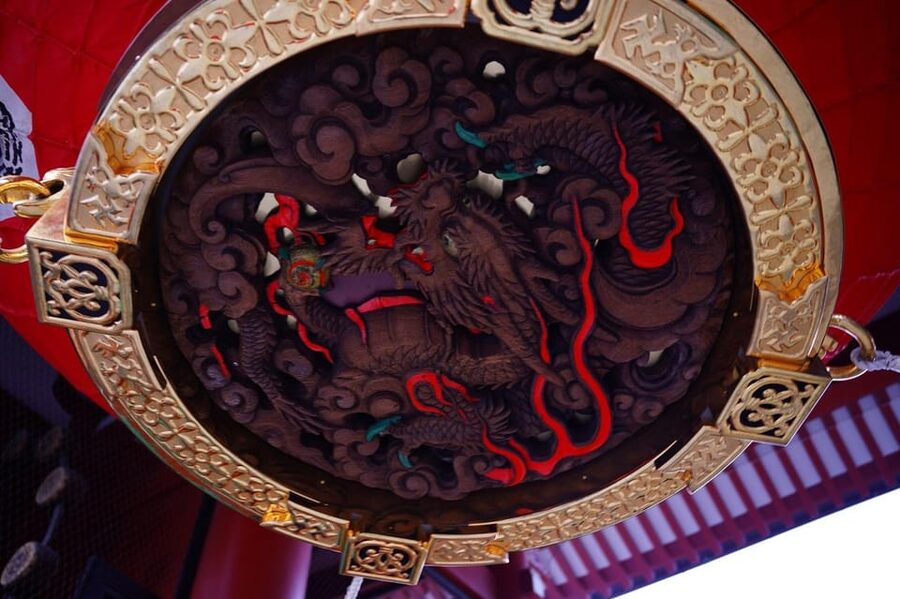
Senso-ji is more than a photo stop. With a history of over 1,000 years, it is the spiritual center of the route and a place where you can offer prayers. The planned visit lasts about 25 minutes, enough to see key features and take pictures, but not enough for a slow, detailed temple study.
Your guide can explain how to behave respectfully and help you understand what you are seeing. This is one reason the tour is better suited to people who want cultural context along with photographs. You still have freedom to look around, but you are not left to guess what matters.
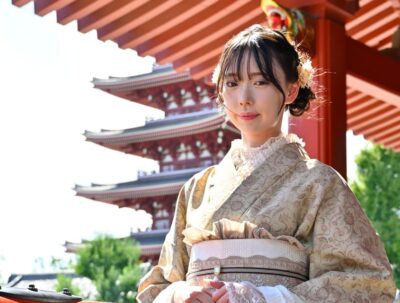
The five-story pagoda is a key Asakusa landmark and an important picture element. From suitable viewpoints, you may frame the pagoda, Senso-ji, and Tokyo Skytree together. That combination brings old and new Tokyo into one image, which is one of the strongest visual reasons to book this walk.
Temple grounds can be busy, and a kimono is not ideal clothing for rushing. Keep your walking pace comfortable and avoid treating every stop as a forced photo session. The best pictures usually come when you have a moment to settle your posture and enjoy the place.
Sumida River Terrace and Tokyo Skytree views
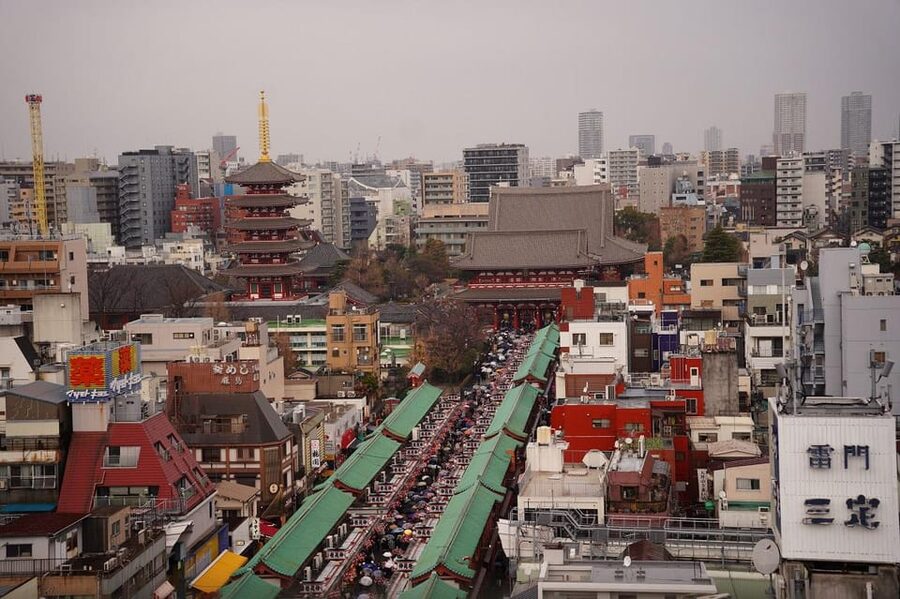
The route then heads to Sumida River Terrace, near the left bank downstream from Shirahige Bridge. The walk is short, around five minutes from the preceding stop, and the photo visit lasts about 30 minutes.
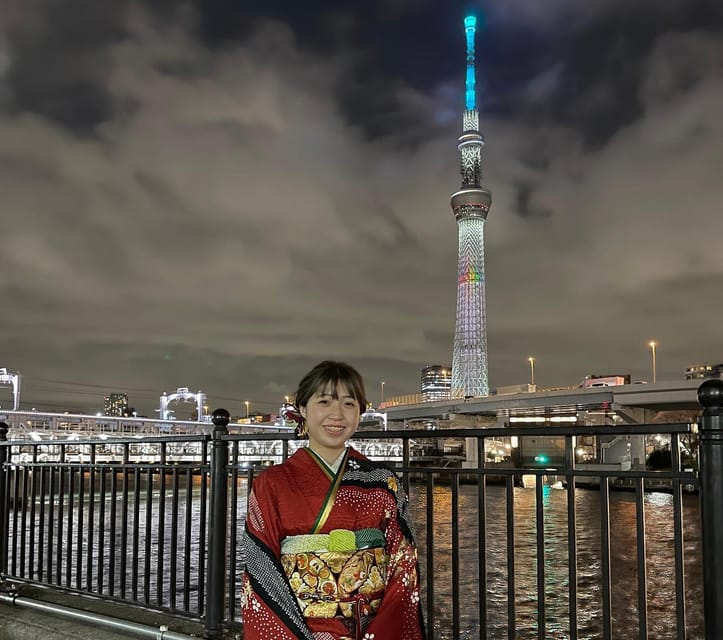
This is the route’s most open setting. Here you can pose with Tokyo Skytree behind you, and cherry blossoms may form part of the background when they are in bloom. The guide specifically plans this location for kimono portraits with the tower and seasonal flowers.
The river terrace provides a useful change from temple gates and narrow shopping streets. It gives the photographer more room to show the entire outfit, including the sleeves and lower layers. It also lets you create pictures that feel different from the standard Senso-ji snapshots.
Cherry blossoms are seasonal, so do not book this experience assuming they will always be present. The Skytree view remains part of the plan, but the flowers depend on your date. Weather can also affect how attractive the outdoor pictures look, and the activity does not promise a weather backup.
Returning the kimono and the next-day option
After the river terrace, you walk back to the kimono shop. The final photo stop is listed at about 15 minutes, followed by a short walk to the end point at Asakusa Station.
The standard plan ends when you return the kimono. If you choose the next-day return option, you can continue sightseeing in the outfit after the guided portion. Emiko can suggest places to visit, but you should check the exact return terms before booking, including the deadline and any extra cost.
This option may be valuable if you want a full day of photographs rather than a concentrated four-hour experience. It also reduces the pressure to fit every picture into the guided route. The tradeoff is that wearing a kimono longer may be tiring, especially for children or anyone unused to formal clothing.
What the $116 price includes
At $116 per person, this is not the cheapest way to rent a kimono in Tokyo. The value comes from combining several services: standard kimono rental, dressing help, a four-hour guided walk, English-language support, cultural explanations, and personal photography.
You also receive the benefit of a small group, with no more than seven participants. That is a reasonable size for a walking tour, though it is not a private photo session. If all seven people need individual portraits at every stop, the schedule may feel tight. Couples, families, or solo visitors who want help taking pictures are likely to get the most from it.
The standard fee does not cover optional kimono upgrades, extra hairstyle choices, entrance charges, transportation, food, drinks, or personal purchases. There are no major paid attractions listed inside the route, but you should still budget for extras at the shop and along Nakamise.
I see the price as fair for someone who values convenience and pictures. It is less compelling if you only want to rent clothing and explore alone. The guide’s help with clothing, poses, cultural details, and camera work is the part that separates this from a basic rental.
Who will enjoy this experience most
I would recommend it to solo visitors who want full-length photographs, couples who want pictures together, and families looking for a structured cultural activity. Emiko’s patient help with a young child is a useful sign for parents, although a four-hour walk in formal clothing still requires some planning.
It also suits first-time visitors to Tokyo who want Asakusa explained in plain terms. You see the district’s major sights without having to work out the route, understand temple etiquette, or find your own photographer.
Photography-minded visitors should bring a camera with enough storage and battery power. The guide takes pictures with your device, so image quality depends partly on the camera you bring. If you want videos as well as still images, tell the guide at the start.
This is not the best pick if you dislike being photographed, need a very relaxed schedule, or want a detailed temple tour lasting several hours. The route gives you a broad Asakusa introduction, with photography as the main purpose.
Practical tips for a smoother morning or afternoon
The meeting point is specific, but Asakusa Station has several exits and can be confusing. Go to Ginza Line Gate 1, not simply the station area, and look for the orange company sign.
Arrive early. No-shows and late arrivals are not refunded, and one serious scheduling problem resulted in a 45-minute wait. The guide is expected to contact you about seven days before the tour to discuss the kimono. Use the company’s WhatsApp contact if you need to confirm the meeting details.
Wear clothing that makes changing easy, and avoid carrying a large bag. The provided information does not specify shoe style, weather arrangements, or the exact kimono return time, so ask these questions before the tour.
The activity is wheelchair accessible, but the route includes walking between several stops and a kimono dressing process. If you use a wheelchair, contact the provider in advance to confirm how the shop and walking sections will be handled on your date.
The tour is offered in English, Chinese, and Japanese. Check the selected language when booking, since the level of explanation and ease of communication can shape the experience.
Should you book this Asakusa kimono walk?
Book it if you want attractive Tokyo photographs, a helpful guide, and a simple introduction to Asakusa in one organized outing. Emiko’s assistance with kimono selection, hair, cultural details, posing, and camera work is the strongest reason to choose it.
Think twice if your main goal is low-cost sightseeing, independent temple exploration, or a long shopping session. The four hours include about an hour of dressing, and optional shop services cost extra. Confirm your reservation several days ahead, arrive at Gate 1 early, and ask about the kimono return option if you want to keep exploring.
For a first Tokyo visit, a family outing, or a special couple’s afternoon, this offers a memorable way to see Asakusa. Just treat it as a guided photo experience with cultural stops, not as an in-depth temple tour.
FAQ
How long does the kimono Asakusa tour last?
The activity lasts four hours, including kimono dressing, sightseeing, photography, and returning the outfit to the shop.
Where do I meet the guide?
Meet at Gate 1 of Asakusa Station on the Ginza Line. The guide will hold a sign with the LightSpeedStar logo, which is orange.
Who is the guide?
The guide may be Emiko, who has been praised for helping with kimono selection, cultural explanations, photography, food suggestions, and souvenir shopping. The activity is led by a qualified domestic travel itinerary managing supervisor.
What languages are available?
Live guiding is available in English, Chinese, and Japanese.
Is the kimono rental included?
The fixed standard kimono fee is included. Optional kimono choices, hairstyle options, or other upgrades are not included.
Does the guide take photographs?
Yes. The guide can take photos with your camera. The experience also includes opportunities for videos, according to the activity information and guest experience.
Which places does the tour visit?
The route includes Kaminarimon Gate, Nakamise Shopping Street, Senso-ji Temple, the five-story pagoda area, and Sumida River Terrace near Shirahige Bridge.
Can I keep the kimono after the tour?
A next-day return option is available if selected. This allows you to continue sightseeing in the kimono, and the guide can suggest places to visit.
Can I cancel the booking?
You can cancel up to 24 hours in advance for a full refund. No refunds are provided for a no-show or late arrival.
More Walking Tours in Tokyo
- Tokyo Tsukiji Fish Market Food and Culture Walking Tour
★ 5.0 · 3,184 reviews - Tokyo: Imperial Palace and Shogun Historical Walking Tour
★ 5.0 · 2,251 reviews - Tokyo: Shinjuku Local Bar and Izakaya Guided Walking Tour
★ 4.9 · 1,794 reviews - Tokyo: Tsukiji Fish Market Food and Walking tour
★ 5.0 · 1,724 reviews
More Asakusa Visits
- Tokyo: Japanese Dance Cabaret Theater Asakusa-Kaguwa Ticket
★ 4.8 · 2,270 reviews - Tokyo: Meiji Shrine, Asakusa, Skytree Bus Tour and Cruise
★ 4.7 · 1,986 reviews - Tokyo: Roll and Authentic Sushi Making Class in Asakusa
★ 4.9 · 1,957 reviews - Tokyo: Asakusa Walking Tour with Sensoji Temple Visit
★ 4.8 · 1,583 reviews
New on our Tokyo list
- Sumi-e Experience in a relaxing green tea shop in Tokyo★ 5.0 · 3 reviews
- Tokyo : Kamikaze Street Drift Ride★ 5.0 · 3 reviews
- Private Zen Meditation in English in Shinjuku, Tokyo★ 5.0 · 3 reviews
- Onsen Spa in Tokyo and Asakusa Bar Hopping with Local Guide★ 5.0 · 3 reviews
- Easy for everyone! Now you can play handmade mini shamisen and show off to everyone! Musical instruments, sweets and live music★ 5.0 · 3 reviews
- Tokyo: Private Tsukiji Street Food & Sake with Local Guide★ 5.0 · 3 reviews
- Mt Fuji Exploration Tour with Free Japanese Kusa Mochi from Tokyo★ 4.5 · 3 reviews
- Tokyo Tsukiji Fish Market Walking and Exploring Hidden Gems Tour★ 5.0 · 3 reviews
Kimono Experiences, compared.

Tokyo Asakusa: Traditional Kimono Rental Experience at Wargo
Read our review →
Tokyo Asakusa: Miu Kimono Rental and Optional Photoshoot
Read our review →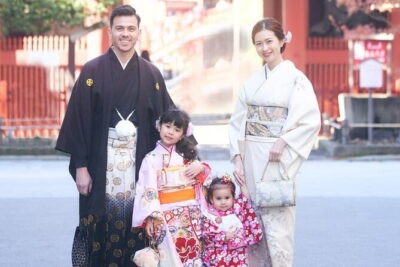
Tokyo Authentic Kimono Rental in Asakusa with Photography Option
Read our review →Browse the lists this tour appears in