
Reviewed · JAPANESE COOKING CLASSES
Gyoza Making from Scratch- Tokyo Ultimate Cooking Class
The best part of this Tokyo class is the side-by-side taste test: you make gyoza wrappers from scratch, then fold and cook them beside dumplings made with store-bought wrappers. I like that you learn a real kitchen skill, not just assemble a souvenir dish. I also like the patient, step-by-step format, with soup, a side dish, and several dipping sauces rounding out the meal.
The main consideration is time. At about 1 hour 50 minutes, this is a focused introduction rather than a long culinary workshop. The class costs $92.24 per person, so it makes the most sense if you want guided instruction, a full meal, an English recipe, and photos, rather than simply a quick dumpling demonstration.
In This Review
- Key points at a glance
- Why this gyoza class is more than a dumpling meal
- Step one: making the filling and learning the juicy texture
- Step two: kneading your own wrappers
- Step three: folding gyoza without panic
- Step four: pan-frying yaki-gyoza
- Soup and a side dish complete the meal
- The Patia Kitchen setting in central Tokyo
- Is $92.24 a fair price?
- Who will enjoy this class most?
- Practical details that affect your decision
- Should you book the Tokyo gyoza class?
- FAQ
- How long does the gyoza cooking class last?
- Where does the class take place?
- What food will I prepare?
- Can I request chicken instead of pork?
- Is the class taught in English?
- Are meals included?
- What happens if I need to cancel?
Key points at a glance
- Fresh dough makes the comparison worthwhile: You knead your own wrappers and compare their taste and texture with store-bought ones.
- The filling lesson goes beyond mixing ingredients: The instructor explains how to make juicy gyoza filling.
- You practice several useful techniques: Folding, pan-frying, soup preparation, and side-dish preparation are all part of the session.
- The class stays manageable: The maximum group size is 12 people, with an English-speaking instructor guiding the work.
- The location fits a Tokyo sightseeing day: The Patia Kitchen studio is in central Tokyo and near public transportation.
- You leave with more than a full stomach: An English recipe and downloadable class photos help you repeat the experience at home.
Why this gyoza class is more than a dumpling meal
Gyoza look simple on the plate, but the small details matter. The wrapper needs the right thickness. The filling needs enough moisture to stay juicy without making the dumpling difficult to close. The pan needs the right balance of heat and liquid so the bottoms brown while the tops steam.
This class gives you a useful look at each part. You begin with fresh ingredients and make the filling yourself. Then you work with dough, fold the dumplings, and cook them as yaki-gyoza, the familiar pan-fried style.
I like this structure because it lets you compare results instead of accepting every technique on faith. Handmade wrappers and packaged wrappers behave differently. You get to taste and feel that difference at the same meal, which is far more useful than hearing a short explanation and moving on.
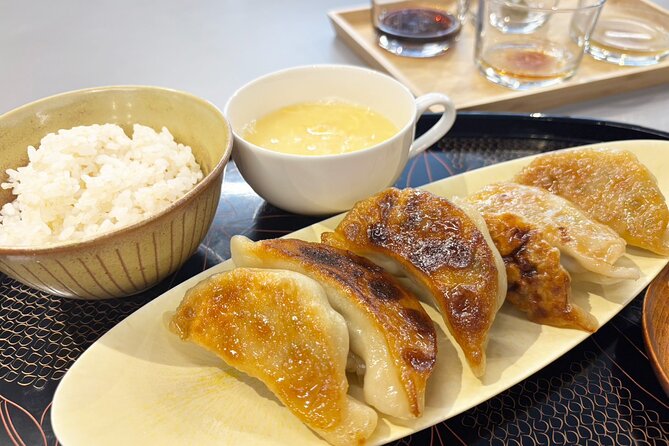
The food is also the point of the class, not just a reward at the end. You prepare soup and a side dish, then eat the gyoza with several dipping sauces. That gives the meal a broader Japanese cooking context while keeping gyoza at center stage.
More cooking classes in Tokyo:
- Ramen & Gyoza Cooking Class in Tokyo with Local Supermarket Visit
★ 5.0 · 823 reviews - Tokyo: Easy Ramen Cooking Experience in Kabukicho, Shinjuku
★ 4.6 · 321 reviews - Ramen and Sushi Cooking Class with Sake Pairing Set in Tokyo
★ 5.0 · 291 reviews
Step one: making the filling and learning the juicy texture
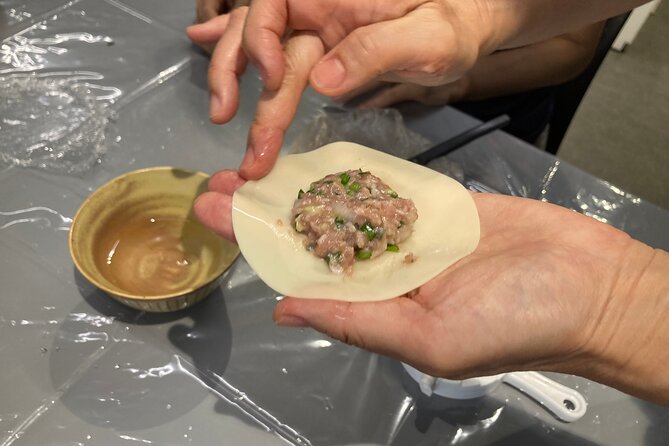
The class starts with the core of the dumpling, its filling. You use fresh ingredients and learn the method for keeping the mixture juicy after cooking.
That lesson is especially valuable for home cooks. Dry gyoza are disappointing, and an overly wet filling can make folding frustrating. The instructor guides you through the process step by step, so you can see how the mixture should come together before it goes inside the wrapper.
The filling is pork by default. If you prefer chicken, you can request a chicken filling more than 48 hours before the class. That deadline matters, so make the request early rather than assuming it can be changed on the day.
The available information does not specify the exact ingredients or seasoning, so you should not expect a full menu preview before booking. What is clear is that the class teaches the principle behind juicy gyoza, a technique you can use again with different fillings at home.
Step two: kneading your own wrappers
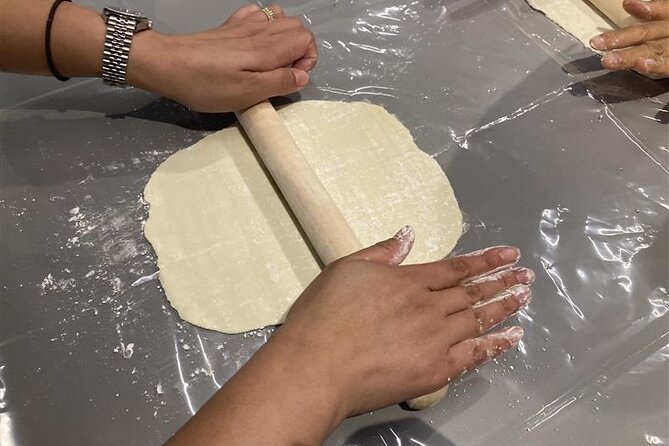
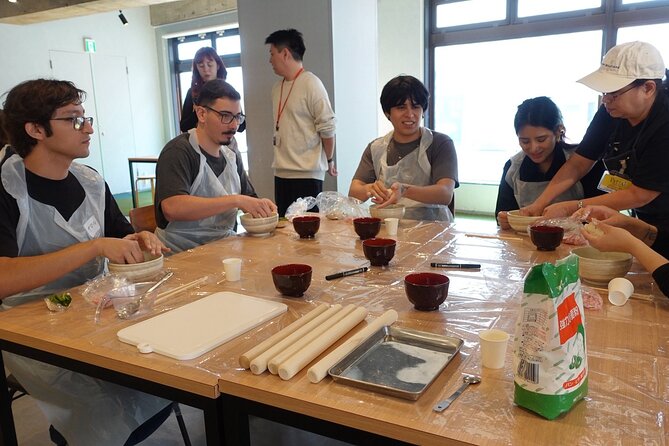
Next comes the part many casual cooking demonstrations skip: making the wrappers. You work with dough from the beginning, rather than opening a packet and going straight to folding.
This takes more attention than it may seem. Even wrappers need enough consistency to hold filling, close cleanly, and cook without falling apart. The instructor helps you through the process, making the lesson suitable for a wide age range, from young children to seniors.
You should expect some hands-on work here. That is the appeal, but it also means this is not the best choice if you want to sit back and watch. The class is built around participation, and the dough portion is one of the clearest examples.
The reward comes during the tasting. You cook your handmade wrappers alongside store-bought wrappers and compare the taste and texture. This is a practical test you can remember when shopping for ingredients back home. Sometimes convenience wins. Sometimes the extra effort changes the result. Here, you get to make that judgment yourself.
Step three: folding gyoza without panic
Folding is often the moment when a cooking class earns its keep. A gyoza may look tidy when made by an experienced cook, but the first few can be uneven, loose, or overfilled.
The English-speaking instructor demonstrates folding techniques and takes you through the process step by step. You are not expected to arrive with experience, and the class is designed for all age groups.
The focus is not only on making a pretty dumpling. A proper fold helps keep the filling inside during cooking and gives the dumpling a useful shape for pan-frying. You may find that the first few take longer, while later ones become quicker and more regular.
With a maximum of 12 people, the group is not tiny, but it is limited enough to keep the class from feeling like a large cooking show. The exact amount of individual help can vary, yet the small-group cap is a useful sign for anyone who wants actual practice.
A few more Tokyo bookings worth comparing
- Sushi Making Tokyo Roll and Authentic Japanese Sushi Class
★ 5.0 · 3,971 reviews - Tokyo: Roll and Authentic Sushi Making Class in Asakusa
★ 4.9 · 1,957 reviews - Tokyo Shinjuku Chopsticks Making Class
★ 5.0 · 1,763 reviews - Tokyo: Sushi Making Class in a Happi Coat near a Famous Spot
★ 4.9 · 1,377 reviews
Step four: pan-frying yaki-gyoza
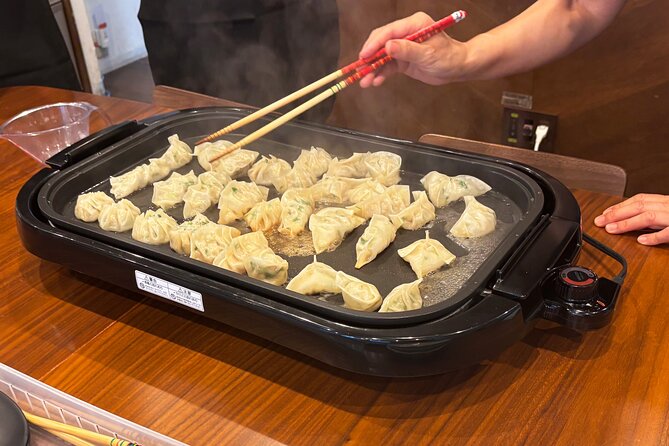
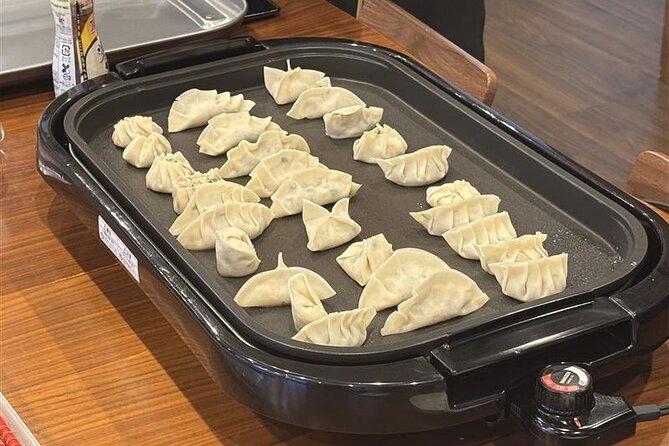
The class cooks pan-fried gyoza, known as yaki-gyoza. This is the style many people picture first: browned on the bottom, tender above, and ready for dipping.
Cooking is where the earlier lessons come together. The filling must cook through. The wrapper must hold. The bottom needs color without burning. Handmade and store-bought wrappers may also respond differently in the pan, making the comparison more than a visual exercise.
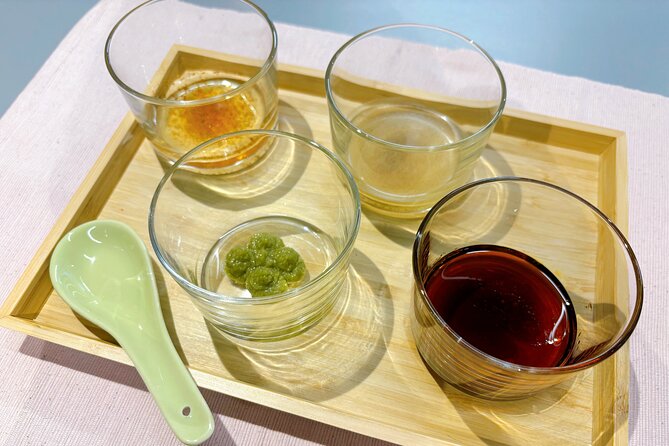
You can then try the finished dumplings with several dipping sauces. This is a small but important detail. A single sauce can dominate the dish, while different sauces show how seasoning changes your perception of the filling and wrapper.
The class does not promise a restaurant-style presentation or an elaborate chef-led performance. Its value is more grounded. You make the food, cook it yourself, and sit down to eat the result.
Soup and a side dish complete the meal
Gyoza alone can make a satisfying snack, but the soup and side dish make this feel like a proper meal. You learn how to prepare both as part of the session, then enjoy them with your dumplings.
I like this addition because it keeps the class from becoming narrowly focused on folding. You get a better sense of how gyoza can fit into a Japanese home meal, with more than one item on the table.
The information provided does not name the soup or side dish, so you should book this for the cooking experience rather than a specific menu. If you need to plan around dietary restrictions, ask the provider before booking, since no full ingredient or allergy policy is supplied here.
Meals are included in the price. You are not paying for a lesson and then buying lunch separately, which helps the $92.24 cost make more sense.
The Patia Kitchen setting in central Tokyo
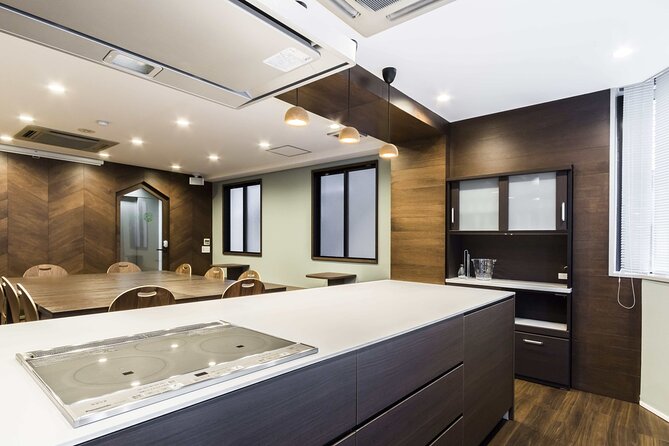
The class takes place at a modern, stylish Patia Kitchen studio in central Tokyo. The kitchens are described as spacious and fully equipped, a practical advantage when several people are working with dough, fillings, pans, and dishes at once.
The central location also makes this easy to pair with other sightseeing. The studio is near public transportation, and the activity starts and ends at the meeting point. There is no hotel pickup or drop-off, so you need to make your own way there and allow enough time to find the studio.
A mobile ticket keeps the arrival process simple. Still, central Tokyo has many stations and exits, so check the meeting details carefully before leaving your hotel. The booking is confirmed at the time of purchase, which gives you the basic information needed to plan the day.
Because the class lasts less than two hours, it can fit neatly between other plans. Give yourself extra time on both sides for transport and for the possibility that you will want to linger over the meal. Do not treat the published duration as the length of your entire door-to-door outing.
Is $92.24 a fair price?
At $92.24 per person, this is not a budget meal. You can buy gyoza cheaply in Tokyo, and you can likely find cooking demonstrations that cost less.
The comparison changes once you count what is included. You receive the cooking experience, the meal, instruction in several techniques, an English recipe, and downloadable photos from the class. You also make two types of wrappers and compare them at the table, which gives the session an educational purpose beyond eating.
The class is a better value for you if you want to recreate gyoza at home. The recipe gives you a reference after the trip, while the hands-on practice helps you remember the feel of the dough and the steps for folding and cooking.
It is less compelling if your main goal is simply to taste gyoza in Tokyo. For that, a restaurant meal will cost less and take less time. You are paying here for access to a kitchen, guidance, ingredients, and the chance to make the dish yourself.
The class is booked an average of 35 days ahead, so plan early if your Tokyo schedule is fixed. That lead time is also a useful clue about demand. I would not wait until the last few days, especially if you need chicken filling or have only one open morning or afternoon.
Who will enjoy this class most?
This is a strong match for first-time visitors who want an activity with a clear Japanese food connection. Gyoza are familiar enough to feel approachable, yet the process has enough technique to keep the class interesting.
Families can also consider it. The class is described as suitable for all age groups, including young children and seniors. The hands-on format gives different ages a way to take part, though adults should still decide what suits their own children.
You will likely enjoy it most if you like practical souvenirs. Instead of bringing home another small object, you leave with a recipe and a method you can use in your own kitchen.
It also suits couples, friends, and solo participants who prefer a structured activity. The group cap of 12 keeps it from being a huge event, while the English instruction removes the need to navigate the lesson through translation.
This is not the ideal pick if you want a private class, a named chef, a long menu, or a deep look at regional Japanese cuisine. None of those features is promised. The class stays focused on gyoza and a few supporting dishes.
Practical details that affect your decision
The session lasts about 1 hour 50 minutes. That is long enough to cover dough, filling, folding, cooking, soup, a side dish, sauces, and the meal, but short enough to fit into a busy sightseeing plan.
The class ends back at the meeting point. Since transportation is not included, use a mobile ticket and plan to reach the central Tokyo studio independently.
English instruction is provided, and an English recipe is sent for home use. Photos taken during the experience are available for later download, giving you a record of the class without requiring you to stop cooking to take pictures.
Free cancellation is available up to 24 hours before the start time for a full refund. Changes or cancellations made less than 24 hours ahead are not accepted and are not refunded. The activity also requires a minimum number of participants, and if that minimum is not reached, you are offered another date or experience, or a full refund.
Should you book the Tokyo gyoza class?
Book it if you want to learn a dish you can repeat, prefer doing rather than watching, and value a complete meal with English instruction. The handmade versus store-bought wrapper comparison is the most useful feature, and the patient teaching style makes the class approachable for beginners.
Think twice if $92.24 feels high for a short activity or if you only want to eat gyoza. A restaurant will be cheaper and faster.
For most food-focused Tokyo visitors, I would book this in advance, especially if you want chicken filling or have limited schedule flexibility. It gives you a clear two-hour activity, real kitchen practice, and a recipe that can keep the memory going after you leave Japan.
FAQ
How long does the gyoza cooking class last?
The experience lasts approximately 1 hour and 50 minutes.
Where does the class take place?
The class takes place at a Patia Kitchen studio in central Tokyo. The studio is near public transportation.
What food will I prepare?
You will make gyoza filling and wrappers from scratch, fold and pan-fry the dumplings, and prepare soup and a side dish. You will also enjoy the gyoza with several dipping sauces.
Can I request chicken instead of pork?
Yes. Chicken filling is available upon request if you notify the provider more than 48 hours in advance. Pork is the standard filling.
Is the class taught in English?
Yes. An English-speaking instructor guides you through the cooking steps, and you receive an English recipe afterward.
Are meals included?
Yes. Meals are included in the experience price.
What happens if I need to cancel?
You can cancel up to 24 hours before the start time for a full refund. Cancellations or changes made less than 24 hours before the experience are not accepted and are not refunded.
New on our Tokyo list
- From Tokyo: Mount Fuji & Hakone Full Day Private Tour★ 4.9 · 25 reviews
- Tokyo Spectacular View Day-Cruise in 90 Minutes★ 5.0 · 25 reviews
- Real Tokyo Runner Club : Daikoku Car Meet Night Tour with JDM Car★ 5.0 · 25 reviews
- 2.5 Hour-Guided Cycle Tour in the Central Tokyo★ 5.0 · 25 reviews
- Ramen Making from Scratch +Akihabara Tour –Cooking Class★ 5.0 · 25 reviews
- [Self-Drive] Tokyo & Daikoku Custom Car Driving Tour★ 4.9 · 25 reviews
- Tokyo: 2-Hour Night Bike Tour of the City’s Hidden Gems★ 4.9 · 25 reviews
- Samurai themed Entertainment show in Shinjuku★ 4.5 · 25 reviews
Japanese Cooking Classes, compared.
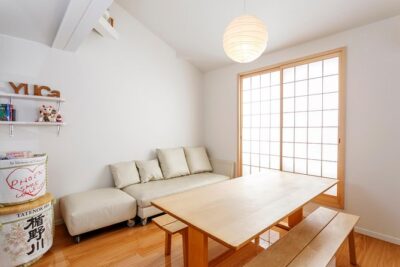
Ramen & Gyoza Cooking Class in Tokyo with Local Supermarket Visit
Read our review →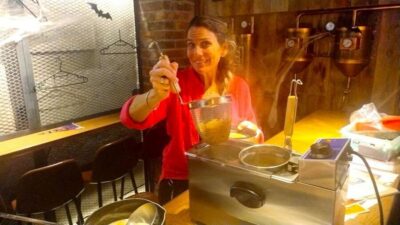
Easy Ramen Cooking Experience in Kabukicho, Shinjuku
Read our review →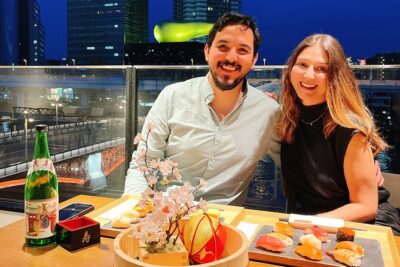
Ramen and Sushi Cooking Class with Sake Pairing Set in Tokyo
Read our review →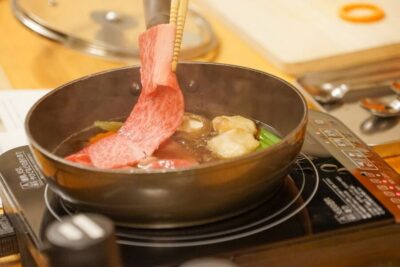
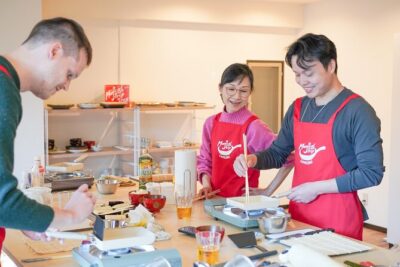
Tokyo Washoku 4-hour Cooking Class: From Market to Table
Read our review →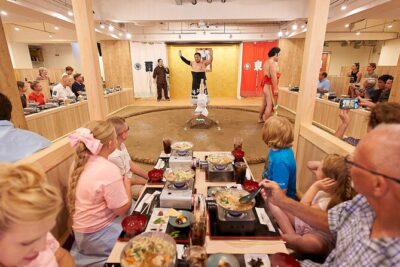
TokyoSumoShow, ChickenHotPot, and Mochi-Pounding by Pro Wrestlers
Read our review →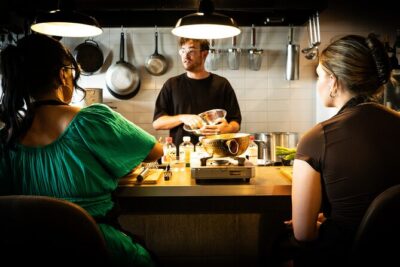
Professional Ramen & Gyoza with Ramen Chef in a restaurant!
Read our review →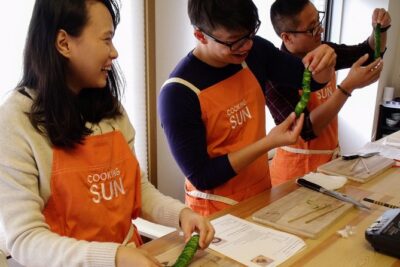
Small-Group Wagyu Beef and 7 Japanese Dishes Tokyo Cooking Class
Read our review →Browse the lists this tour appears in