
Reviewed · JAPANESE COOKING CLASSES
Japanese Cooking class in Tokyo
Japanese cooking is often built on a few careful basics, and this private class puts those basics on your cutting board. You’ll learn to make dashi, cook rice in an ordinary pot, and use traditional tools such as a suribachi mortar and oshizushiki pressed-sushi mold. I like the home setting and the choice of three very different courses. I also like that English recipes let you repeat the dishes at home.
The main consideration is the location. You’ll need to reach Morimi’s Home Kitchen in Setagaya for the 10:30 a.m. start, and private transportation is not included. Pickup is listed as available, so confirm exactly what that means before booking.
In This Review
- Key points to know
- Cooking Japanese food in Morimi-san’s home kitchen
- The opening lesson: dashi and rice
- Choosing the tofu course
- Shaping temari and pressed sushi
- Making Japanese curry from roux and dashi
- A three-hour class that ends with lunch
- What the private format means for you
- Is $71 a fair price?
- Getting to the kitchen in Setagaya
- Who should book this cooking class?
- FAQ
- How long does the Japanese cooking class last?
- What time does the class begin?
- Where does the cooking class take place?
- Which cooking courses can I choose from?
- Can vegetarian or vegan participants join?
- Are recipes included?
- Should you book Morimi’s Home Kitchen?
Key points to know
- Three distinct menus: Choose tofu, sushi, or Japanese curry when you reserve.
- Real cooking skills: Dashi, rice cooked in a regular pot, tofu preparation, sushi shaping, and frying techniques are part of the work.
- Private home setting: Only your group takes part, creating a quieter session than a large studio class.
- Diet-friendly tofu course: The tofu menu can accommodate vegetarian, vegan, and gluten-free diets. Gluten-free choices are also available with the sushi course.
- A full meal is included: You eat the dishes you prepare, with unlimited green tea and mineral water.
- Useful take-home extras: English recipes and a small souvenir help carry the experience beyond your time in Tokyo.
Cooking Japanese food in Morimi-san’s home kitchen
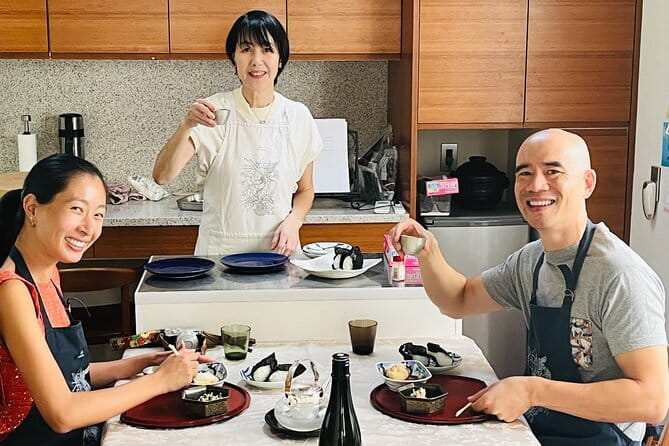
This is not a demonstration where you watch a chef prepare a polished plate and then leave. You work through the recipes yourself in a private home kitchen with certified chef Morimi-san. The class lasts about three hours, enough time to cook, ask questions, eat lunch, and learn a handful of methods you can use again.
The home setting matters. Cooking in a private kitchen feels more personal than standing in a busy commercial school with several unrelated groups. The available feedback describes the atmosphere as relaxed and family-like, with Morimi-san taking time to explain small techniques and practical shortcuts. That is exactly the sort of detail that can make a cooking class useful rather than merely pleasant.
The format is also flexible. You choose one of three courses: tofu, sushi, or curry. These are not small variations on one menu. Each course gives you a different view of Japanese home cooking, so think about the skills you want before you reserve.
More cooking classes in Tokyo:
- Ramen & Gyoza Cooking Class in Tokyo with Local Supermarket Visit
★ 5.0 · 823 reviews - Tokyo: Easy Ramen Cooking Experience in Kabukicho, Shinjuku
★ 4.6 · 321 reviews - Ramen and Sushi Cooking Class with Sake Pairing Set in Tokyo
★ 5.0 · 291 reviews
The opening lesson: dashi and rice
The tofu course includes instruction on preparing dashi, the basic stock used in many Japanese dishes. This is one of the most valuable parts of the class because dashi gives soup, curry, and other dishes a distinctly Japanese base. You also learn to cook rice in a regular pot rather than relying on a specialized rice cooker.
That second lesson is especially practical. Most people returning home will not own every Japanese kitchen appliance, but nearly everyone has access to a standard pot. Learning how to handle the rice with familiar equipment makes the recipe easier to repeat in your own kitchen.
The class also introduces traditional tools. A suribachi is a Japanese mortar used for grinding and mixing, while an oshizushiki is a mold for pressed sushi. Using these tools gives you a feel for techniques that are difficult to understand from a recipe alone. They are also memorable parts of the session, particularly if you want to bring home more than a list of ingredients.
Choosing the tofu course
The tofu menu is the best fit if you want several dishes and need dietary flexibility. You prepare tofu hamburgers, agedashi tofu, shiraae tofu salad, tofu soup, and two rice balls. The meal includes three tofu dishes, rice balls, and soup.
Agedashi tofu involves deep-fried tofu, while shiraae is a tofu-based salad. Together, the recipes show how one ingredient can take on very different textures and flavors. The tofu hamburger offers another useful lesson, since it turns tofu into a hearty main dish rather than treating it as a plain side.
This is the only course specifically described as suitable for vegetarian, vegan, and gluten-free diets. If you follow one of those diets, tell Morimi-san about your needs when you reserve. The class also asks you to report allergies or foods you cannot eat.
I would choose this menu if you want the broadest introduction to home-style techniques, not simply the most recognizable Japanese dish. It also makes sense for couples or families with mixed food preferences, although you should give the kitchen clear information in advance.
Shaping temari and pressed sushi
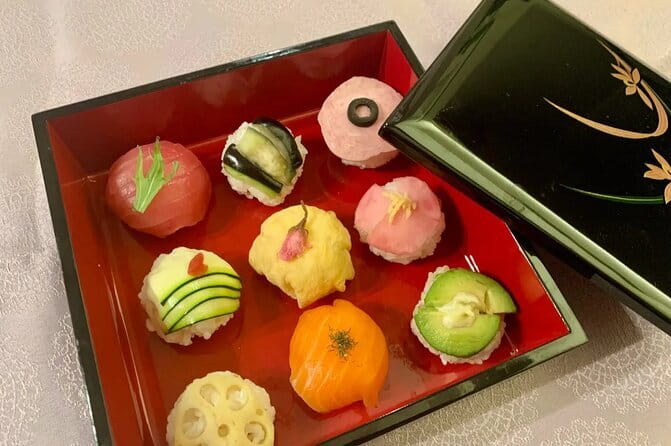
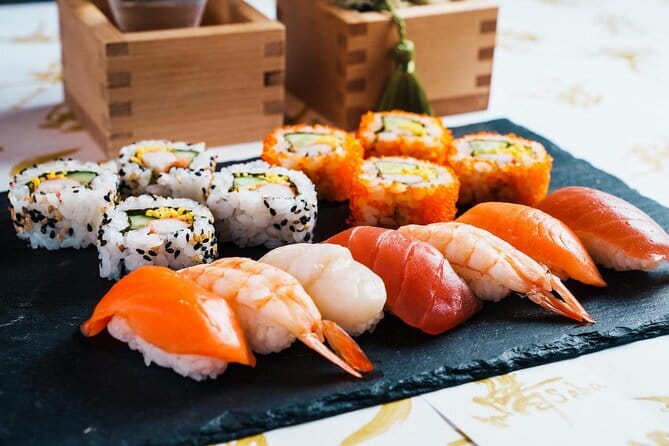
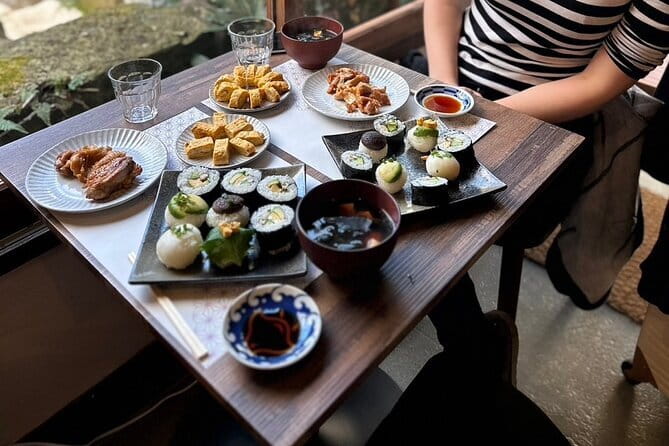
The sushi course begins with making sushi rice. You then select from a range of sashimi and vegetables to create six temari sushi of your choice. Temari sushi are small, rounded pieces that allow you to play with color, shape, and ingredient combinations.
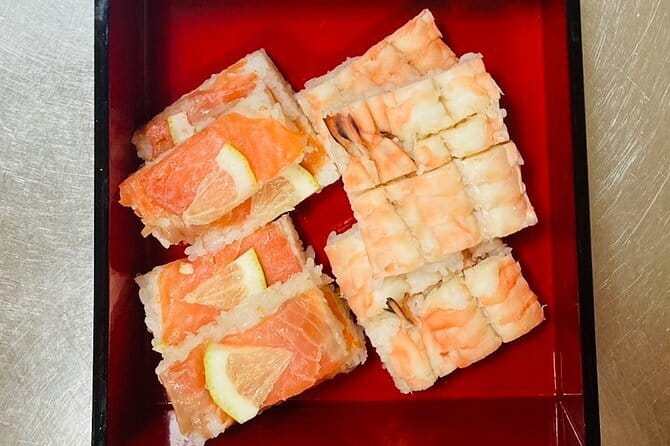
Each participant also makes one roll of oshizushi, or pressed sushi, using the traditional mold. The mold is one of the class’s most distinctive tools, and pressing the rice and toppings into shape gives you a technique that differs from the usual hand-formed sushi.
The course includes temari sushi, pressed sushi, and soup for lunch. Gluten-free preparation is available with this menu, but you still need to explain your requirements before the session. Since sashimi is part of the ingredient selection, anyone with seafood restrictions should ask what alternatives can be offered before booking.
This menu is a good choice if the act of making sushi is your main goal. It offers more hands-on shaping than a simple sushi-making lesson and leaves you with party-friendly ideas you can use at home. The smaller forms also make the meal feel festive without requiring elaborate equipment beyond the pressed-sushi mold.
A few more Tokyo bookings worth comparing
- Sushi Making Tokyo Roll and Authentic Japanese Sushi Class
★ 5.0 · 3,971 reviews - Tokyo: Roll and Authentic Sushi Making Class in Asakusa
★ 4.9 · 1,957 reviews - Tokyo Shinjuku Chopsticks Making Class
★ 5.0 · 1,763 reviews - Tokyo: Sushi Making Class in a Happi Coat near a Famous Spot
★ 4.9 · 1,377 reviews
Making Japanese curry from roux and dashi
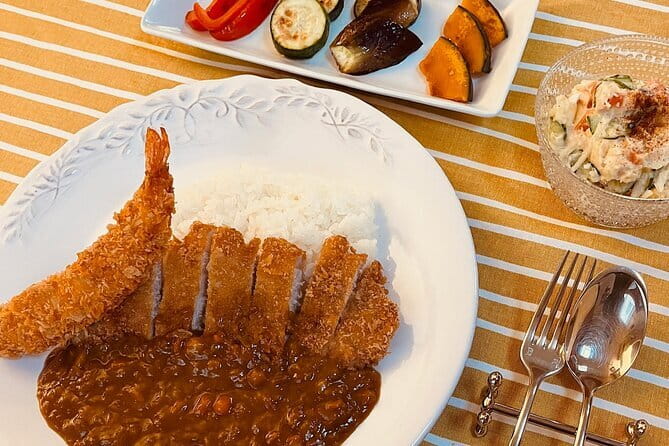
The curry course gives you a different picture of Japanese food. You prepare Japanese-style curry with roux and dashi, then make tonkatsu, ebi fry, grilled vegetables, and Japanese-style potato salad. Lunch includes rice, curry, pork cutlet, fried shrimp, grilled vegetables, and potato salad.
Japanese curry is not the same as Indian curry. The use of prepared roux and Japanese dashi creates a milder, thicker style with a flavor profile of its own. If you have eaten curry in Japan and want to understand how the meal comes together, this course gives you the key elements in one sitting.
The fried items add technique. Tonkatsu is a breaded pork cutlet, while ebi fry is fried shrimp. You get to work on crisp coatings and timing, then serve both with curry and rice. The potato salad and grilled vegetable sides keep the meal from becoming only a plate of fried food.
I would pick this course if you want the most substantial lunch or if Japanese curry is already high on your food list. It may be less suitable for anyone avoiding pork or seafood, since both are central to the menu. Ask about substitutions before paying, as the available information only specifies dietary adaptations for the tofu and sushi courses.
A three-hour class that ends with lunch
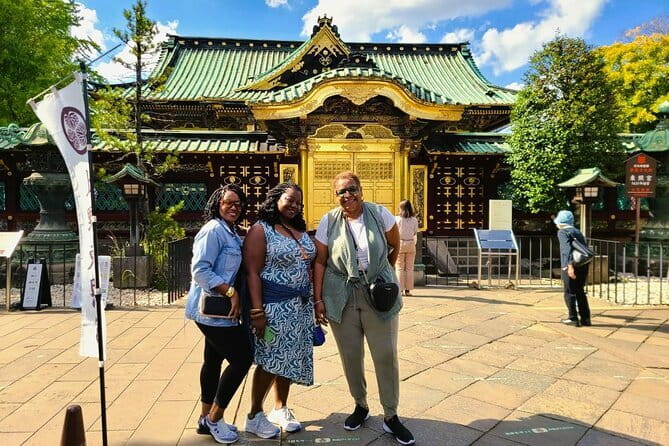
The 10:30 a.m. start makes this a natural morning activity. You cook through the menu, then sit down to eat what you have prepared. The food included depends on your chosen course, so the value is not limited to instruction alone.
Green tea and mineral water are unlimited, and herbal tea is also available. Sake and wagashi, traditional Japanese sweets, are optional additions. The optional sake can pair nicely with sushi or tofu, but it is not included in the listed price, so ask about the extra cost when making your reservation.
The class ends back at the meeting point. You are not being shuttled to a restaurant or dropped at a sightseeing stop, so plan the rest of your day around returning to the Setagaya address. That is a small but important detail if you have timed tickets or another tour afterward.
What the private format means for you
Only your group participates. That gives you a better chance to ask questions, repeat a step, or discuss an ingredient without waiting for a large class to catch up. It also makes the experience a reasonable choice for a birthday activity, a couple’s outing, or a small family group.
The tradeoff is that a private class depends more on your group’s interests. A large school may offer a fixed, fast-moving structure, while this setting appears designed for conversation and careful instruction. If you prefer watching a professional do most of the work, this may feel more active than expected. You are there to cook, not just sample.
The available feedback places special value on Morimi-san’s patience and explanations of small cooking details. That is useful for beginners, since a short tip about texture, timing, or handling can matter more than a page of general information.
Is $71 a fair price?
At $71 per person, this is not the cheapest way to eat lunch in Tokyo. You could buy a filling meal for much less. The comparison changes when you count the private instruction, the full meal, tea and water, recipes in English, use of traditional tools, and the souvenir.
I think the price is fair for someone who wants a practical food experience rather than a meal alone. You are paying for the time spent learning dashi, rice, tofu, sushi, or curry, plus the chance to make the dishes yourself. The recipes give the class lasting value, especially if you plan to cook Japanese food after returning home.
Value depends heavily on your menu choice and interest. The tofu course offers several recipes and the broadest diet support. The sushi course gives you a memorable hands-on activity with temari sushi and pressed sushi. The curry course delivers a large, varied lunch and useful frying practice.
Since the class is usually booked about 15 days ahead, reserve early if your Tokyo dates are fixed. Confirmation is normally provided at booking, although reservations made within two days of the activity may take up to 48 hours to confirm, subject to availability.
Getting to the kitchen in Setagaya
The meeting point is Morimi’s Home Kitchen at 3-chōme-19-5 Matsubara, Setagaya City, Tokyo 156-0043. It is near public transportation, and the listed start time is 10:30 a.m.
Pickup is offered, but private transportation is not included. Those two details can sound contradictory, so contact the provider before booking if you want pickup. Do not assume a private car or hotel transfer is part of the $71 price.
Give yourself enough time to find the address and arrive ready to begin. Because this is a home kitchen rather than a large public attraction, careful attention to the meeting instructions matters.
Cancellation is free up to 24 hours before the local start time for a full refund. Changes or cancellations inside that 24-hour window are not accepted or refunded, so keep your schedule firm once the deadline passes.
Who should book this cooking class?
I would recommend this experience to you if you want to learn techniques you can repeat at home, prefer a small private setting, or enjoy food activities that include a proper meal. It is also a good match for couples and small groups looking for a shared birthday or holiday activity.
The tofu course is the clear choice for vegetarian, vegan, or gluten-free participants. The sushi course suits anyone who wants to shape food and use an oshizushiki mold. The curry course is best for diners who want a hearty Japanese lunch built around rice, roux, tonkatsu, and ebi fry.
You should think twice if you want a quick class in central Tokyo, dislike hands-on cooking, or have strict allergies that have not been discussed in advance. The class takes place in Setagaya, begins at 10:30 a.m., and requires you to reach the meeting point yourself unless pickup arrangements are confirmed.
FAQ
How long does the Japanese cooking class last?
The class lasts approximately three hours.
What time does the class begin?
The scheduled start time is 10:30 a.m.
Where does the cooking class take place?
It takes place at Morimi’s Home Kitchen, 3-chōme-19-5 Matsubara, Setagaya City, Tokyo 156-0043, Japan.
Which cooking courses can I choose from?
You can choose the Tofu Course, Sushi Course, or Curry Course when making your reservation.
Can vegetarian or vegan participants join?
Yes. The tofu course can accommodate vegetarian and vegan diets. You should report allergies and foods you cannot eat when booking.
Are recipes included?
Yes. English recipes are provided for the dishes prepared during the class.
Should you book Morimi’s Home Kitchen?
Book it if you want to cook, not just eat. The strongest reasons are the private home setting, the chance to learn dashi and rice basics, the traditional tools, and the English recipes that help you repeat the dishes later.
Choose the menu carefully. Tofu offers the best dietary flexibility and several recipes, sushi gives you the most visually engaging shaping work, and curry delivers the biggest comfort-food lunch. Confirm transport and food restrictions before reserving, then allow enough time to reach Setagaya for the 10:30 start. For the right food-minded visitor, $71 buys a useful skill session as well as lunch.
New on our Tokyo list
- Sumi-e Experience in a relaxing green tea shop in Tokyo★ 5.0 · 3 reviews
- Tokyo : Kamikaze Street Drift Ride★ 5.0 · 3 reviews
- Private Zen Meditation in English in Shinjuku, Tokyo★ 5.0 · 3 reviews
- Onsen Spa in Tokyo and Asakusa Bar Hopping with Local Guide★ 5.0 · 3 reviews
- Easy for everyone! Now you can play handmade mini shamisen and show off to everyone! Musical instruments, sweets and live music★ 5.0 · 3 reviews
- Tokyo: Private Tsukiji Street Food & Sake with Local Guide★ 5.0 · 3 reviews
- Mt Fuji Exploration Tour with Free Japanese Kusa Mochi from Tokyo★ 4.5 · 3 reviews
- Tokyo Tsukiji Fish Market Walking and Exploring Hidden Gems Tour★ 5.0 · 3 reviews
Japanese Cooking Classes, compared.
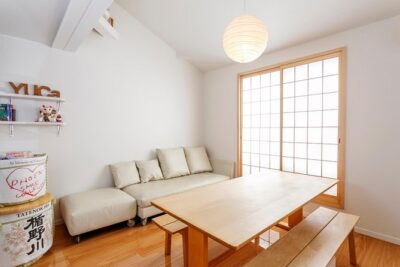
Ramen & Gyoza Cooking Class in Tokyo with Local Supermarket Visit
Read our review →
Easy Ramen Cooking Experience in Kabukicho, Shinjuku
Read our review →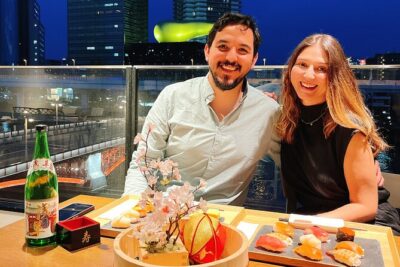
Ramen and Sushi Cooking Class with Sake Pairing Set in Tokyo
Read our review →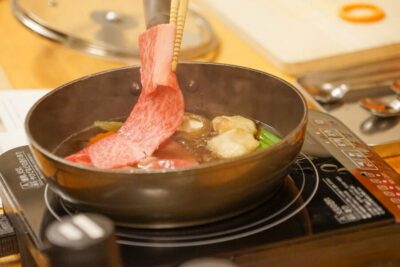
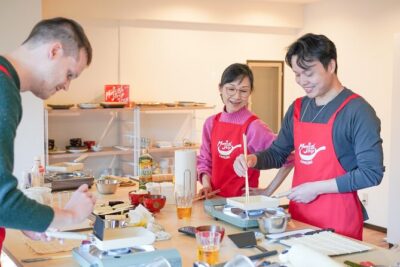
Tokyo Washoku 4-hour Cooking Class: From Market to Table
Read our review →
TokyoSumoShow, ChickenHotPot, and Mochi-Pounding by Pro Wrestlers
Read our review →
Professional Ramen & Gyoza with Ramen Chef in a restaurant!
Read our review →
Small-Group Wagyu Beef and 7 Japanese Dishes Tokyo Cooking Class
Read our review →Browse the lists this tour appears in