
Reviewed · JAPANESE COOKING CLASSES
Japanese Home Cooking Class with Local Supermarket Visit
The best part of this Tokyo class is that it treats Japanese food as something you can actually make at home, not just admire in a restaurant. With YUCa guiding you, you learn how meals are planned, how meat, fish, and vegetables fit together, and how seasonal ingredients shape everyday cooking. I especially like the hands-on format and the chance to visit a local supermarket after class. You also receive recipes and notes, so the experience can continue in your own kitchen.
I like that the class is small, with a maximum of seven people, and that YUCa has a gentle, patient teaching style that works well for families and curious beginners. The main drawback is the high price of $162.88 per person for two and a half hours. It makes the most sense if you care about cooking, want personal instruction, and value lunch plus practical recipes over a quick sightseeing stop.
In This Review
- Key points
- A Tokyo kitchen lesson with practical value
- What you may cook during the two and a half hours
- Why the menu-planning lesson matters
- YUCa’s kitchen and the small-group setting
- The supermarket visit adds a useful second chapter
- Lunch turns the lesson into a complete experience
- What makes the teaching style work for families and beginners
- Timing, meeting point, and planning your morning
- Who should pay the $162.88 price
- My call: book it if food is part of your travel plan
- FAQ
- Where does the Japanese home cooking class meet?
- What time does the class start?
- How long does the activity last?
- Where does the activity end?
- Is lunch included?
- What kinds of food might I prepare?
- Is there a supermarket visit?
- How many people can join the class?
- Can I cancel for a full refund?
Key points
- Cook in YUCa’s home kitchen: The setting is clean, cozy, and personal rather than a large demonstration room.
- Learn more than recipes: The lesson covers menu planning, nutrition balance, and seasonal Japanese ingredients.
- Menus can vary: Past classes have included gyoza, ramen, Japanese omelette, pork katsu, and walnut miso sauce.
- Take the lesson to the supermarket: After cooking, you visit a local supermarket and can get help understanding ingredients and choosing souvenirs.
- A small group helps: The maximum is seven people, with more room for questions and individual help.
- Lunch is included: You eat the traditional Japanese home meals prepared during the class.
A Tokyo kitchen lesson with practical value
Japanese food is often presented abroad through sushi, ramen shops, and elaborate restaurant meals. This class looks at a quieter side of the country’s food culture: what people cook at home when they want a good meal that is balanced, manageable, and suited to the season.
That difference matters. You are not simply watching a chef assemble an impressive dish. You are learning how a Japanese home cook thinks about a meal. The class includes menu planning and nutrition balance, along with the use of meat, fish, and vegetables. Those topics help you understand why a home meal may contain several modest dishes rather than one oversized centerpiece.
YUCa leads the experience at her cooking space in Nishiogu, in Tokyo’s Arakawa City. The class begins at 10:00 a.m. and lasts about two hours and 30 minutes. It ends back at the meeting point, which keeps the morning easy to plan.
The class suits you best if you want to ask questions and take part. It is less useful if you only want to eat Japanese food or watch someone else cook. The central appeal is participation.
More cooking classes in Tokyo:
- Ramen & Gyoza Cooking Class in Tokyo with Local Supermarket Visit
★ 5.0 · 823 reviews - Tokyo: Easy Ramen Cooking Experience in Kabukicho, Shinjuku
★ 4.6 · 321 reviews - Ramen and Sushi Cooking Class with Sake Pairing Set in Tokyo
★ 5.0 · 291 reviews
What you may cook during the two and a half hours
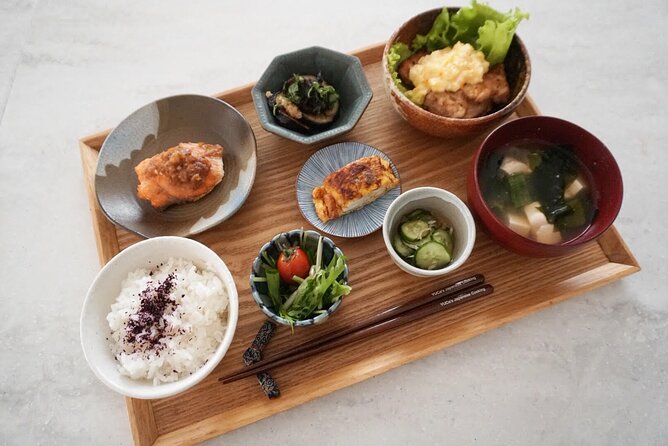
The exact menu is not specified in advance, and that is worth keeping in mind when you book. The class description allows for traditional home foods using meat, fish, or vegetables. Past dishes have included gyoza, ramen, Japanese omelettes, pork katsu, and walnut miso sauce.
That range gives you a good sense of the teaching style. Gyoza can introduce folding and filling. Ramen can show how several components come together in a familiar bowl. Japanese omelette offers a useful lesson in technique, while pork katsu and walnut miso sauce show how a simple main dish can gain character from a homemade topping or sauce.
You should not assume that every one of those dishes appears in your class. Still, the examples point to food that is realistic for a home kitchen, rather than restaurant-level cooking that requires rare equipment or long preparation.
The class is described as very hands-on. That means you should expect to prepare food yourself, not simply stand near the counter while YUCa does the work. Her instruction also includes tips and written recipes to take home. For a food class, this is a major benefit. A pleasant lunch is short-lived, but a clear recipe can become part of your regular cooking.
Why the menu-planning lesson matters
The most useful part of the experience may not be a single dish. It is the explanation of how Japanese home meals fit together.
The class addresses nutrition balance, which helps place familiar foods in context. You can learn how a meal might combine a main ingredient with vegetables and other supporting dishes. The aim is not just to copy one recipe. You gain a way to think about ingredients, portions, and variety.
Seasonal cooking is another important theme. Japan’s food culture pays close attention to what is available at different times of year, and the class connects home cooking with that habit. You may come away with a better sense of why an ingredient appears in a dish, rather than treating it as decoration.
This makes the lesson useful for cooks at different levels. Beginners get a friendly introduction to basic Japanese flavors and methods. More experienced home cooks can ask about substitutions, meal balance, and ways to adapt a dish outside Japan.
You should bring questions. The small group and personal format make that possible, and YUCa’s patient approach is especially helpful if you are unsure about a technique or ingredient.
YUCa’s kitchen and the small-group setting
The experience takes place at YUCa’s Japanese Cooking, at 2-chome-34-8 Nishiogu, Arakawa City, Tokyo 116-0011. It is near public transportation, though the provided details do not specify the closest station or the best route from your hotel. Check the meeting point carefully before setting out.
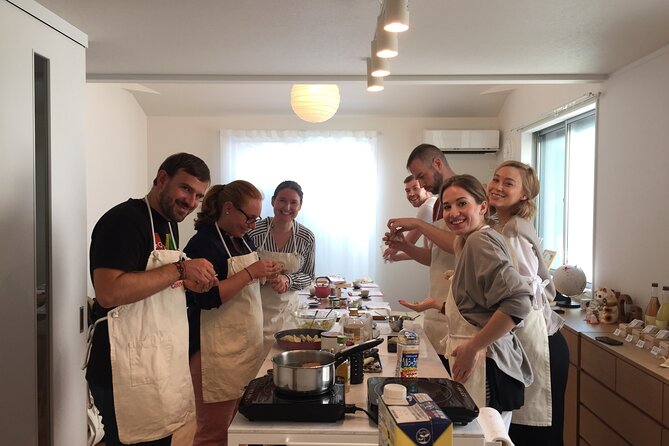
A maximum of seven people keeps the class from feeling like a production line. You have a better chance to see what is happening, take a turn, and ask about small details. That matters in cooking, where a few seconds, a texture change, or a folding motion can make a difference.
The home kitchen setting also gives the lesson a personal character. It is not presented as a formal culinary school. The space has been described as clean and cozy, which should help you feel comfortable while working.
Families can consider this class, too. Elementary-age children have taken part, and YUCa has been praised for including them in the cooking. That does not mean every child will enjoy every step, but the format has worked for family groups. If your children like making things with their hands, this is more promising than a class built around quiet observation.
A few more Tokyo bookings worth comparing
- Sushi Making Tokyo Roll and Authentic Japanese Sushi Class
★ 5.0 · 3,971 reviews - Tokyo: Roll and Authentic Sushi Making Class in Asakusa
★ 4.9 · 1,957 reviews - Tokyo Shinjuku Chopsticks Making Class
★ 5.0 · 1,763 reviews - Tokyo: Sushi Making Class in a Happi Coat near a Famous Spot
★ 4.9 · 1,377 reviews
The supermarket visit adds a useful second chapter
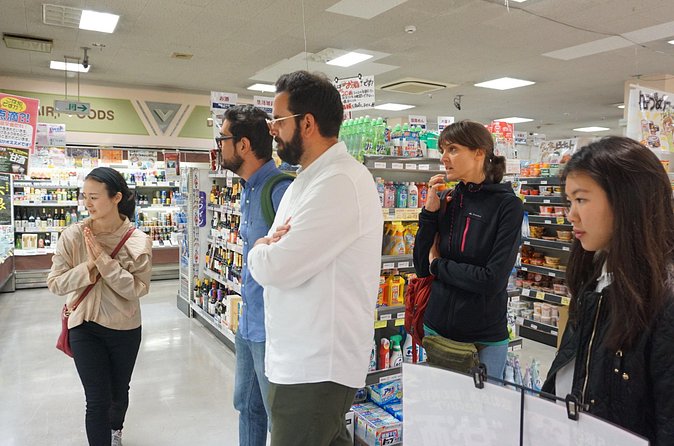
After the cooking class, you visit a local supermarket. This is one of the most distinctive parts of the experience because it connects the meal you just prepared with everyday shopping in Japan.
A supermarket can be confusing at first. Labels may be unfamiliar, package sizes may differ from those at home, and common ingredients can appear in forms you do not recognize. Having YUCa explain what you are seeing turns an ordinary shopping stop into a practical food lesson.
The visit can also help you find ingredients for cooking after you return home. You might see sauces, seasonings, snacks, or packaged foods that are difficult to identify on your own. The experience has also included help with choosing souvenirs, which gives the visit value even if you are not planning to recreate the recipes immediately.
Do not expect a long market tour with a formal tasting program. The available information describes a local supermarket visit after class, not a full food market excursion. Its strength is usefulness. You are seeing where ordinary ingredients are bought and learning how Japanese food fits into daily life.
Lunch turns the lesson into a complete experience
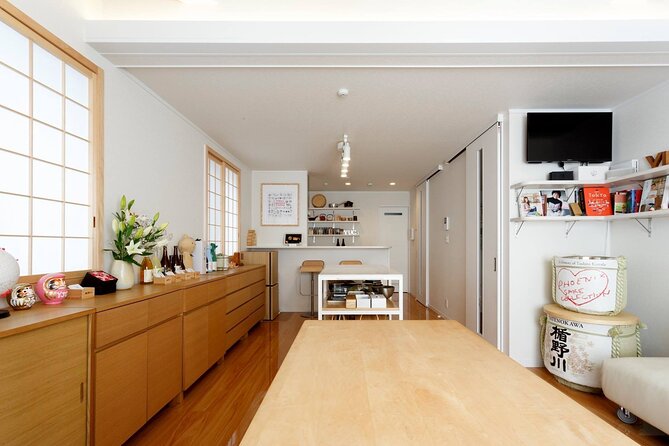
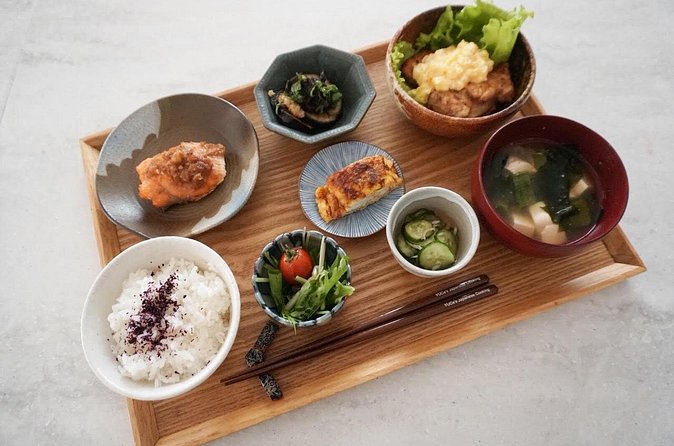
Traditional Japanese home meals are included as lunch. Since you prepare the food as part of the class, the meal is also your chance to see how the separate steps come together on the table.
This is more satisfying than finishing with a rushed snack. You can taste the results while the techniques are still fresh in your mind. It also gives you a chance to ask follow-up questions about flavor, texture, or how you might adjust a dish at home.
The meal should be viewed as part of the value, not the only reason to book. At $162.88 per person, you are paying for instruction, food, a small group, written recipes, and the supermarket visit. If you only want lunch, a restaurant will cost less. If you want a personal cooking lesson with a local instructor, the price is easier to justify.
The value improves for people who will use what they learn. A recipe for pork katsu or walnut miso sauce that becomes part of your cooking routine can make the class worthwhile long after the Tokyo visit ends.
What makes the teaching style work for families and beginners
YUCa’s approach appears particularly suited to people who are eager but not highly trained cooks. She has been described as patient and accommodating, and the class welcomes questions rather than assuming you already know Japanese cooking methods.
That patience matters for mixed groups. One family class included elementary-age children and another family traveling with them. A class that can include adults and children without losing its focus is a useful option for a family day in Tokyo.
The class has also worked well for people who wanted a simple introduction to home cooking. You do not need to arrive with a long list of culinary skills. The emphasis is on dishes you can understand and repeat, with instructions to take home.
At the same time, accomplished cooks should not expect an advanced professional workshop. The stated focus is traditional Japanese home food, menu planning, nutrition, and seasonal ingredients. This is about building a practical foundation, not earning a chef’s certificate.
Timing, meeting point, and planning your morning
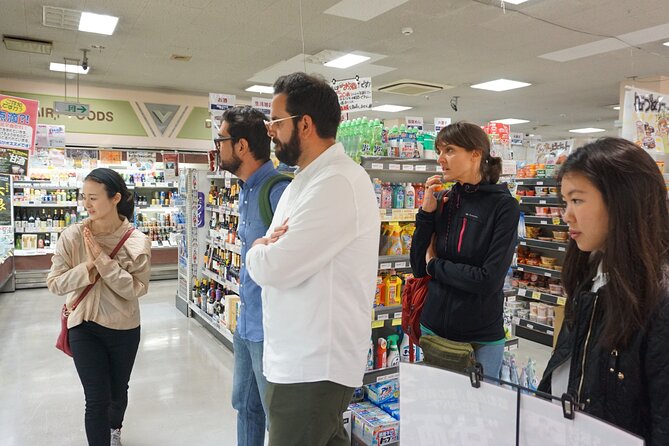
The start time is 10:00 a.m., and the activity lasts approximately two hours and 30 minutes. Because it includes cooking, lunch, and the supermarket visit, you should keep your schedule open around that window rather than booking a tight morning appointment elsewhere.
The class starts and ends at the same Nishiogu meeting point. That makes the return simple, but you still need to allow time to reach the neighborhood. The experience is near public transportation, and a mobile ticket is provided.
Confirmation is received at the time of booking. Bring the booking information on your phone and check the exact address before leaving. Since the activity has a maximum of seven people, the small scale is part of the experience and not just a note in the fine print.
The cancellation policy is friendly if your plans are still shifting. You can receive a full refund by canceling at least 24 hours before the 10:00 a.m. start time. Cancellations or changes made within 24 hours are not accepted for a refund. The activity also requires a minimum number of participants, so a cancellation by the operator could result in another date, another experience, or a full refund.
Who should pay the $162.88 price
The cost is high for a two-and-a-half-hour activity, so you should decide what kind of souvenir you want from Tokyo.
This class is a strong fit if you:
- Like cooking and want recipes you can repeat at home
- Prefer a small, personal lesson to a large group demonstration
- Want to understand Japanese home meals, not just restaurant dishes
- Enjoy asking questions about ingredients and cooking methods
- Are traveling with children who like hands-on activities
- Want help with Japanese supermarket products and food souvenirs
It is a weaker fit if you want a low-cost activity, a broad sightseeing tour, or a guaranteed menu built around one particular dish. The menu can include meat, fish, or vegetables, and past examples vary.
For a couple or family who will cook together afterward, the price can make sense. For a solo visitor focused mainly on sightseeing, it may feel expensive unless Japanese food is a central interest.
My call: book it if food is part of your travel plan
I would book this class if you want more than a photograph of Japanese food. The combination of personal instruction, home-style dishes, lunch, recipes, and a supermarket visit gives you several useful ways to connect with Tokyo’s daily food culture.
The strongest features are YUCa’s patient, hands-on teaching and the practical follow-through after the meal. You are not sent away with only a full stomach. You get notes, cooking ideas, and a better sense of how to shop for Japanese ingredients.
The price is the clear caution. At $162.88 per person, this is a special-interest experience, not a bargain lunch. Book it when you value personal attention and plan to use what you learn. Skip it if you would rather spend the same money on several restaurants or a wider sightseeing activity.
FAQ
Where does the Japanese home cooking class meet?
The class meets at YUCa’s Japanese Cooking, 2-chome-34-8 Nishiogu, Arakawa City, Tokyo 116-0011, Japan.
What time does the class start?
The class starts at 10:00 a.m.
How long does the activity last?
The experience lasts approximately two hours and 30 minutes.
Where does the activity end?
The activity ends back at the meeting point in Nishiogu.
Is lunch included?
Yes. Traditional Japanese home meals are included as lunch.
What kinds of food might I prepare?
The class focuses on traditional Japanese home foods using meat, fish, or vegetables. Past dishes have included gyoza, ramen, Japanese omelettes, pork katsu, and walnut miso sauce, but the exact menu is not specified.
Is there a supermarket visit?
Yes. You visit a local supermarket after the cooking class.
How many people can join the class?
The activity has a maximum of seven participants.
Can I cancel for a full refund?
Yes, if you cancel at least 24 hours before the experience start time. Cancellations or changes made less than 24 hours before the start are not eligible for a refund.
New on our Tokyo list
- Sumi-e Experience in a relaxing green tea shop in Tokyo★ 5.0 · 3 reviews
- Tokyo : Kamikaze Street Drift Ride★ 5.0 · 3 reviews
- Private Zen Meditation in English in Shinjuku, Tokyo★ 5.0 · 3 reviews
- Onsen Spa in Tokyo and Asakusa Bar Hopping with Local Guide★ 5.0 · 3 reviews
- Easy for everyone! Now you can play handmade mini shamisen and show off to everyone! Musical instruments, sweets and live music★ 5.0 · 3 reviews
- Tokyo: Private Tsukiji Street Food & Sake with Local Guide★ 5.0 · 3 reviews
- Mt Fuji Exploration Tour with Free Japanese Kusa Mochi from Tokyo★ 4.5 · 3 reviews
- Tokyo Tsukiji Fish Market Walking and Exploring Hidden Gems Tour★ 5.0 · 3 reviews
Japanese Cooking Classes, compared.
Ramen & Gyoza Cooking Class in Tokyo with Local Supermarket Visit
Read our review →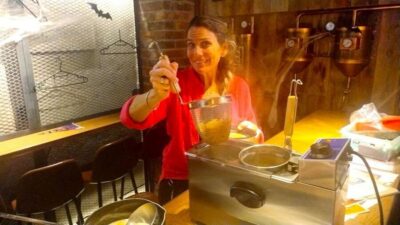
Easy Ramen Cooking Experience in Kabukicho, Shinjuku
Read our review →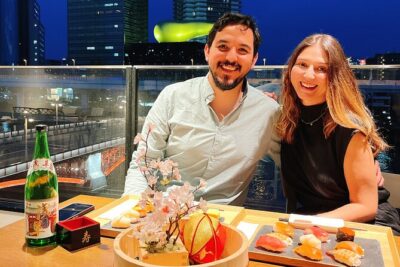
Ramen and Sushi Cooking Class with Sake Pairing Set in Tokyo
Read our review →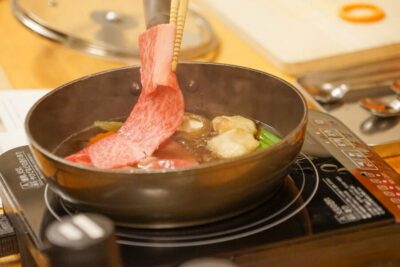
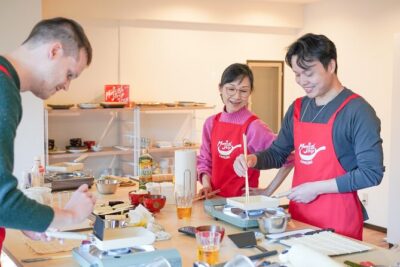
Tokyo Washoku 4-hour Cooking Class: From Market to Table
Read our review →
TokyoSumoShow, ChickenHotPot, and Mochi-Pounding by Pro Wrestlers
Read our review →
Professional Ramen & Gyoza with Ramen Chef in a restaurant!
Read our review →
Small-Group Wagyu Beef and 7 Japanese Dishes Tokyo Cooking Class
Read our review →Browse the lists this tour appears in