
Reviewed · TOKYO FOOD TOURS
Japanese Sake Tasting & Wagyu Sukiyaki Cooking Class in Tokyo
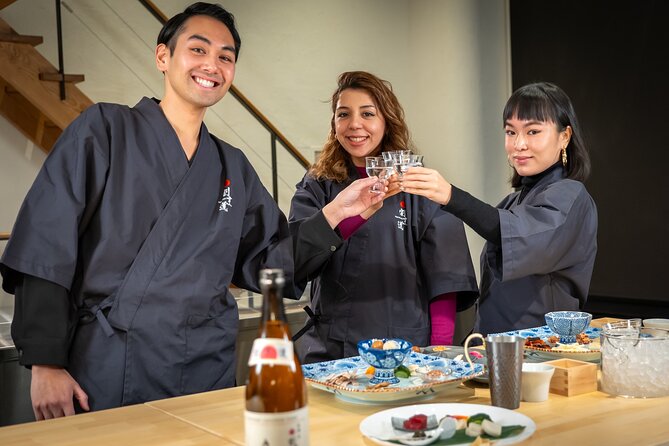
Sake changes dramatically with temperature, and this two-hour Tokyo class lets you test that for yourself before cooking a bubbling pot of Wagyu sukiyaki. At Kappodo’s modern kitchen studio in Nishiazabu, you taste sake chilled, at room temperature, and warm, then pair it with Japanese snacks and your own hot pot.
I like the small maximum of eight people, which should make it easier to ask questions and take part at the stove. I also like the way the class links drinks and food instead of treating sake as a quick sample before lunch. Hiromi leads the sake lesson, while Naoya and other cooking staff help with the sukiyaki session and demonstrations.
The main consideration is price: $129 per person is a serious sum for a two-hour activity. It becomes better value if you want an English-language food lesson, a full Wagyu lunch, several sake styles, and a cultural activity in one sitting. It is less appealing if you only want a quick tasting or a cheap meal.
In This Review
- Key points at a glance
- Why the temperature tasting matters
- From sake lesson to the sukiyaki pot
- A professional vegetable-carving display
- What the two-hour schedule feels like
- The small group makes a difference
- Is $129 a fair price?
- Getting to the Nishiazabu studio
- Who should book this class?
- Booking details worth knowing
- Should you book the sake and Wagyu class?
- FAQ
- Where does the class take place?
- What time does the experience start?
- How long does the class last?
- How many people can join?
- Is lunch included?
- What types of sake are included?
- Is transportation included?
- Do I receive anything to take home?
- Is there a shop discount?
- Can I cancel for a full refund?
Key points at a glance
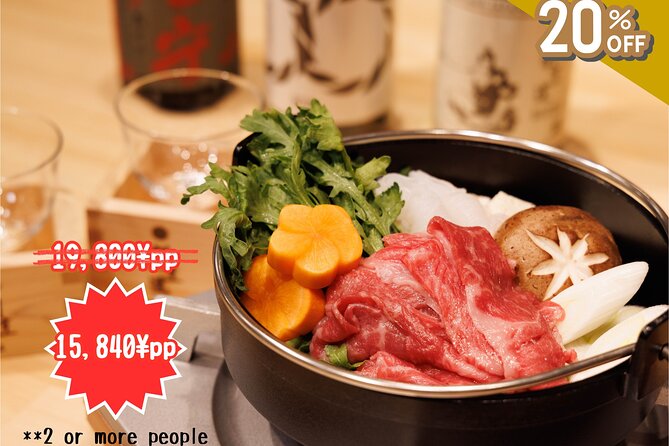
- Three sake temperatures: Compare chilled, room-temperature, and warm sake to see how heat changes aroma and taste.
- Wagyu sukiyaki lunch: Prepare and eat your own hot pot with premium Wagyu beef.
- Live vegetable carving: Watch a professional chef create decorative cuts while your sukiyaki cooks.
- Small English-language setting: The class has a maximum of eight participants, with Hiromi praised for clear and engaging instruction.
- Useful extras: You receive a participation certificate and 10 percent off purchases at the first-floor shop on the day of your class.
Why the temperature tasting matters
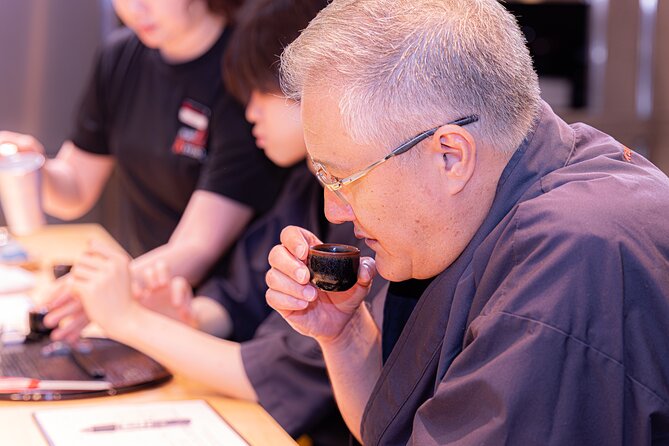
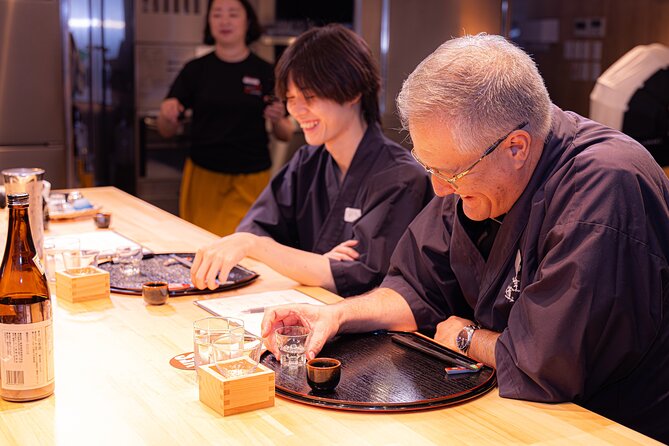
Many visitors first meet sake as a single drink served cold. This class gives you a more useful introduction by presenting sake across three temperature ranges: chilled, room temperature, and warm. The point is not simply to drink more. It is to notice how temperature can change the drink’s smell, weight, sweetness, and finish.
You also learn how the serving vessel affects flavor. That is a small detail with practical value. Once you return to a restaurant or izakaya, you will have a better idea of why the same sake can feel different depending on how it is served.
Hiromi handles the opening lesson, and the class has been praised for making sake understandable without turning the session into a dry lecture. The instruction covers sake production and background, as well as tasting. If you are new to sake, this gives you a clear starting point. If you already drink it, comparing temperatures side by side offers a chance to refine your preferences.
The pairings matter, too. Each pour comes with selected Japanese snacks, giving you something to compare against the sake. A drink that seems sharp on its own may feel rounder with food, while another may work better with a different salty or savory bite.
The exact sake selection can vary, and the details do not promise a fixed number of pours. You can expect three temperature presentations plus other types of sake, but you should not book this as a formal sake certification course. It is a friendly tasting lesson built around lunch.
More sake and whisky sessions:
- Ramen and Sushi Cooking Class with Sake Pairing Set in Tokyo
★ 5.0 · 291 reviews - Sake Tasting Masterclass in Shinjuku (8+ Varieties with a Pro)
★ 5.0 · 271 reviews - Sake Omakase in Tokyo: Guided Tasting by Certified Sommeliers
★ 5.0 · 239 reviews
From sake lesson to the sukiyaki pot
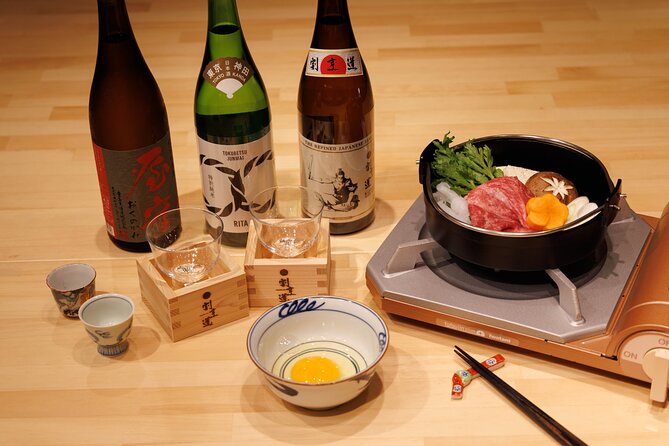
After tasting, you move into the cooking portion. The focus is Wagyu sukiyaki, a Japanese hot pot known for thin slices of beef cooked in a sweet-savory sauce. Here, the premium beef is part of the included lunch rather than an optional upgrade.
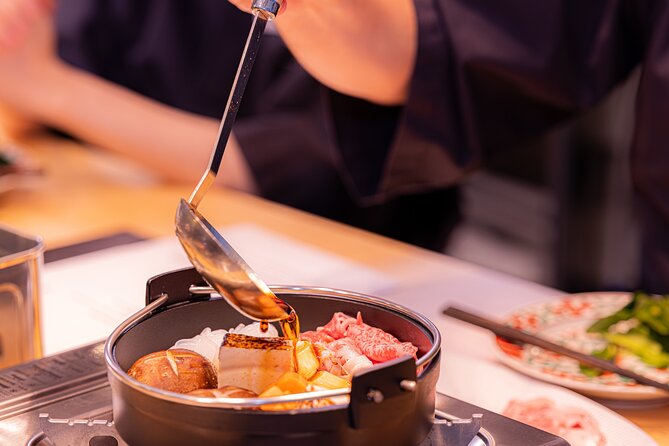
The hands-on format makes this more useful than simply sitting down to a prepared meal. You take part in making your food, then eat it while it is hot. That creates a natural connection between the cooking process and the sake pairing.
Sukiyaki is also a good choice for a short class. It does not require a long baking time or complicated equipment, and the ingredients can come together at the table. The schedule is only about two hours, so the activity needs a dish that can be prepared and enjoyed within that window.
You should expect instruction rather than complete independence. Staff provide the equipment and guide the process, so this is suitable even if you have little cooking experience. The class is not aimed at professional chefs. Its strength is showing you enough technique to understand the dish and enjoy making it.
One useful point from the teaching style is the mix of food history, visual explanation, and practical work. The class has been described as smooth and fun for families, but you should still expect a structured workshop rather than an unplanned kitchen hangout.
A professional vegetable-carving display
While the sukiyaki simmers, a professional chef gives a decorative vegetable-cutting demonstration. This is more than a pause between activities. Japanese food presentation often pays close attention to shape, balance, and small visual details, and the carving segment gives you a look at that craft.
It also keeps the class moving. You are not left waiting for the beef and vegetables to cook. Instead, you can watch a specialist work while the meal develops nearby.
The demonstration is a show-and-tell rather than a separate hands-on carving lesson. If you are hoping to spend a large part of the class practicing knife decoration yourself, this may feel brief. If you want to see a professional technique without adding another long lesson, it is a welcome extra.
Kappodo is also associated with knife-related workshops and a knife shop, so the demonstration fits the wider character of the venue. Your participation certificate and the same-day 10 percent shop discount may be useful if Japanese kitchen tools interest you, though neither is a reason by itself to book the class.
What the two-hour schedule feels like
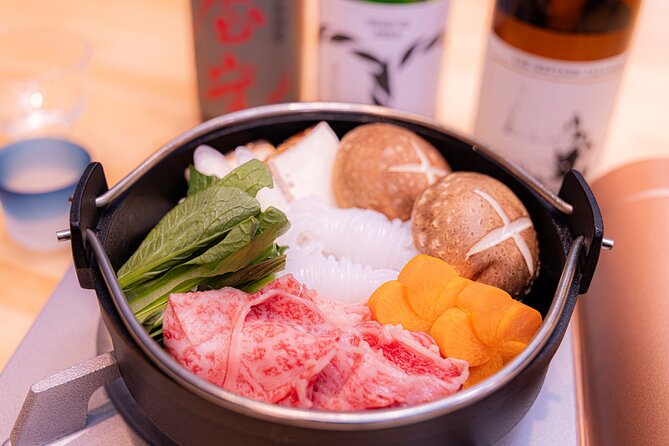
The activity begins at 11:00 a.m. and ends back at the same meeting point. The experience is designed as a compact morning-to-lunch program, so you can place it before an afternoon visit elsewhere in Tokyo.
A typical flow is:
- Arrival at the Kappodo H.Q. and Tokyo D Kitchen Studio in Nishiazabu
- Guided sake tasting across chilled, room-temperature, and warm servings
- Food pairings with Japanese snacks
- Introduction to Wagyu sukiyaki and hands-on preparation
- Professional vegetable-carving demonstration
- Cooking, sake pairing, and lunch
- Participation certificate and time to use the shop discount
The exact order may vary, but the structure is clear. You taste first, cook second, and finish with a meal. That sequence works well because it lets you apply the first lesson immediately.
A two-hour class is long enough to feel substantial but short enough for most sightseeing plans. The trade-off is that there is little spare time. If your train or another booking follows immediately, leave a buffer for Tokyo transport and the natural pace of a group activity.
More cooking classes in Tokyo:
- Ramen & Gyoza Cooking Class in Tokyo with Local Supermarket Visit
★ 5.0 · 823 reviews - Tokyo: Easy Ramen Cooking Experience in Kabukicho, Shinjuku
★ 4.6 · 321 reviews - Tokyo: Wagyu and 7 Japanese Dishes Cooking Class
★ 4.9 · 273 reviews - Tokyo Washoku 4-hour Cooking Class: From Market to Table
★ 5.0 · 253 reviews
The small group makes a difference
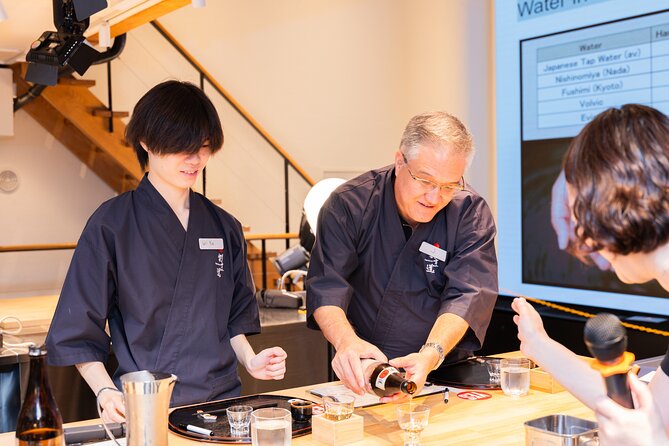
The maximum group size is eight. That is one of the strongest practical features of the class. With a small group, you are more likely to hear the explanations, see the demonstrations, and get help during cooking.
It also suits questions. Sake can be confusing because unfamiliar terms and serving customs often come together. A smaller room gives you a better chance to ask about temperature, vessels, pairings, or the cooking steps without calling across a crowded classroom.
The class has worked well for families and groups of friends, including people taking the lesson in English. Hiromi is repeatedly singled out for being lively, clear, and informative. That combination matters in a food class. Good instruction should help you understand what you are tasting, not simply tell you that one item is good.
The small size has one possible downside. Dates may fill faster than larger group activities, and the class requires a minimum number of participants to operate. If the minimum is not reached, the provider offers another date or experience, or a full refund. Keep that possibility in mind when building a tightly timed Tokyo itinerary.
Is $129 a fair price?
At $129, this is not a bargain lunch. You are paying for a guided cultural activity, alcohol, a premium Wagyu meal, equipment, instruction, and a limited-size class.
I would judge the value by comparing it with what you would otherwise book separately. A basic meal and an unstructured sake tasting would cost less, but they would not give you the same context or hands-on cooking. The class combines a lesson, a tasting, a demonstration, and lunch in one compact visit.
The price makes the most sense for you if Wagyu, sake, and Japanese food customs are high on your list. It is also a good fit for a family or small group that wants a shared activity rather than another restaurant meal. Group discounts are available, though the supplied details do not state the discount amount, so check the total before booking.
The value is weaker if you do not drink alcohol, since sake is central to the experience. The class includes alcoholic beverages, but no nonalcoholic alternative is specified. If that matters to you, ask before reserving.
The 10 percent discount at the first-floor shop adds a little value for anyone considering kitchen goods. It applies only on the same day as the workshop, so it is worth remembering before you leave. The participation certificate is a pleasant keepsake, but I would treat it as a souvenir rather than a formal qualification.
Getting to the Nishiazabu studio
The meeting point is Kappodo H.Q. and Tokyo D Kitchen Studio, at DK Building, 2-chome 21-12 Nishiazabu, Minato City, Tokyo 106-0031. The activity is near public transportation, but private transportation is not included.
You need to make your own way to the studio. Tokyo’s rail and subway system is efficient, but Nishiazabu addresses can still take a little care to find, especially if you are following a map from a larger station. Give yourself time to locate the building and arrive before the 11:00 a.m. start.
The class ends where it begins. That is convenient if you plan to continue sightseeing in the same part of Tokyo, but you will need to arrange your onward transport. No hotel pickup or private transfer is part of the booking.
A mobile ticket is available, which saves you from printing paperwork. Confirmation arrives at booking, so keep the confirmation details easy to access on your phone.
Who should book this class?
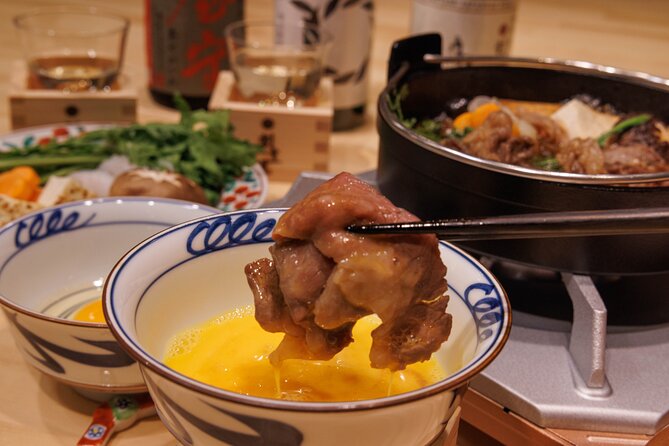
I would recommend it to first-time sake drinkers who want more than a single sample. The temperature comparison is the class’s most distinctive feature, and it gives you a simple way to understand your own taste.
It also suits food-focused visitors who want to work with Wagyu rather than only order it. You cook, watch a knife and vegetable presentation, and sit down to a meal that connects directly to the earlier tasting.
Families can enjoy it as a shared activity, provided the adults are comfortable with the alcohol-centered format. The family feedback describes the teaching as informative and enjoyable, and the small group should help keep the session personal.
Friends and small groups may get especially good value from the class. Group discounts are offered, and the two-hour format is easy to fit into a day of Tokyo sightseeing.
I would be more cautious if you want a long, advanced cooking course. The schedule covers several elements, so the cooking instruction is part of a broader cultural lesson rather than the only focus. I would also look elsewhere if your priority is a large sake tasting with many detailed labels and producers. The supplied information focuses on temperature, vessels, pairings, and general sake education.
Booking details worth knowing
Free cancellation is available if you cancel at least 24 hours before the 11:00 a.m. start time. Cancellations or changes made inside that window are not accepted for a refund, and the cut-off follows Tokyo local time.
The activity has a minimum number of participants. If that minimum is not met and the class is canceled, you can choose another date or experience, or receive a full refund.
The tour is confirmed at booking, accepts mobile tickets, and has a maximum of eight people. Since private transportation is not included, plan your route to Nishiazabu separately.
Should you book the sake and Wagyu class?
Book it if you want a compact, well-rounded introduction to two central parts of Japanese food culture. The strongest reasons are the three-temperature sake comparison, the Wagyu sukiyaki lunch, the small group, and the clear teaching style associated with Hiromi and the cooking staff.
At $129, the class asks more than a simple meal, but it gives you instruction, tasting, cooking, and lunch in return. I would choose it for a food-loving family, a pair of friends, or a first-time visitor who wants an activity with real participation.
Skip it if you do not drink alcohol, need hotel transportation, or want an advanced chef-level course. For everyone else, it offers a practical way to taste, cook, and learn without giving up an entire day in Tokyo.
FAQ
Where does the class take place?
The class takes place at Kappodo H.Q. and Tokyo D Kitchen Studio in DK Building, 2-chome 21-12 Nishiazabu, Minato City, Tokyo 106-0031.
What time does the experience start?
The class starts at 11:00 a.m.
How long does the class last?
The activity lasts approximately two hours.
How many people can join?
The maximum group size is eight participants.
Is lunch included?
Yes. Lunch includes Wagyu beef sukiyaki.
What types of sake are included?
Sake is served in chilled, room-temperature, and warm temperature ranges. Other types of sake are also included.
Is transportation included?
No. Private transportation is not included, but the studio is near public transportation.
Do I receive anything to take home?
Yes. Participants receive a certificate of participation.
Is there a shop discount?
Yes. Participants receive 10 percent off items at the first-floor shop on the same day as the workshop.
Can I cancel for a full refund?
Yes, if you cancel at least 24 hours before the experience start time. Cancellations or changes made less than 24 hours in advance are not accepted for a refund.
More Drinking Tours in Tokyo
- Tokyo Bar Hopping Tour in Shinjuku (All-You-Can-Drink + Dinner)
★ 5.0 · 3,587 reviews - Tokyo: Shinjuku Local Bar and Izakaya Guided Walking Tour
★ 4.9 · 1,794 reviews - Shibuya Meltdown Nightlife Tour: All-You-Can-Drink Bar Hopping
★ 5.0 · 1,058 reviews - Tokyo: Pub Crawl and Bar Tour
★ 4.5 · 951 reviews
More Food Crawls in Tokyo
- Tokyo: Shinjuku Food Tour (13 Dishes at 4 Local Eateries)
★ 5.0 · 6,603 reviews - Tokyo: Shinjuku Food Tour (15 Dishes and 4 Eateries)
★ 4.9 · 2,033 reviews - Best of Shinjuku: Izakaya Food Tour (4 Stops, 14+ Tastings)
★ 5.0 · 1,863 reviews - Tokyo Night Foodie Tour in Shinjuku – Seasonal Sushi, Wagyu Beef
★ 5.0 · 1,161 reviews
New on our Tokyo list
- Sumi-e Experience in a relaxing green tea shop in Tokyo★ 5.0 · 3 reviews
- Tokyo : Kamikaze Street Drift Ride★ 5.0 · 3 reviews
- Private Zen Meditation in English in Shinjuku, Tokyo★ 5.0 · 3 reviews
- Easy for everyone! Now you can play handmade mini shamisen and show off to everyone! Musical instruments, sweets and live music★ 5.0 · 3 reviews
- Onsen Spa in Tokyo and Asakusa Bar Hopping with Local Guide★ 5.0 · 3 reviews
- Tokyo: Private Tsukiji Street Food & Sake with Local Guide★ 5.0 · 3 reviews
- Mt Fuji Exploration Tour with Free Japanese Kusa Mochi from Tokyo★ 4.5 · 3 reviews
- Tokyo Tsukiji Fish Market Walking and Exploring Hidden Gems Tour★ 5.0 · 3 reviews
Tokyo Food Tours, compared.
Shinjuku Food Tour (13 Dishes at 4 Local Eateries)
Read our review →
Shinjuku Food Tour (15 Dishes and 4 Eateries)
Read our review →
Best of Shinjuku: Izakaya Food Tour (4 Stops, 14+ Tastings)
Read our review →
Tokyo Night Foodie Tour in Shinjuku – Seasonal Sushi, Wagyu Beef
Read our review →
Eat and Drink Like a Local: Tokyo Ueno Food Tour-Taverns&Ramen
Read our review →
Tsukiji Fish Market: Street Food & Culture Walking Tour
Read our review →Shinjuku Food Tour – 15 Dishes, 3 Drinks, 4 Eateries
Read our review →Browse the lists this tour appears in