
Reviewed · TEMPLE & SHRINE TOURS
Kamakura Zen Temples and Gardens Private Trip with Government-Licensed Guide
Kamakura gives you an unusual choice: instead of racing through a fixed route, you can build a six-hour day around three or four places you genuinely want to see. A licensed local guide can connect Zen temples, gardens, shrines, the Great Buddha, and even wooded walking trails into a plan that fits your interests.
I like the private format because you get direct answers about Buddhism, samurai culture, architecture, and local customs. I also like the flexibility: guides such as Kei, Kappa, and Seky have helped shape days around temple visits, bamboo gardens, traditional food, and the weather.
The catch is simple but important: $153.11 per person covers the guide and custom tour, not the whole day. You pay for transport, meals, and most entrance tickets separately, and the advertised 18 stops are options, not a promise that you will visit them all.
In This Review
- Key points to know before you book
- Why a private Kamakura day can work so well
- Engaku-ji and Kencho-ji, Kamakura’s Zen foundation
- Meigetsu-in and Jochi-ji, smaller-scale temple beauty
- Jomyo-ji and Hokoku-ji, the best garden pairing
- The Great Buddha and Hasedera, Kamakura’s famous icons
- Shrines and religious variety around Kamakura
- Forest trails and Enoshima, two very different add-ons
- What the guides add to the day
- Price, extra costs, and the real value
- Who should book this Kamakura experience?
- Should you book it?
- FAQ
- How long is the Kamakura tour?
- How many sights can I visit?
- Is transportation included?
- Are entrance fees included?
- Is lunch included?
- Can I cancel for a full refund?
Key points to know before you book
- Choose only three or four sights: The long list is a menu for customization, not a packed six-hour schedule.
- Private attention matters here: You can ask questions and adjust the pace without keeping up with strangers.
- The Great Buddha and Hasedera make a strong pairing: Both are famous, but they offer very different experiences.
- Hokoku-ji adds a memorable bamboo grove: The small temple is a good choice if gardens and quiet paths appeal to you.
- Transport is not included: The tour meets on foot, and buses, trains, taxis, and admission fees are extra.
- A guide can make the culture easier to read: Names, rituals, temple ranks, and shrine customs mean more when someone explains them on the spot.
Why a private Kamakura day can work so well
Kamakura is compact enough to visit from Tokyo, but its temples and shrines are spread across several parts of town. One site sits near the station, another lies in a wooded valley, and the Great Buddha is closer to the coast. You can certainly explore alone, but a guide helps you decide what belongs together.
The strongest part of this experience is not the number of stops. It is the chance to say, I care more about Zen gardens than famous statues, or I want the Great Buddha and a short forest walk, and have the day shaped around that request.
You meet the guide on foot within the designated Kamakura area. The exact meeting point matters, so check it carefully before setting out. Pickup is not private vehicle pickup by default. This is a walking tour, and private transport is not included.
The six-hour length gives you enough time for a thoughtful half-day rather than a quick photo hunt. Still, you should keep your expectations realistic. Three or four substantial sites, with travel between them, will fill the day. The short ten-minute entries in the suggested route are better treated as optional glimpses than full visits.
More Private Tours in Kamakura
- Kamakura Private Tour: Temples, Nature, and the Great Buddha
★ 5.0 · 121 reviews - Kamakura 8 hr Private Walking Tour with Licensed Guide from Tokyo
★ 5.0 · 80 reviews - Kamakura: Private Guided Walking Tour with Local Guide
★ 4.8 · 60 reviews
Engaku-ji and Kencho-ji, Kamakura’s Zen foundation
If you want a day centered on Zen, begin with the northern temple area. Engaku-ji is ranked number two among Kamakura’s Five Great Zen Temples. It was founded in 1282 by Hojo Tokimune, the ruling regent of the period.
I would choose Engaku-ji for its sense of place and for an introduction to Kamakura’s Zen tradition. The suggested stop is only ten minutes, but that is not enough for a careful visit. Ask your guide to allow more time if you want to notice the buildings, grounds, and quiet corners rather than simply pass through.
Kencho-ji holds the number one position among the Five Great Zen Temples and was founded in 1253 by Hojo Tokiyori. It is also described as the oldest Zen temple in Kamakura. Those details give your guide plenty to explain, especially if you are trying to understand how Zen institutions fit into the city’s samurai-era past.
The suggested visit lasts 30 minutes. That is more useful than the ten-minute Engaku-ji listing, but still brisk if you want a slow garden visit. I would not force both temples into the day unless Zen history is your main interest. For many people, one major Zen temple paired with a garden or statue will feel more balanced.
Meigetsu-in and Jochi-ji, smaller-scale temple beauty
Meigetsu-in is known as the Hydrangea Temple because hydrangeas bloom across its grounds. The temple belongs to the Rinzai Zen tradition and was founded in 1160.
This is a particularly seasonal choice. If flowers and carefully kept temple grounds matter to you, tell your guide that before the tour begins. The 30-minute suggested stop gives you time for a pleasant look, though flower conditions naturally vary by season.
Jochi-ji is number four among Kamakura’s Five Great Zen Temples and belongs to the Engaku-ji school of Rinzai Zen. It offers another look at the network of related temples rather than a completely separate religious tradition.
I like Jochi-ji as a quieter companion to Engaku-ji. You can ask your guide to explain how the temples are connected, which makes the ranking system and Zen lineages less confusing. If you are short on time, though, I would choose one of them rather than trying to collect every temple on the list.
Tokei-ji is another small Rinzai temple connected with Engaku-ji. Its suggested stop is ten minutes, so it works best as a quick addition near the northern temple area. The same is true of Jufuku-ji, ranked number three among the Five Great Zen Temples, and Eisho-ji, the only surviving nunnery in Kamakura.
Eisho-ji has a different story from the male monastic institutions. It was founded in the early Edo period by a woman connected to the Tokugawa family. If women’s religious history or the Edo period interests you, it may deserve priority over another short temple stop.
Jomyo-ji and Hokoku-ji, the best garden pairing
Jomyo-ji is ranked fifth among the Five Great Zen Temples and sits in the hills of eastern Kamakura. It was founded by the influential Ashikaga family.
I would pair Jomyo-ji with Hokoku-ji. Together, they offer a good mix of temple history, hillside setting, garden atmosphere, and bamboo. Jomyo-ji’s suggested visit lasts 30 minutes, enough for a measured stop if you are not trying to cover every corner.
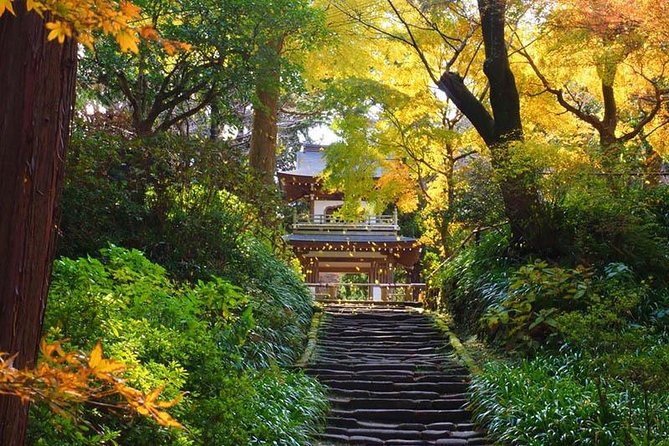
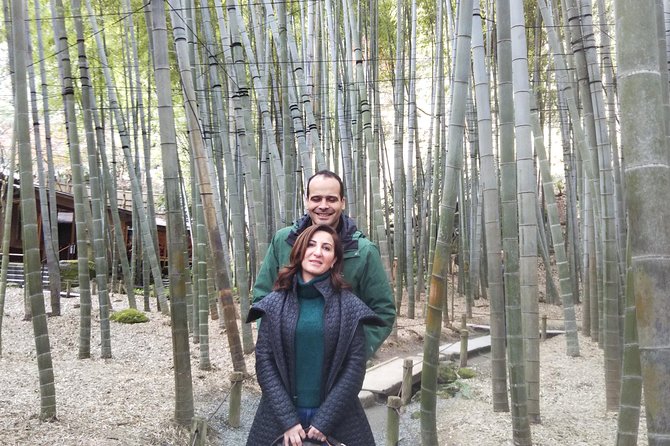
Hokoku-ji is the better pick if you have one clear visual priority. Behind its main hall, more than 2,000 bamboo stalks fill a small grove crossed by narrow paths. The space is not huge, and that is part of its appeal. You are not signing up for a long forest expedition. You are getting a focused, memorable garden visit.
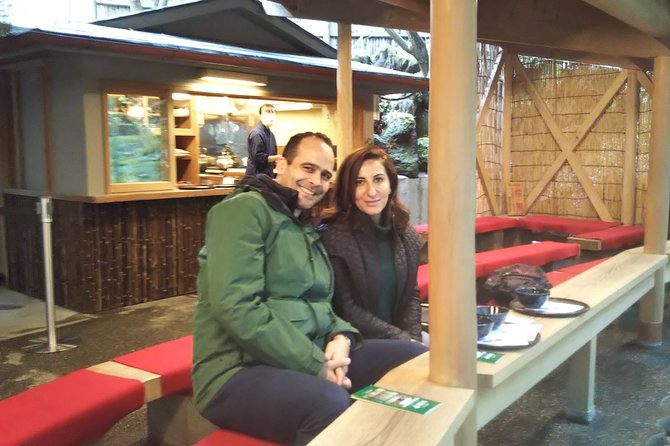
The bamboo grove is also linked with green tea in one guide-led day, so you can ask about adding that kind of pause when planning. Do not assume food or tea is included. Meals and personal expenses are extra.
This pairing may be less useful for someone who wants famous Kamakura icons only. If your first visit must include the Great Buddha, Hasedera, and Tsurugaoka Hachimangu, the eastern Zen temples may have to wait for another day.
More Temple & Shrine Tours in Kamakura
- Tokyo: Kamakura & Enoshima Day Trip including Temple Tickets
★ 4.5 · 1,375 reviews - Kamakura Historical Walking Tour with the Great Buddha
★ 5.0 · 129 reviews - From Tokyo Kamakura, Hachimangu Shrine and Enoshima Full Day Tour
★ 4.5 · 36 reviews - Day Trip to Kamakura & Enoshima: Shrines, Seaside, Temples & Tea
★ 5.0 · 32 reviews
The Great Buddha and Hasedera, Kamakura’s famous icons
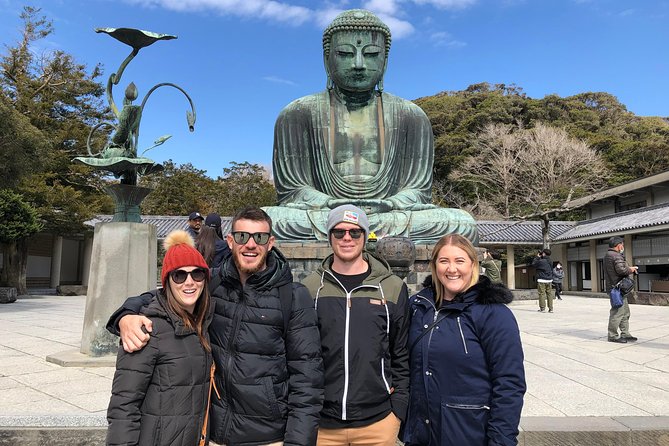
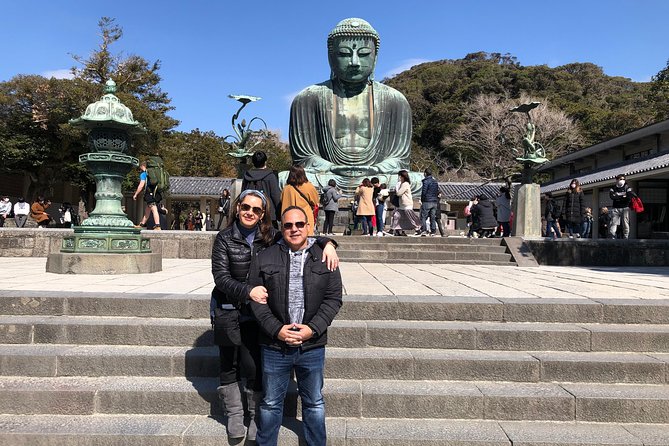
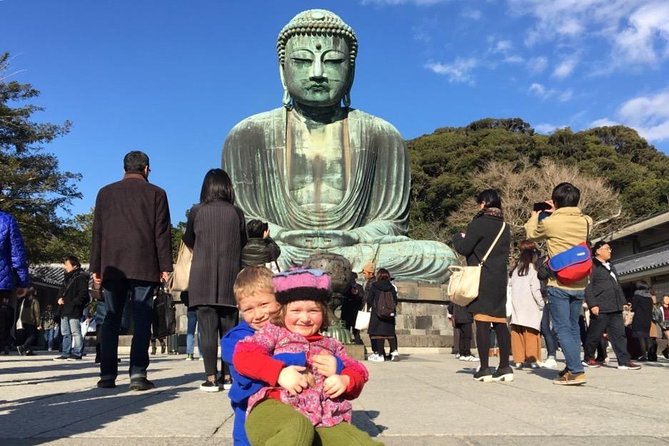
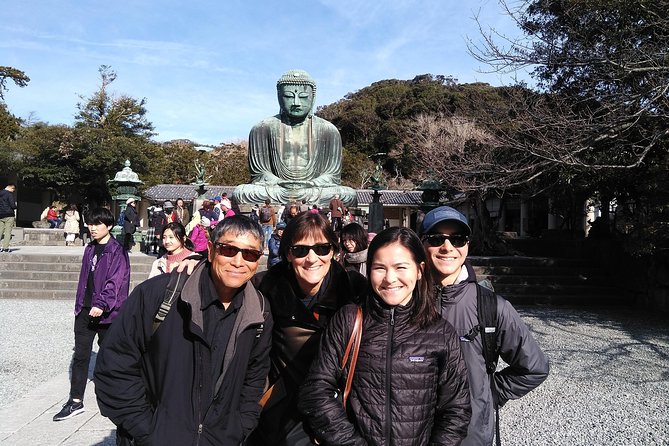
Kotoku-in is home to the Great Buddha of Kamakura, an 11.4-meter bronze image of Amida Buddha. It is one of the city’s essential sights, and I would make room for it if this is your first visit.
The statue gives you a strong focal point after a morning of temple grounds and religious architecture. The suggested visit is 30 minutes, which should allow time to see the statue and its setting. Entrance is not included, so budget separately.
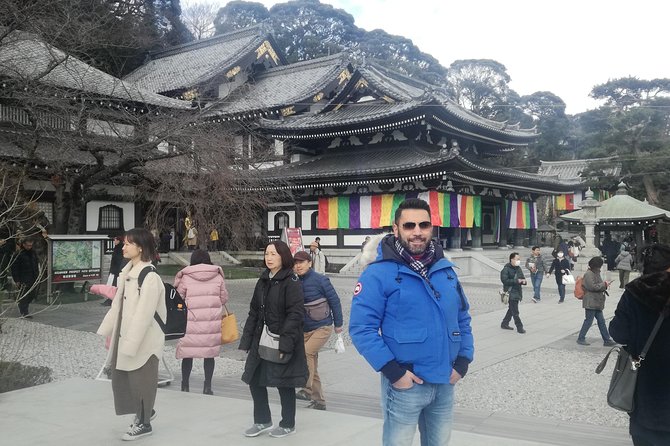
Hasedera is famous for its 9.18-meter, eleven-headed wooden Kannon statue, associated with mercy. The temple belongs to the Jodo sect, so it adds religious variety to a day otherwise centered on Rinzai Zen.
The suggested Hasedera stop is only ten minutes. That is a warning to discuss timing with your guide. The site deserves more than a rushed look if you want to appreciate both the Kannon tradition and the temple grounds. If you choose the Great Buddha and Hasedera, you have already used two of your three or four main choices.
A guide can also help you avoid building a day that sounds good on paper but wastes time crossing town. The Great Buddha, Hasedera, and western Kamakura sights make a natural group, while the eastern and northern temples belong to different clusters.
Shrines and religious variety around Kamakura
Tsurugaoka Hachimangu is dedicated to Hachiman, the patron deity of the Minamoto family and samurai in general. It is a Shinto shrine rather than a Zen temple, making it a useful counterpoint to the Buddhist sites.
The suggested stop is ten minutes, and admission is free. I would use it as an add-on if you are already near central Kamakura, not necessarily as one of the four main stops. Its importance comes from the link between religion, military power, and the Minamoto family.
Zeniarai Benten is a popular shrine where people wash money in a sacred spring. The name itself refers to coin washing, and the custom gives you something active to observe rather than another hall or statue to inspect.
The suggested visit is 30 minutes, with no admission fee listed. It is a good pick if you enjoy local customs and want a shrine experience that feels different from formal temple sightseeing.
Ankokuron-ji and Myohon-ji represent Kamakura’s Nichiren Buddhist tradition. Nichiren founded Ankokuron-ji around 1253, while Myohon-ji was founded in 1260 by Hiki Yoshimoto. Their suggested times are ten minutes each, so I would choose them only if Nichiren Buddhism is a priority.
Forest trails and Enoshima, two very different add-ons
Kamakura’s wooded hills surround the city on three sides, with the ocean to the south. Forest trails connect some temples and provide a change from paved streets and formal grounds.
The suggested hiking-trail time is only ten minutes, which is far too short to think of as a full hike. Ask your guide exactly what kind of walk fits your six-hour plan. You might find a short connecting path useful, but the information provided does not promise a particular trail length or difficulty.
Enoshima is a separate coastal outing, connected to the mainland by bridge and reached by a short train ride west of Kamakura. The island offers a shrine and other attractions, with a 30-minute suggested stop.
I would not combine Enoshima with a temple-heavy Kamakura day unless you have a specific reason. Travel time can eat into your six hours, and the island deserves more than a hurried look. It works better for someone who wants a coastal change of scene and is willing to visit fewer Kamakura temples.
What the guides add to the day
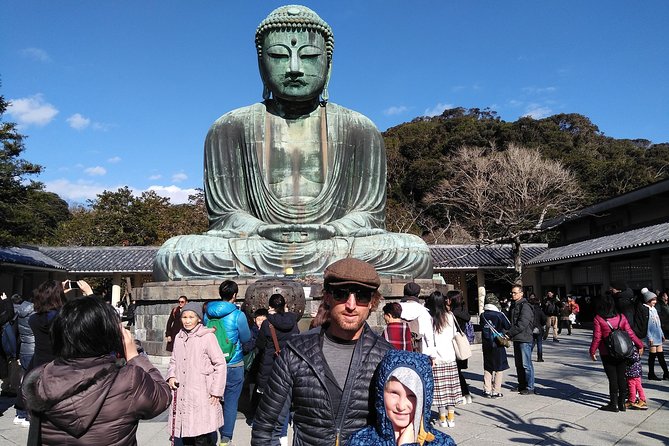
A licensed local English-speaking guide is included, and the private setup means your group alone participates. That matters most when you want explanations instead of a silent procession from gate to gate.
Kei’s approach included discussion of history, architecture, culture, and customs, along with help choosing sites. Kappa also guided a day that included a traditional local lunch at a restaurant, with food suggestions such as chilled white wheat noodles called hiyashi udon. Lunch was not part of the tour price, but this kind of help can make an unfamiliar meal easier to order.
Seky’s day included a private car and driver named Mikami, arranged separately. That example is useful, but do not read it as an included feature. The standard terms say transportation and private transport cost extra.
The guides have also handled difficult weather and hot, humid conditions. That makes the private format practical: you can ask to adjust the plan, spend longer indoors, or favor shaded temple grounds. The tour does not promise a weather-specific route, so discuss your needs when you meet.
Price, extra costs, and the real value
At $153.11 per person, this is not a cheap sightseeing walk, especially for a solo visitor. For a private group, the value improves because the guide’s time is reserved for your party and the route can match your interests.
You should add admission fees, transport, lunch, and personal expenses. Most temples on the suggested route list admission as not included, while Tsurugaoka Hachimangu, Zeniarai Benten, Enoshima, and the hiking trails are listed without an admission charge.
The tour is strongest when you use the guide to make choices you would struggle to make alone. If you already know Kamakura well and only want to walk to one temple, paying for a private guide may not make sense. If this is your first visit and you want cultural context without joining a large group, the cost can be reasonable.
Group discounts are available, so the per-person price may work better for couples, families, or friends booking together. You cannot combine separate tour groups, and the experience remains private to your own party.
Who should book this Kamakura experience?
I would recommend it to first-time visitors who want a flexible cultural day, couples who prefer a private pace, families who need help balancing interests, and anyone who wants more than a quick photograph at the Great Buddha.
It is also a good fit if you are unsure how Zen temples, Shinto shrines, Nichiren sites, and samurai history relate to one another. A guide can turn those separate stops into a clearer picture of Kamakura.
I would hesitate if you want all 18 places in one day. That is not realistic for a six-hour walking tour. I would also hesitate if you dislike extra costs or prefer to arrange every detail yourself.
The tour is confirmed at booking, free cancellation is available up to 24 hours before the start time, and most people can participate. Service animals are allowed, and the meeting area is near public transportation. You should still expect substantial walking and confirm the meeting point, since pickup is on foot.
Should you book it?
Book this tour if you want to choose a few Kamakura sights and understand what you are seeing. My ideal plan would be the Great Buddha, Hasedera, and one or two Zen temples, with Hokoku-ji replacing one temple if bamboo is high on your list.
Choose Engaku-ji and Kencho-ji for a serious Zen focus, Jomyo-ji and Hokoku-ji for gardens and bamboo, or Tsurugaoka Hachimangu and Zeniarai Benten for religious customs beyond Zen. Tell the guide your top priorities before the day begins, and keep one or two stops flexible.
For a private six-hour introduction, the personal guidance and custom route are the main value. Just budget for tickets, transport, and lunch, and remember that a good Kamakura day is about choosing well, not checking every name off a long list.
FAQ
How long is the Kamakura tour?
The tour lasts approximately six hours.
How many sights can I visit?
The tour includes a customizable walking route covering your choice of three or four sites from the available options.
Is transportation included?
No. Transportation fees and private transportation are not included. The guide meets your group on foot within the designated Kamakura area.
Are entrance fees included?
No. Entrance fees are generally extra. Guide entry fees are covered only for sights listed under the tour’s stated expectations.
Is lunch included?
No. Lunch and other personal expenses are extra. Your guide can provide local food guidance, but meals are not part of the tour price.
Can I cancel for a full refund?
Yes. You can cancel at least 24 hours before the experience start time for a full refund. Cancellations or changes made less than 24 hours before the start time are not accepted for a refund.
More Temple and Shrine Visits
- Kamakura Temples Private Guided Tour from Tokyo
★ 4.8 · 21 reviews - Kamakura Bamboo Forest and Great Buddha Private Tour
★ 5.0 · 12 reviews - Kamakura: Great Buddha, Hase Temple, & Komachi Street Tour
★ 5.0 · 11 reviews - Trip to Kamakura & Enoshima: Shrines, Seaside, Temples &Tea
★ 5.0 · 11 reviews
New on our Kamakura list
- 1-Day trip: Kamakura City (Enoshima/Shonan/Beach)★ 4.7 · 3 reviews
- Kamakura Zen: Great Buddha, Nature, Bamboo & Samurai Culture★ 5.0 · 3 reviews
- Kamakura Half Day Walking Tour with Local Experience★ 3.4 · 4 reviews
- Hiking Tour in Enoshima with a Local Guide★ 5.0 · 4 reviews
- Kamakura Tour with Pro Photographer: Anime Train & Fuji Sunset★ 5.0 · 4 reviews
- Kamakura Private Custom Tour★ 5.0 · 4 reviews
- Kamakura Historical and Cultural Day Trip with Local Cuisine★ 5.0 · 4 reviews
- Kamakura Full-Day Private Tour★ 5.0 · 4 reviews
Temple & Shrine Tours, compared.
Meiji Shrine, Asakusa, Skytree Bus Tour and Cruise
Read our review →
Asakusa Walking Tour with Sensoji Temple Visit
Read our review →
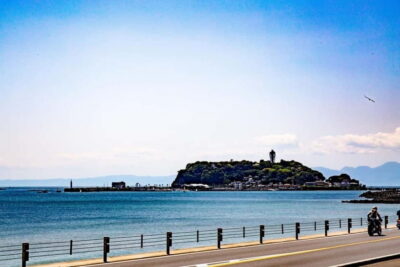
Kamakura & Enoshima Day Trip including Temple Tickets
Read our review →
Nikko Toshogu Shrine and Kegon Waterfall Tour
Read our review →
Tokyo Panoramic 1 Day: Meiji Shrine, Asakusa, Odaiba and SKYTREE®
Read our review →
Mt. Fuji Heritage Tour: Traditional Villages, Lakes & Shrine
Read our review →Browse the lists this tour appears in