
Reviewed · TSUKIJI & TOYOSU MARKET TOURS
Master the art of Sushi : Toyosu Market Tour & Tuna Cutting
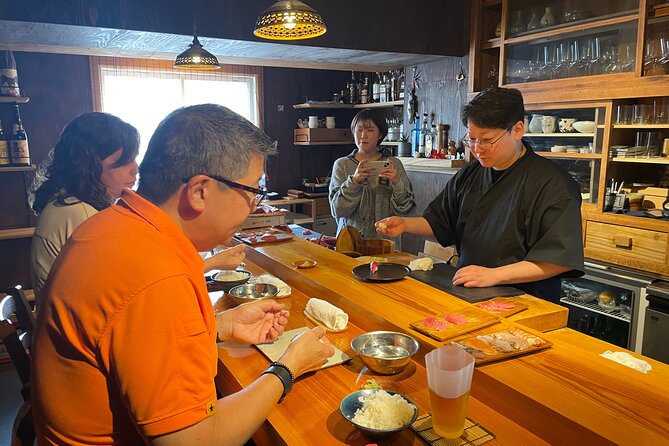
The most unusual part of this Tokyo food tour is the chance to help cut a large tuna before comparing its fatty, middle, and lean sections. You then turn some of it into nigiri sushi with a chef, a far more hands-on lesson than simply sitting at a sushi counter.
I like the small group of no more than six, which gives the guide room to explain fish quality and answer questions. I also like the contrast between Toyosu, Tokyo’s modern wholesale market, and Tsukiji’s street-level shops and food stalls.
The main caution is time spent moving between stops. Subway or bus fares are not included, and one part of the route can take more than an hour in transit. At $297.23 per person, this is a specialist food experience, not a cheap market walk.
In This Review
- Key points to know before booking
- A tuna lesson with more bite than a standard sushi class
- 7 a.m. at Toyosu Market
- Tsukiji for a different kind of market experience
- Azabujuban and the hands-on sushi lunch
- What the $297.23 price really covers
- Timing, transport, and the early start
- Who will get the most from this experience
- Booking details worth keeping in mind
- Should you book it?
- FAQ
- Where does the tour begin?
- Where does the tour end?
- How long does the experience last?
- Is lunch included?
- Are public transportation fares included?
- How many people can join the tour?
- What is the cancellation policy?
Key points to know before booking
- Cut three kinds of tuna: Compare fatty, middle, and lean portions, then taste them in different ways.
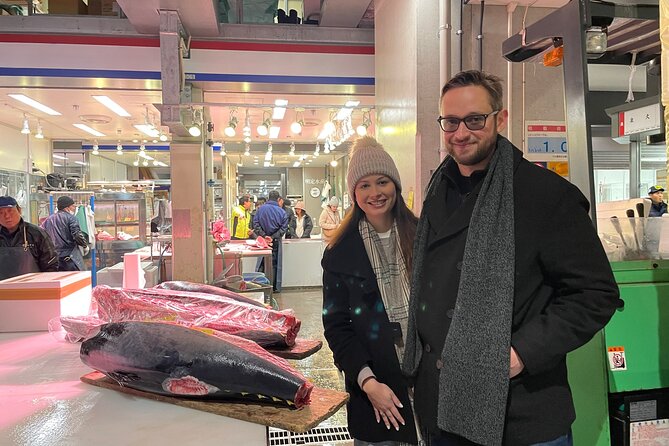
- Start early at Toyosu: Meet at Shijo-mae Station at 7 a.m. for a guided look at the wholesale market.
- See two sides of Tokyo seafood: Toyosu is the market successor to Tsukiji, while Tsukiji offers shops, snacks, and a more casual eating stop.
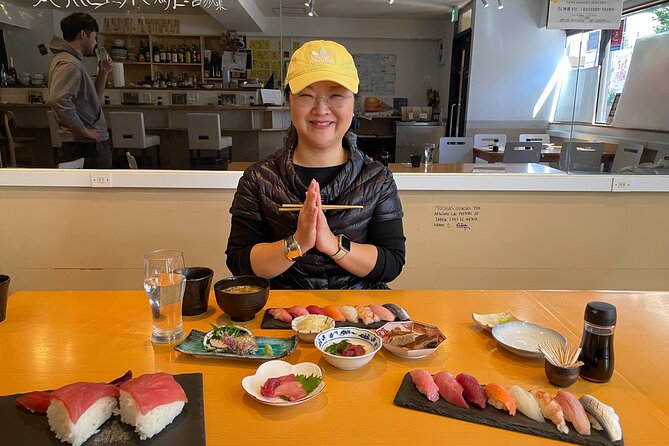
- Make your own lunch: Tuna and sushi prepared during the lesson are included.
- Keep the group small: The maximum is six people, with an English-speaking guide.
- Plan for extra transport costs: Subway or bus fares between locations are paid separately.
A tuna lesson with more bite than a standard sushi class
Many sushi classes begin with a neat row of ingredients and a short demonstration. This one begins closer to the source. At Azabujuban, you watch a sushi chef cut tuna and explain how different sections vary in texture and flavor.
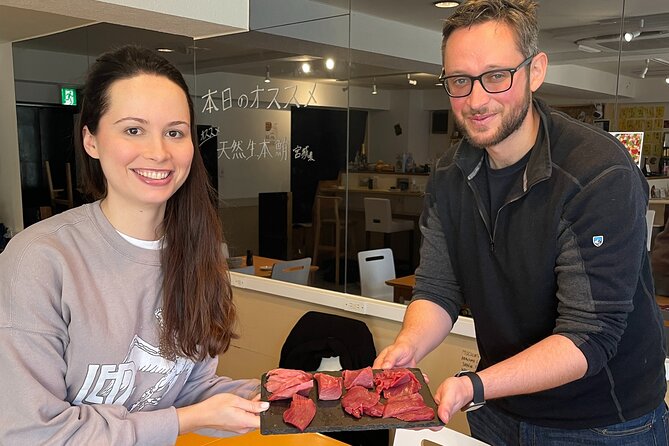
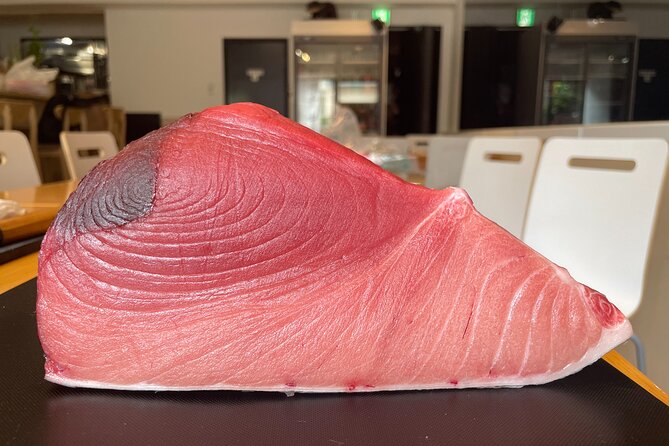
The lesson includes fatty, middle, and lean tuna. That comparison matters because tuna is not one single eating experience. The fatty portion can feel softer and fuller, while leaner sections offer a different texture and taste. The supplied details do not promise a formal fish-market certification course, but you do get practical insight into selection, freshness, and sushi-grade standards.
You also learn how the fish becomes nigiri. The appeal here is not only eating lunch. You get to see the work behind a piece of sushi, then try preparing it yourself. If you enjoy Japanese food but have never understood why two tuna pieces can taste so different, this part gives you a useful frame of reference.
The group size helps. With no more than six people, you should have a better chance to see the cutting and follow the chef’s instructions than you would in a large class. The guide, Amy, has been singled out for being personable and well informed, and her role links the market visits with the meal.
More market mornings in Tokyo:
- Tokyo Tsukiji Fish Market Food and Culture Walking Tour
★ 5.0 · 3,184 reviews - Tokyo: Tsukiji Fish Market Food and Walking tour
★ 5.0 · 1,724 reviews - Tokyo: Tsukiji Fish Market Guided Walking Tour
★ 4.9 · 1,397 reviews
7 a.m. at Toyosu Market
The tour begins at Shijo-mae Station in Toyosu at 7 a.m. That early start is important. Toyosu is Tokyo’s main fish market, and a morning visit fits the rhythm of a working wholesale operation better than a late-morning stroll.
You visit the wholesaler market with the guide and have the option to buy fish there. The admission cost for this stop is included, but your personal purchases are not stated as part of the tour price, so bring a payment method and treat shopping as an optional extra.
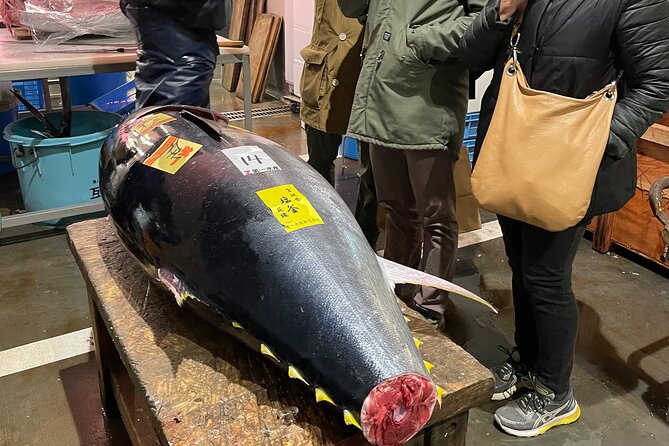
Toyosu is also valuable because it gives you context for Tokyo’s seafood trade. This is the successor to Tsukiji, the market long associated with Tokyo’s famous fish auctions and sushi culture. You are not simply looking at seafood behind glass. You are seeing the setting where fish is selected and sold before it reaches restaurants and shops.
The experience is not described as a tuna auction viewing, so do not book it expecting a guaranteed auction spectacle. The clear focus is the wholesale market visit, fish selection, and the later tuna-cutting lesson.
I would wear comfortable shoes and keep your morning schedule open. The tour lasts about four hours, but the day includes several locations and public transport. A 7 a.m. meeting also means you need to be ready to navigate to Shijo-mae before the tour begins.
Tsukiji for a different kind of market experience
From Toyosu, the tour continues to Tsukiji Jogai Market. This part lasts about an hour, including travel time, and combines browsing with eating and shopping.
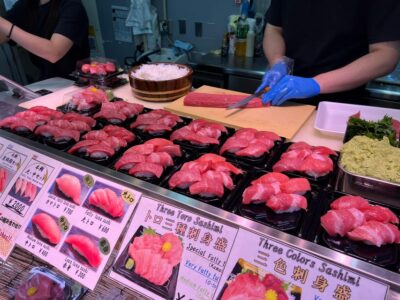
Tsukiji is not being presented as a second wholesale-market lesson. Its value is different. You visit various stores, try food while walking around, and compare the feel of Tsukiji with Toyosu. That contrast is one of the smartest parts of the route because it shows two linked but distinct sides of Tokyo’s seafood culture.
At Toyosu, you are closer to the wholesale trade. At Tsukiji, you have more opportunity to look at shops and sample market food. The tour gives you a guide to help choose places, which is useful when a short visit could otherwise turn into random wandering.
Keep your expectations in check. The tour includes lunch later, and the Tsukiji stop is only about an hour. You may have time to sample a few items, but this is not a long, unhurried food crawl. If you want to shop extensively or eat your way through every lane, you will need to return on your own.
The public transport connection also deserves attention. The published route includes travel time, but a participant found that more than an hour was spent on public transportation between destinations. That makes the journey part of the experience, not a minor footnote. In hot weather, the transfers can feel tiring, especially with a family or anyone who dislikes rushed city travel.
Azabujuban and the hands-on sushi lunch
The final main stop is a Japanese restaurant in Azabujuban, where the tuna cutting and sushi preparation take place. The listed lesson lasts about an hour and a half, making it the longest single activity on the route.
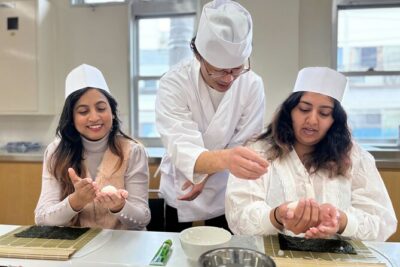
This is where the tour earns its specialist price. You do not just watch a chef handle tuna. You compare its different parts, try different ways of eating it, and prepare nigiri sushi. Tuna and the sushi made during the session form part of the included lunch.
One particularly memorable detail is the scale of the cutting demonstration. The experience includes cutting about three kilograms of tuna, enough to make the differences between sections clear rather than merely theoretical. You can see how the fatty, middle, and lean portions are separated, then taste the results.
The sushi-making component also gives you something to take home besides a full stomach. The tour promises preparation tips you can try later. You should not expect a professional chef qualification, but you will gain a better sense of how sushi is shaped and how tuna can be served.
The meal takes place at a small local restaurant, according to the experience details. That setting may appeal to you if you prefer a focused lesson over a polished restaurant performance. It can also feel more personal, particularly with a six-person maximum.
More sushi mornings and classes:
- Sushi Making Tokyo Roll and Authentic Japanese Sushi Class
★ 5.0 · 3,971 reviews - Tokyo: Roll and Authentic Sushi Making Class in Asakusa
★ 4.9 · 1,957 reviews - Make Sushi and Create Unforgettable Memories in Tokyo
★ 5.0 · 1,413 reviews - Tokyo: Sushi Making Class in a Happi Coat near a Famous Spot
★ 4.9 · 1,377 reviews
What the $297.23 price really covers
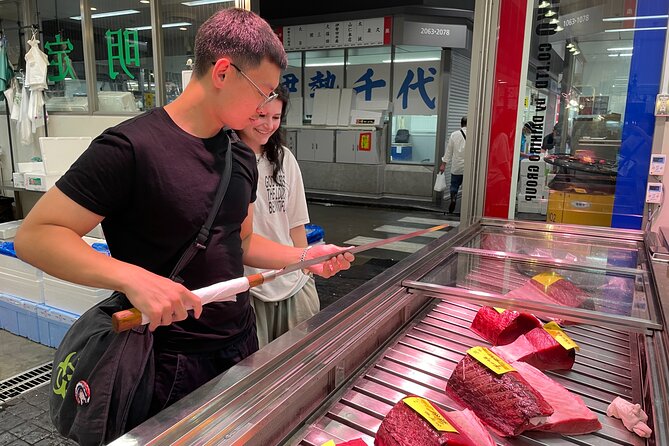
At $297.23 per person, this is expensive for a four-hour Tokyo food outing. The price makes more sense if you value access, instruction, and a structured route rather than simply the amount of food you eat.
You are paying for an English-speaking guide, the Toyosu visit, the Tsukiji stop, a tuna-cutting session, sushi preparation, and lunch made with tuna and sushi from the class. The small group is another part of the value. A private or near-private feel is harder to find in Tokyo food activities, and six people is a practical limit for watching a large fish being cut.
Still, the cost is not all-inclusive. Subway or bus fares between stops are extra, and any fish or additional food you buy at the markets is also your responsibility. You should also consider what type of food experience you want. If you mainly want to eat excellent sushi, a restaurant meal may give you more food for less money. If you want to understand tuna and make sushi under guidance, this tour offers more than a meal.
The strongest reason to pay the price is the combination of market access and practical instruction. A regular Tsukiji visit can show you snacks and shops. A normal sushi lunch can show you finished dishes. This tour connects the market, the fish, and the preparation.
Timing, transport, and the early start
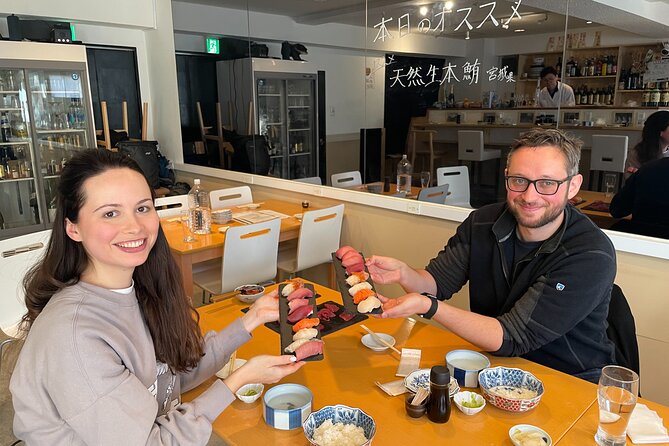
The advertised duration is approximately four hours, beginning at 7 a.m. and ending in Azabujuban. The route is one-way, so do not expect to finish back at Toyosu.
The end point is 3-chome-3-4 Azabujuban in Minato City. That can be convenient if you plan to spend the afternoon in the Azabujuban area, but it may require another train or subway ride if your hotel is elsewhere.
The public transport issue is the biggest practical weakness. The tour uses subway or bus travel, and those fares are not included. More important, the transfers consume useful time. One account found the travel between destinations took more than an hour, and the guide acknowledged that moving around in hot weather was uncomfortable.
I would avoid booking this on a day when you need to reach another fixed appointment soon after. The tour has three distinct locations, and city transport can be unpredictable. Give yourself a relaxed afternoon after the sushi lesson.
The early start can be a plus if you want to see Toyosu at a more active hour and still have much of the day ahead. It is less appealing if you are adjusting to jet lag or prefer slow mornings. The experience is best for someone willing to trade a little sleep and comfort for a more specific look at Tokyo’s seafood business.
Who will get the most from this experience
This tour suits serious sushi fans, especially those curious about tuna rather than only interested in eating it. You will get the most from it if you want to compare cuts, ask questions, and take part in the preparation.
It also suits curious first-time visitors who want a guide to connect Toyosu and Tsukiji. Seeing both locations helps explain why Tsukiji remains part of Tokyo’s food identity even though Toyosu is the main successor market.
Families can participate, since most people can take part, but I would think about the early start and the public transport. A young child may enjoy eating sushi but have less patience for a wholesale-market visit and lengthy transfers.
The tour may not suit you if you want a slow market breakfast, a long shopping session, or a single-location cooking class. The route is active and spread out. You need to be comfortable walking, changing transport, and keeping to a morning schedule.
The experience has a 4.9 rating from 60 reviews and a 98 percent recommendation rate. Those figures point to a strong level of satisfaction, but the price and transport demands still deserve a clear look before you commit.
Booking details worth keeping in mind
You receive a mobile ticket, and confirmation is sent within 48 hours of booking, subject to availability. The tour requires a minimum number of participants, so it can be moved or canceled if that number is not met.
Free cancellation is available up to 24 hours before the local start time for a full refund. Changes or cancellations inside that 24-hour window are not accepted for a refund.
The activity also depends on good weather. If poor weather causes cancellation, you are offered another date or a full refund. Since the route includes market visits and movement around the city, this policy is more relevant than it would be for a fully indoor restaurant class.
Should you book it?
Book this tour if you want more than a sushi lunch. The combination of Toyosu’s wholesale setting, Tsukiji’s food stalls, a large tuna-cutting session, and hands-on nigiri preparation is unusual. Amy’s friendly guiding style and the six-person limit add to the appeal.
Skip it if $297.23 feels high for four hours, or if spending a large part of the morning on public transportation sounds frustrating. You should also pass if you want plenty of free time at Tsukiji.
For the right person, this is a focused food lesson with a real connection to Tokyo’s seafood trade. Arrive rested, budget for transit and market purchases, and keep your afternoon free. If that plan sounds good, the tuna comparison and sushi-making session make the cost easier to justify.
FAQ
Where does the tour begin?
The tour begins at Shijo-mae Station, 6 Chome-3, Toyosu, Koto City, Tokyo, at 7 a.m.
Where does the tour end?
The tour ends at 3-chome-3-4 Azabujuban in Minato City, Tokyo.
How long does the experience last?
The experience lasts approximately four hours.
Is lunch included?
Yes. Lunch includes tuna and sushi made during the experience.
Are public transportation fares included?
No. Subway or bus transportation used during the tour is not included in the price.
How many people can join the tour?
The tour has a maximum of six participants.
What is the cancellation policy?
You can cancel at least 24 hours before the local start time for a full refund. Cancellations or changes made less than 24 hours before the start time are not accepted for a refund.
More Shopping Tours in Tokyo
- Tokyo: Tsukiji Fish Market Sushi Making Class with Pro Chef
★ 4.9 · 506 reviews - Tokyo Food Tour Taste Fresh Delights at Tsukiji Market
★ 5.0 · 429 reviews - Tokyo Tsukiji Fish Market Tour and Sushi Making Lesson
★ 5.0 · 390 reviews - Tsukiji Fish Market: Street Food & Culture Walking Tour
★ 4.8 · 259 reviews
More Markets in Tokyo
- Tsukiji Fish Market Guided Tour and Sushi Making with Pro Chef
★ 5.0 · 775 reviews - Tokyo: Tsukiji Fish Market Food and Culture Walking Tour
★ 4.7 · 757 reviews - Tsukiji Fish Market: Street Food & Culture Walking Tour
★ 5.0 · 669 reviews - Tsukiji Fish Market Small-Group Food Walking Tour
★ 5.0 · 621 reviews
New on our Tokyo list
- From Tokyo: Mount Fuji & Hakone Full Day Private Tour★ 4.9 · 25 reviews
- Tokyo Spectacular View Day-Cruise in 90 Minutes★ 5.0 · 25 reviews
- Real Tokyo Runner Club : Daikoku Car Meet Night Tour with JDM Car★ 5.0 · 25 reviews
- 2.5 Hour-Guided Cycle Tour in the Central Tokyo★ 5.0 · 25 reviews
- [Self-Drive] Tokyo & Daikoku Custom Car Driving Tour★ 4.9 · 25 reviews
- Tokyo: 2-Hour Night Bike Tour of the City’s Hidden Gems★ 4.9 · 25 reviews
- Ramen Making from Scratch +Akihabara Tour –Cooking Class★ 5.0 · 25 reviews
- Samurai themed Entertainment show in Shinjuku★ 4.5 · 25 reviews
Tsukiji & Toyosu Market Tours, compared.
Tokyo Tsukiji Fish Market Food and Culture Walking Tour
Read our review →
Tokyo Sushi Making Class in Tsukiji with Professional Chef
Read our review →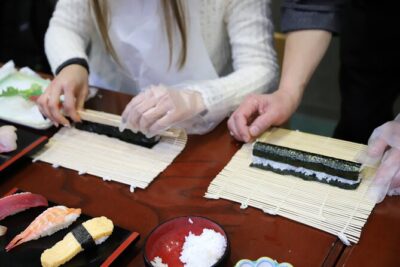
Tsukiji Fish Market Guided Tour and Sushi Making with Pro Chef
Read our review →Tsukiji Fish Market Food and Culture Walking Tour
Read our review →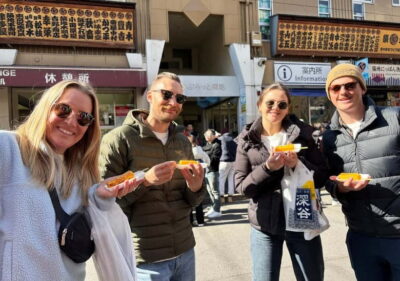
Tsukiji Fish Market: Street Food & Culture Walking Tour
Read our review →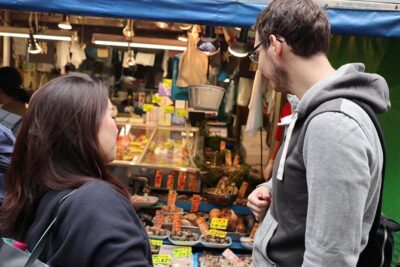
Tsukiji Fish Market Small-Group Food Walking Tour
Read our review →Browse the lists this tour appears in