
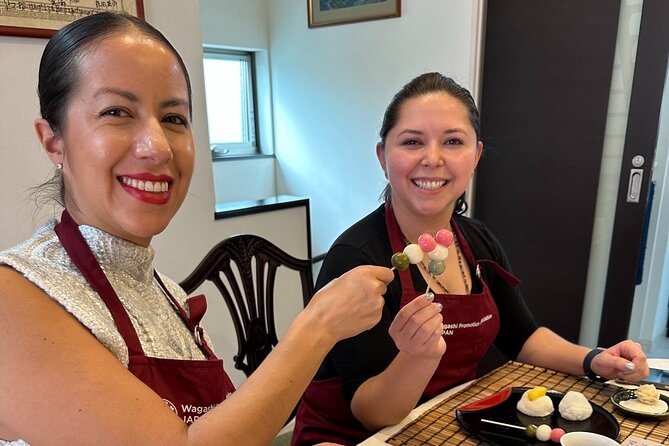
Reviewed · WORKSHOPS
Mochi Sweets Making Class in Tokyo
The fun begins with a simple ingredient: glutinous rice flour. In about 90 minutes, Satoko guides you through strawberry daifuku, dango, warabi-mochi, and isobe-mochi, with a mochi-ice cream recipe to take home. I like the hands-on pace and the fact that the recipes use ingredients you can usually find outside Japan.
I also like the personal setting. You work in a private home in a quiet Ota City neighborhood, not a crowded cooking studio, and Satoko adds stories about mochi and Japanese celebrations. The main drawback is location: you need to reach Kitaminemachi yourself, and the home has two cats, which matters if you have a strong allergy.
In This Review
- Key points to know before booking
- What the 90-minute mochi class is really like
- Starting with mochi basics and Japanese tradition
- Strawberry daifuku and seasonal fruit
- Dango, warabi-mochi, and isobe-mochi
- Finishing with tea, tasting, and a takeaway box
- Why the private home setting matters
- Food choices and family suitability
- How much value do you get for $75.12?
- Photos and the personal touch
- Planning your visit to Kitaminemachi
- Who should book this mochi-making experience?
- Should you book Satoko’s Tokyo mochi class?
- FAQ
- Where does the mochi-making class take place?
- How long does the class last?
- How far is the class from central Tokyo?
- What sweets will I make?
- Is the class suitable for vegetarians?
- Do I need to bring an apron or cooking tools?
- Can I take the mochi home?
- Is this a private activity?
- Are there cats at the class location?
Key points to know before booking
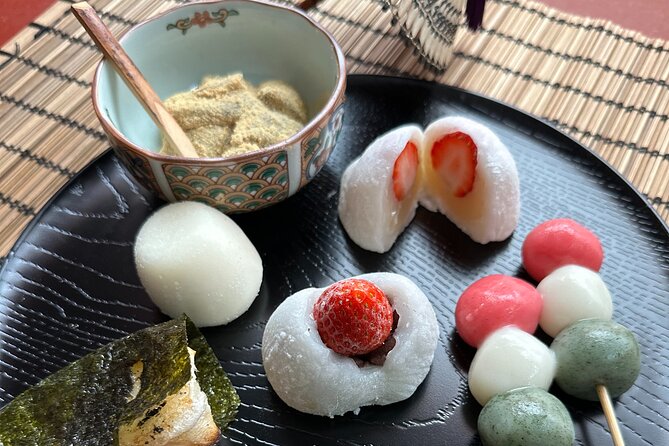
- Four kinds of mochi in one class: Make strawberry daifuku, fruit-filled daifuku when strawberries are out of season, dango, warabi-mochi, and isobe-mochi.
- Satoko teaches in English: The lesson is step by step, with cultural background and plenty of time to practice.
- A real residential setting: The class takes place in a private home in Ota City, around 15 minutes from central Tokyo by train or car.
- Good for families and vegetarians: Plant-based ingredients are used, and vegan options are available.
- Eat or take home your sweets: Enjoy them with green tea or hojicha, or pack them in the supplied box.
- Photos are part of the memory: Portrait photos and videos taken during class can be provided to you.
What the 90-minute mochi class is really like
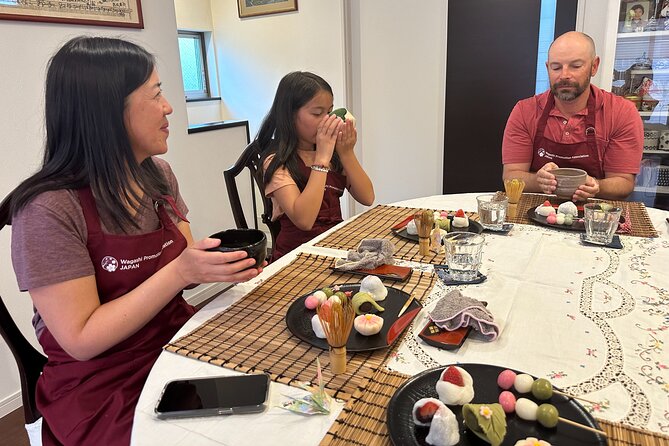
This is not a demonstration where you sit quietly and watch someone else do the work. You make the sweets yourself, using glutinous rice flour and a straightforward recipe that you can download later.
Satoko leads you through each stage. The reviews of her teaching repeatedly point to her patience, clear demonstrations, warm manner, and strong English. That matters here because mochi dough can be sticky, delicate, and unfamiliar. A clear explanation at the right moment saves frustration.
The lesson is designed for first-timers. You do not need to bring cooking equipment, an apron, or a towel. The class provides the apron, hand towel, wagashi-making tools, drinking water, and a special box for your sweets.
The tone is relaxed rather than formal. You are in a private residence, and the class is meant to feel cozy and personal. If your group has more than three people during the off-peak season, it can become a private lesson at no extra cost. The activity is also described as private, meaning only your own group participates.
That setup works especially well for families. Children can take part in shaping and assembling the sweets, while adults get a useful introduction to Japanese food customs. One family class was praised for keeping children involved and making the experience feel welcoming.
A few more Tokyo bookings worth comparing
- Matcha Making Class in Tokyo with Authentic Japanese Sweets Set
★ 5.0 · 744 reviews - Tokyo: Matcha Making Experience with Mochi Sweets in Asakusa
★ 4.9 · 388 reviews - Make Traditional Nerikiri Sweets & Matcha experience in Shibuya
★ 5.0 · 130 reviews
Starting with mochi basics and Japanese tradition
Before you start shaping sweets, Satoko explains what mochi is and how it relates to Japanese traditions and celebrations. This is one of the strongest parts of the experience because mochi is more than a soft dessert.
You learn that the same basic ingredient can appear in different forms, textures, and serving styles. Satoko also explains several ways to eat mochi, giving context to the dishes you are about to prepare.
I appreciate this kind of introduction because it keeps the cooking from becoming a disconnected craft project. You are not simply mixing flour and sugar. You are learning why mochi appears so often in Japanese food culture and how different sweets fit into everyday life and special occasions.
The cultural talk is also useful for visitors who have already sampled packaged mochi in Tokyo. Those sweets may look familiar, but making them by hand gives you a better sense of the texture and care involved.
Strawberry daifuku and seasonal fruit
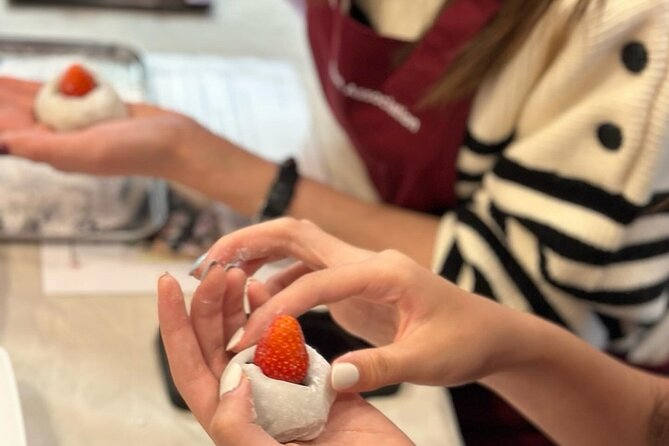
Strawberry daifuku is likely the most recognizable item on the menu. It combines soft mochi with a sweet filling and a whole strawberry when the fruit is in season.
The class does not treat strawberries as a year-round guarantee. Outside strawberry season, Satoko uses other fruit such as pineapple or kiwi. That is a practical touch, not a disappointment. It shows how the recipe can change with ingredients available at the time.
This is also where the lesson’s focus on repeatability becomes clear. The recipes use plant-based ingredients that are easily available in your own country. You are not expected to track down rare Japanese tools or specialist products once you return home.
You should expect the finished daifuku to be delicate. The pleasure is partly in getting the dough around the filling without tearing it. Satoko’s step-by-step approach is useful for this stage, particularly if you have never handled mochi before.
Dango, warabi-mochi, and isobe-mochi
The class moves beyond one famous sweet. You also make several flavors of dango, the small mochi balls served on skewers.
Dango gives you a different shape and eating style. Instead of wrapping a filling, you form small balls and prepare them in several flavors. It is a simple lesson in how one basic dough can become a range of Japanese sweets.
Warabi-mochi offers another change in texture. Despite its name, it is different from the chewy mochi used for daifuku. Learning several sweets in one sitting lets you compare them while the methods are still fresh in your mind.
Isobe-mochi brings a savory note. It is a useful reminder that mochi is not limited to dessert. The class teaches different ways to eat mochi, so you get both sweet and savory examples rather than one narrow version of the food.
The menu is generous for a 90-minute activity, but do not expect a long professional pastry course. The value is variety, direct practice, and recipes simple enough to repeat at home.
Same corner of Tokyo, a completely different plan:
- Mt Fuji and Hakone 1-Day Bus Tour Return by Bullet Train
★ 5.0 · 26,383 reviews - 1-Day Tokyo Bus Tour
★ 5.0 · 14,250 reviews - Tokyo: TOKYO SKYTREE® Admission ticket
★ 4.5 · 11,192 reviews - Tokyo: teamLab Planets TOKYO Digital Art Museum Entry Ticket
★ 4.6 · 9,779 reviews
Finishing with tea, tasting, and a takeaway box
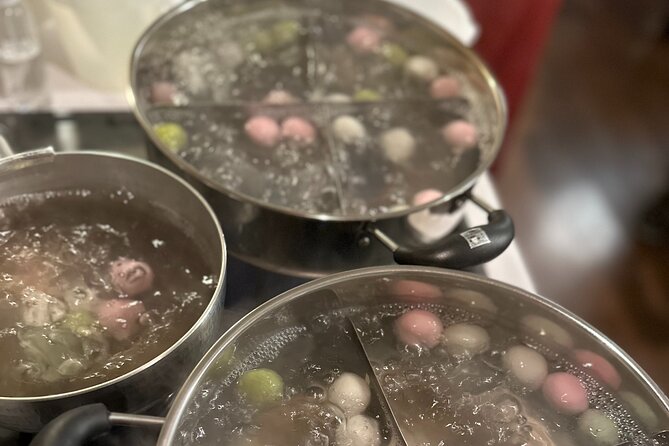
Once the cooking is done, you taste your creations with Japanese green tea or hojicha, a roasted green tea. The tea gives the tasting a calm finish and helps you compare the sweets with two familiar Japanese drinks.
You can also place the sweets in a special box and take them with you. That is useful if you are full, need to return to your hotel, or want to share the results with family.
Mochi is best enjoyed fresh, so plan your day with that in mind. The supplied box makes transport easier, but the information provided does not promise long-term storage or refrigeration. Ask Satoko about the best way to keep your particular sweets if you will not eat them soon.
A mochi-ice cream recipe is also available for download, even though the class menu centers on the other sweets. That gives you another project for home and adds value after the Tokyo visit is over.
Why the private home setting matters
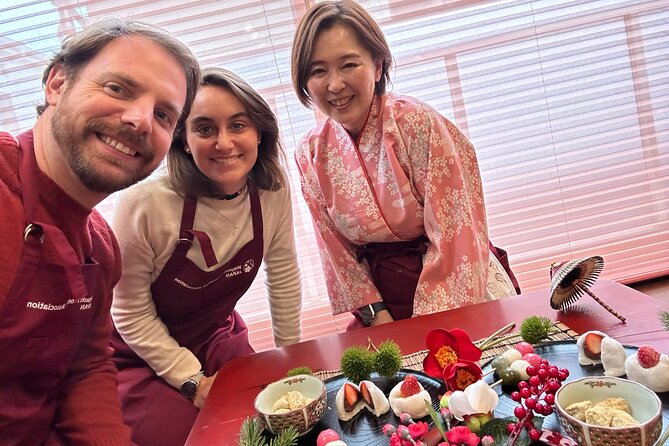
The address is 20-15 Kitaminemachi, Ota City, Tokyo 145-0073. The class is near public transportation and about 15 minutes from central Tokyo by train or car, but it is not a central sightseeing stop.
That distance can be a drawback if your Tokyo schedule is tightly packed around Asakusa, Shibuya, or Shinjuku. It can also be the point of the outing. The class takes place in a quiet residential neighborhood, where you can see a slower side of Tokyo away from the main shopping streets.
Before or after the lesson, you can explore local shops, supermarkets, cafes, a shrine, and a famous public bath. These nearby options let you turn the class into a half-day visit rather than rushing back toward the city center.
I would allow extra time around the 90-minute lesson. The activity itself is short, but the neighborhood gives you a chance to see ordinary daily life. Do not expect a guided tour of each local stop. You are simply given the chance to explore independently before or after class.
The home has two short-haired cats. They stay in the bedroom during the lesson, but the activity is not recommended for anyone with a strong cat allergy. This is an important practical detail that should not be overlooked.
Food choices and family suitability
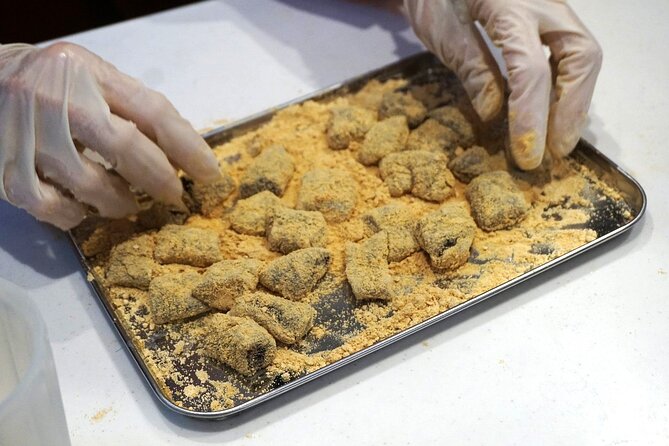
The menu is made with plant-based products, and vegetarian visitors can take part. Vegan options are available, but you should confirm the exact arrangements when booking if you have strict dietary needs.
Because the class is hands-on and recipes are simple, it suits several types of visitors:
- Families looking for an activity that gives children something to do with their hands
- First-time visitors who want cultural context along with food
- Couples or friends who prefer a small private setting
- Vegetarian visitors seeking a Japanese cooking activity
- Mochi fans who want to understand how the sweets are made
- Repeat visitors who have already seen Tokyo’s major sights
The class is less suitable if you want a central Tokyo activity with no travel time, a large professional kitchen, or a focused lesson on advanced pastry technique.
How much value do you get for $75.12?
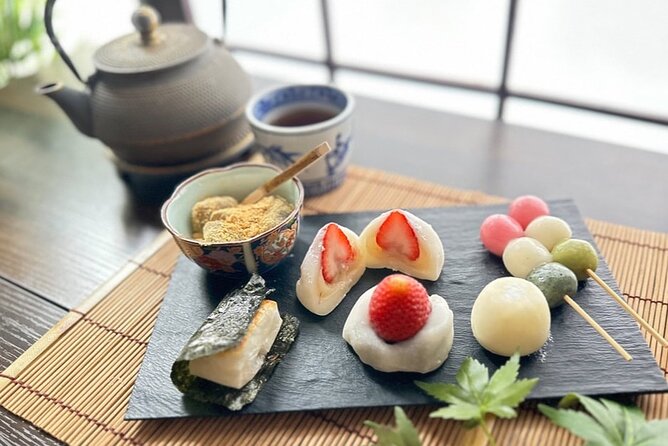
At $75.12 per person, this is not the cheapest way to eat mochi in Tokyo. You could buy packaged sweets for far less. But the comparison is not really between a class and a snack.
The fee includes about 90 minutes of instruction, ingredients, tools, apron rental, hand towel, water, tasting, takeaway packaging, cultural explanation, and a souvenir gift. You also leave with recipes you can recreate for family and friends.
The strongest value comes from the range of dishes. You are not paying to make one item and leave. You learn daifuku, dango, warabi-mochi, and isobe-mochi, then taste the results with tea.
The private or small-group format adds value for people who want personal help. During the off-peak season, groups of more than three can receive a private lesson without an added charge. Group discounts are also available, though the exact price depends on the booking.
I would consider the fee fair for a visitor who values instruction, cultural background, and a personal setting. It is less compelling for someone who only wants to sample Japanese sweets or who measures value by the amount of food alone.
The activity is often booked around 42 days ahead, so it is sensible to reserve early if your Tokyo dates are fixed. Free cancellation is available up to 24 hours before the start time. Cancellations or changes made inside that window are not accepted for a refund.
Photos and the personal touch
Satoko takes portrait photos and videos during the class and can provide them to you as part of the experience. That is a thoughtful addition, especially for families who want a record of the activity without asking one person to stay behind the camera.
The personal connection is a major part of the class. Satoko is described as kind, patient, enthusiastic, and easy to talk with in English. Her replies to past participants also show that she takes an interest in the people she teaches, not just the recipe.
You should still keep your expectations realistic. This is a home lesson, not a staged photo session. The photos are a pleasant extra, while the main activity remains cooking and learning.
Planning your visit to Kitaminemachi
The meeting point and return point are the same. Private transportation is not included, so you need to arrange your own route to 20-15 Kitaminemachi.
The neighborhood is around 15 minutes from central Tokyo by train or car, though your total journey depends on where you are staying. Check the route before booking and leave enough time to find the residence.
A mobile ticket is provided, and confirmation arrives at booking. You do not need to bring supplies. Comfortable clothing is sensible for any cooking class, though no special dress requirement is given.
Because the class ends back at the meeting point, you can plan a local stop afterward without figuring out a second pickup location. A cafe, supermarket, shrine, or public bath can make the outing feel more complete.
Who should book this mochi-making experience?
I would choose this class for you if you want an activity that is personal, practical, and tied to Japanese culture. It gives you something to do rather than something to watch, and the recipes continue to be useful after your trip.
It is particularly good for families. Children can help shape the sweets, and the private-home atmosphere is less intimidating than a large group class. It also suits couples and small groups who want a relaxed break from Tokyo’s busiest districts.
Vegetarians have a clear reason to consider it, thanks to the plant-based menu and vegan options. English speakers should also feel comfortable because Satoko teaches in English and explains the process clearly.
I would hesitate only if you have a severe cat allergy, need a fully central location, or want a long, advanced cooking course. For everyone else, this is a pleasant way to combine food, local life, and a skill you can carry home.
Should you book Satoko’s Tokyo mochi class?
Book it if you want to make several Japanese sweets, learn why mochi matters, and spend time in a quiet neighborhood with a welcoming teacher. The class earns its price through its variety, personal instruction, takeaway box, recipes, and cultural explanation.
Before booking, check three things: your route to Ota City, the seasonal fruit used for daifuku, and your comfort around cats. If those details work for you, the class offers a well-rounded 90-minute experience and a good change of pace from Tokyo’s major sights.
FAQ
Where does the mochi-making class take place?
The class takes place at 20-15 Kitaminemachi, Ota City, Tokyo 145-0073, Japan.
How long does the class last?
The experience lasts approximately 1 hour and 30 minutes.
How far is the class from central Tokyo?
The private residence is about 15 minutes from central Tokyo by train or car.
What sweets will I make?
You can make strawberry daifuku, or other fruit daifuku outside strawberry season, several flavors of dango, warabi-mochi, and isobe-mochi.
Is the class suitable for vegetarians?
Yes. The recipes use plant-based products, and vegan options are available.
Do I need to bring an apron or cooking tools?
No. An apron, hand towel, wagashi-making tools, drinking water, and a special takeaway box are provided.
Can I take the mochi home?
Yes. You can taste the sweets with green tea or hojicha, or place them in the provided box to take with you.
Is this a private activity?
Yes. Only your group participates. During the off-peak season, groups of more than three can receive a private lesson without an extra charge.
Are there cats at the class location?
Yes. Two short-haired cats live at the residence, although they stay in the bedroom during lessons. The class is not recommended for people with strong cat allergies.
New on our Tokyo list
- Sumi-e Experience in a relaxing green tea shop in Tokyo★ 5.0 · 3 reviews
- Tokyo : Kamikaze Street Drift Ride★ 5.0 · 3 reviews
- Private Zen Meditation in English in Shinjuku, Tokyo★ 5.0 · 3 reviews
- Onsen Spa in Tokyo and Asakusa Bar Hopping with Local Guide★ 5.0 · 3 reviews
- Easy for everyone! Now you can play handmade mini shamisen and show off to everyone! Musical instruments, sweets and live music★ 5.0 · 3 reviews
- Tokyo: Private Tsukiji Street Food & Sake with Local Guide★ 5.0 · 3 reviews
- Mt Fuji Exploration Tour with Free Japanese Kusa Mochi from Tokyo★ 4.5 · 3 reviews
- Tokyo Tsukiji Fish Market Walking and Exploring Hidden Gems Tour★ 5.0 · 3 reviews
Workshops, compared.
Sushi Making Tokyo Roll and Authentic Japanese Sushi Class
Read our review →
Roll and Authentic Sushi Making Class in Asakusa
Read our review →
Sushi Making Class in a Happi Coat near a Famous Spot
Read our review →
Tokyo Sushi Making Class in Tsukiji with Professional Chef
Read our review →
Ramen & Gyoza Cooking Class in Tokyo with Local Supermarket Visit
Read our review →
Matcha Making Class in Tokyo with Authentic Japanese Sweets Set
Read our review →Browse the lists this tour appears in