
Reviewed · SUMO EXPERIENCES
Morning Sumo Practice Viewing in Tokyo
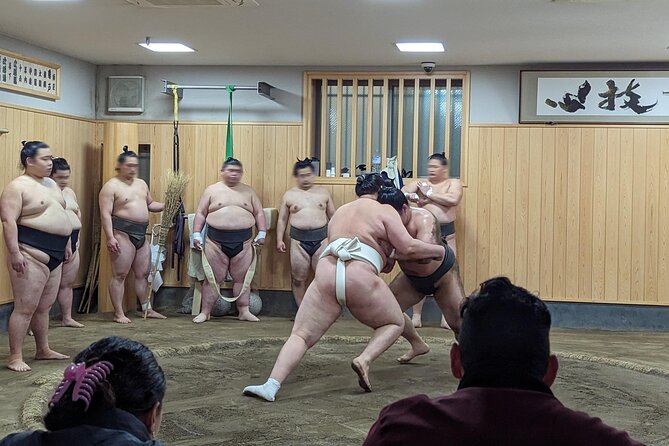
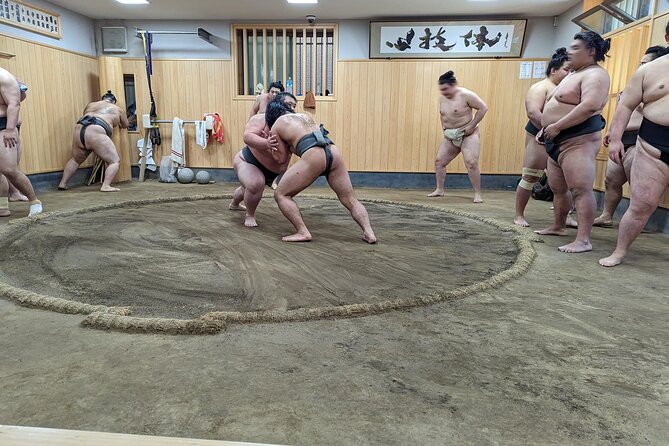
Watching sumo practice from inside a wrestler’s stable is far different from seeing a polished tournament at Ryogoku Kokugikan. You sit quietly on the floor as wrestlers warm up, clash in practice bouts, and follow rituals rooted in Shinto tradition. The setting feels private because access to a stable is hard to arrange on your own.
I like the close range and the thoughtful guiding. You may be only a few steps from the action, while guides such as Joji, Dawn, Jeff, or Aki explain the rules, wrestlers’ routines, and meaning behind each ritual. The main drawback is simple: you sit on a cushion on a flat floor for about two hours, with no chairs and no toilet inside the stable.
In This Review
- Key points before you book
- Why morning practice feels different from tournament sumo
- Meeting at Tokyo Skytree at 7:30 am
- Entering Naruto-beya in Sumida City
- What you actually watch during the two hours
- The Shinto customs behind the sport
- Photos with wrestlers and the question of lunch
- Is $99.08 fair for three hours?
- Who will get the most from this experience?
- Practical details that shape your morning
- What the strongest guide-led experience looks like
- Should you book this sumo morning?
- FAQ
- Where does the sumo practice tour begin?
- What time does the tour start?
- Where does the tour end?
- How long does the experience last?
- Do I sit on chairs inside the stable?
- Is hotel pickup included?
- Is a photo with the wrestlers guaranteed?
- Can I cancel for a full refund?
Key points before you book
- Watch from inside Naruto-beya: You enter a real sumo stable in Sumida City rather than viewing practice from a distant public area.
- Arrive early at 7:30 am: The meeting point is Tokyo Skytree Station, and the early start helps you reach practice on time.
- Expect close-up training: Practice can include warm-ups and repeated bouts lasting two to three hours.
- Learn before you watch: Your English-speaking certified guide explains basic moves, rules, and stable etiquette before entry.
- Bring patience for floor seating: Everyone sits on a cushion, and chairs are not available.
- Your fee supports the stable: Donations are included, adding a useful connection between your booking and the place you visit.
Why morning practice feels different from tournament sumo
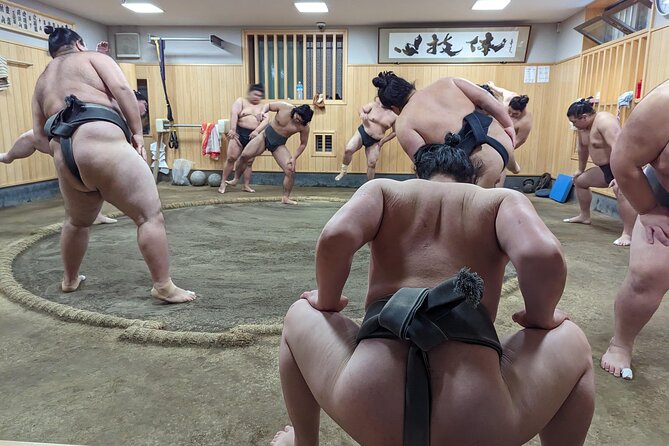
A tournament gives you noise, ceremony, crowds, and a clear winner. Morning practice gives you the daily work behind that spectacle. You see wrestlers warm up, repeat techniques, and test each other without the same arena presentation.
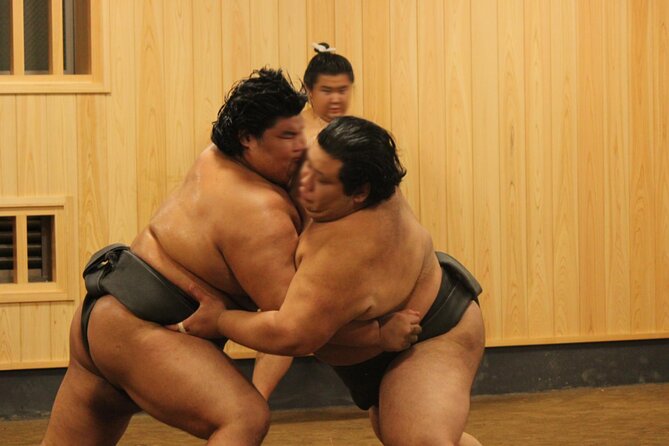
That change of setting matters. Inside a stable, you are close enough to notice the heavy breathing, the slap of feet, and the force of a bout. You also see that sumo is not just two large men pushing. Balance, timing, grip, footwork, and discipline all matter.
The experience also gives you a look at sumo as a way of life. Your guide explains the sport’s old Shinto roots and the customs that shape the morning. The point is not simply to watch bodies collide. You learn why sumo includes ritual gestures and why the stable follows a strict order.
You should expect a quiet atmosphere. This is not a show designed for an audience, so you must follow the stable’s rules and avoid treating practice like a loud sporting event. The guide’s briefing helps you know when to watch, when to stay still, and how to behave respectfully.
More sumo mornings:
- Tokyo: Sumo Show Experience with Chicken Hot Pot and a Photo
★ 4.8 · 6,678 reviews - Tokyo: Sumo Show and Dining Experience
★ 4.8 · 2,742 reviews - the SUMO show
★ 5.0 · 1,960 reviews
Meeting at Tokyo Skytree at 7:30 am
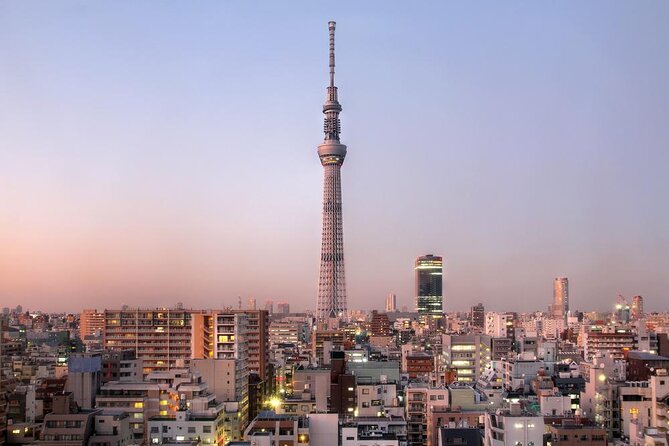
The tour begins at Tokyo Skytree Station, at 1-chome-1-4 Oshiage in Sumida City. Tokyo Skytree itself provides an easy landmark, and the route begins with about 30 minutes of orientation.
You do not pay an admission fee for the Skytree stop. The tower is used as the meeting point and place for your briefing, not as a separate sightseeing visit. If you want to go up the tower, that is not part of this activity.
The early hour is important. Morning practice starts early, and you need to be ready at 7:30 am rather than arriving casually after breakfast. Build in extra time to reach Oshiage by public transport. Hotel pickup and drop-off are not included, so you handle your own journey to the station and your return from the stable.
At Skytree, the guide explains simple sumo rules and the etiquette required inside the stable. This short lesson is more useful than it may sound. Without it, you might watch a bout and see only pushing. With it, you can follow basic movements and understand why a wrestler wins or loses.
The guides are local certified English-speaking experts. Different departures may use guides such as Joji, Dawn, Jeff, or Aki. Past details about these guides point to a strong focus on preparation, handouts, wrestler profiles, and clear explanations. You should still think of the guide as an interpreter of the sport, not as a commentator shouting over the action.
Entering Naruto-beya in Sumida City
From the Skytree area, you go to Naruto-beya Sumo Stable at 1-chome-22-16 Mukojima. The stable is the heart of the experience. You are not visiting a museum or watching a staged demonstration. You are entering a working place where wrestlers train.
Access like this is difficult to arrange independently. Sumo stables do not function like ordinary attractions with a regular ticket window. A guided visit gives you a clear meeting plan, an English explanation, and a donation to the stable built into the price.
Once inside, you sit on a cushion on the flat floor. There are no chairs. The viewing period lasts about two hours, though the practice may run for two to three hours depending on the morning. This is the point where the experience becomes a test of comfort as much as curiosity.
If you have stiff knees, trouble sitting on the floor, or simply dislike fixed seating, take the warning seriously. Most people can participate, but the stable has no chair seating. You should wear clothing that allows you to sit comfortably and plan on remaining still for long stretches.
There is also no toilet inside the stable. Use facilities before practice begins. This is a small practical detail, but it can make a big difference during a long, quiet morning.
What you actually watch during the two hours
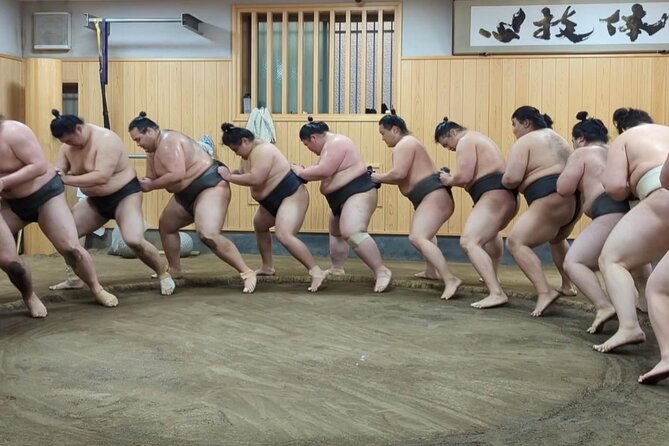
The practice begins with wrestlers warming up and preparing their bodies. You may then see repeated practice bouts, with wrestlers facing one another again and again. The work is physical, but the rhythm can be measured rather than nonstop.
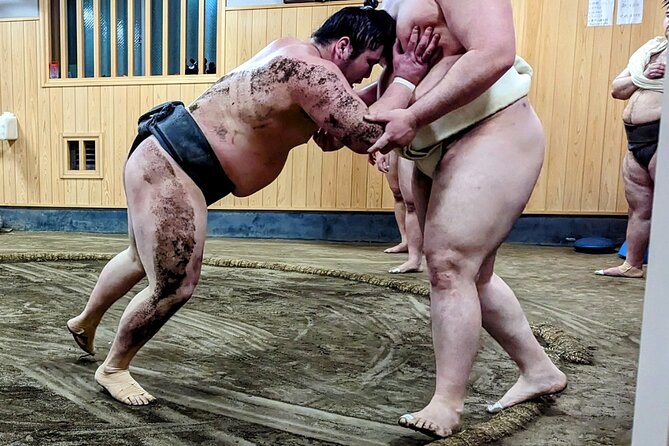
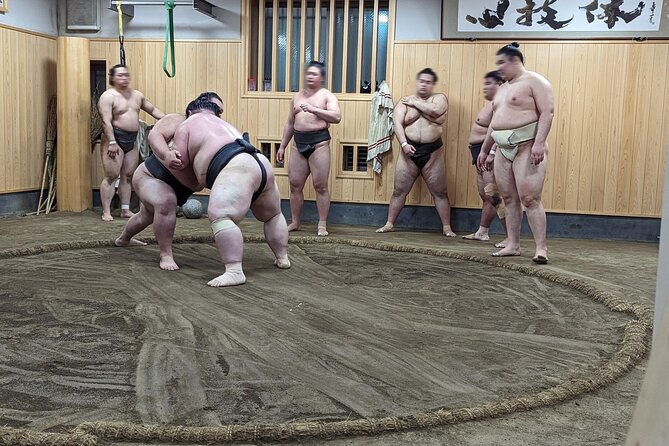
That slower pace lets you notice details. A bout can end quickly, then the wrestlers reset and try again. A guide can point out a move, explain the goal of a grip, or help you understand how a wrestler uses position instead of brute force.
The close seating is the strongest part of the visit. You do not have the long-distance view of a stadium. You see bodies twist, feet stamp, and wrestlers recover after a bout. Because the group is limited to a maximum of 10 people, the guide can give more personal attention than a large coach tour allows.
This small group also helps the stable maintain a calm setting. You are not moving from room to room or competing for a view. You settle in and watch the practice unfold.
The guide may provide written material, including basic information and wrestler profiles. That is especially helpful if you know little about sumo. You can follow names and roles instead of feeling lost during a long series of bouts.
Keep your expectations realistic. Practice is not a tournament, and the action is not presented for your entertainment alone. Some parts may feel repetitive. That repetition is also the point: sumo wrestlers build strength and skill through routine, not through a single dramatic match.
A few more Tokyo bookings worth comparing
- Tokyo: Sumo Morning Practice Viewing Tour
★ 4.8 · 570 reviews - Tokyo: Sumo Morning Training Visit
★ 4.4 · 370 reviews - Tokyo: Sumo Morning Practice Tour at Sumida City
★ 4.8 · 308 reviews - Tokyo Sumo Morning Practice Tour at Stable
★ 5.0 · 298 reviews
The Shinto customs behind the sport
Sumo’s appeal goes beyond sport. Your guide explains its ancient Shinto connections, which helps place the physical action in a wider cultural setting.
The rituals are not decorative extras added for tourists. They are part of the sport’s identity and help set the tone before competition. You may see movements and gestures that make more sense once the guide explains their purpose.
This context is where the tour earns much of its value. A casual look at sumo can leave you with the impression that it is simply a forceful contest. The briefing shows how tradition, ceremony, training, and rank fit together.
I would give the guide’s explanation your full attention before practice. Once the wrestlers begin, you will want to watch rather than read. Learning the basics at Skytree gives you a better chance to recognize what happens in front of you.
Photos with wrestlers and the question of lunch
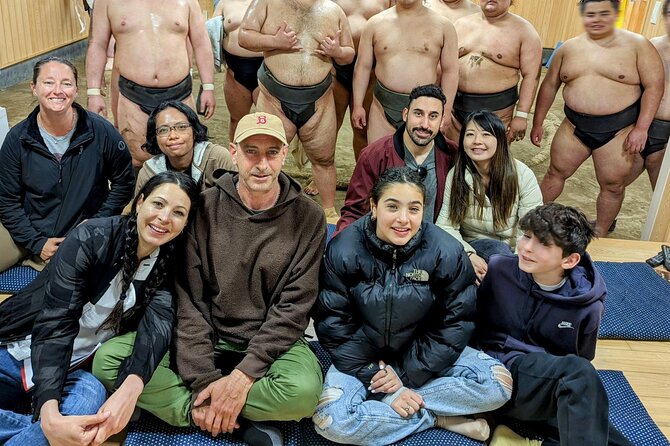
A photo session with the wrestlers will most probably be available after practice. Treat this as a possible extra, not a guaranteed part of the visit. If it happens, it gives you a personal memory of the stable and a chance to stand beside the athletes you have just watched train.
Be respectful during photos. This remains a working stable, so the timing and conditions depend on the wrestlers and stable staff. Your guide handles the flow and tells you what is appropriate.
The tour description also refers to chanko nabe, the traditional hot-pot food associated with sumo wrestlers. It describes this as a way to refuel after the practice, but the included and excluded details do not clearly list lunch as part of the price. I would confirm this before booking rather than assume the meal is included.
That distinction matters because the advertised price is $99.08 per person. If lunch is included on your departure, the value improves. If it is not, you are paying mainly for stable access, guiding, and the donation, not for a full meal.
Is $99.08 fair for three hours?
At first glance, $99.08 is a serious price for a three-hour activity. The value depends on what you want from Tokyo.
You are paying for something that is difficult to arrange alone: entry to a real sumo stable. You also receive a private or very small-group experience, an English-speaking local certified guide, and a donation to the stable. Those elements make this different from simply buying a ticket to a public tournament.
The donation is worth noting. Part of your fee supports the stable rather than paying only for transport or a commercial attraction. That does not make the price automatically cheap, but it gives the booking a clearer purpose.
The tour is usually booked about 19 days ahead, so you should not leave it until the last morning of your Tokyo stay. The group limit is 10, and morning dates can be limited. If sumo is a major interest, reserve before your schedule fills.
Value also depends on your comfort with the format. If you want a flexible, casual activity with comfortable seating and lots of movement, this may feel expensive. If you want close access to a working stable and careful cultural explanation, the cost is easier to justify.
Who will get the most from this experience?
I would recommend it most strongly to anyone with a real interest in sumo, Japanese customs, or behind-the-scenes sports culture. You do not need to know the rules in advance. The guide’s introduction covers the basics.
It also suits families with older children who can sit quietly for a long period. The close view can make a strong impression, especially for a child fascinated by sports. The floor seating is the main family consideration.
Photographers may appreciate the proximity, but this is not a photography tour. You must follow stable rules, and the possible photo session is not guaranteed. Bring your interest in observing first, and your camera second.
I would be more cautious about recommending it to someone with mobility limits that make floor seating difficult. The activity notes that most people can participate, but no chairs are available. That is a clear physical requirement, not a minor footnote.
It is also a poor choice if you dislike early starts. You meet at 7:30 am, and the experience is built around morning practice. The sunrise journey through Tokyo can be pleasant, but only if you are willing to get out of bed for it.
Practical details that shape your morning
Plan to reach Tokyo Skytree Station before 7:30 am. You must arrange your own transport because hotel pickup and drop-off are not included. The tour ends at Naruto-beya, not back at Skytree, so check your onward route from Mukojima before you set out.
The total activity lasts about three hours, with 30 minutes at Skytree and around two hours inside the stable. The exact timing may vary with the practice. Keep the rest of your morning reasonably open rather than scheduling a timed attraction immediately afterward.
Wear something comfortable for sitting on the floor. The stable provides a cushion, but a cushion is not the same as a chair. You may be there for about two hours, and shifting around can disturb the quiet setting.
Eat and use a toilet before entering. There is no toilet inside the stable. If chanko nabe is available as part of your visit, it can serve as a later meal, but confirm the arrangement in advance.
The experience requires good weather. If poor weather causes cancellation, you are offered another date or a full refund. For a full refund when you cancel yourself, you must do so at least 24 hours before the local start time. Changes or cancellations inside that window are not accepted.
What the strongest guide-led experience looks like
The guide can make or break a sumo morning. The best version begins with a clear briefing, written information, and practical advice about stable etiquette. That preparation lets you focus on the wrestlers once practice begins.
Joji is noted for making sure the group was prepared and comfortable before entry. Dawn is described as offering strong explanations of sumo while the practice unfolded. Jeff is associated with clear background information, and Aki with teaching rules and moves before the group entered.
Those details point to a useful style of guiding: explain first, then give you space to observe. A good guide does not turn the stable into a lecture hall. Instead, the guide helps you understand what you are seeing and answers questions without distracting from practice.
The personal attention is helped by the small group. A maximum of 10 people is not the same as a one-to-one tour, but it is small enough for questions and a decent view. The private-tour language suggests an intimate format, while the stated group limit is the safer figure to use when planning.
Should you book this sumo morning?
Book it if you want an authentic look at sumo training, can sit on the floor for about two hours, and value access more than comfort. The close view, stable donation, and careful English guidance give you something a stadium ticket cannot.
Skip it if you need chairs, a toilet nearby, a later start, or a guaranteed meal and photo session. Also confirm the chanko nabe details before paying, since the meal is described but not clearly listed among the included items.
For the right person, this is one of Tokyo’s most memorable cultural activities. You begin before the city fully wakes, learn how to read the action, and finish at a working stable rather than a display built for tourists. Just arrive early, sit ready, and respect the quiet.
FAQ
Where does the sumo practice tour begin?
It begins at Tokyo Skytree Station, at 1-chome-1-4 Oshiage, Sumida City, Tokyo.
What time does the tour start?
The start time is 7:30 am.
Where does the tour end?
The tour ends at Naruto-beya Sumo Stable, at 1-chome-22-16 Mukojima, Sumida City, Tokyo.
How long does the experience last?
The experience lasts approximately three hours. About 30 minutes are spent at Tokyo Skytree for the briefing, followed by around two hours watching practice at the stable.
Do I sit on chairs inside the stable?
No. All participants sit on a cushion on a flat floor, and chairs are not available.
Is hotel pickup included?
No. Hotel pickup and drop-off are not included. You must reach the meeting point and arrange your own transport afterward.
Is a photo with the wrestlers guaranteed?
No. A photo session with the wrestlers will most probably be available, but it is not presented as a guarantee.
Can I cancel for a full refund?
Yes, if you cancel at least 24 hours before the experience start time. Cancellations or changes made less than 24 hours before the start are not accepted, and poor-weather cancellations offer either another date or a full refund.
New on our Tokyo list
- Tokyo Spectacular View Day-Cruise in 90 Minutes★ 5.0 · 25 reviews
- From Tokyo: Mount Fuji & Hakone Full Day Private Tour★ 4.9 · 25 reviews
- Real Tokyo Runner Club : Daikoku Car Meet Night Tour with JDM Car★ 5.0 · 25 reviews
- 2.5 Hour-Guided Cycle Tour in the Central Tokyo★ 5.0 · 25 reviews
- Ramen Making from Scratch +Akihabara Tour –Cooking Class★ 5.0 · 25 reviews
- [Self-Drive] Tokyo & Daikoku Custom Car Driving Tour★ 4.9 · 25 reviews
- Tokyo: 2-Hour Night Bike Tour of the City’s Hidden Gems★ 4.9 · 25 reviews
- Samurai themed Entertainment show in Shinjuku★ 4.5 · 25 reviews
Sumo Experiences, compared.
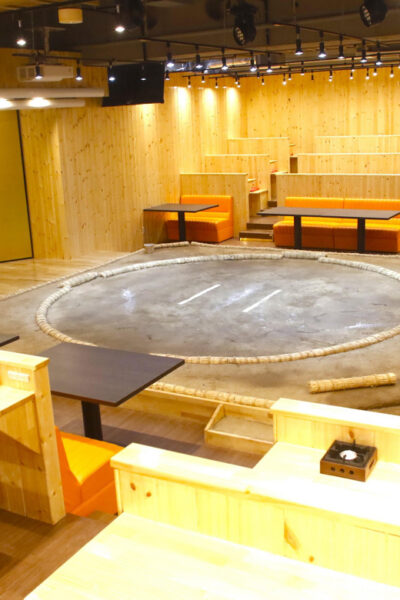
Sumo Show Experience with Chicken Hot Pot and a Photo
Read our review →
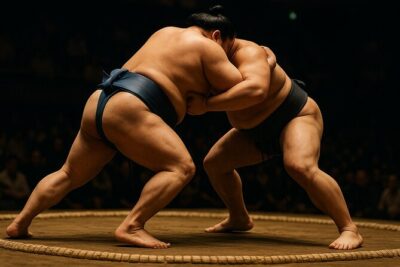
Tokyo Shinjuku Sumo Show & Experience with Photo
Read our review →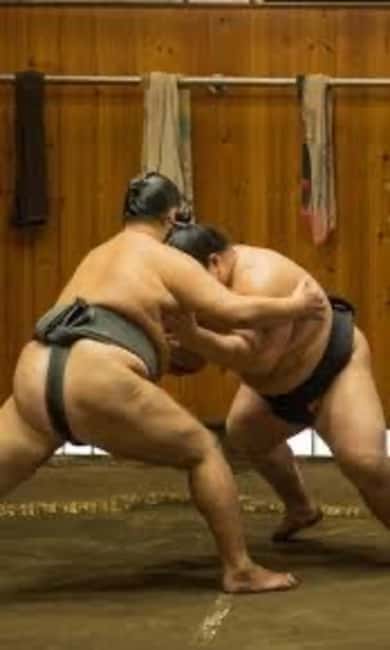

Authentic Sumo Experience in Tokyo: Enter the Sanctuary
Read our review →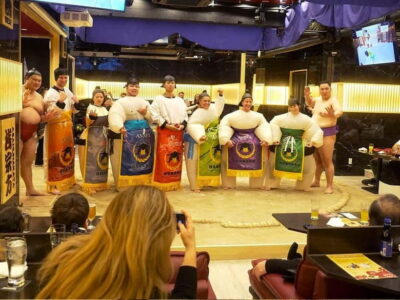
Luxury Sumo Show Experience & Japanese cuisine & Drink
Read our review →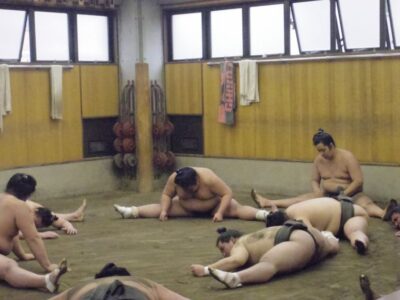
Browse the lists this tour appears in