
Reviewed · JAPANESE COOKING CLASSES
Okonomiyaki & Gyoza Cooking Class with Local Supermarket Visit
Making okonomiyaki and gyoza in Yuca’s own Tokyo home kitchen gives you more than a meal. You learn how familiar Japanese dishes are built, handle the ingredients yourself, and finish with lunch. The optional supermarket visit adds a useful look at the food Japanese cooks actually buy.
I like the small maximum group of seven, which keeps the cooking practical rather than turning it into a demonstration from across the room. I also like the one-way taxi ride included in the price, a thoughtful perk when you are heading to a residential neighborhood away from Tokyo’s main sightseeing districts.
The main consideration is the price: at $121.89 per person, this is not a cheap lunch. The value depends on how much you want personal instruction, cultural context, and a meal you can try to recreate at home.
In This Review
- Key points at a glance
- A home kitchen in residential Nishiogu
- The short food culture lesson from 10:15
- Making okonomiyaki, Tokyo’s savory pancake
- Folding gyoza, the class’s most useful take-home skill
- Lunch is part of the lesson
- The optional supermarket visit from 12:30 to 1:00
- What the one-way taxi ride adds
- Who will get the most from this Tokyo class?
- Price, timing, and practical value
- The strongest part is the human touch
- Should you book the okonomiyaki and gyoza class?
- FAQ
- Where does the cooking class meet?
- What time does the experience start?
- How long does the experience last?
- What dishes will I cook?
- Is lunch included?
- Is the supermarket visit required?
- How large is the group?
- Is transportation included?
- Where does the experience end?
- Can I cancel for a full refund?
Key points at a glance
- Cook two Japanese staples: Make okonomiyaki, a savory pancake with vegetables, pork, and egg noodles, plus minced pork and vegetable gyoza.
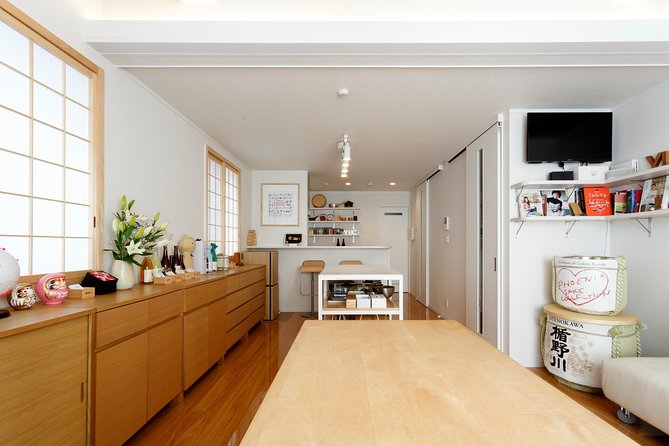
- Learn in Yuca’s home kitchen: The setting feels personal and gives you a look at everyday life in a residential part of Tokyo.
- Keep the group small: The class accepts no more than seven people, useful for hands-on work and questions.
- Add a local supermarket tour: The optional 12:30 to 1:00 visit helps you identify Japanese ingredients and packaged foods.
- Enjoy lunch as part of the lesson: You eat the dishes you prepare, so the class does not leave you waiting for a separate meal.
- Use the included taxi perk: A one-way taxi ride is included, though the supplied details do not specify exactly which leg it covers.
A home kitchen in residential Nishiogu
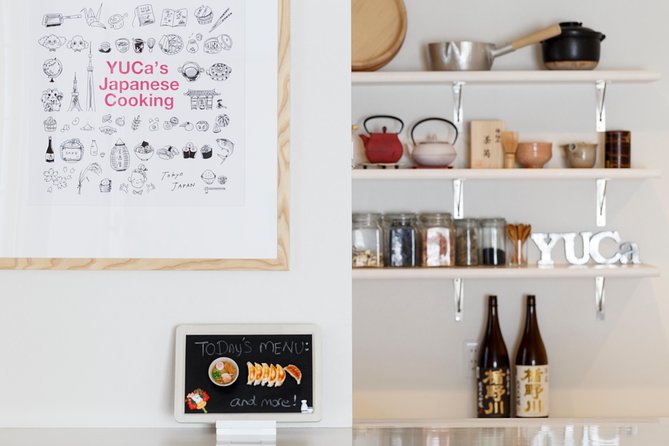
The class begins at YUCa’s Japanese Cooking, at 2-chōme-34-8 Nishiogu in Arakawa City. This is not a restaurant in central Tokyo or a polished cooking school built for large groups. It takes place in Yuca’s home or cooking studio, in a residential neighborhood.
That setting is a large part of the appeal. You are not just following a recipe in a tourist venue. You are entering a more ordinary side of Tokyo, where the streets feel connected to daily life rather than sightseeing routes. The meeting point is near public transportation, and the activity ends back there.
You should arrive between 9:50 and 10:00 for the meeting. The scheduled start is 10:00 a.m. Since this is a home-based class, I would allow extra time to find the address and avoid cutting it close. The listing provides a mobile ticket, and booking confirmation is issued at the time of reservation.
The group limit is seven people. That matters here. Gyoza requires repeated small tasks, and okonomiyaki involves timing and technique. A small group gives you a better chance to take part rather than simply watch Yuca prepare everything.
More cooking classes in Tokyo:
- Ramen & Gyoza Cooking Class in Tokyo with Local Supermarket Visit
★ 5.0 · 823 reviews - Tokyo: Easy Ramen Cooking Experience in Kabukicho, Shinjuku
★ 4.6 · 321 reviews - Ramen and Sushi Cooking Class with Sake Pairing Set in Tokyo
★ 5.0 · 291 reviews
The short food culture lesson from 10:15
After the meeting, the class includes a lecture on Japanese food culture and ingredients from about 10:15 to 10:30. This is brief, but it gives the cooking a useful frame.
Japanese supermarkets can be confusing even when you know what you are looking for. Labels, cuts of meat, sauces, seasonings, and prepared foods may not be familiar. A short explanation before cooking helps you understand why certain ingredients appear on the work surface and how they fit into Japanese home meals.
The lesson is also helpful if you plan to cook after returning home. You are not only copying motions. You are learning what the ingredients do and gaining some background on the dishes. The available feedback places particular emphasis on Yuca’s clear instruction and strong English, which is important for a class built around precise kitchen steps.
The timing is sensible. Fifteen minutes is enough to introduce the food without allowing the lecture to take over the experience. If you want a long history of Japanese cuisine or a formal culinary education, this is not that kind of class. It is a practical introduction before lunch.
Making okonomiyaki, Tokyo’s savory pancake
From roughly 10:30 to 12:30, you cook and taste the dishes. Okonomiyaki is the first major reason to book this experience.
The dish is often described as a Japanese savory pancake. Here it includes vegetables, pork, and egg noodles. That combination makes it more substantial than the word pancake might suggest. You get a useful lesson in how Japanese cooks combine a batter with filling ingredients and turn it into a complete meal.
The hands-on format is important. You are not sitting at a table waiting for a plate to arrive. You work through the preparation and cooking with Yuca’s guidance, then eat what you have made. For a food lover, that gives the meal a second layer: you notice the texture and balance of the dish because you helped create it.
I also like the choice of okonomiyaki beside gyoza. The two dishes use different skills and feel different on the plate. Okonomiyaki is larger and more substantial, while gyoza requires patience and repetition. Together, they make a more varied class than one recipe alone.
The exact cooking equipment and individual tasks are not specified, so you should not expect a fixed professional kitchen setup. The available information does make clear that the instruction is hands-on and approachable, including for a family with a 10-year-old child. That makes this a reasonable choice for parents who want an activity where children can take part, though the listing does not set a formal minimum age.
Folding gyoza, the class’s most useful take-home skill
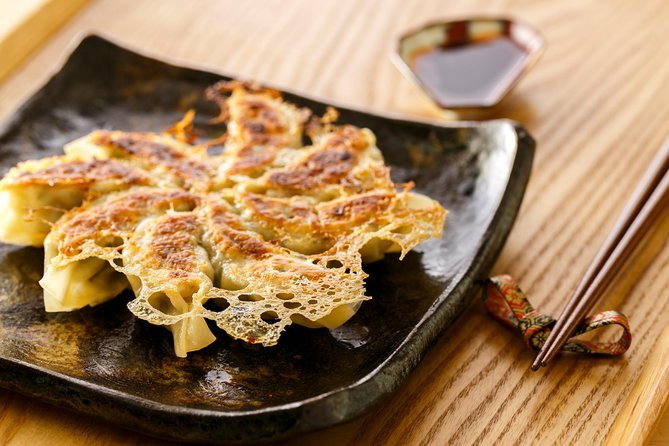
Gyoza is the second dish, made with minced pork and vegetables. It is probably the recipe you will be most tempted to repeat at home because the components are familiar and the process is easy to remember once you have practiced it.
The value is in the small details. You learn how the filling comes together and how the wrapper is handled. Even without advanced kitchen experience, you can see how a few ordinary ingredients become a dish that feels distinctly Japanese.
The class is designed to be approachable. Past feedback highlights clear explanations, a friendly teaching style, and a comfortable atmosphere. Yuca is described as warm, patient with children, and able to teach in very good English. Those details matter more than fancy equipment. A cooking class succeeds or fails on whether you can follow the instructions and feel comfortable asking questions.
Gyoza also suits different levels of experience. If you already cook, you can pay attention to technique and ingredient choices. If you rarely cook, the small group and guided approach should make the process less intimidating. The class is not presented as an advanced chef course, so you are booking it for participation and understanding, not professional certification.
A few more Tokyo bookings worth comparing
- Sushi Making Tokyo Roll and Authentic Japanese Sushi Class
★ 5.0 · 3,971 reviews - Tokyo: Roll and Authentic Sushi Making Class in Asakusa
★ 4.9 · 1,957 reviews - Tokyo Shinjuku Chopsticks Making Class
★ 5.0 · 1,763 reviews - Tokyo: Sushi Making Class in a Happi Coat near a Famous Spot
★ 4.9 · 1,377 reviews
Lunch is part of the lesson
The cooking period runs until about 12:30, and the meal is included. You eat the okonomiyaki and gyoza you have prepared rather than paying extra for lunch afterward.
That makes the schedule convenient. A morning activity often leaves you wondering where to eat, especially in a residential neighborhood. Here, the food is built into the experience and arrives at the natural end of the cooking session.
The meal also helps you judge the results immediately. You can taste the texture, seasoning, and balance while the instructions are still fresh. If you plan to make the dishes at home, that instant comparison is useful.
Still, the food should not be the only reason you book. Tokyo offers countless inexpensive meals, and $121.89 buys far more than lunch alone. The price is paying for instruction, ingredients, a small group, the home setting, and the cultural explanation. If you only want to eat okonomiyaki and gyoza, a restaurant will be better value. If you want to learn how to make them, the calculation changes.
The optional supermarket visit from 12:30 to 1:00
After cooking and tasting, you can join an optional supermarket tour from 12:30 to 1:00. This is a short addition, but it may be one of the most practical parts of the morning.
A supermarket shows you Japanese food in its everyday form. You can learn about ingredients you may not recognize, see how products are packaged, and connect the cooking lesson with the choices available to home cooks. This is especially useful if you want to continue exploring Japanese food during the rest of your stay.
The tour is optional, so you have some control over the pace of the day. If you are full or have another appointment, you can finish after lunch. If you enjoy food shopping and want help making sense of Japanese ingredients, stay for the extra half hour.
The supermarket visit is not described as a market tour or a major sightseeing stop. Keep your expectations realistic. It is a brief food-shopping lesson, not a full neighborhood tour. Its value comes from context and practical help, not from a long list of sights.
What the one-way taxi ride adds
A one-way taxi ride is included as an extra feature. The information does not specify whether it takes you to the class or away from it, so confirm the exact arrangement when booking or with the operator.
Even with that limitation, the inclusion is useful. YUCa’s kitchen is in Nishiogu, in Arakawa City, rather than beside one of Tokyo’s best-known attractions. A taxi can reduce the stress of finding a residential address, especially on your first morning in the city.
The class ends at the original meeting point, so do not assume the taxi covers a ride back to your hotel. The supplied details only promise one-way transport. Public transportation is nearby, which gives you another way to handle the return journey.
Who will get the most from this Tokyo class?
I would recommend this experience most strongly to people who enjoy food, small groups, and activities where they make something with their own hands.
It suits:
- First-time visitors to Japan who want a gentle introduction to everyday food culture.
- Home cooks who want recipes and techniques they can try again.
- Families looking for a shared activity rather than another sightseeing stop.
- Couples and friends who prefer a relaxed kitchen setting to a formal restaurant meal.
- People who enjoy local shopping and want help understanding Japanese supermarket ingredients.
The class also appears suitable for English-speaking participants, based on the teaching experience described for Yuca. Children have taken part, including a 10-year-old, but no official age policy is provided.
I would think twice if you dislike group activities, have strict dietary requirements that have not been discussed in advance, or want a long tour of Tokyo. The experience centers on cooking, eating, and a short supermarket visit. It is not a general city tour.
Price, timing, and practical value
At $121.89 per person, the price is on the expensive side for a two-and-a-half-hour activity. You should compare it with the cost of a regular Tokyo lunch, but that is only part of the equation.
You are also paying for a small group capped at seven, a host-led lesson, ingredients, lunch, a food culture introduction, the optional supermarket visit, and a one-way taxi benefit. The personal setting adds value for people who want conversation and a look at residential Tokyo rather than a standard commercial class.
The schedule is compact:
- 9:50 to 10:00: meeting
- 10:15 to 10:30: food culture and ingredient lesson
- 10:30 to 12:30: cooking and tasting
- 12:30 to 1:00: optional supermarket tour
The activity lasts about two and a half hours if you include the supermarket stop. The cooking itself takes about two hours. I like that the schedule leaves the rest of your day open, but you should avoid booking a tight midday appointment immediately afterward. The class has several stages, and the optional supermarket visit can extend the finish to 1:00 p.m.
Demand appears steady, with reservations made an average of 47 days in advance. That does not guarantee every date sells out, but it is a good reason to reserve early if your Tokyo schedule is fixed. Free cancellation is available until 24 hours before the start time. Canceling or changing the booking later does not qualify for a refund, and the class requires a minimum number of participants. If the operator cancels because that minimum is not met, you receive another date or experience, or a full refund.
The strongest part is the human touch
The most consistently praised feature is Yuca herself. The class is described as warm, friendly, organized, and easy to follow. That is exactly what you want in a home cooking lesson.
A good host changes the whole tone. You can ask about ingredients, pause when a step is unclear, and enjoy the meal without feeling rushed through a commercial production line. The home setting also gives the morning a personal quality that a restaurant kitchen demonstration cannot easily match.
The available rating record is exceptionally strong, with a 5 out of 5 average and a 100 percent recommendation rate across 31 ratings. I would still keep the price and residential location in mind, but the pattern points to a well-liked teaching experience rather than a meal with a token recipe attached.
Should you book the okonomiyaki and gyoza class?
Book it if you want to cook rather than simply eat, value a small group, and like the idea of meeting Yuca in her home kitchen. The combination of okonomiyaki, gyoza, lunch, and a supermarket visit gives you a useful introduction to Japanese food from preparation through shopping.
Skip it if your main goal is the lowest-cost meal, a central Tokyo location, or a broad sightseeing tour. At $121.89, the experience earns its price through instruction and personal attention, not through quantity.
For families, food lovers, and visitors who want a practical memory to take home, I think this is a strong choice. Reserve ahead if you can, arrive with enough time to find Nishiogu, and stay for the supermarket visit if learning about Japanese ingredients interests you.
FAQ
Where does the cooking class meet?
It meets at YUCa’s Japanese Cooking, 2-chōme-34-8 Nishiogu, Arakawa City, Tokyo 116-0011, Japan.
What time does the experience start?
The scheduled start time is 10:00 a.m. The meeting window is from 9:50 to 10:00.
How long does the experience last?
The experience lasts approximately two hours and 30 minutes. Cooking and tasting run from about 10:30 to 12:30, followed by an optional supermarket tour until 1:00 p.m.
What dishes will I cook?
You will learn to make okonomiyaki and gyoza. The okonomiyaki includes vegetables, pork, and egg noodles. The gyoza includes minced pork and vegetables.
Is lunch included?
Yes. You taste the dishes you prepare, and lunch is included in the experience.
Is the supermarket visit required?
No. The supermarket tour from 12:30 to 1:00 is optional.
How large is the group?
The activity has a maximum of seven participants.
Is transportation included?
A one-way taxi ride is included. The supplied details do not specify which direction the ride covers. The meeting point is also near public transportation.
Where does the experience end?
The activity ends back at the meeting point.
Can I cancel for a full refund?
Yes, if you cancel at least 24 hours before the local start time. Cancellations or changes made less than 24 hours before the start are not refunded or accepted.
New on our Tokyo list
- From Tokyo: Mount Fuji & Hakone Full Day Private Tour★ 4.9 · 25 reviews
- Tokyo Spectacular View Day-Cruise in 90 Minutes★ 5.0 · 25 reviews
- Real Tokyo Runner Club : Daikoku Car Meet Night Tour with JDM Car★ 5.0 · 25 reviews
- 2.5 Hour-Guided Cycle Tour in the Central Tokyo★ 5.0 · 25 reviews
- Tokyo: 2-Hour Night Bike Tour of the City’s Hidden Gems★ 4.9 · 25 reviews
- Ramen Making from Scratch +Akihabara Tour –Cooking Class★ 5.0 · 25 reviews
- [Self-Drive] Tokyo & Daikoku Custom Car Driving Tour★ 4.9 · 25 reviews
- Samurai themed Entertainment show in Shinjuku★ 4.5 · 25 reviews
Japanese Cooking Classes, compared.
Ramen & Gyoza Cooking Class in Tokyo with Local Supermarket Visit
Read our review →
Easy Ramen Cooking Experience in Kabukicho, Shinjuku
Read our review →
Ramen and Sushi Cooking Class with Sake Pairing Set in Tokyo
Read our review →
Tokyo Washoku 4-hour Cooking Class: From Market to Table
Read our review →
TokyoSumoShow, ChickenHotPot, and Mochi-Pounding by Pro Wrestlers
Read our review →
Professional Ramen & Gyoza with Ramen Chef in a restaurant!
Read our review →
Small-Group Wagyu Beef and 7 Japanese Dishes Tokyo Cooking Class
Read our review →Browse the lists this tour appears in