
Reviewed · JAPANESE COOKING CLASSES
Shibuya Tokyo: Onigiri & Tamagoyaki Cooking Class
Onigiri looks simple, but the small details matter: rice texture, hand shape, filling balance, and the way nori wraps the finished rice ball. This 90-minute Sorisso class gives you a useful taste of Japanese home cooking, not just a quick snack-making demo. I like the hands-on format and the chance to make three different rice balls yourself.
I also like the small group of up to eight, which leaves room for individual help. The English instruction, recipe booklet, apron, ingredients, and souvenir add real value. The main consideration is the limited meal: each person makes three rice balls and half a portion of rolled omelet, so this is a cooking activity rather than a full lunch.
In This Review
- Key Points Before You Book
- Why Onigiri Makes a Good Tokyo Food Class
- A Cozy Sorisso Kitchen in Shibuya
- Choosing Rice Before You Shape Anything
- Shaping Three Rice Balls by Hand
- Fillings From Traditional to Modern
- Nori Wrapping and the Finished Onigiri
- Adding Half a Portion of Tamagoyaki
- Eating What You Prepare
- What You Take Home
- Is the $49 Price Good Value?
- Who Will Enjoy This Most?
- Booking Details That Matter
- Should You Book the Sorisso Onigiri Class?
- FAQ
- How long does the onigiri and tamagoyaki class last?
- How much does the experience cost?
- What food will I make?
- Is the class taught in English?
- How large is the group?
- Are ingredients and cooking tools included?
- Can children attend the class?
- Can the class accommodate allergies or gluten-free diets?
Key Points Before You Book
- Make three onigiri per person: You shape the rice, choose fillings, and wrap the finished pieces with nori.
- Learn the rice first: The class explains how rice choice, cooking, texture, and flavor affect the final result.
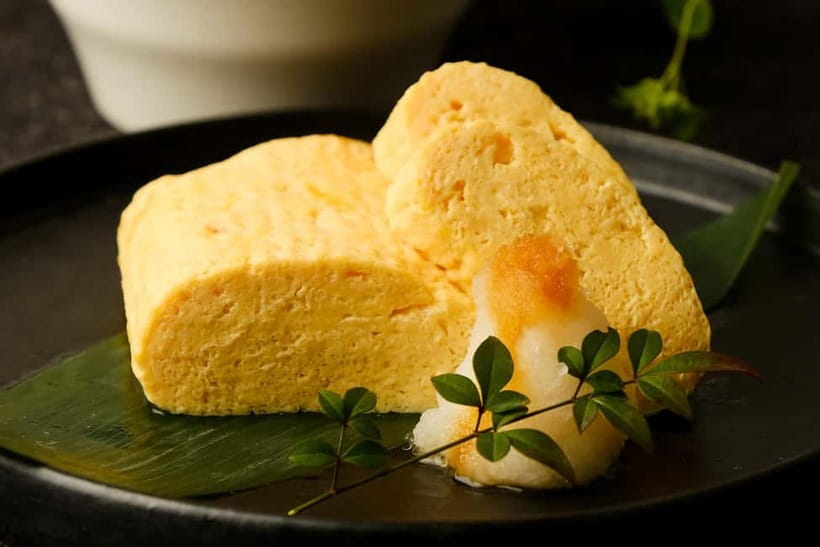
- Practice tamagoyaki: You also prepare half a portion of Japanese rolled omelet.
- Small, personal setting: The group is limited to eight, with individual guidance from an English-speaking host.
- Take the lesson home: Recipes and a small souvenir are included, along with apron rental.
- Plan around dietary needs: Tell Sorisso about restrictions or allergies ahead of time. Gluten-free choices may be possible, but severe food allergies cannot be accommodated.
Why Onigiri Makes a Good Tokyo Food Class
Onigiri is one of Japan’s most familiar everyday foods. It is practical, portable, and comforting, yet it rewards careful preparation. That makes it a better cooking lesson than a dish that depends on hard-to-find equipment or a long list of ingredients.
You learn how to select suitable rice, cook it to the right texture, and handle it without turning it sticky or heavy. These are skills you can use again at home. The class also shows how a few simple fillings can change the character of the finished rice ball.
The activity is not aimed at professional cooks. No prior experience is needed, and the host guides you through each stage. I see that as a strong point for families with older children, first-time cooks, and anyone who wants a gentle introduction to Japanese food.
More cooking classes in Tokyo:
- Ramen & Gyoza Cooking Class in Tokyo with Local Supermarket Visit
★ 5.0 · 823 reviews - Tokyo: Easy Ramen Cooking Experience in Kabukicho, Shinjuku
★ 4.6 · 321 reviews - Ramen and Sushi Cooking Class with Sake Pairing Set in Tokyo
★ 5.0 · 291 reviews
A Cozy Sorisso Kitchen in Shibuya
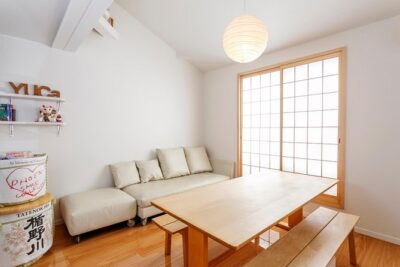
Sorisso runs the class in a small shop with a compact kitchen setup. That sounds modest, and it is worth setting expectations correctly: this is not a large cooking school with multiple stations or a restaurant-style dining room.
The smaller room works in your favor. With no more than eight participants, you should be close enough to follow the instructions and ask for help. One particularly small session had only three people, creating plenty of space and personal attention. Group size can vary, but the eight-person limit keeps the class from feeling like a crowded demonstration.
The location is described as easy to find, but transportation is not included. You need to make your own way to the venue in Shibuya and allow enough time to arrive before the class begins. Since the activity lasts only 90 minutes, a late arrival could take a noticeable portion of your cooking time.
Choosing Rice Before You Shape Anything
The class begins with one of the least glamorous but most useful parts of onigiri making: understanding the rice. A good rice ball depends on more than simply cooking rice and squeezing it into a triangle.
You learn about choosing the right rice and aiming for a texture that holds together without becoming dense. This matters because onigiri must be firm enough to handle, but pleasant to eat. If the rice is too dry, the shape may fall apart. If it is too wet or compressed, the result can feel heavy.
The lesson also connects rice texture with flavor. Rice is the main ingredient, so small differences are easy to notice. I like that the class treats it as the foundation of the dish instead of rushing straight to decoration and fillings.
For home cooks, this part may be the most practical takeaway. You can buy fillings easily, but understanding how to prepare the rice gives you the basis for making onigiri again after your Tokyo visit.
Shaping Three Rice Balls by Hand
After the rice work, you practice forming three rice balls per person. The traditional triangle is part of the lesson, but you can also learn other shapes and creative designs.
This is where the activity becomes genuinely hands-on. You are not simply watching a host make a perfect onigiri while you eat it. You handle the rice, work on the shape, and see how light or firm your touch should be.
The triangle may look easy, but even pressure matters. Press too hard and the rice becomes compact. Use too little pressure and the sides may not hold. An English-speaking host guides you through the process, which is helpful when your hands are busy and you cannot keep looking at written instructions.
Making three pieces gives you room to improve. The first may be a little uneven, the second may hold together better, and by the third you should have a clearer sense of the technique. That small progression is one reason this class works well for beginners.
More Shibuya plans:
- Official Street Go-Kart in Shibuya
★ 5.0 · 3,435 reviews - Tokyo: Street Kart Experience in Shibuya
★ 4.9 · 1,484 reviews - Shibuya Meltdown Nightlife Tour: All-You-Can-Drink Bar Hopping
★ 5.0 · 1,058 reviews - Shibuya Official Street Go-Kart in Shibuya Annex
★ 5.0 · 972 reviews
Fillings From Traditional to Modern
Onigiri can be plain, savory, vegetarian, familiar, or inventive. The class explores a range of filling choices rather than limiting you to one standard recipe.
The traditional options help you understand why onigiri became such a lasting part of Japanese food culture. Modern interpretations show how flexible the format can be. You can compare how different fillings work with the rice and how much is needed for a balanced bite.
Vegetarian fillings are included among the choices, which broadens the class appeal. Still, you should share dietary restrictions and allergies before booking. Gluten-free options may be available on request, but the activity is not suitable for anyone with severe or life-threatening food allergies.
The useful lesson here is proportion. A filling should add flavor without making the rice ball difficult to shape or eat. With three rice balls to prepare, you have a chance to try more than one approach rather than putting all your effort into a single piece.
Nori Wrapping and the Finished Onigiri
Nori gives onigiri its familiar look and adds a crisp, savory note. You learn traditional wrapping techniques and how to finish the rice balls neatly.
This step has a practical side. Nori can soften as it touches warm rice, so when and how you wrap it affects the eating experience. The class helps connect the visual finish with texture and handling, rather than treating the seaweed as a simple garnish.
The wrapping also makes the rice ball easier to hold. That is part of what makes onigiri so useful as everyday food. You end with something compact and portable, even though this particular class is designed for eating together at the venue.
Adding Half a Portion of Tamagoyaki
The class includes half a portion of tamagoyaki, the Japanese rolled omelet. It is a smaller share than the onigiri portion, so you should not expect a full omelet course or a large meal.
Tamagoyaki brings a different technique to the session. Onigiri is about rice texture and shaping, while the omelet requires careful rolling. Preparing both gives the class more variety and lets you sample two well-known Japanese home-style foods in one sitting.
The omelet is also a useful contrast to the rice balls. You move from handling rice and fillings to working with a cooked egg mixture and building layers. The portion is modest, but it adds another skill without stretching the class beyond 90 minutes.
Eating What You Prepare
At the end, you eat the onigiri and tamagoyaki together. This shared meal is part of the appeal, especially if you are attending with friends or meeting other people in the small group.
The food you make may not look perfectly uniform, and that is part of the point. You get to taste how your rice texture, filling amount, shaping pressure, and nori wrapping worked in practice. A finished dish tells you more than a recipe alone.
The session has been described as friendly and encouraging, with clear instructions and a comfortable amount of working space despite the compact kitchen. English is the teaching language, and communication should be straightforward for English-speaking participants.
Because the food portion is limited, I would treat the meal as a tasting and reward after the lesson. Plan another meal later if you are hungry, especially if this class forms part of a full day in Shibuya.
What You Take Home
Sorisso provides recipes and a small souvenir. The recipes are more important than they may first appear. Onigiri is easy to remember in broad terms, but details about rice, shaping, fillings, and wrapping are the parts most likely to fade after a busy day in Tokyo.
The recipe booklet gives you a reference when you try the dishes in your own kitchen. You can use the basic method and adjust the fillings to suit your taste. Since the class includes traditional and vegetarian choices, you should have more than one direction to explore at home.
An apron is also provided for the session, so you do not need to pack cooking clothes or worry about protecting your own outfit. Ingredients and utensils are included for the stated portions, which keeps the booking simple.
Is the $49 Price Good Value?
At $49 per person, this class sits in the reasonable range for a short, guided food activity in Tokyo. The value is not mainly in the amount of food. Three rice balls and half a portion of tamagoyaki would not justify the price as a restaurant meal.
You are paying for instruction, ingredients, utensils, apron rental, an English-speaking host, recipes, and a souvenir. More important, you get direct practice rather than a food demonstration. The small group limit makes the instruction more useful because you can receive help while shaping rice and rolling the omelet.
I think the price works best for you if you value a practical skill and a cultural connection. If you only want a cheap lunch, this is not the right choice. If you want a relaxed activity that leaves you able to repeat the dishes at home, the package is more convincing.
The 90-minute length also fits neatly into a Tokyo schedule. It is long enough to teach several techniques but short enough to combine with other plans. Just remember to add travel time to and from the venue, since transportation is not included.
Who Will Enjoy This Most?
This class is a good match for food-focused visitors who want to do something with their hands. It also suits first-time cooks because the instructions are designed for beginners and an English-speaking host is available.
Families can consider it, but children must be at least five years old. The listing does not provide further age guidance, so adults should judge whether younger participants can safely and comfortably take part in a kitchen activity.
Couples, friends, and solo visitors can all fit the format. A small group makes it easier to interact, and the shared meal creates a natural social moment without turning the activity into a large group event.
You should think twice if you have a severe food allergy. Sorisso asks you to give advance notice about dietary restrictions and may offer gluten-free choices, but it cannot accommodate severe or life-threatening food allergies.
Booking Details That Matter
The activity costs $49 per person and lasts 90 minutes. Available starting times depend on the date, so check the schedule before planning other Shibuya activities around it.
The group is limited to eight people, and instruction is in English. You can reserve now and pay later, which helps if your Tokyo plans are still shifting. Free cancellation is available up to 24 hours in advance for a full refund.
The experience is provided by Sorisso. No transportation is included, so you are responsible for reaching the venue. The exact meeting details should be checked carefully when you book.
Should You Book the Sorisso Onigiri Class?
I would book this if you want a compact, friendly cooking lesson with a clear Japanese food focus. The strongest reasons are the small group size, the practical rice and shaping instruction, and the chance to make both onigiri and tamagoyaki in one session.
I would skip it if your main goal is a substantial meal, a large professional kitchen, or a broad tour of Tokyo food. The venue is compact, the portions are limited, and the class stays focused on two dishes.
For most food lovers, families with children over five, and visitors who want a skill to take home, the balance is good. You leave with recipes, a souvenir, and a better understanding of why a simple rice ball depends on careful technique.
FAQ
How long does the onigiri and tamagoyaki class last?
The class lasts 90 minutes.
How much does the experience cost?
The price is $49 per person.
What food will I make?
You will make three rice balls and half a portion of rolled tamagoyaki per person.
Is the class taught in English?
Yes. Guidance is provided by an English-speaking host, and English is the listed class language.
How large is the group?
The class is limited to eight participants.
Are ingredients and cooking tools included?
Yes. Ingredients and utensils for the stated portions are included, along with apron rental.
Can children attend the class?
Children under five are not permitted to take part.
Can the class accommodate allergies or gluten-free diets?
You should tell Sorisso about dietary restrictions or allergies in advance. Gluten-free options may be available on request, but the class is not suitable for people with severe or life-threatening food allergies.
More Workshops in Tokyo
- Sushi Making Tokyo Roll and Authentic Japanese Sushi Class
★ 5.0 · 3,971 reviews - Tokyo: Roll and Authentic Sushi Making Class in Asakusa
★ 4.9 · 1,957 reviews - Tokyo Shinjuku Chopsticks Making Class
★ 5.0 · 1,763 reviews - Tokyo: Sushi Making Class in a Happi Coat near a Famous Spot
★ 4.9 · 1,377 reviews
New on our Tokyo list
- Sumi-e Experience in a relaxing green tea shop in Tokyo★ 5.0 · 3 reviews
- Tokyo : Kamikaze Street Drift Ride★ 5.0 · 3 reviews
- Private Zen Meditation in English in Shinjuku, Tokyo★ 5.0 · 3 reviews
- Onsen Spa in Tokyo and Asakusa Bar Hopping with Local Guide★ 5.0 · 3 reviews
- Easy for everyone! Now you can play handmade mini shamisen and show off to everyone! Musical instruments, sweets and live music★ 5.0 · 3 reviews
- Tokyo: Private Tsukiji Street Food & Sake with Local Guide★ 5.0 · 3 reviews
- Mt Fuji Exploration Tour with Free Japanese Kusa Mochi from Tokyo★ 4.5 · 3 reviews
- Tokyo Tsukiji Fish Market Walking and Exploring Hidden Gems Tour★ 5.0 · 3 reviews
Japanese Cooking Classes, compared.
Ramen & Gyoza Cooking Class in Tokyo with Local Supermarket Visit
Read our review →
Easy Ramen Cooking Experience in Kabukicho, Shinjuku
Read our review →
Ramen and Sushi Cooking Class with Sake Pairing Set in Tokyo
Read our review →
Tokyo Washoku 4-hour Cooking Class: From Market to Table
Read our review →
TokyoSumoShow, ChickenHotPot, and Mochi-Pounding by Pro Wrestlers
Read our review →
Professional Ramen & Gyoza with Ramen Chef in a restaurant!
Read our review →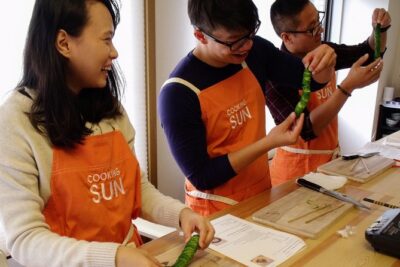
Small-Group Wagyu Beef and 7 Japanese Dishes Tokyo Cooking Class
Read our review →Browse the lists this tour appears in