
Reviewed · SUMO EXPERIENCES
Sumo Wrestlers Morning Practice Tour – Tokyo Sumida District
The most striking part of this Tokyo tour is the setting: you sit close to a working sumo stable while wrestlers train for their own sport, not for an audience. You may see powerful drills, stretching, footwork, and bouts, but the session follows the stable’s routine.
I like the close-up view of daily training and the chance to understand sumo beyond a tournament seat. I also like that the early start leaves your afternoon free for Tokyo Skytree, Asakusa, or another part of the city. The main drawback is practical: you sit cross-legged on the floor for about 90 minutes, with no chairs, and the practice can finish earlier than planned.
In This Review
- Key points before you book
- Why a morning stable visit feels different from a tournament
- Starting beneath Tokyo Skytree at 7:30am
- Entering the stable and settling onto the floor
- Watching the 90-minute training session
- Meeting the stable master and wrestlers afterward
- What the guide adds to the visit
- The value of the $83.23 price
- Who will enjoy this most
- Timing, tournament season, and changing practice length
- Small etiquette details that matter
- Should you book the Sumida morning practice?
- FAQ
- Where does the sumo practice tour start?
- How long does the tour last?
- How far is the stable from the meeting point?
- Are chairs provided inside the stable?
- Can I take photos or videos?
- Can children join the tour?
Key points before you book
- Training takes place inside a working sumo stable, not in a theater or visitor center.
- Meet at 7:10am near Tokyo Skytree for the 7:30am departure, then walk about 15 minutes.
- You sit on the floor, cross-legged and facing away from the ring with your feet tucked in.
- The guide explains rules, customs, and training, with English translation helping bridge the language gap.
- Photos may be allowed after practice, sometimes with the wrestlers, but flash, shutter sounds, and social media uploads are not allowed.
- The schedule is flexible, especially during tournament season, and practice may run shorter or longer.
Why a morning stable visit feels different from a tournament
A sumo tournament gives you the noise, ceremony, rankings, and formal bouts. This visit gives you the quieter work behind the spectacle. You see wrestlers repeat basic movements, prepare their bodies, and test one another under the direction of the stable.
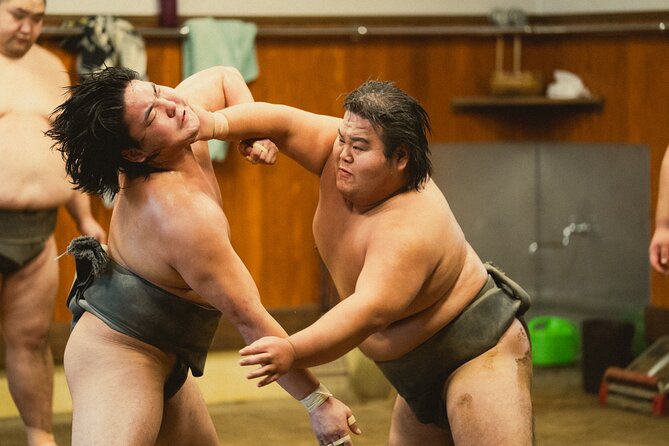
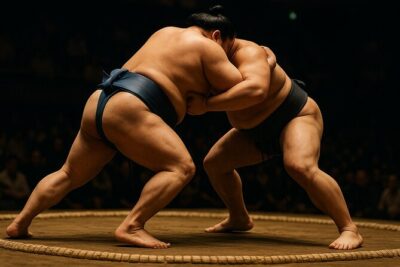
That difference matters. If you want constant full-contact matches, this may feel restrained. One family expected the kind of intense bout shown in promotional photography and found the actual session less dramatic. That is a fair warning. Practice is not a show, and the wrestlers are not performing on demand.
I think the quieter format is the point. You are watching athletes work through a routine built around discipline. Their size can be startling up close, but so can their flexibility, speed, and control. Several parts of training may look simple at first, yet repetition gives them meaning.
The guide helps explain what you are seeing. English interpretation is especially useful when the stable master or wrestlers speak with the group after practice. Guide Yuriko received particular praise for her patience and clear explanations, though the guide assigned to your date may be someone else.
More sumo mornings:
- Tokyo: Sumo Show Experience with Chicken Hot Pot and a Photo
★ 4.8 · 6,678 reviews - Tokyo: Sumo Show and Dining Experience
★ 4.8 · 2,742 reviews - the SUMO show
★ 5.0 · 1,960 reviews
Starting beneath Tokyo Skytree at 7:30am
The meeting point is at 1-chōme-8-21 Oshiage, in Sumida City, close to Tokyo Skytree and nearby rail connections. You should arrive by 7:10am. The group leaves at 7:30am sharp, so this is not a morning to risk a slow breakfast or a last-minute train connection.
The walk to the stable takes about 15 minutes. That short walk is useful because the actual stable location is not the public meeting point. You get oriented with the guide and follow the group rather than trying to find the entrance alone.
If it has rained, your feet could get wet on the way. Bring a small towel if that would bother you, since shoes come off as soon as you enter the stable. Wear modest, comfortable clothing and shoes that are easy to remove.
If you are late, contact the tour provider at once. You may be told to go to the stable by yourself, but you cannot enter without first making contact. That rule protects the stable’s routine and prevents people from arriving unannounced.
The tour ends back at the Skytree meeting point. That makes it easy to continue sightseeing nearby. You can pair the visit with Tokyo Skytree, though you should check opening times and allow yourself time for breakfast afterward.
Entering the stable and settling onto the floor
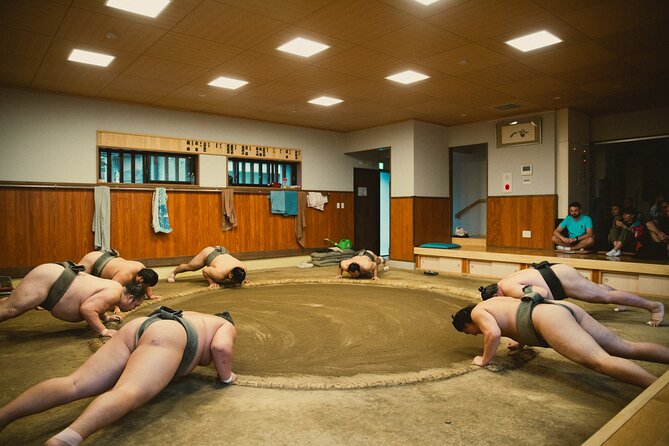
The stable is a working training space with strict customs. You remove your shoes before stepping onto the raised wooden floor. Sunglasses and hats are not allowed inside, and modest clothing is expected.
There are no chairs. You sit on the floor, cross-legged, for roughly an hour and a half. You must keep your legs tucked in rather than pointing your feet toward the ring, since showing the soles of your feet is considered rude in this setting.
This is the most important comfort question to answer before booking. If sitting cross-legged on the floor for that long is difficult, the tour may not suit you. There is no suggestion that alternative seating is available, so do not count on a chair or stool.
You should also use the restroom before the visit. The instructions ask you to remain seated and avoid moving around during practice. You can bring and drink water, but food, gum, candy, and smoking are not allowed.
These rules can feel formal, but they make sense once you understand the space. The ring and sandy ground are sacred to the wrestlers. You may not step into the ring or walk on the sand, and you are asked to watch quietly.
Watching the 90-minute training session
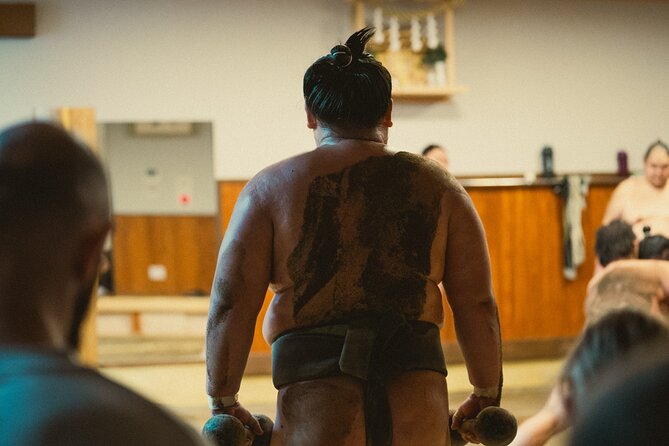
The main portion lasts about one hour and 30 minutes, though the timing can change. You watch the wrestlers follow their daily routine at close range. Depending on the day, you might see stretching, solo exercises, technique work, and some wrestling practice.
The appeal is proximity. You are not looking at distant figures from stadium seats. You can notice the physical effort and the careful movements that are easy to miss during a tournament. The training can also reveal how much work goes into balance, agility, and flexibility.
Still, your view depends partly on where you sit. The maximum group size is 25 people, which is manageable for a small cultural visit but large enough that some people may have one row of spectators in front of them. A large group can also limit how much direct conversation you get.
The guide may provide explanations during the visit, but the stable’s needs come first. You should not expect a running commentary through every minute. The best approach is to listen when the guide speaks, watch the training, and save questions for the proper moment.
Silence is part of the experience. Keep your cellphone on silent, and do not use flash or shutter sounds when taking photographs. You may record video, but you cannot upload photos or videos from the stable to social media. That restriction is easy to overlook, so set your phone before practice begins.
A few more Tokyo bookings worth comparing
- Tokyo: Sumo Morning Practice Viewing Tour
★ 4.8 · 570 reviews - Tokyo: Sumo Morning Training Visit
★ 4.4 · 370 reviews - Tokyo: Sumo Morning Practice Tour at Sumida City
★ 4.8 · 308 reviews - Tokyo Sumo Morning Practice Tour at Stable
★ 5.0 · 298 reviews
Meeting the stable master and wrestlers afterward
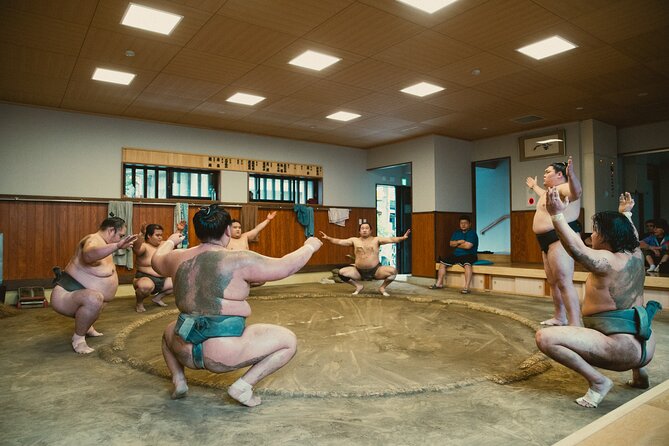
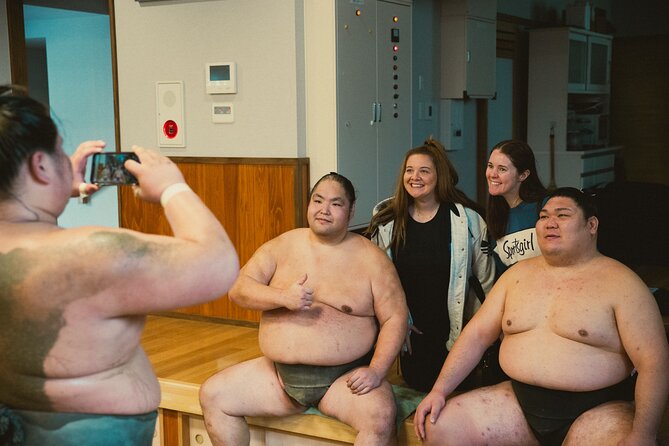
The final part lasts about 15 minutes and may include questions, conversation, and a photograph with wrestlers. Access depends on how the practice finishes and what the stable permits that day, so you should treat a photo as a possible bonus rather than the main reason to book.
The conversation can add useful context. You may learn more about training, diet, and the wrestlers’ daily life. One particularly worthwhile part of the visit can be speaking with the stable master, who has offered insight into diet and the demands of the sport.
Photos are usually taken without flash or artificial shutter sounds. You must follow the guide’s instructions and remain respectful. The stable is still a private working place after the formal practice ends.
Do not expect a photograph with every wrestler. A group photo may not be possible, and the number of athletes available can vary. If you would be disappointed without a particular photo, book this for the training itself, not the picture.
What the guide adds to the visit
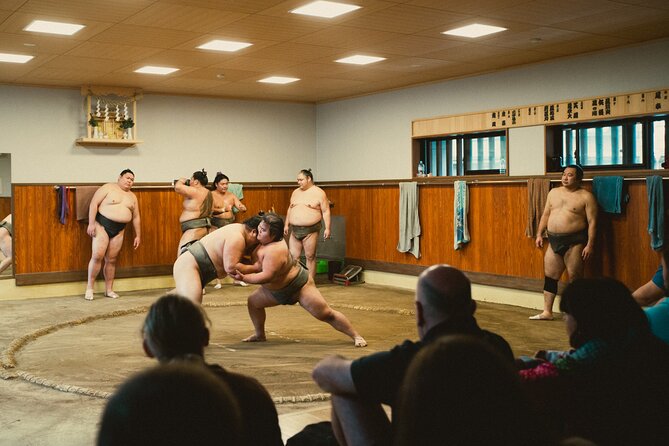
Sumo has rules and customs that are not always obvious from watching a bout. The guide explains the sport’s background, rules, regulations, and Shinto connections, then helps you understand the purpose of the exercises.
That language support is valuable. A stable is not the place to interrupt, gesture repeatedly, or guess at local etiquette. Your guide tells you when to sit, where to look, and how to behave around the ring.
The quality of explanation may vary by guide and by how much time the stable allows. Some visitors wanted more background on training and the sport, while others found the guide’s translation and information very strong. I would treat the guide as an interpreter and cultural adviser first, rather than expecting a full classroom lecture.
If you are curious, prepare a few questions in advance. Ask about the training routine, diet, rules, or what separates practice from a tournament bout. The question period with the stable master can be the best chance to connect the physical work you have just watched with the larger culture of sumo.
The value of the $83.23 price
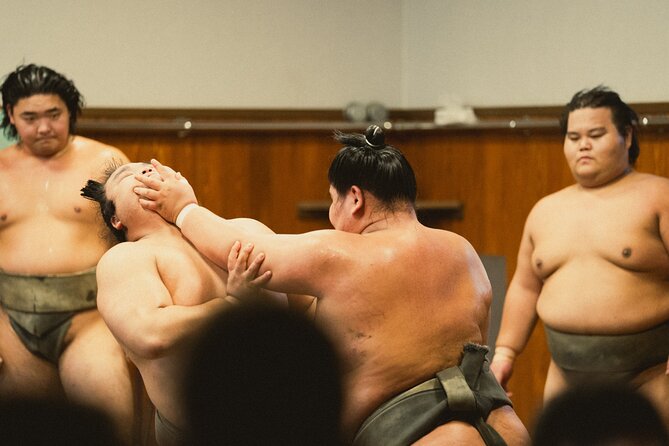
At $83.23 per person, this is not a cheap way to fill two hours. The price pays for a guided visit to a place that most people would not enter alone, plus translation and help with customs.
I think the value is strongest if you have limited time in Tokyo and want access to a working sumo stable rather than only a museum display or televised match. You also get the rest of the day free because the tour begins early and ends near Skytree.
The value is weaker if you mainly want guaranteed bouts, a long photo session, or a polished performance. The wrestlers train for themselves, and the practice can be calm or finish early. You are paying for access and context, not a fixed entertainment schedule.
A 98 percent recommendation rate and a 4.9 rating from 54 ratings suggest that the format works very well for most people. I would still read those numbers with the practical limits in mind: floor seating, silence, early arrival, no flash, and no guarantee of intense wrestling.
Who will enjoy this most
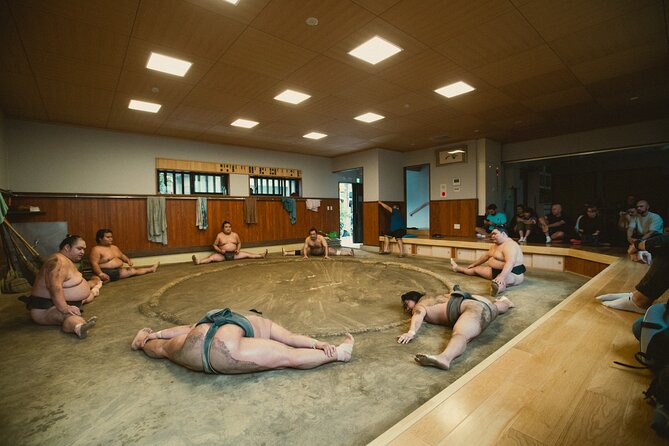
I would choose this tour if you want to understand sumo as a daily discipline. It is a strong fit for first-time visitors to Japan, sports fans, photographers who can follow strict rules, and anyone interested in Shinto-linked customs and Japanese etiquette.
Children aged six and older may join, but they must remain quiet and still. If a child is likely to move around, talk loudly, or struggle with the long seated period, the family may be asked to leave the stable. That is not an easy setting for restless young children.
The tour can also suit older children who are fascinated by athletes or Japanese culture, provided they understand that this is observation, not a show. Explain the rules before you arrive so everyone knows why silence and stillness matter.
I would be cautious about booking if you have difficulty sitting on the floor, need frequent restroom access, or dislike early starts. The stable’s rules are firm, and the experience does not appear to offer much flexibility once practice begins.
Timing, tournament season, and changing practice length
The normal meeting time is 7:30am, with arrival requested at 7:10am. During tournament season, the schedule may change, so check the provider’s direct message for the correct time.
The stated duration is about two hours, but you should keep your plans flexible. Practice may end earlier than usual, or it may run longer depending on the day’s training. The final photo and question period can also depend on the stable’s schedule.
This flexibility is common sense for a working training space. The wrestlers’ routine takes priority. Do not book a nonrefundable timed attraction immediately afterward, even though the standard tour is short.
The cancellation terms are simple: you can cancel for a full refund up to 24 hours before the local start time. Changes or cancellations made inside that 24-hour window are not accepted for a refund.
Small etiquette details that matter
The rules are not decoration. They protect the stable and help you avoid an awkward moment.
- Keep your cellphone silent.
- Take photographs only without flash or shutter sounds.
- Do not upload photos or videos to social media.
- Do not eat, chew gum, smoke, or bring candy into the stable.
- Drink water if needed.
- Keep your hat and sunglasses off.
- Do not stand, move around, or stretch your legs toward the ring.
- Never step into the ring or onto the sandy ground.
- Follow the guide’s directions throughout the visit.
I like that these instructions are clear before arrival. If you follow them, the visit feels respectful rather than intrusive. You are entering a serious workplace and sacred training area, not a photo studio.
Should you book the Sumida morning practice?
Book it if you want to see the work behind sumo’s public ceremony, can sit cross-legged on the floor, and are willing to watch quietly. The close view of training, the guide’s translation, and the chance to ask questions make this more useful than simply seeing a tournament bout without context.
Skip it if your main goal is an action-packed match or a guaranteed group photograph. For that, a tournament is the better choice. Here, the reward is watching athletes repeat demanding work in their own setting.
For most suitable visitors, I think the $83.23 price is reasonable for the access and cultural guidance. Arrive early, wear practical clothes, bring water and perhaps a foot towel, and treat the photo as a possible extra. That mindset gives you the best chance of appreciating what this tour actually offers.
FAQ
Where does the sumo practice tour start?
The tour starts at 1-chōme-8-21 Oshiage, Sumida City, Tokyo, near Tokyo Skytree. You should arrive by 7:10am for the 7:30am departure.
How long does the tour last?
The tour is scheduled for about two hours. Practice may end earlier or run longer depending on the content of the session. During tournament season, the meeting time may be different.
How far is the stable from the meeting point?
The walk from the meeting point to the sumo stable takes about 15 minutes. The tour returns to the Skytree meeting point afterward.
Are chairs provided inside the stable?
No. You must sit on the floor, cross-legged, for approximately one and a half hours. If that is not comfortable or possible for you, this tour is not recommended.
Can I take photos or videos?
Photos are allowed only without flash or shutter sounds. You may take videos, but you cannot upload photos or videos from the stable to social media.
Can children join the tour?
The minimum age is six. Children must watch quietly and remain still during practice. If a child is noisy or moves around, the group may be asked to leave the stable.
New on our Tokyo list
- From Tokyo: Mount Fuji & Hakone Full Day Private Tour★ 4.9 · 25 reviews
- Tokyo Spectacular View Day-Cruise in 90 Minutes★ 5.0 · 25 reviews
- Real Tokyo Runner Club : Daikoku Car Meet Night Tour with JDM Car★ 5.0 · 25 reviews
- 2.5 Hour-Guided Cycle Tour in the Central Tokyo★ 5.0 · 25 reviews
- Ramen Making from Scratch +Akihabara Tour –Cooking Class★ 5.0 · 25 reviews
- [Self-Drive] Tokyo & Daikoku Custom Car Driving Tour★ 4.9 · 25 reviews
- Tokyo: 2-Hour Night Bike Tour of the City’s Hidden Gems★ 4.9 · 25 reviews
- Samurai themed Entertainment show in Shinjuku★ 4.5 · 25 reviews
Sumo Experiences, compared.
Sumo Show Experience with Chicken Hot Pot and a Photo
Read our review →
Tokyo Shinjuku Sumo Show & Experience with Photo
Read our review →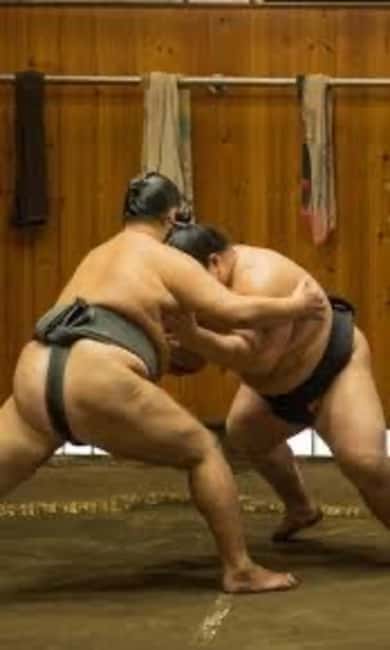
Authentic Sumo Experience in Tokyo: Enter the Sanctuary
Read our review →
Luxury Sumo Show Experience & Japanese cuisine & Drink
Read our review →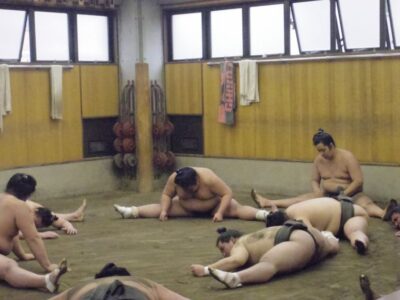
Browse the lists this tour appears in