
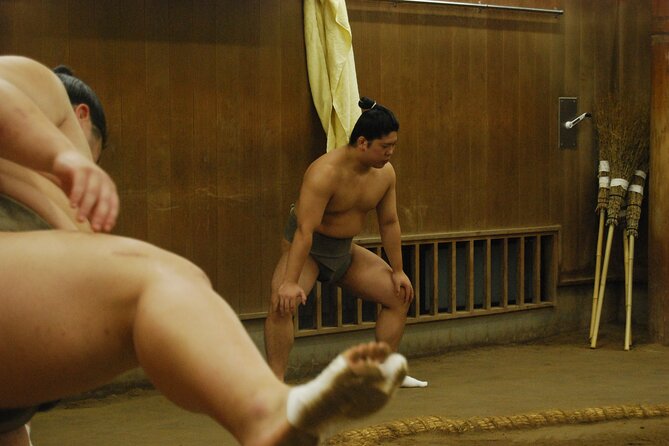
Reviewed · SUMO EXPERIENCES
Tokyo: Sumo Morning Practice -Stable Visit Tour with a Guide
The most striking part of this Tokyo tour is the distance. You are not watching sumo from the far side of the Kokugikan arena. You are close enough to notice the wrestlers’ breathing, facial expressions, and the heavy sound of bodies hitting the floor. I like the small group of no more than 10 people and the chance to ask questions after practice. The main drawback is that this is a working stable, not a show, so strict rules about silence, food, video, and flash photography may disappoint anyone expecting a casual photo stop.
I also like the direct look at daily training, including the stern voice of the coach and the trust behind that demanding routine. The experience runs in the morning, beginning at 8:30 am, and the early start is part of its value. You will see sumo as a living discipline, but you must be ready to watch quietly and follow the stable’s customs.
In This Review
- Key points to know before you book
- Why a sumo stable feels different from the Kokugikan
- Arriving in Oshiage at 8:30 am
- What happens during the hour of practice
- The coach’s voice and the meaning of discipline
- Photos, questions, and meeting the rikishi
- The brochure adds context without taking over
- Family appeal, and who should think twice
- The rules are part of the experience
- Is $82 a fair price?
- Booking, cancellation, and practical planning
- My recommendation: book it for access, not spectacle
- FAQ
- Where does the sumo stable tour begin?
- What time does the tour start?
- How long does the experience last?
- How many people can join the tour?
- Can I take photographs or videos inside the stable?
- Can I bring food or drinks?
Key points to know before you book
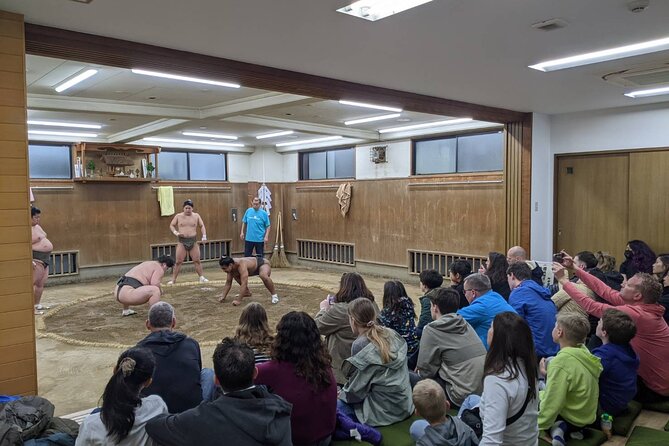
- Watch practice from close range: You can see breathing, expressions, and physical contact much more clearly than from arena seats.
- Morning start at 8:30 am: Meet at 1-1-1 Oshiage in Sumida, near public transportation.
- About one hour of training: The full experience lasts roughly two hours, with time afterward for photos and questions.
- Small group size: The tour accepts a maximum of 10 people, which helps the guide manage the visit in a quiet space.
- Strict stable etiquette: No private conversations, video, flash photography, or food during practice. Drinks must have lids.
- Optional support after practice: If you feel inclined, you can leave a tip for the rikishi.
Why a sumo stable feels different from the Kokugikan
A professional sumo match is easy to understand as a spectator sport. You buy a ticket, take your seat, and watch bouts under bright arena lights. A stable visit gives you something more private: the work that happens before the public sees the competition.
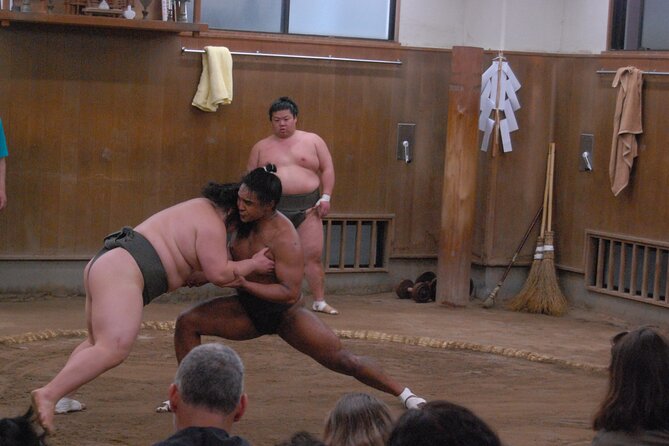
You may notice the rhythm first. Wrestlers repeat movements, brace their bodies, collide, and reset. The sound is not polished or theatrical. It is physical and sometimes startling. You hear the coach’s strong, harsh commands and see how seriously the rikishi and apprentices respond.
That sharp tone can surprise you if your only picture of sumo comes from television. Here, it is part of the training relationship. The visit presents a stable that depends on discipline, concentration, and trust between the coach and the wrestlers.
I find this setting valuable because it takes sumo out of the category of colorful spectacle. You see a demanding practice session that exists to preserve Japan’s national sport and pass it to future generations. That does not mean you will receive a full lesson in every rule or ranking. It does mean you will see the human effort behind the bouts.
More sumo mornings:
- Tokyo: Sumo Show Experience with Chicken Hot Pot and a Photo
★ 4.8 · 6,678 reviews - Tokyo: Sumo Show and Dining Experience
★ 4.8 · 2,742 reviews - the SUMO show
★ 5.0 · 1,960 reviews
Arriving in Oshiage at 8:30 am
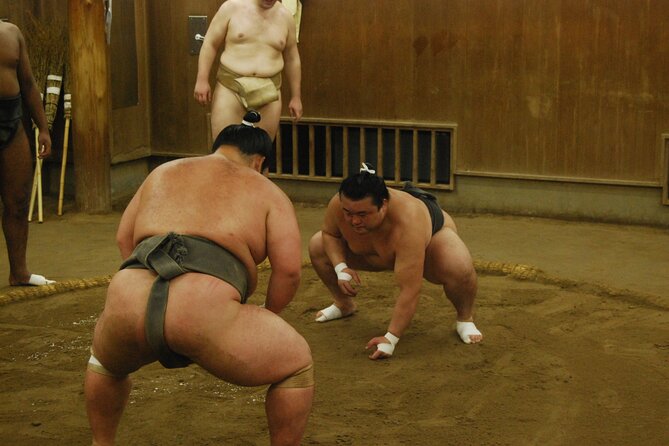
The meeting point is at 1-1-1 Oshiage in Sumida City, Tokyo. The tour begins at 8:30 am and ends back at the meeting point. The area is near public transportation, which helps with an early start, though you should allow enough time to reach the address without rushing.
This is not a flexible late-morning activity. If you arrive in Tokyo after a long night or prefer slow starts, the timing may be the first issue to consider. On the other hand, a morning visit fits neatly into a day of sightseeing. Once it finishes, you still have much of the day available for Oshiage, Asakusa, or other parts of Tokyo.
The booking uses a mobile ticket, and confirmation is provided when you book. I would keep the ticket easy to reach and arrive ready to follow the guide rather than trying to sort out directions at the last minute.
What happens during the hour of practice
The central part of the tour is about an hour inside a strong sumo stable. You sit or stand quietly and watch the wrestlers train. The exact movements and pace may vary because this is a real practice session, not a performance arranged for the group.
That unpredictability is a strength, but it also sets the right expectation. You are not guaranteed a particular bout, a dramatic ceremony, or a long personal conversation. You are there to observe the routine as it takes place.
From close range, small details matter. You can watch a wrestler control his breathing, prepare for contact, and recover between efforts. You may see apprentices working through the same demanding pattern. The atmosphere depends on silence, so the sound of the coach and the impact of the training become the main explanation.
You should not speak privately during the session. This rule protects the concentration of the rikishi and apprentices. It may feel strict, especially if you are visiting with children, but it is also what allows the group to enter a genuine working environment without turning it into a noisy attraction.
The coach’s voice and the meaning of discipline
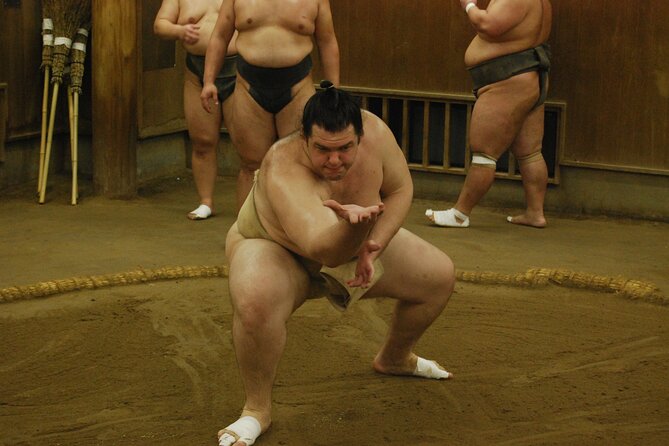
The coach’s voice may sound severe at first. That is worth knowing before you arrive, particularly if you are bringing children or are not familiar with traditional sports training.
The experience explains this intensity as part of the trust built between the coach and the wrestlers. You are seeing correction, pressure, and repetition within a system designed to keep the stable operating. The tone is not presented as entertainment. It is part of the work.
I appreciate that the visit does not smooth away this harder side of sumo. A softer, staged demonstration might be easier to consume, but it would tell you less. Here, the atmosphere can feel tense because the wrestlers are concentrating on the task in front of them.
That said, the tour may not suit you if you want a relaxed cultural activity with plenty of conversation during the practice. The best approach is to watch, listen, and save your questions for the end.
A few more Tokyo bookings worth comparing
- Tokyo: Sumo Morning Practice Viewing Tour
★ 4.8 · 570 reviews - Tokyo: Sumo Morning Training Visit
★ 4.4 · 370 reviews - Tokyo: Sumo Morning Practice Tour at Sumida City
★ 4.8 · 308 reviews - Tokyo Sumo Morning Practice Tour at Stable
★ 5.0 · 298 reviews
Photos, questions, and meeting the rikishi
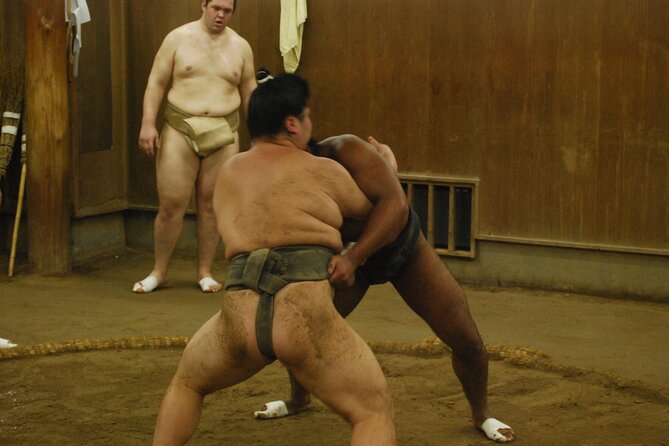
After practice, you can take photographs with sumo wrestlers and ask questions. This is the most social part of the visit, and it helps balance the quiet observation period.
You may take photographs without flash, but video and flash photography are prohibited inside the stable. Plan to keep your camera or phone on a quiet setting and wait for the proper moment. Do not assume that you can record the full session for later.
The question period is useful because it gives you a chance to clarify what you have just seen. A family review specifically praised the question-and-answer period, and the format works well for children who may hold their questions during practice. The available information does not name the guide, so you should not book this expecting a specific guide by name.
The photo opportunity is a nice extra, but I would not make it the main reason to book. The heart of the experience is watching training. The photograph comes after, when the stable’s work has paused and a more personal exchange is possible.
The brochure adds context without taking over
You receive a special brochure prepared for the tour. That matters because sumo has its own vocabulary, customs, and structure, and a close-up practice session can be hard to interpret without some background.
The brochure is not a substitute for a full sumo education, but it gives you something concrete to read before or after the visit. I would glance through it before entering if time allows, then use it later to remember what you saw.
The guide also helps you make sense of the practice and manages the group’s behavior. In a stable where concentration matters, that practical role is important. The guide is not there to turn every moment into a lecture. The value comes from helping you observe respectfully and understand the setting.
Family appeal, and who should think twice
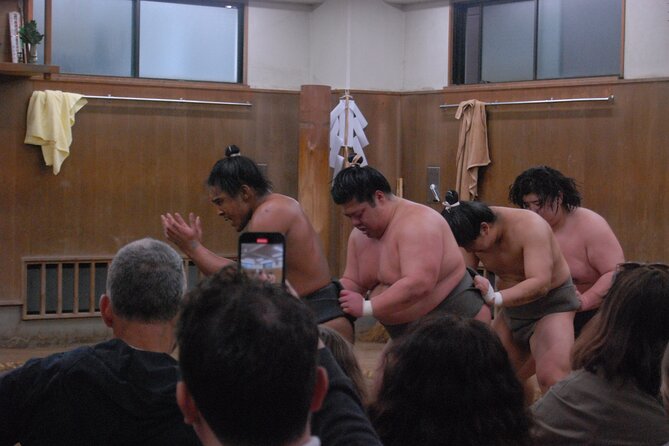
This experience can work well for families. A parent’s review described attending with children and enjoying both the practice and the question period. The close physical action gives young visitors something concrete to watch, while the chance to ask questions provides a clear ending.
Still, children must be able to remain quiet during practice. This is not a good choice for anyone who needs to snack, move around often, or talk through what is happening. The stable’s rules apply to every member of the group.
I also recommend it for adults interested in Japanese culture, sports, training, and daily life. You do not need to be a sumo expert. In fact, the visit may be more useful if you know only the basics and want to understand what happens away from the public tournament.
It may be less satisfying if your main goal is to attend a tournament, see a large number of bouts, or learn detailed rankings and match statistics. This is a practice visit, not a competition ticket.
The rules are part of the experience
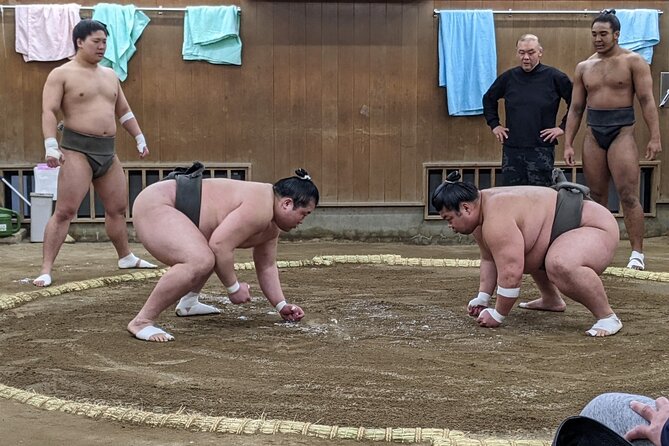
The restrictions are simple, but you need to take them seriously:
- Do not hold private conversations during practice.
- Do not take video.
- Do not use flash photography.
- Do not bring snacks, bread, rice balls, or other food into the morning practice.
- Bring drinks only in containers with lids.
- Take photographs without flash.
These rules protect the wrestlers’ focus and the stable’s working atmosphere. They also make the visit feel different from a typical sightseeing stop. You are entering a place with its own priorities, and the group must adapt.
If you are visiting with children, explain the quiet rule before you arrive. If you need breakfast, eat beforehand. A sealed drink is fine, but food is not allowed during practice.
Afterward, you can decide if you want to support the rikishi with a tip. It is optional, not part of the stated tour cost, but the opportunity is there if you feel the visit deserves it.
Is $82 a fair price?
At $82, this is not the cheapest way to spend two hours in Tokyo. You are paying for access to a setting that most people cannot enter on an ordinary sightseeing day, along with a guide, a special brochure, group coordination, and the chance to ask questions and take photos afterward.
The value depends on what you want from sumo. If you simply want to see large athletes in action, a public broadcast or tournament may be enough. If you want to understand the discipline behind the sport and see a stable at close range, the price is easier to justify.
The small group helps. With a maximum of 10 people, the visit is less likely to feel like a large crowd pressing into a private working space. It also gives the guide a better chance to manage questions and the photo period.
Keep in mind that the practice itself lasts about an hour, while the full activity is roughly two hours. The itinerary description also gives an approximate total of one hour and 30 minutes, so you should treat the timing as flexible rather than planning a strict appointment immediately afterward.
Booking, cancellation, and practical planning
You can cancel for a full refund if you do so at least 24 hours before the local start time. Cancellations or changes made within 24 hours are not refunded or accepted.
The activity requires a minimum number of participants. If that minimum is not met and the experience is canceled, you will be offered another date or experience, or a full refund.
Most people can participate, and the meeting point is near public transportation. The supplied information does not provide further accessibility details, so you should ask the provider before booking if you have specific mobility or access needs.
Because the tour begins early and takes place in a working stable, I would plan conservatively. Get breakfast before arriving, carry a lidded drink, wear something comfortable, and keep your phone ready for silent, non-flash photos.
My recommendation: book it for access, not spectacle
I would book this tour if you want a close, quiet look at how sumo wrestlers train before the public sees them. The physical sounds, the coach’s forceful calls, and the chance to meet rikishi after practice give you a more personal view than a seat at a tournament can provide.
I would skip it if you need a casual morning with food, conversation, or unlimited photography. The rules are firm, the start is early, and the practice may not unfold like a staged show.
For families with children who can stay quiet, the question period makes this a particularly good choice. For adults, the best reason to go is simple: you are seeing a working sumo stable at close range, an opportunity even people living in Japan may not have on a regular basis.
FAQ
Where does the sumo stable tour begin?
The meeting point is at 1-1-1 Oshiage, Sumida City, Tokyo 131-0045, Japan.
What time does the tour start?
The tour starts at 8:30 am.
How long does the experience last?
The activity lasts approximately two hours. The main practice session lasts about one hour, with additional time for photographs and questions afterward.
How many people can join the tour?
The activity accepts a maximum of 10 participants.
Can I take photographs or videos inside the stable?
You can take photographs without flash. Video recording and flash photography are prohibited.
Can I bring food or drinks?
Food, including snacks, bread, rice balls, and other items, is not allowed during morning practice. You may bring a drink if it has a lid.
New on our Tokyo list
- Sumi-e Experience in a relaxing green tea shop in Tokyo★ 5.0 · 3 reviews
- Tokyo : Kamikaze Street Drift Ride★ 5.0 · 3 reviews
- Private Zen Meditation in English in Shinjuku, Tokyo★ 5.0 · 3 reviews
- Onsen Spa in Tokyo and Asakusa Bar Hopping with Local Guide★ 5.0 · 3 reviews
- Easy for everyone! Now you can play handmade mini shamisen and show off to everyone! Musical instruments, sweets and live music★ 5.0 · 3 reviews
- Tokyo: Private Tsukiji Street Food & Sake with Local Guide★ 5.0 · 3 reviews
- Mt Fuji Exploration Tour with Free Japanese Kusa Mochi from Tokyo★ 4.5 · 3 reviews
- Tokyo Tsukiji Fish Market Walking and Exploring Hidden Gems Tour★ 5.0 · 3 reviews
Sumo Experiences, compared.
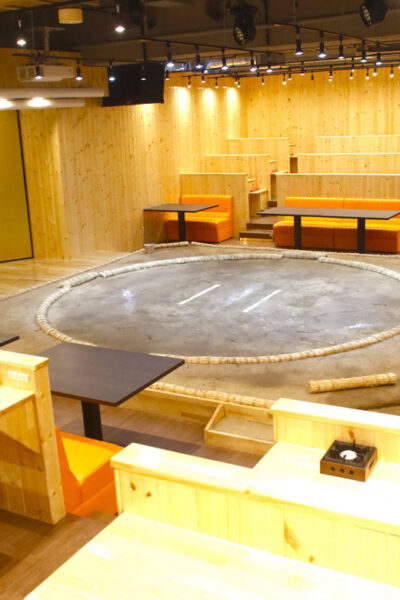
Sumo Show Experience with Chicken Hot Pot and a Photo
Read our review →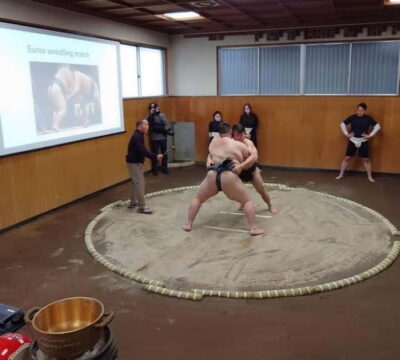
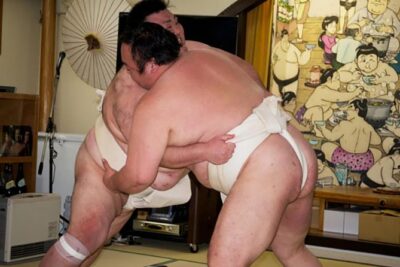
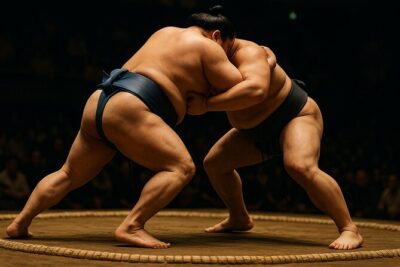
Tokyo Shinjuku Sumo Show & Experience with Photo
Read our review →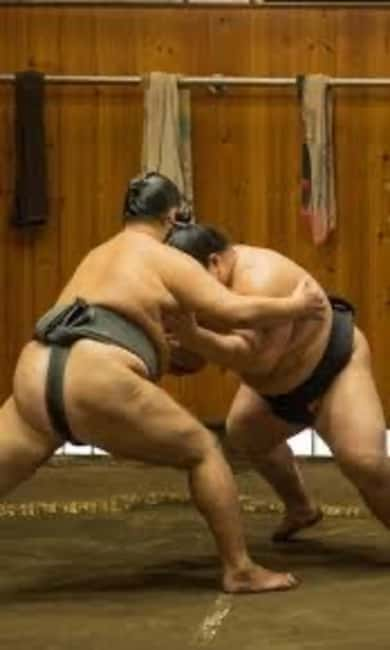
Authentic Sumo Experience in Tokyo: Enter the Sanctuary
Read our review →
Luxury Sumo Show Experience & Japanese cuisine & Drink
Read our review →
Browse the lists this tour appears in