
Reviewed · SUMO EXPERIENCES
Tokyo: Sumo Morning Practice Viewing Tour at a Real Stable
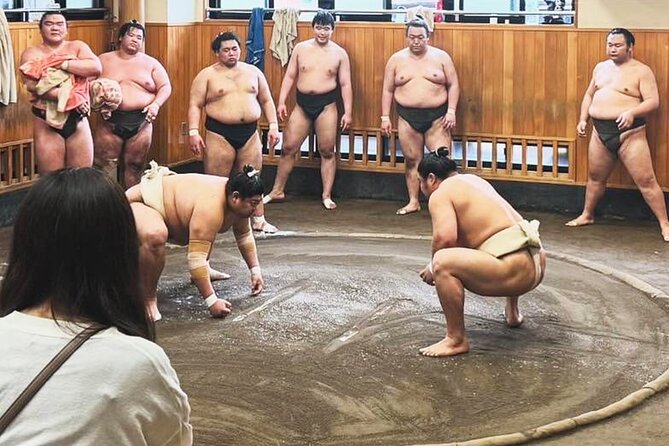
At this Tokyo sumo stable, you sit close enough to hear the slap of flesh and the sharp thud of bodies hitting the floor. I like the fact that this is a real morning practice, not a staged show, and I like how guides such as Mao, Yuki, Kawa, and Tomo explain the rules before you enter. You see the sport, the ritual, and the hard daily work behind it.
The main catch is that this is a place of work, not a casual attraction. You must stay quiet, remain seated, keep your phone silent, dress modestly, and stay until practice ends. Late arrival can mean missing the visit altogether, so allow plenty of time before meeting at Kiyosumi-Shirakawa Station.
In This Review
- Key points to know before booking
- Why this sumo visit feels different from a tournament
- Meeting at Kiyosumi-Shirakawa Station
- The guide’s introduction makes the practice easier to follow
- Sitting beside the ring during real training
- The rules that shape what you can do inside
- How close contact changes your view of sumo
- Group size, guides, and the pace of the morning
- Is $98 a fair price?
- Who should book this experience
- Should you book the Tokyo sumo stable visit?
- FAQ
- Where does the tour meet?
- How long does the activity last?
- Can I arrive late?
- Do I have to stay until the end of practice?
- What language is the tour offered in?
- Can children join the tour?
- Can I cancel or pay later?
Key points to know before booking
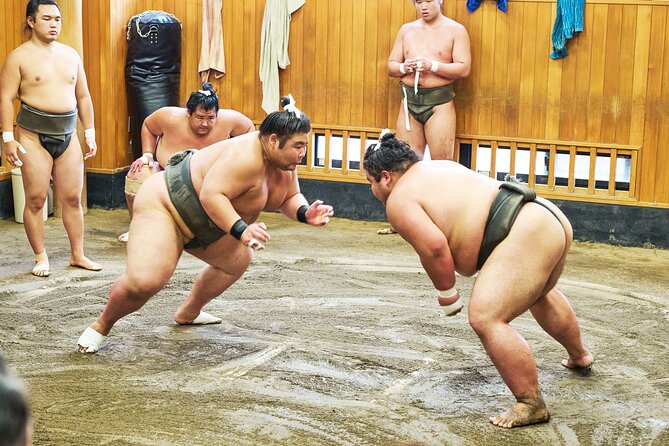
- Watch practice from beside the ring: You are close enough to hear the impact and see the wrestlers’ speed, balance, and effort.
- Visit a working sumo stable: Wrestlers train, live, and eat in this private setting, which is normally closed to the public.
- Learn before you watch: Your English-speaking guide explains the rules, Shinto customs, rituals, and tournament system.
- Silence is part of the experience: You cannot stand, move around, make noise, or use your phone during practice.
- Plan for a strict morning schedule: The visit must be completed in full, usually ending around 9:00 to 10:00 AM.
- Best for older children and adults: The activity is not suitable for children under 11.
Why this sumo visit feels different from a tournament
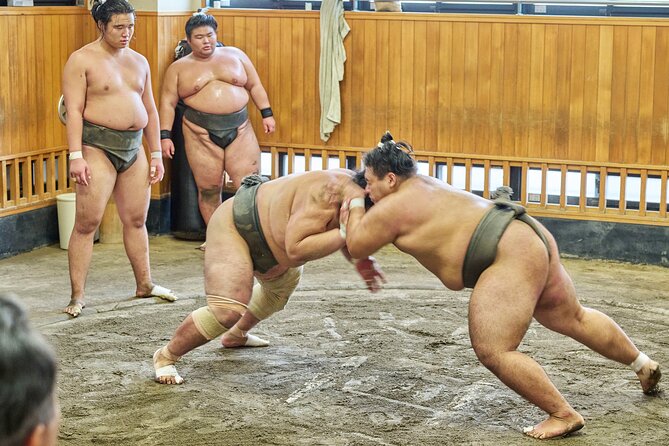
A professional sumo tournament gives you the ceremony, the crowd, the announcer, and the drama of an official match. This visit gives you something less polished and, in some ways, more revealing: the ordinary work that leads to those tournament bouts.
Morning practice is where wrestlers repeat movements until they become instinctive. You see pushing, grappling, balance work, and full-contact bouts at close range. The wrestlers are not performing for a room of sightseers. They train while you watch, which gives the session a serious, workmanlike mood.
That distinction matters. A tournament can make sumo look like a few seconds of shoving. At the stable, you begin to see the strength, flexibility, stamina, and discipline required before a wrestler ever steps into a formal match.
The setting also gives you a look at sumo as a way of life. A stable is not merely a gym. It is where wrestlers live, eat, train, and devote themselves to the sport. The experience cannot show every part of that routine in two hours, but it gives you a direct view of the commitment involved.
More sumo mornings:
- Tokyo: Sumo Show Experience with Chicken Hot Pot and a Photo
★ 4.8 · 6,678 reviews - Tokyo: Sumo Show and Dining Experience
★ 4.8 · 2,742 reviews - the SUMO show
★ 5.0 · 1,960 reviews
Meeting at Kiyosumi-Shirakawa Station
The tour begins at Exit A1 of Kiyosumi-Shirakawa Station. You can reach the station on the Toei Oedo Line or the Hanzomon Line. Look for a guide holding a Local Guide Stars sign.
The meeting point is practical, but do not treat it as a place to arrive at the last second. After the group meets, you may take a train to the stable, and the stable itself is not necessarily right outside the station. One late group reduced the available viewing time for everyone else, so I would arrive at least 30 minutes early.
That advice is especially important because late arrival may mean no entry. This is not like a museum where you can slip in after the group has started. The stable is a private workplace, and the visit depends on entering together and following its schedule.
The final location may differ from the meeting point, depending on the day’s arrangements. Keep that in mind when making plans for the rest of your morning.
The guide’s introduction makes the practice easier to follow
Before entering the stable, your English-speaking guide explains the basic rules and rituals of sumo. This short briefing is more useful than it may sound. Without it, you could see two large athletes collide and miss the reason for the movements around the bout.
You learn that a match is won when one wrestler forces the other outside the ring or makes any part of the opponent’s body touch the ground. You also get context for the ceremony and customs connected to sumo’s Shinto roots.
The guides named in the feedback include Mao, Yuki, Kawa, and Tomo. Mao is praised for clear explanations, patience, and strong English. Yuki is described as friendly and good at explaining sumo’s history and rules. Kawa helped connect sumo with daily life in Japan, while Tomo kept the information useful without overloading the group.
Guide quality matters here because there is little commentary once practice begins. You need the background before you sit down. A good introduction lets you watch quietly while still understanding what you are seeing.
Sitting beside the ring during real training
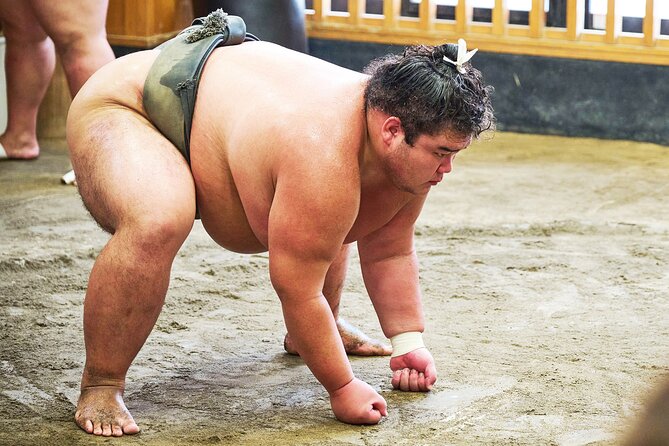
The central part of the visit is the morning practice. You sit on the side of the ring, close to the action, and watch the wrestlers work. Reports from the activity describe being close enough to see and hear the action almost as if sitting in the ring itself.
Expect a quiet room and a focused atmosphere. There is no theatrical presentation and no promise that the wrestlers will explain each bout as it happens. Their attention is on training. That lack of performance is exactly what gives the visit its value.
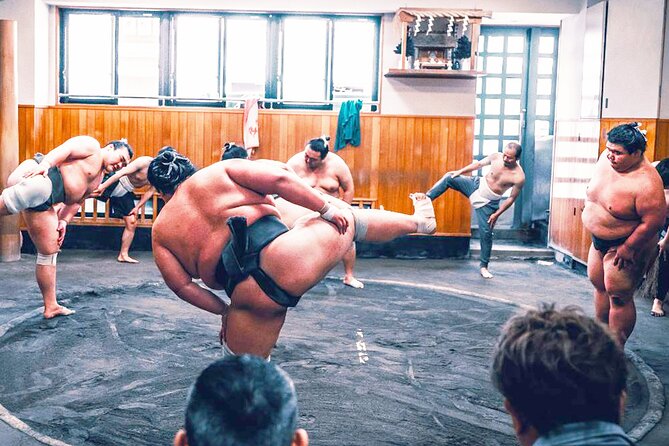
You may see young wrestlers working toward the dream of becoming top-ranked professionals. Their training is demanding, and the physical effort is easy to understand from only a few feet away. The speed and force can be surprising, even if you have seen sumo on television.
The sport also has a ritual side. Sumo developed from ancient Shinto beliefs, and the movements around a bout carry meaning beyond physical competition. The guide helps you notice those details, including the preparation and customs that frame the clashes.
The practice can last a little shorter or longer than expected. You must stay until the end, usually around 9:00 to 10:00 AM, and once you leave, you cannot re-enter. Do not schedule an important appointment immediately afterward.
A few more Tokyo bookings worth comparing
- Tokyo: Sumo Morning Practice Viewing Tour
★ 4.8 · 570 reviews - Tokyo: Sumo Morning Training Visit
★ 4.4 · 370 reviews - Tokyo: Sumo Morning Practice Tour at Sumida City
★ 4.8 · 308 reviews - Tokyo Sumo Morning Practice Tour at Stable
★ 5.0 · 298 reviews
The rules that shape what you can do inside
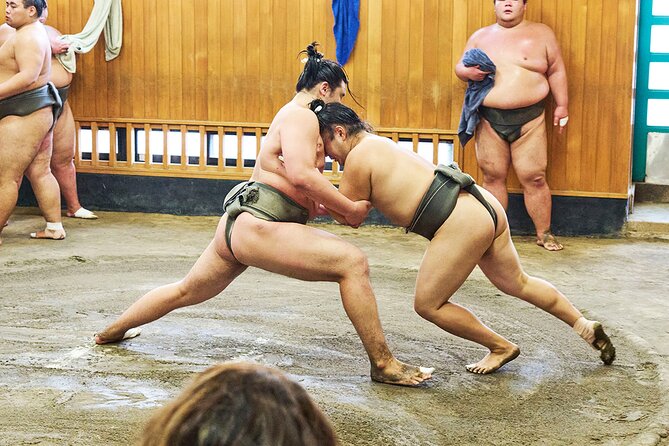
The restrictions are strict, but they protect the wrestlers’ concentration and the stable’s working routine. You must remain seated and avoid standing or moving around during practice. Keep your phone on silent and do not make noise.
Modest clothing is required. You should also use the restroom before entering, since leaving early is discouraged and re-entry is not allowed. One useful practical note is that food and drink are not part of the visit, apart from water.
These rules may frustrate anyone hoping to walk around, chat, or take constant photographs. They are also the reason the practice can continue without turning into a public show. I see the quiet as part of the cultural lesson: you are entering someone else’s workplace, so your role is to observe respectfully.
The information says there may be a chance to speak with wrestlers outside training hours. That opportunity depends on the stable’s schedule and circumstances. It should be treated as a possible addition, not the main reason to book.
One visitor was able to take pictures with the wrestlers, but the supplied rules do not promise photography for every group. Follow the guide’s instructions rather than assuming you can photograph during practice.
How close contact changes your view of sumo
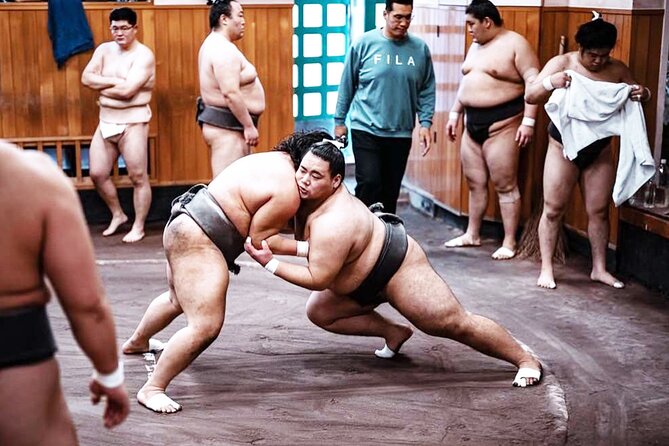
Watching sumo on a screen gives you the broad picture. At the stable, your ears and eyes pick up smaller details. You hear the impact of a charge, notice how quickly a bout changes direction, and see the effort required to keep balance.
The physical size of the wrestlers is only part of the story. Their flexibility and control are just as striking. The training shows that sumo is not simply about being heavy. Timing, footwork, leverage, toughness, and technique all matter.
This close view can also make the sport feel less exotic and more human. You see young athletes repeating difficult movements and giving their full effort while working toward a professional rank. The quiet concentration in the room tells you as much as the collisions do.
I especially like that the visit places the sport within Japanese culture rather than presenting it as a novelty. The guide explains why rituals matter and how tournaments fit into the wrestlers’ goals. You leave with a better sense of why each movement has such weight.
Group size, guides, and the pace of the morning
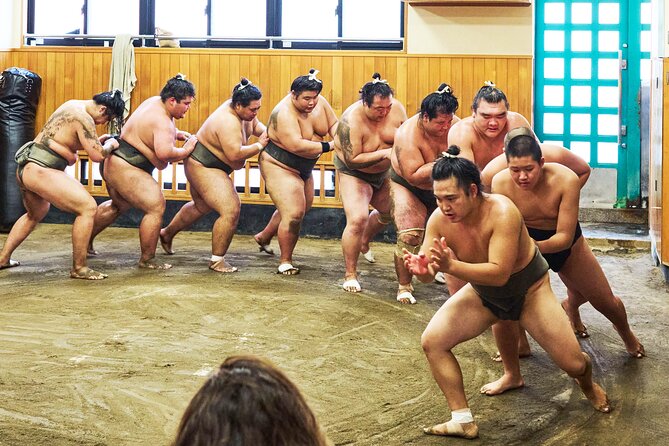
The group size can vary. One booking had 11 people, while another had 14. A smaller group can make a close viewing position feel more comfortable, but you should not book expecting a particular group size.
The pace is brisk before entry, then deliberately still once you are inside. You meet the guide, receive the explanation, travel to the stable if needed, and settle in for practice. There is no flexible drop-in period.
The guides receive especially strong praise for being clear, friendly, and prepared. Mao is noted for answering questions patiently, even when late arrivals caused frustration for the rest of the group. That patience is welcome, though it also reinforces the need for every participant to arrive early.
Because the stable is a private workplace, the guide cannot promise every detail in advance. The practice may vary in length, the ending point may change, and the chance to talk with wrestlers depends on the day.
Is $98 a fair price?
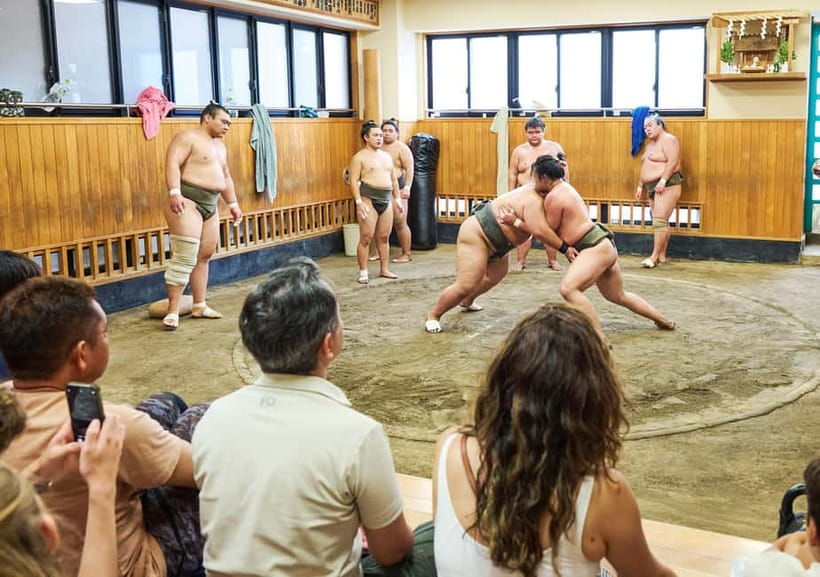
At $98 per person, this is not a cheap two-hour activity. You are paying for access that is normally unavailable to the public, an English-speaking guide, transportation arrangements after the meeting point if needed, and an explanation that helps you understand what you are watching.
The value is strongest if you care about authentic access rather than a broad sightseeing checklist. You are not paying for a long tour with many stops. You are paying for a rare look inside a working sumo stable, where even local access has traditionally been limited.
The price is harder to justify if you mainly want photographs, a quick introduction, or a guaranteed meeting with famous wrestlers. The session is quiet and highly controlled. You may not get much interaction, and you cannot leave and return when convenient.
For someone with a strong interest in Japanese culture, sport, or traditional practice, I think the price can be reasonable. It offers something a regular city tour cannot. For a tight budget, compare it with attending a sumo tournament or visiting a public attraction, but remember that those options do not provide this same view of daily training.
Who should book this experience
This visit suits adults and children aged 11 or older who can sit quietly and follow instructions for the entire practice. It is a good pick if you want to understand sumo beyond its television image.
You will get the most from it if you enjoy cultural context, physical sports, and places that are still used for their original purpose. The guide’s explanation is valuable for first-time sumo watchers, while fans may appreciate the close view of training and the chance of seeing a high-ranking wrestler.
It is less suitable if you need a flexible morning, dislike sitting still, or expect a polished entertainment show. It is also a poor choice for anyone who may need to leave early. The stable’s rules are not optional.
Wear modest clothing, silence your phone, use the restroom first, and allow extra travel time. Those simple steps will make the morning much easier.
Should you book the Tokyo sumo stable visit?
Book it if you want a close look at the work behind Japan’s national sport and you are willing to behave like a respectful observer. The real training, the proximity to the ring, and the explanations from guides such as Mao and Yuki make this far more meaningful than a quick photo stop.
Skip it if you want an informal, come-and-go activity or guaranteed wrestler interaction. The strict rules and fixed schedule demand cooperation from the whole group.
For the right person, this is one of Tokyo’s more memorable cultural activities. You see sumo at its most honest: early, demanding, quiet, and focused.
FAQ
Where does the tour meet?
Meet in front of Kiyosumi-Shirakawa Station at Exit A1. The station is served by the Toei Oedo Line and the Hanzomon Line. Your guide will hold a Local Guide Stars sign.
How long does the activity last?
The stated duration is two hours. The practice and tour may be slightly shorter or longer than expected, and the practice usually ends around 9:00 to 10:00 AM.
Can I arrive late?
Late arrival may mean you cannot enter the stable. Allow plenty of travel time and arrive early for the meeting point.
Do I have to stay until the end of practice?
Yes. You must stay until the practice ends. Once you leave the stable, re-entry is not possible.
What language is the tour offered in?
The tour is offered in English and includes a live English-speaking guide.
Can children join the tour?
The activity is not suitable for children under 11 years old.
Can I cancel or pay later?
You can cancel up to 24 hours in advance for a full refund. Reserve now and pay later is available, so you do not have to pay at the time of booking.
New on our Tokyo list
- From Tokyo: Mount Fuji & Hakone Full Day Private Tour★ 4.9 · 25 reviews
- Tokyo Spectacular View Day-Cruise in 90 Minutes★ 5.0 · 25 reviews
- Real Tokyo Runner Club : Daikoku Car Meet Night Tour with JDM Car★ 5.0 · 25 reviews
- 2.5 Hour-Guided Cycle Tour in the Central Tokyo★ 5.0 · 25 reviews
- Ramen Making from Scratch +Akihabara Tour –Cooking Class★ 5.0 · 25 reviews
- [Self-Drive] Tokyo & Daikoku Custom Car Driving Tour★ 4.9 · 25 reviews
- Tokyo: 2-Hour Night Bike Tour of the City’s Hidden Gems★ 4.9 · 25 reviews
- Buddha, Bamboo & Zen – Bespoke Kamakura Private Walking Tours★ 5.0 · 25 reviews
Sumo Experiences, compared.
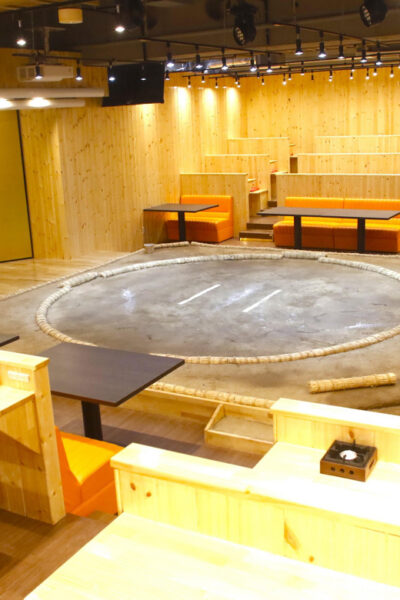
Sumo Show Experience with Chicken Hot Pot and a Photo
Read our review →
Tokyo Shinjuku Sumo Show & Experience with Photo
Read our review →

Authentic Sumo Experience in Tokyo: Enter the Sanctuary
Read our review →
Luxury Sumo Show Experience & Japanese cuisine & Drink
Read our review →
Browse the lists this tour appears in