
Reviewed · SUMO EXPERIENCES
Tokyo Sumo Morning Training/ Sumo Practice with Wrestlers
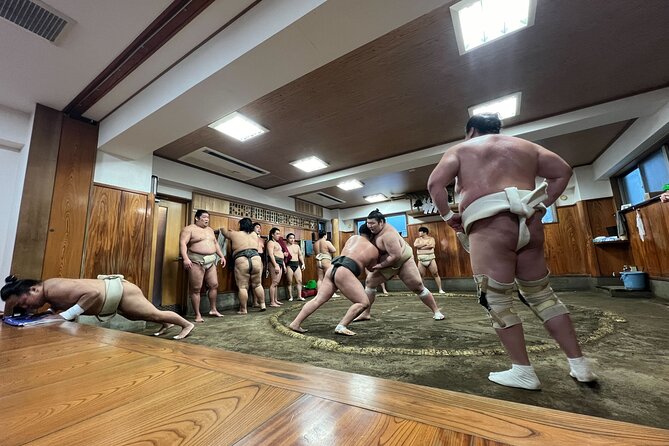
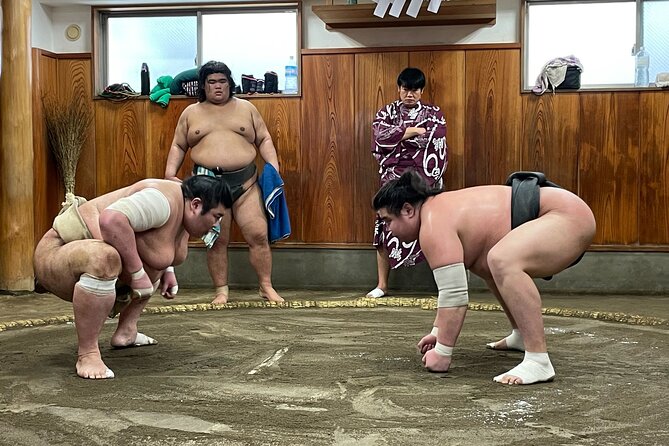
The best part of this Tokyo experience is simple: you enter a real sumo stable and watch wrestlers train at close range. This is not a tournament with bright lights and cheering crowds. It is a working morning practice, built around repetition, strength, discipline, and silence.
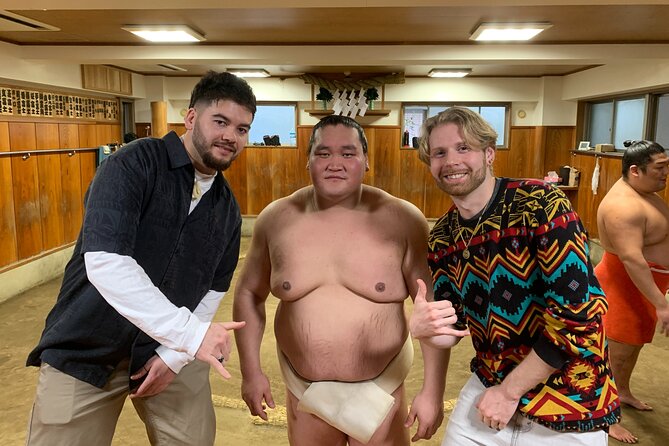
I like the close view of daily training and the guide’s explanations, which help you understand what you are seeing. I also like the chance to take a photo with a sumo wrestler after practice, a small but memorable finish.
The main catch is that this is an observation experience, not a staged show. Practice can end early, the schedule and stable can change, and you may sit on the floor for much of the session. You must also remain quiet and stay until the practice ends.
In This Review
- Key details before you book
- Why sumo practice feels different from a tournament
- Meeting your guide in Sumida City
- Entering the stable and settling in
- Watching the wrestlers train up close
- The rules that protect the practice
- The photo with a wrestler
- What the $99.10 price gets you
- Who will enjoy this most
- Practical preparation for the morning
- Should you book this Tokyo sumo experience?
- FAQ
- How long does the sumo practice experience last?
- Where does the experience start?
- Is the practice held every morning at the same time?
- Does a guide accompany the group?
- Can I take photos inside the stable?
- Can I use my cellphone during practice?
- Can I leave the stable during practice?
- Is food allowed inside the stable?
- Do women have access to the full experience?
- Is a photo with a sumo wrestler included?
- What happens if I need to cancel?
Key details before you book
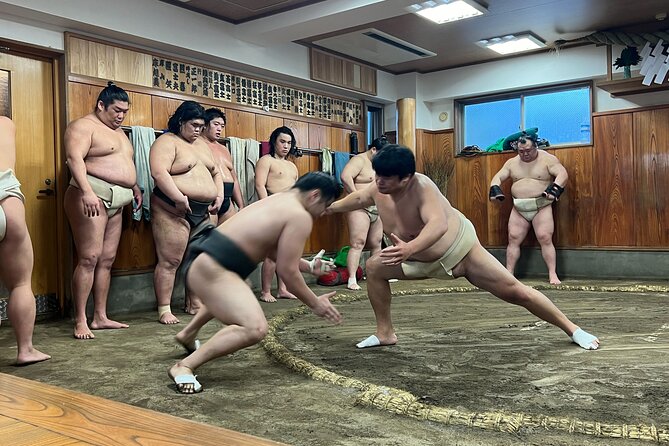
- Watch inside a working stable: You see wrestlers train in their own practice space, not perform a tourist show.
- Practice comes first: The session may include warmups, repeated bouts, stretching, and technical drills, but the exact routine changes by day.
- A guide explains the action: A guide gives background on sumo and helps you follow what is happening, with commentary that may be provided through a headset.
- The meeting point can change: The listed starting point is 1-chōme-2-8 Chitose in Sumida City, but the operator sends the final time and location after booking.
- Respect matters: Keep your phone silent, do not use flash or shutter sounds, and do not leave during practice.
- The Yokozuna is not guaranteed: The stable may be one where a Yokozuna trains, but you will not know if he is present until that morning.
Why sumo practice feels different from a tournament
At a Grand Sumo Tournament, you buy a seat, watch formal bouts, and feel the energy of the crowd. At a stable, you see the part most spectators never witness: the work before the public performance.
Training is repetitive by design. Wrestlers may work through warmups, footwork, pushing drills, and bouts with little conversation. The force is impressive, but so is the control. A practice room can feel quiet and formal, even when two large athletes collide inches away.
That contrast gives this activity its value. You are not getting a polished show made for visitors. You are watching a routine that belongs to the wrestlers and their stable. The rules for visitors can feel strict, but they protect the concentration of the athletes and the dignity of the place.
You should also set your expectations correctly. Some sessions have plenty of action. Others may include long stretches of explanation or less dramatic training. A day before a major tournament can affect the schedule, and the practice may finish earlier than the advertised hour. In some cases, the session has lasted about two hours, so the one-hour estimate is best treated as an approximate guide rather than a promise.
More sumo mornings:
- Tokyo: Sumo Show Experience with Chicken Hot Pot and a Photo
★ 4.8 · 6,678 reviews - Tokyo: Sumo Show and Dining Experience
★ 4.8 · 2,742 reviews - the SUMO show
★ 5.0 · 1,960 reviews
Meeting your guide in Sumida City
The stated meeting point is at 1-chōme-2-8 Chitose, in Tokyo’s Sumida City. The area is near public transportation, but the exact meeting time and stable location can change with the date. After booking, check your messages carefully for the final instructions from Japan Wonder Travel.
You first meet the guide and receive a short explanation of sumo. This briefing covers the sport, the stable, and the behavior expected inside. It is useful because the training itself is not narrated like a sporting event.
One practical issue is noise. If the briefing takes place near a station or main road, traffic and other sounds can make it difficult to hear. Stand close to the guide, and if you receive a headset, use it. The explanation is more useful when you can connect the movements in front of you with the basic rules and customs of sumo.
Allow extra time to find the meeting point. The operator will not compensate you if you miss the start because you failed to check the updated meeting details or arrive late. This is one booking where checking your phone before leaving your hotel matters.
Entering the stable and settling in
From the meeting point, the guide leads you to the stable. The walk to the entrance is listed as about five minutes, though the route depends on the day’s location.
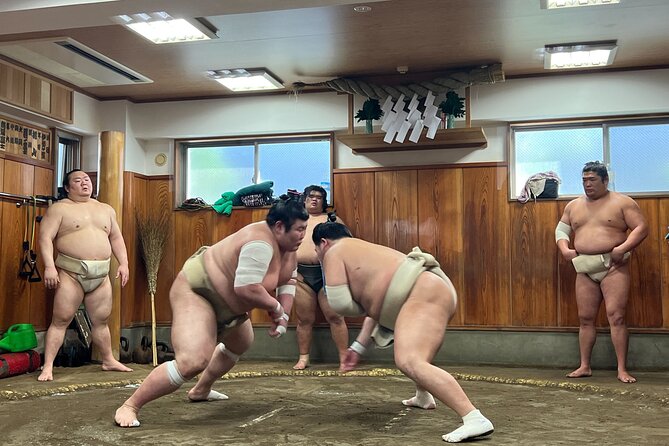
The atmosphere changes as soon as you enter. You are stepping into a training facility, not a museum or theater. Keep your voice low, follow the guide’s instructions, and avoid sudden movement near the ring.
Some stables do not have chairs. You may sit on a mat or directly on the floor, sometimes cross-legged, for much of the practice. An hour can be manageable, but a longer session may be hard on your knees, hips, or back. Wear comfortable clothes, and think honestly about your ability to sit on the floor.
You must use the restroom before arriving. Eating is not allowed inside, though water and sports drinks are permitted. If you feel unwell, skip the activity rather than trying to push through it.
Shoes are another point to remember. Men must remove their shoes before stepping onto the dohyo, or sumo ring. Women may join the experience, but cultural and religious rules at the facility do not allow female participants to enter the dohyo. Women can still watch the full practice from the designated seating area.
Watching the wrestlers train up close
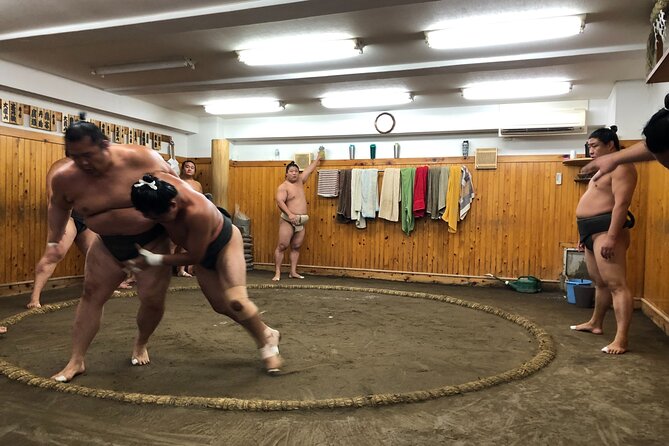
The main session lasts about 55 minutes in the standard itinerary, making the total advertised time about one hour. In practice, the length depends on what is happening inside the stable. A session may be shorter or longer, especially around a Grand Tournament.
Your best moments may come during the actual bouts, when you can see the speed and force that are easy to miss from a distant tournament seat. Even the warmup work can be revealing. The wrestlers repeat movements with care, and the group’s focus gives the room a serious feel.
The guide helps you understand the sequence. Written notes may be passed along, and live commentary or a headset may be used. This is especially helpful if you are new to sumo. Without some context, a visitor might see a series of pushes and throws without understanding the purpose behind them.
The guide may also explain the wrestlers’ daily routine, training methods, rules, ranks, and life inside a stable. The strongest part of the experience for many people is this link between what you see and what it means. You begin to notice the difference between a warmup drill and a formal bout, or between raw strength and careful balance.
Do not expect constant action. One disappointing version of this experience can feel like too much talking and too little practice, especially if you arrive hoping for a performance. The guide’s role is to explain, but the wrestlers are not there to entertain you. Their work takes priority.
A few more Tokyo bookings worth comparing
- Tokyo: Sumo Morning Practice Viewing Tour
★ 4.8 · 570 reviews - Tokyo: Sumo Morning Training Visit
★ 4.4 · 370 reviews - Tokyo: Sumo Morning Practice Tour at Sumida City
★ 4.8 · 308 reviews - Tokyo Sumo Morning Practice Tour at Stable
★ 5.0 · 298 reviews
The rules that protect the practice
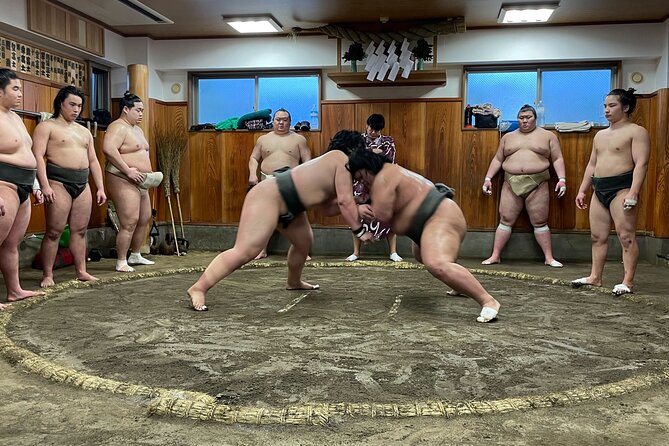
The stable has clear etiquette, and it is important to treat it as part of the experience rather than an inconvenience.
- Keep your cellphone on silent.
- Photos are allowed only without flash or shutter sounds.
- Video recording is not allowed.
- Do not stretch your legs toward the ring, since showing the soles of your feet is considered rude.
- Stay quiet and avoid distracting the wrestlers.
- Do not leave in the middle of practice.
- Once you leave, you cannot re-enter.
- Remain until the practice is finished unless the guide gives different instructions.
The no-exit rule deserves special attention. Use the restroom before you arrive, bring only what you need, and do not book this activity immediately before another fixed appointment. You are committing to the full session.
The photo rule also changes the way you record the visit. You can take still photographs without flash or artificial shutter sounds, but you cannot make a video. If photography is very important to you, listen carefully to the guide and wait for permission at the appropriate time.
The photo with a wrestler
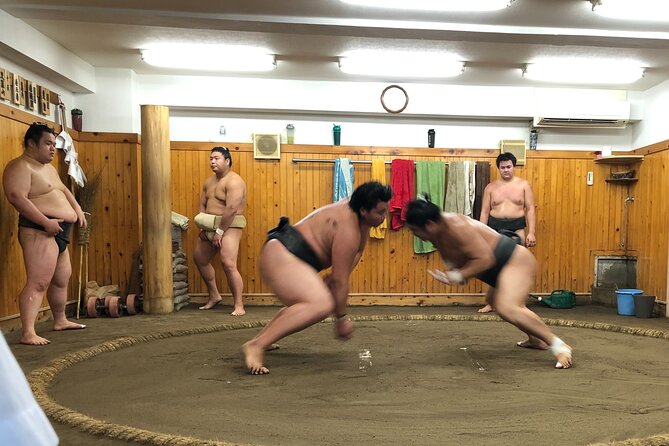
A photo with a sumo wrestler is included, giving the experience a personal ending after the quiet observation period. The interaction may be brief, but it creates a clear memory of the visit and gives you a chance to thank the athletes.
Some sessions also allow a little conversation. Do not assume every day will produce the same amount of contact. The wrestlers have their own schedule and may be tired after training, so keep the exchange polite and short.
The presence of a famous wrestler is never assured. The stable may be associated with a Yokozuna, but the operator cannot confirm his attendance until the morning. Book this to see sumo training, not to meet a particular champion.
One important distinction is the kind of option you book. The supplied details refer to both morning practice and a Sumo Practice with Wrestlers option. Some experiences may include more direct interaction or hands-on activity, while the core stable visit centers on watching practice. Read the exact option name and description before paying, especially if you expect professional wrestlers, training participation, or a meal such as chanko.
What the $99.10 price gets you
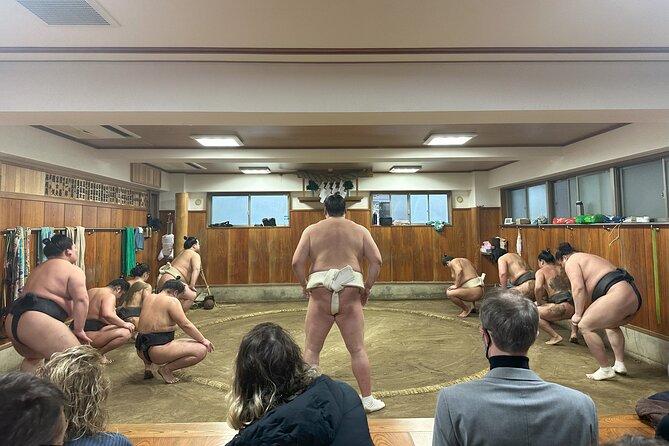
At $99.10 per person, this is not a cheap way to fill an hour in Tokyo. The value depends on what you want from the visit.
If you simply want to see a few minutes of sumo action, the price may feel high. Practice is not guaranteed to include famous wrestlers, and the session can finish earlier than expected. You also give up the freedom to leave, eat, or record video.
For someone who already follows sumo, the price makes more sense. Access to a working stable is unusual, and a tournament ticket does not show you the private training routine. The guide, translation help, close seating, and wrestler photo add value for a first visit to Japan or for anyone who cannot attend a tournament.
I would also consider the cost of alternative sumo experiences. A staged demonstration may offer more audience interaction, but it will not necessarily show a real stable’s daily routine. This activity is worth the money when authenticity and close observation matter more to you than guaranteed entertainment.
The 96 percent recommendation rate and 4.8 rating suggest that the format works well for most people, but the range of reactions is useful. People who want history, rules, and serious training tend to find plenty to enjoy. People who expect a continuous show can leave disappointed.
Who will enjoy this most
I would book this for:
- First-time visitors who want a cultural experience beyond temples and shopping.
- Sumo fans who want to see practice rather than only tournament bouts.
- Families with older children who can sit quietly for the entire session.
- Visitors who enjoy learning through observation and explanation.
- Photographers who are satisfied with still images and can work without flash or sound.
I would think twice if you need frequent restroom breaks, dislike floor seating, or want a flexible one-hour stop. I would also avoid it if you are mainly looking for a staged contest, video footage, or a guaranteed Yokozuna appearance.
Children can participate if they can follow the rules. The maximum group size is 25, so the experience is not necessarily private, but it is still a relatively focused way to watch the practice. A smaller group may feel more intimate, while a full group could make the viewing area busier.
Practical preparation for the morning
Wear comfortable clothes and shoes that are easy to remove. Bring water or a sports drink, but do not bring food for the stable. Before leaving your hotel, use the restroom and check for any message that changes the meeting location or time.
Dress for the season. One cold, rainy visit involved waiting outside and a chilly stable, so a warm layer and rain protection are sensible in winter. The need for outdoor waiting can vary, but you should not assume the stable will be warm.
Avoid scheduling a major attraction, train departure, or meal immediately afterward. The practice may run long, or the group may need time for the photo. At the same time, it can end early, so do not count on a full two hours either.
The free cancellation rule is straightforward: cancel at least 24 hours before the local start time for a full refund. Changes or cancellations inside that window are not accepted, and the operator does not refund missed starts caused by late arrival or unread messages.
Should you book this Tokyo sumo experience?
Book it if you want to see serious training in an intimate setting, and if you can follow a quiet, formal routine. The best parts are the proximity to the wrestlers, the guide’s explanations, the chance to observe a real stable, and the photo afterward.
Skip it if your ideal sumo experience is a guaranteed bout, a lively crowd, video recording, or a meeting with a particular champion. For the right person, $99.10 buys access to a side of sumo that a tournament ticket cannot provide. Just arrive prepared to sit, stay silent, and accept that the wrestlers’ schedule, not the visitor schedule, controls the morning.
FAQ
How long does the sumo practice experience last?
The advertised duration is about one hour, including a short introduction and roughly 55 minutes inside the stable. The practice can be shorter or longer depending on the day.
Where does the experience start?
The listed meeting point is 1-chōme-2-8 Chitose, Sumida City, Tokyo 130-0025, Japan. The final meeting point and time may vary by date and will be sent after booking.
Is the practice held every morning at the same time?
No. The location and time can vary depending on the tour date, and the schedule may change around a Grand Tournament.
Does a guide accompany the group?
Yes. You meet a guide before entering the stable, receive an explanation about sumo, and get help understanding the practice. Commentary may be provided through a headset or written notes.
Can I take photos inside the stable?
Yes, still photos are allowed without flash or shutter sounds. Video recording is not allowed.
Can I use my cellphone during practice?
Your cellphone must be on silent. You should avoid any action that could distract the wrestlers.
Can I leave the stable during practice?
No. You cannot leave in the middle of practice, and once you leave the stable, you cannot re-enter.
Is food allowed inside the stable?
No. Eating is not allowed. Water and sports drinks are permitted.
Do women have access to the full experience?
Women can join and watch the complete training session from designated seating areas. Due to the facility’s cultural and religious traditions, women cannot enter the dohyo.
Is a photo with a sumo wrestler included?
Yes. The experience includes a photo with a sumo wrestler after the practice. The attendance of a particular wrestler, including a Yokozuna, is not guaranteed.
What happens if I need to cancel?
You can receive a full refund by canceling at least 24 hours before the local start time. Cancellations or changes made less than 24 hours before the start are not accepted.
New on our Tokyo list
- From Tokyo: Mount Fuji & Hakone Full Day Private Tour★ 4.9 · 25 reviews
- Tokyo Spectacular View Day-Cruise in 90 Minutes★ 5.0 · 25 reviews
- Real Tokyo Runner Club : Daikoku Car Meet Night Tour with JDM Car★ 5.0 · 25 reviews
- 2.5 Hour-Guided Cycle Tour in the Central Tokyo★ 5.0 · 25 reviews
- Ramen Making from Scratch +Akihabara Tour –Cooking Class★ 5.0 · 25 reviews
- [Self-Drive] Tokyo & Daikoku Custom Car Driving Tour★ 4.9 · 25 reviews
- Tokyo: 2-Hour Night Bike Tour of the City’s Hidden Gems★ 4.9 · 25 reviews
- Samurai themed Entertainment show in Shinjuku★ 4.5 · 25 reviews
Sumo Experiences, compared.
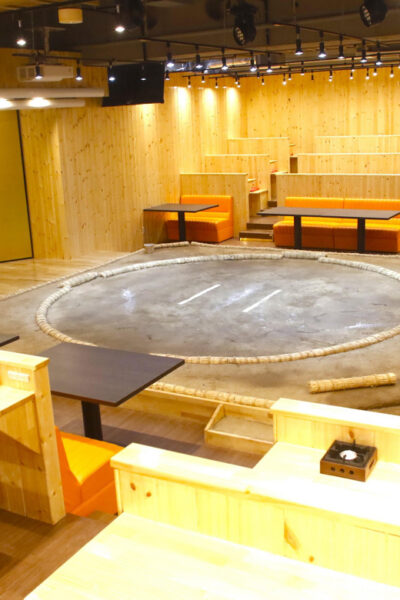
Sumo Show Experience with Chicken Hot Pot and a Photo
Read our review →
Tokyo Shinjuku Sumo Show & Experience with Photo
Read our review →
Authentic Sumo Experience in Tokyo: Enter the Sanctuary
Read our review →
Luxury Sumo Show Experience & Japanese cuisine & Drink
Read our review →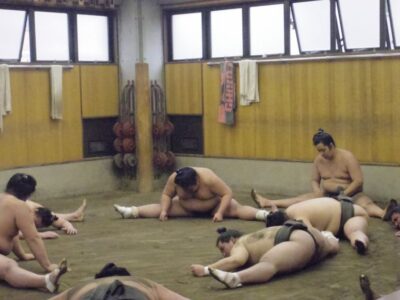
Browse the lists this tour appears in