
Reviewed · SUMO EXPERIENCES
Tokyo: Visit Sumo Morning Practice with English Guide
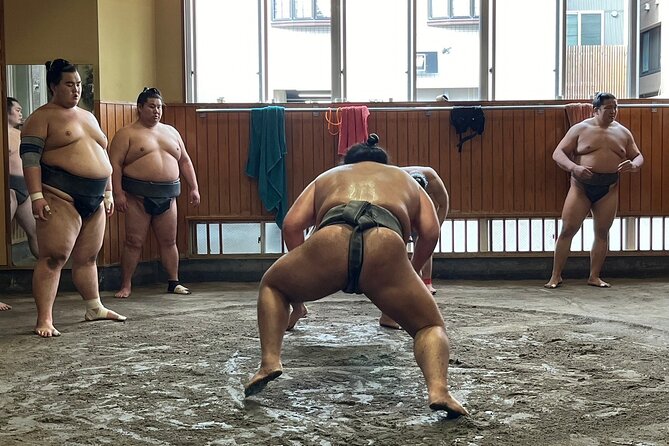
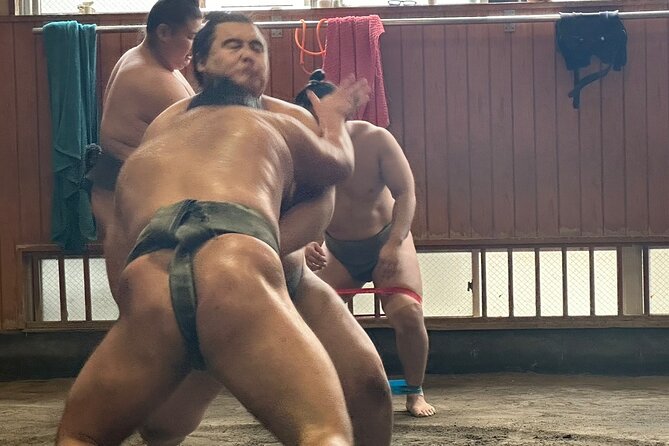
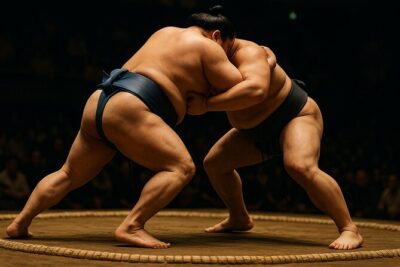
A sumo morning practice gives you something a formal tournament cannot: a close view of wrestlers at work, before the noise and ceremony of competition. At Takasago Stable, you sit near the training room and watch stretching, repeated drills, and hard practice bouts that can make the floor seem to shake.
I like the helpful English guidance, especially when you want to understand terms, training routines, and customs as they happen. I also like the commemorative photo at the end, plus the easy chance to continue on to nearby Asakusa. The main caution is simple: this is quiet observation, not a staged show, and floor seating can be cramped or uncomfortable for up to two hours.
In This Review
- Key points to know before you book
- Why a morning stable visit feels different from a tournament
- Meeting at Ryogoku Station requires careful planning
- Entering Takasago Stable and taking your place
- Reading the practice from stretching to full-contact bouts
- What the English guide adds to the morning
- The photo with the wrestlers is a brief but meaningful finish
- Price and value at $98.53
- Pairing the stable with Asakusa afterward
- Who will enjoy this, and who may not
- Should you book the Takasago Stable visit?
- FAQ
- Where does the sumo morning practice take place?
- What time does the tour start?
- Where is the meeting point?
- How long does the experience last?
- Is an English-speaking guide included?
- Can I ask questions about sumo?
- What kind of seating is provided?
- Is the practice a staged show?
- Is a photo included?
- Can I visit Asakusa after the tour?
Key points to know before you book
- Watch serious practice at Takasago Stable: You see wrestlers train at close range in a traditional sumo room.
- Meet near Ryogoku Station: The guide leads you from the station area to the stable, with the walk taking about 10 minutes.
- Arrive early for the station meeting: The group may leave the A3 exit at about 7:45 a.m., despite the listed 8:00 a.m. start.
- Ask questions in English: Guides explain sumo terms, history, and training, with some staff also speaking French and Japanese.
- Expect floor-style seating: The viewing area can become crowded, and small stools or floor seating may not suit everyone.
- Finish with a photo: You receive a commemorative picture with the sumo wrestlers after practice.
Why a morning stable visit feels different from a tournament
A tournament is polished and public. A stable practice is more private and workmanlike. You are not watching a performance designed for an audience. You are watching athletes repeat movements, test one another, and prepare their bodies for competition.
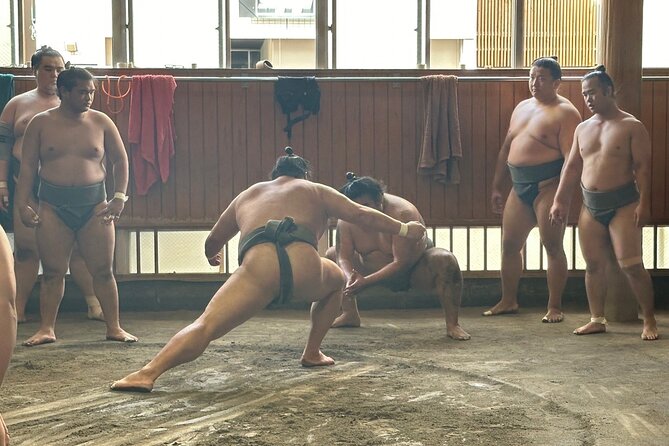
That difference gives this experience its appeal. The room is small, so the sounds matter. You hear feet strike the floor, bodies collide, and wrestlers breathe through demanding exercises. From a distance, sumo can look slow and ceremonial. From a few feet away, the speed and force become much clearer.
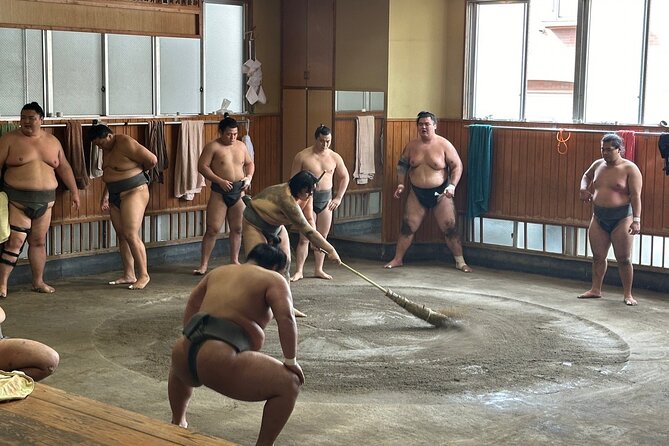
The practice normally begins with stretching and preparation. That may last around 30 minutes, sometimes longer. Younger wrestlers then challenge one another, followed by bouts involving larger and more experienced athletes. The pace can change as the session progresses, but the point is to watch the full training process rather than only the most exciting clashes.
I especially like this format for first-time sumo spectators. You do not need prior knowledge of rankings, rituals, or Japanese terms to appreciate the effort in the room. A guide can explain enough to help you understand what you are seeing, while the wrestlers provide the action without needing to put on a show for you.
More sumo mornings:
- Tokyo: Sumo Show Experience with Chicken Hot Pot and a Photo
★ 4.8 · 6,678 reviews - Tokyo: Sumo Show and Dining Experience
★ 4.8 · 2,742 reviews - the SUMO show
★ 5.0 · 1,960 reviews
Meeting at Ryogoku Station requires careful planning
The stated meeting point is near Ryogoku Station at 1-chōme-4-29 Yokoami in Sumida City. The start time is listed as 8:00 a.m., but you should aim to reach the station area well before then.
The station has several exits, and finding the correct A3 exit can take longer than expected. One useful instruction is to be ready around 7:45 a.m., when the tour may leave the exit. Give yourself an extra 10 minutes to get your bearings inside the station. Do not assume that arriving at Ryogoku Station means you have reached the meeting point.
The guide should be easy to identify, often carrying a large sign. Staff have also used two people at the meeting area, and a confirmation message the day before may include a guide’s WhatsApp number. Still, you should keep your booking details close and arrive early. Missing a small walking group in Tokyo is an avoidable way to spoil an otherwise excellent morning.
From the station, the guide walks the group to Takasago Stable. The walk is described as short, roughly 10 minutes, but the exact route and pace can vary. One practical alternative is taking a taxi directly to the stable, especially if you are staying some distance away. The tour begins near the station, so check your instructions carefully before choosing that option.
Entering Takasago Stable and taking your place
Takasago Stable is the main stop, and admission is included. The stable has produced many champions, which gives the setting extra interest, but the real attraction is seeing the training environment itself.
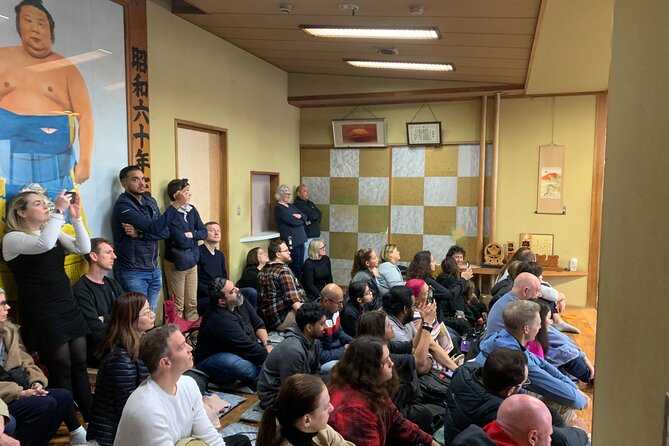
Once inside, you are directed to a viewing area. This is not a theater with assigned padded seats. You may sit on the floor or use a small stool, and the space can feel tight when more than one group is present. Some people find the traditional arrangement part of the experience. Others may find sitting low for 90 minutes or longer difficult.
The group size can reach 20 people. That is small enough for a guide to help with questions and seating, but it does not guarantee a private visit. An unexpected Japanese fan club or another group can add people to the room, and late arrivals may join while practice is already underway. The result can be squeezed seating and a less clear view from some positions.
I would treat the seating as an important part of your decision. If you have trouble sitting on the floor, ask the guide for help when you arrive. The information provided does not promise special seating, so do not book this expecting a comfortable chair or a spacious viewing platform.
Reading the practice from stretching to full-contact bouts
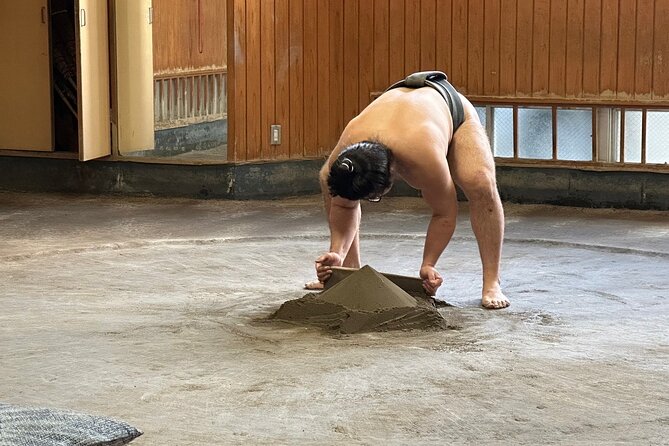
The opening exercises can seem repetitive if you expect immediate matches. That is the wrong way to judge them. Stretching and body preparation show how much work comes before a bout. Sumo wrestlers need flexibility, balance, leg strength, and control, and the early part of the session helps you see that foundation.
As practice moves on, the younger wrestlers begin challenging each other. These bouts may be easier to follow because you can see the basic goals clearly: push the opponent out, force a mistake, or break balance. The guide’s explanations help connect the movements with the rules and vocabulary of sumo.
The later bouts can feel much more intense. Larger wrestlers collide with startling force, even though the matches may last only moments. You sit close enough to notice the impact, sweat, breathing, and concentrated silence between exchanges. This is where the visit earns its price for many people.
The session lasts about 90 minutes to two hours. The exact experience depends on how long practice continues and how crowded the room is. One disappointing experience came from expecting a broader tour or a hosted program, then finding that the main activity was simply sitting and watching practice. That reaction is understandable if the description is not clear, but it also points to the central truth: watching practice is the whole event.
You should book this if that sounds appealing. You should skip it if you want a narrated demonstration, a tournament atmosphere, or a series of tourist activities inside the stable.
A few more Tokyo bookings worth comparing
- Tokyo: Sumo Morning Practice Viewing Tour
★ 4.8 · 570 reviews - Tokyo: Sumo Morning Training Visit
★ 4.4 · 370 reviews - Tokyo: Sumo Morning Practice Tour at Sumida City
★ 4.8 · 308 reviews - Tokyo Sumo Morning Practice Tour at Stable
★ 5.0 · 298 reviews
What the English guide adds to the morning
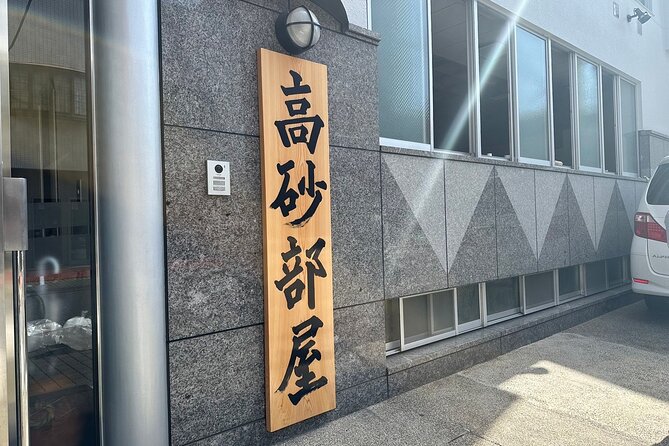
The guide meets you near the station, leads you to the stable, helps with the viewing arrangement, and explains what is happening. The best guides also act as a bridge between you and a highly traditional setting where quiet observation matters.
Naomi has received particular praise for her warm manner, strong English, and patience with long question sessions. Another guide was reported to speak English, French, and Japanese. Names may vary by departure, so Naomi is not guaranteed, but the service is designed for international visitors.
A fact sheet explaining sumo terms and training details may be provided. That small aid can make a big difference. You might otherwise hear unfamiliar words without knowing if they refer to a wrestler’s rank, a type of movement, or a stage of practice.
I like that the guide can answer questions during or after the session rather than forcing you to learn everything beforehand. You can ask about the training exercises, the traditions of the stable, or what makes the practice different from a formal bout. The guide’s role is not to turn the room into a lecture hall. It is to give you just enough context to understand the discipline in front of you.
The language support also matters at the meeting point. Tokyo’s transport system is easy once you know where you are going, but station exits can be confusing early in the morning. A guide holding a sign and walking the group to the stable removes much of that worry.
The photo with the wrestlers is a brief but meaningful finish
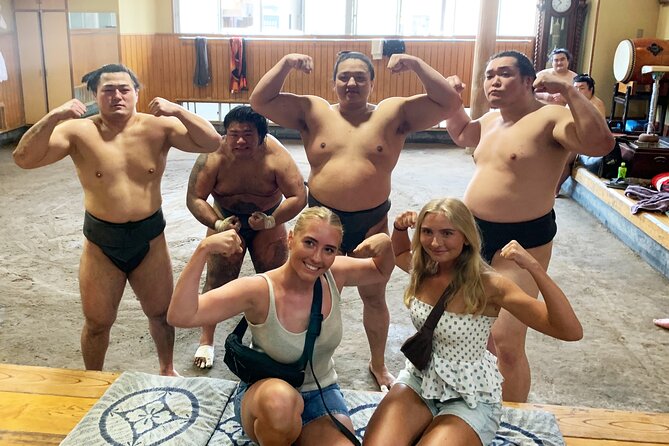
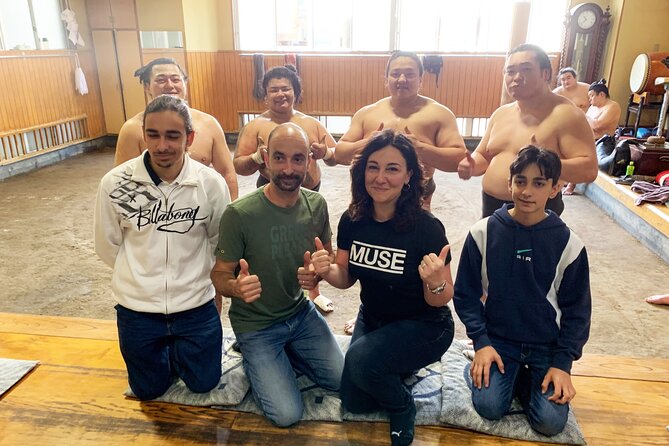
After practice, you can take a commemorative photo with the sumo wrestlers. This is not the main reason to book the experience, but it gives the morning a clear ending and a physical reminder of the visit.
Keep your expectations sensible. The training itself is the valuable part, and the photo takes place after the session rather than replacing it. You should also follow the guide’s instructions closely because a stable is a working environment, not a photo studio.
For families with teenagers, the photo can help make the culture more memorable. Younger visitors may not remember every sumo term, but they are likely to remember sitting close to the wrestlers and taking a picture afterward. The activity suits anyone who respects athletic effort, even if sumo is not already a personal interest.
Price and value at $98.53
At $98.53 per person, this is not a cheap way to fill an hour. You are paying for access to a normally closed training setting, the guide, station assistance, explanations in English, admission, and the commemorative photo.
The value depends on how you measure the morning. If you only want to see a sumo match, you may prefer to spend the money on a tournament ticket when one is available. A tournament gives you many bouts, formal rituals, spectators, and the full public spectacle.
This visit offers something else: proximity and access. You see the athletes during ordinary practice, when they are repeating exercises and taking each bout seriously. That access is difficult to arrange independently, especially if you do not speak Japanese or know which stable permits visitors.
The price also makes more sense if you care about context. A guide who can explain the exercises and answer detailed questions adds value that a quick peek through a doorway would not provide. The benefit is strongest for first-time visitors who want a clear introduction rather than a silent observation with no background.
I would call the price fair for someone who considers sumo a priority in Tokyo. I would call it less convincing for a casual sightseer who has not decided that a long morning of quiet viewing sounds worthwhile.
Pairing the stable with Asakusa afterward
The tour ends at Takasago Stable, at 2-chōme-30-1 Ishiwara in Sumida City. You are dismissed there, and the guide shows you how to reach your next destination.
That open ending works well. You can continue sightseeing in nearby Asakusa, rather than returning to the station and losing the rest of the morning. The experience itself does not include an Asakusa tour, so plan that part independently.
The combination makes practical sense because both sumo and Asakusa help you see different sides of Tokyo. The stable is private, disciplined, and focused on athletic work. Asakusa offers a more public sightseeing setting. You can make the morning about one major cultural experience, then continue at your own pace.
Do not count on the tour guide providing a full day of sightseeing after the stable. The confirmed service ends at the tour location. The useful handoff is directions, not an escorted Asakusa itinerary.
Who will enjoy this, and who may not
I would recommend the visit to:
- First-time sumo spectators who want basic explanations
- People interested in Japanese customs and traditional sports
- Families with teenagers who enjoy powerful, unusual athletic events
- Visitors who prefer access to a working setting over a formal show
- Anyone already planning to spend time in Ryogoku or Asakusa
I would hesitate to recommend it to:
- Anyone expecting a tournament or staged demonstration
- People who dislike sitting on the floor or on small stools
- Visitors who need a spacious, quiet viewing area
- Anyone unwilling to arrive early and navigate a station exit
- Sightseers looking for several stops rather than one long observation
Most people can participate, and the group is capped at 20. That does not mean the room will always feel roomy. The main physical issue is the seating, while the main logistical issue is reaching the correct station exit on time.
Free cancellation is available if you cancel at least 24 hours before the start time. Changes or cancellations inside that window are not accepted for a refund, and the cut-off follows Tokyo local time.
Should you book the Takasago Stable visit?
Book it if you want to see real sumo practice up close, and if you are comfortable sitting quietly while athletes work through a long training session. The English guide, clear explanations, close view, and final photo make this a strong cultural experience for the right audience.
Do not book it because you expect entertainment from start to finish. The room may be crowded, the seating may be hard, and the first part of practice can be slow. Arrive at the correct A3 exit early, accept that observation is the point, and you will get a rare look at the discipline behind the sport.
FAQ
Where does the sumo morning practice take place?
The practice takes place at Takasago Stable in Tokyo’s Sumida City. The tour begins near Ryogoku Station and the guide leads the group to the stable.
What time does the tour start?
The listed start time is 8:00 a.m. Tour instructions indicate that the group may leave the Ryogoku Station A3 exit at about 7:45 a.m., so arrive early.
Where is the meeting point?
The meeting point is near Ryogoku Station at 1-chōme-4-29 Yokoami, Sumida City, Tokyo 130-0015, Japan.
How long does the experience last?
The visit lasts approximately 1 hour 30 minutes to 2 hours. The main activity is watching the sumo wrestlers practice.
Is an English-speaking guide included?
Yes. An English-speaking guide leads the walk to the stable and explains the practice. Some guides also speak French and Japanese.
Can I ask questions about sumo?
Yes. You can ask the guide about the sport, its traditions, history, training exercises, and sumo terms.
What kind of seating is provided?
You may sit on the floor or use a small stool or similar low seat. The viewing area can become crowded, so the arrangement may not be comfortable for everyone.
Is the practice a staged show?
No. The tour provides access to a real training session. It is not a performance created for the group.
Is a photo included?
Yes. You can take a commemorative photo with the sumo wrestlers after the practice.
Can I visit Asakusa after the tour?
Yes. The tour ends at Takasago Stable, and the guide shows you how to reach your next destination. You can continue sightseeing in nearby Asakusa on your own.
New on our Tokyo list
- Sumi-e Experience in a relaxing green tea shop in Tokyo★ 5.0 · 3 reviews
- Tokyo : Kamikaze Street Drift Ride★ 5.0 · 3 reviews
- Private Zen Meditation in English in Shinjuku, Tokyo★ 5.0 · 3 reviews
- Onsen Spa in Tokyo and Asakusa Bar Hopping with Local Guide★ 5.0 · 3 reviews
- Easy for everyone! Now you can play handmade mini shamisen and show off to everyone! Musical instruments, sweets and live music★ 5.0 · 3 reviews
- Tokyo: Private Tsukiji Street Food & Sake with Local Guide★ 5.0 · 3 reviews
- Mt Fuji Exploration Tour with Free Japanese Kusa Mochi from Tokyo★ 4.5 · 3 reviews
- Tokyo Tsukiji Fish Market Walking and Exploring Hidden Gems Tour★ 5.0 · 3 reviews
Sumo Experiences, compared.
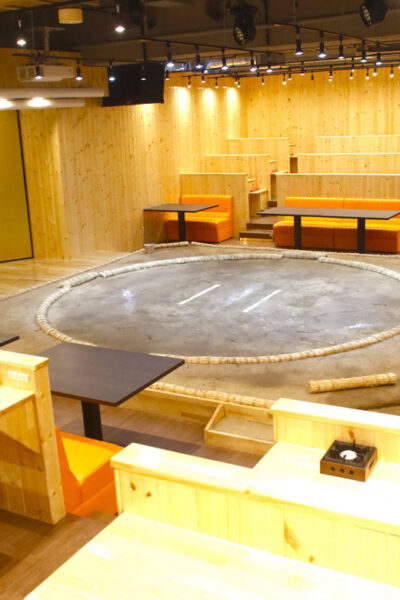
Sumo Show Experience with Chicken Hot Pot and a Photo
Read our review →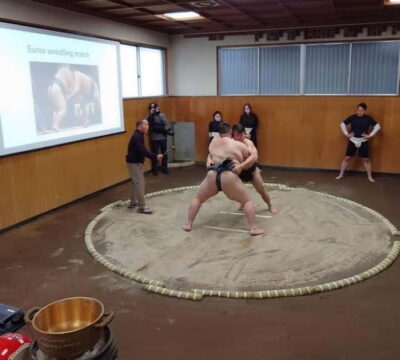
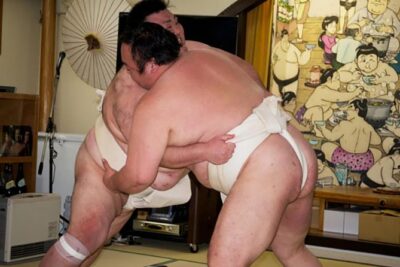
Tokyo Shinjuku Sumo Show & Experience with Photo
Read our review →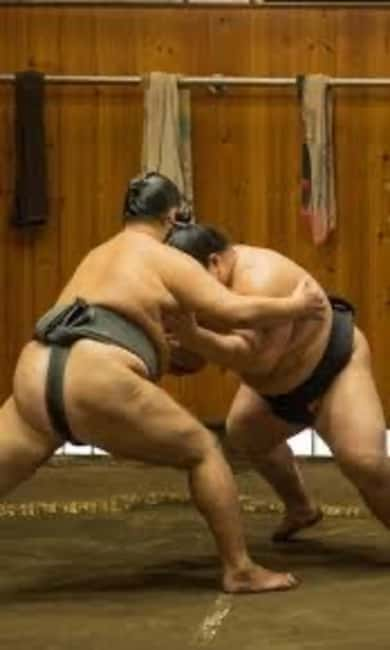

Authentic Sumo Experience in Tokyo: Enter the Sanctuary
Read our review →
Luxury Sumo Show Experience & Japanese cuisine & Drink
Read our review →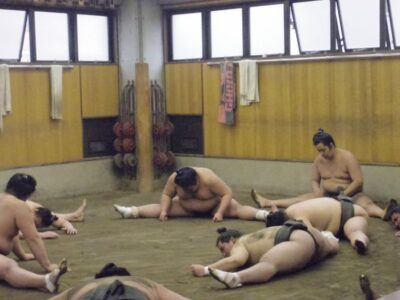
Browse the lists this tour appears in