
Reviewed · SUMO EXPERIENCES
Watch Sumo Morning Practice at Stable in Tokyo
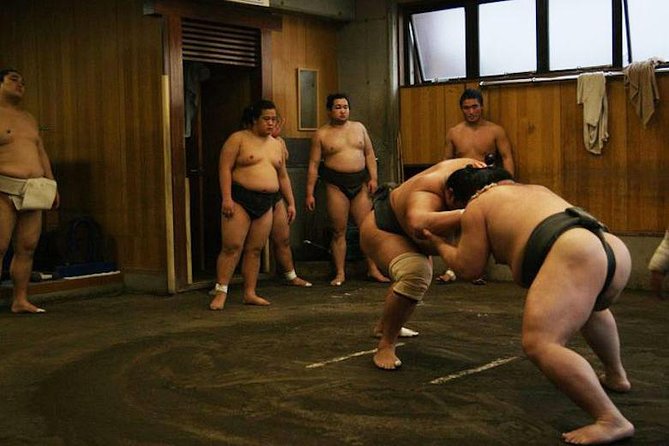
Sumo practice is not a show. It is a quiet, serious workout in a small stable, where you may watch enormous athletes stretch, stamp, push, grapple, and trade hard blows only a few feet away. The best part is seeing the slow build from ritual and warmups to full-force sparring. The closeness feels rare, because this is a working training room rather than a performance arranged for tourists.
I like the chance to see a private side of Japanese sporting life, and I like the small-group format advertised for up to 10 people. The ending photo opportunity is another welcome touch. The catch is that you must sit on the floor for a long time, stay quiet, and accept that practice length and the final photo session can change without much warning.
In This Review
- Key points before you book
- A working sumo stable, not a staged performance
- Meeting near Tokyo’s sumo district
- The quiet rules inside the practice room
- From warmups to full-force sparring
- Floor seating is the biggest practical issue
- Why the two-hour promise needs careful reading
- Is the price of $95.77 fair?
- Who will enjoy this morning most
- Booking rules and age requirements
- Should you book this sumo practice?
- FAQ
- How long does the sumo practice last?
- Is the total activity two hours?
- Where does the activity begin and end?
- Is Ryogoku Kokugikan the practice location?
- Do I sit on the floor?
- Can I take photographs during practice?
- Is food or drink included?
- What is the minimum age?
Key points before you book
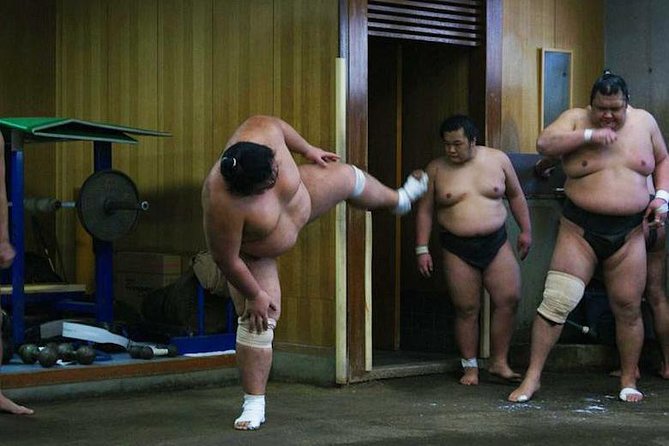
- Watch the full training rhythm: Practice can move from stretching and warmups to intense contact work, giving you a real sense of how sumo athletes prepare.
- Expect floor seating: The mat may be hard and uncomfortable, and only limited stools or chairs may be available.
- Silence matters: You cannot eat, speak loudly, or use a bright flash or noisy camera while practice is underway.
- Timing is flexible: The usual session lasts 60 to 90 minutes, but Tokyo tournament season can reduce practice to 30 to 40 minutes.
- Arrive ready to navigate: The exact stable and meeting details may be confirmed only about a week before the visit.
- Photos are included, but not guaranteed: A photo with wrestlers is planned for the end, though a long practice can push it out of reach.
A working sumo stable, not a staged performance
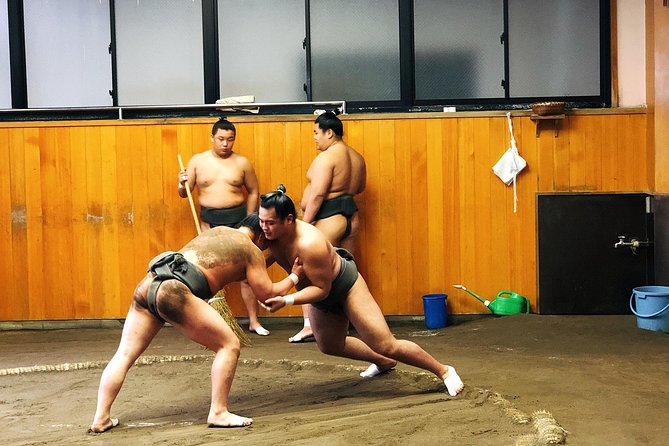
The appeal here is simple: you enter a sumo training center in Tokyo and watch the wrestlers do the work they normally do in the morning. You are not being taught a choreographed routine, and the wrestlers are not pausing to explain each movement. That gives the visit an unusual sense of honesty.
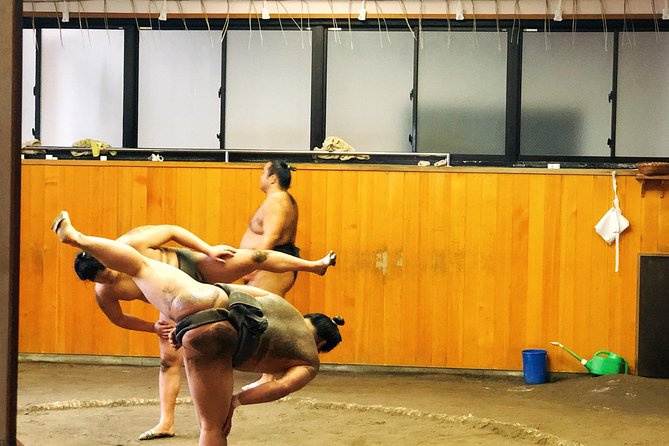
The session usually begins with stretching and warmup exercises. You might see repeated drills, balance work, pushing practice, and wrestlers taking turns in the dohyo, the raised sumo ring. The pace may seem slow at first, but that is part of the point. Sumo depends on repetition, discipline, posture, timing, and the ability to produce tremendous force in a short burst.
As practice develops, the contact becomes more intense. The initial impact can be startling when two heavy wrestlers collide. You can also notice the less obvious parts of training: a younger wrestler learning from an older one, a coach watching closely, or wrestlers joking briefly before returning to serious work.
This is why I would not sell the experience as entertainment. If you need constant action, the first part may feel repetitive. If you enjoy watching athletes train and want a close look at sumo customs, the repetition becomes meaningful.
More sumo mornings:
- Tokyo: Sumo Show Experience with Chicken Hot Pot and a Photo
★ 4.8 · 6,678 reviews - Tokyo: Sumo Show and Dining Experience
★ 4.8 · 2,742 reviews - the SUMO show
★ 5.0 · 1,960 reviews
Meeting near Tokyo’s sumo district
The stated itinerary lists Ryogoku Kokugikan, Tokyo’s best-known sumo venue, as the stop. The actual practice stable and meeting details can depend on the stable’s schedule, so you should read the final instructions carefully. Exact conditions may be confirmed only about one week before the date.
You make your own way to the meeting point, meet the guide and the rest of the group, and then go inside together. This arrangement helps with the hardest part of the visit: finding a stable that is not set up like a normal sightseeing attraction.
Allow extra time. One useful practical tip is to have the address written in Japanese if you need a taxi, since drivers may not be able to work from an English address. A taxi from Asakusa has been estimated in the supplied information at about 10 Australian dollars, but your fare will depend on traffic and the exact stable. Public transport and walking may work well for you, but the address can be difficult to locate without clear directions.
Some bookings have involved guides or staff who helped arrange transport and explain the visit. Names mentioned in the supplied material include Hiroko and Ricko, but you should not assume either person will lead your particular session. The key point is to treat the meeting instructions as essential, not as a minor detail.
The quiet rules inside the practice room
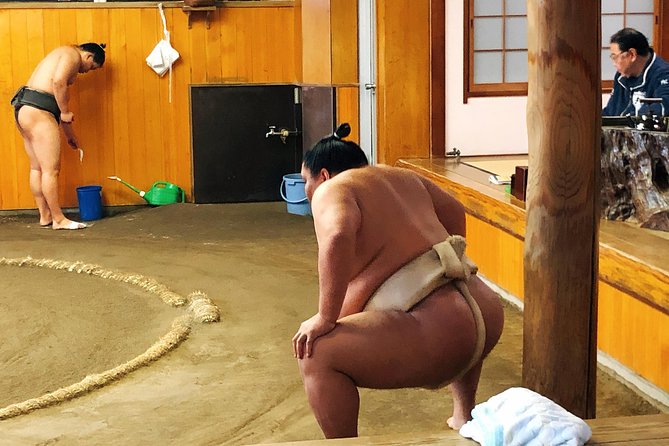
Once inside, you take a place along the side of the room and watch from a fixed position. The rules are strict because this is training time. Keep your voice low, do not eat, and do not use flash photography or a camera that makes intrusive sounds.
That silence can feel unusual at first. It also changes the experience for the better. You hear the thud of bodies, the scrape of feet, the rhythm of breathing, and the occasional instruction from the stable. The room’s seriousness tells you that you are observing a real workplace with its own customs.
Do not expect a running explanation of every movement. Some sessions have provided a guide who discussed sumo history and answered questions. Other arrangements have offered little or no explanation once the group entered. If learning the rules and ranking system is important to you, read about sumo before arriving and ask in advance what language support will be available.
A basic understanding helps. Sumo wrestlers, called rikishi, follow a strict hierarchy, and the stable operates through discipline and seniority. The actions you see are not random exercises. They form part of a long training routine built around strength, balance, ritual, and control.
From warmups to full-force sparring
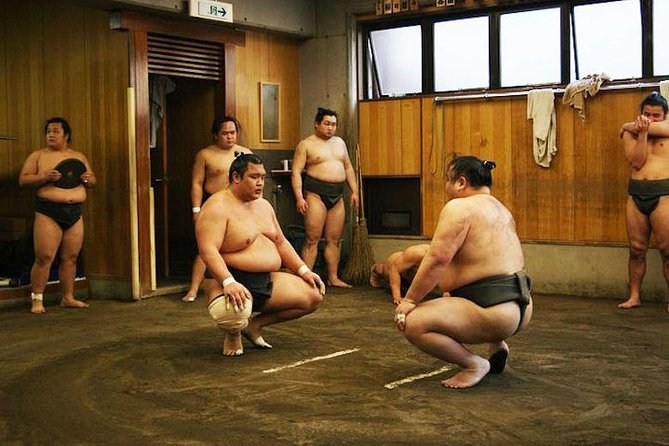
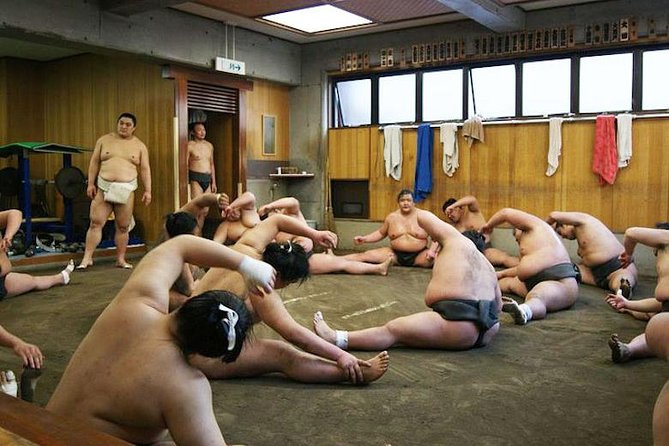
The most rewarding part of the morning is the change in intensity. At first, you may see long periods of stretching and repeated movement. One session described in the supplied material included about an hour of stretching before roughly 30 minutes of contact practice, although the exact balance varies.
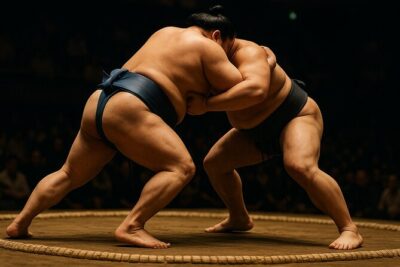
Then the room changes. Wrestlers enter the ring, crouch low, and crash into each other with remarkable force. The impact is brief, but it carries real weight. You can see why sumo requires more than size. The wrestlers use foot placement, leverage, timing, grip, and the ability to remain balanced while another athlete tries to drive them out of the ring.
The practice may also reveal the stable’s social side. You might see senior wrestlers correcting younger ones, teammates teasing each other, or a wrestler offering advice after a bout. These small moments can be as interesting as the collisions because they show that sumo is both an individual contest and a group training culture.
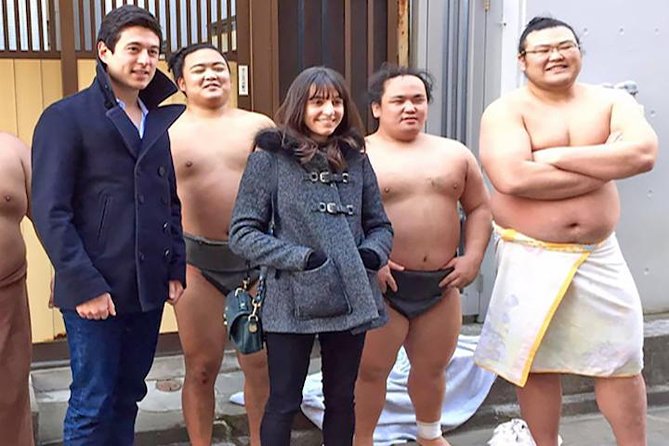
The session may end with cooldown exercises and a chance for photographs. Photos with the wrestlers are included, but the timing is not firm. If practice runs long, the photo period may be shortened or missed. Keep your later plans flexible, especially if a photo is one of your main reasons for booking.
A few more Tokyo bookings worth comparing
- Tokyo: Sumo Morning Practice Viewing Tour
★ 4.8 · 570 reviews - Tokyo: Sumo Morning Training Visit
★ 4.4 · 370 reviews - Tokyo: Sumo Morning Practice Tour at Sumida City
★ 4.8 · 308 reviews - Tokyo Sumo Morning Practice Tour at Stable
★ 5.0 · 298 reviews
Floor seating is the biggest practical issue
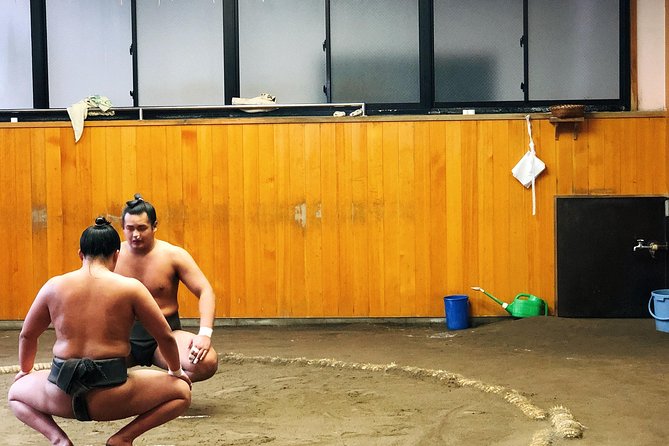
You need to be comfortable sitting on the floor for an extended period. The practice room may have a thin mat over a hard surface, and some people find this painful after an hour. A limited number of chairs or stools may be available on request, but the view from them can be poor, and there may not be enough for everyone.
If you have back, hip, knee, or leg problems, contact the operator before booking and request a chair in advance. Do not assume that a chair will appear when you arrive. You may need to sit cross-legged or in another position that keeps your feet from pointing toward the ring, and moving around during practice is discouraged.
Where you sit also matters. Some sessions have had larger groups than the stated maximum of 10, with people seated in several rows. From the back, heads and shoulders can block the view. Arriving early may help you get a better position, but do not treat a front-row place as guaranteed.
The seating issue is not a small footnote. It can decide whether you enjoy the visit. If you are happy to sit quietly on the floor and focus on the ring, the discomfort may be manageable. If you need to stretch your legs, shift often, or stand for part of the session, this is a poor match.
Why the two-hour promise needs careful reading
The experience is often presented as a two-hour visit, with a scheduled window such as 8:00 to 10:00 in the listed operating periods. The actual practice itself is generally described as lasting 60 to 90 minutes. The end time can change each day because the wrestlers control their own training schedule.
During Tokyo tournament months, practice can be much shorter. The supplied dates note that January, May, and September are tournament months, particularly around the middle and later part of the month, and practice may last only 30 to 40 minutes. The price does not change when the session is shorter.
This does not necessarily make the experience poor value. A shorter practice can still place you close to professional wrestlers during an important part of their routine. But you should not book during tournament season expecting the usual 90-minute session.
The stable may also close during tournament periods, and the operating calendar varies from year to year. Confirmation depends on the stable’s schedule and is subject to availability. If your Tokyo plans are tight, wait before booking nonrefundable activities around this one.
Is the price of $95.77 fair?
At $95.77 per person, this is not a casual add-on. You are paying for access to a training environment that most independent visitors cannot simply enter, along with the meeting arrangements and entrance fee. The small-group option can make the price easier to justify, especially if your main goal is close viewing rather than a large public event.
The value depends on what you want from sumo. If you want a polished explanation, a comfortable seat, and guaranteed photos, the price may feel high. The experience does not include food or drinks, and the amount of instruction can vary.
I think the price makes more sense for someone who already has an interest in sumo, Japanese customs, or sports training. You are paying for access and proximity, not for a long guided lecture. The sight of a full-size wrestler warming up a few feet away is difficult to replicate elsewhere, but you need to appreciate the setting on its own terms.
Group discounts may be available, so check the final price if you are booking for several people. The maximum group size is stated as 10, although the seating arrangements can vary by stable and date.
Who will enjoy this morning most
I would recommend this to adults and children aged 13 or older who can remain quiet and still for a long period. Families with teenagers may find it especially memorable because the practice shows real physical skill rather than a staged cultural demonstration.
It suits you if you enjoy:
- Watching athletes train rather than watching a formal event
- Learning through close observation
- Traditional Japanese customs and strict etiquette
- Powerful physical contact and repetitive drills
- Unusual experiences that are not part of the standard Tokyo sightseeing route
I would think twice if you dislike sitting on the floor, need constant narration, or expect the wrestlers to interact with you during practice. The athletes are there to train. Your role is to observe without getting in the way.
Reading about sumo ranks and customs before you go is a smart move. You could also watch Sanctuary on Netflix, as one practical suggestion from the supplied information recommends, to get a basic feel for the world of sumo before the visit. It will not explain the exact practice you see, but it may help you recognize the difference between warmup drills, ring work, and sparring.
Booking rules and age requirements
Confirmation is sent within 48 hours of booking, subject to availability. The exact stable schedule may only be known about one week before the visit, so do not be surprised if the final location information arrives close to your date.
The minimum age is 13, and most people can participate as long as they can sit on the floor for an extended period. The activity begins and ends at the meeting point, and you arrange your own transport there.
Cancellation terms are strict close to the date. Cancel at least six full days before the start time for a full refund. Cancelling two to six full days ahead may return 50 percent, while cancelling less than two full days ahead brings no refund. Date changes are not accepted within three days, including for flight delays or illness.
Bad weather can also affect the activity. If the operator cancels because of poor weather, you are offered another date or a full refund.
Should you book this sumo practice?
Book it if you want an intimate look at sumo as a demanding daily discipline, and if you can handle the silence, uncertain timing, and floor seating. The warmup-to-sparring progression, the heavy impact of the bouts, and the chance to see wrestlers at close range make this one of Tokyo’s more unusual cultural activities.
Skip it if you want a comfortable chair, detailed commentary, or a guaranteed photo session. For the best chance of enjoying it, wear practical clothing, arrive early, bring the address in Japanese, request a stool before the date if needed, and leave your schedule open afterward.
The strongest reason to go is authenticity. You are not being entertained by a staged sumo display. You are watching athletes work, and that demands patience from you. For the right person, that quiet respect is exactly what makes the morning memorable.
FAQ
How long does the sumo practice last?
The practice usually lasts between 60 and 90 minutes. During Tokyo tournament season in January, May, and September, it may last only 30 to 40 minutes.
Is the total activity two hours?
The scheduled visit is generally arranged within a two-hour morning window, often from 8:00 AM to 10:00 AM. The actual ending time varies each day.
Where does the activity begin and end?
You make your own way to the Tokyo meeting point. The activity ends back at the meeting point.
Is Ryogoku Kokugikan the practice location?
Ryogoku Kokugikan is listed as the itinerary stop, but the exact stable and schedule depend on the stable’s availability. Final conditions may be confirmed about one week before the visit.
Do I sit on the floor?
Yes. Participants must be able to sit on the floor for an extended period. Chairs or stools may be available on request, but the supply is limited and the view may not be as good.
Can I take photographs during practice?
You must avoid bright flashes and intrusive camera sounds during practice. Photos with the sumo wrestlers are included at the end when the schedule allows.
Is food or drink included?
No. The experience does not include food or beverages.
What is the minimum age?
The minimum age is 13 years. Most people can participate if they can follow the quiet rules and sit on the floor for an extended period.
New on our Tokyo list
- Tokyo Spectacular View Day-Cruise in 90 Minutes★ 5.0 · 25 reviews
- From Tokyo: Mount Fuji & Hakone Full Day Private Tour★ 4.9 · 25 reviews
- Real Tokyo Runner Club : Daikoku Car Meet Night Tour with JDM Car★ 5.0 · 25 reviews
- 2.5 Hour-Guided Cycle Tour in the Central Tokyo★ 5.0 · 25 reviews
- Ramen Making from Scratch +Akihabara Tour –Cooking Class★ 5.0 · 25 reviews
- [Self-Drive] Tokyo & Daikoku Custom Car Driving Tour★ 4.9 · 25 reviews
- Tokyo: 2-Hour Night Bike Tour of the City’s Hidden Gems★ 4.9 · 25 reviews
- Samurai themed Entertainment show in Shinjuku★ 4.5 · 25 reviews
Sumo Experiences, compared.
Sumo Show Experience with Chicken Hot Pot and a Photo
Read our review →
Tokyo Shinjuku Sumo Show & Experience with Photo
Read our review →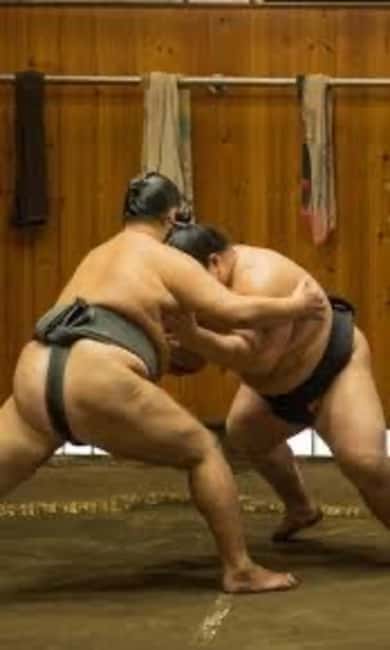
Authentic Sumo Experience in Tokyo: Enter the Sanctuary
Read our review →
Luxury Sumo Show Experience & Japanese cuisine & Drink
Read our review →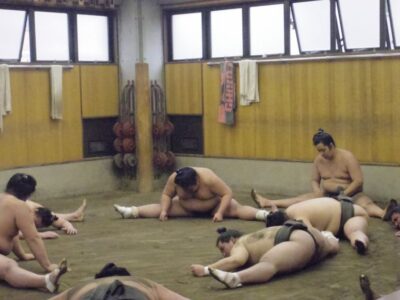
Browse the lists this tour appears in