
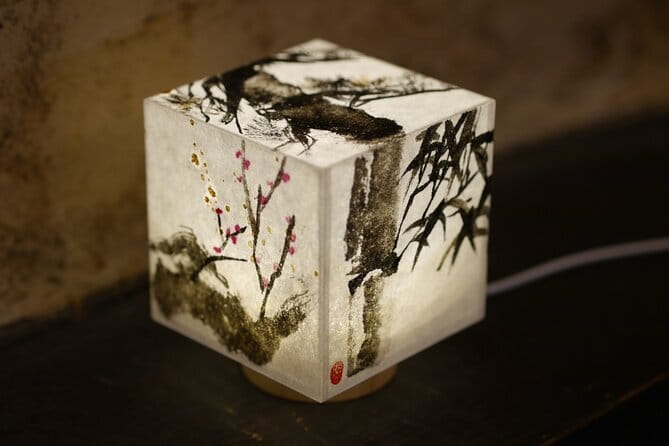
Reviewed · TEA CEREMONIES
Sumi-e Ink Painting Suiboku-Ga Workshop in a Japanese Teahouse
The magic of this Tokyo workshop is its simplicity: water, ink, one brush, and a quiet teahouse setting. Artist and award-winning calligrapher Rensui shows you how a single stroke can suggest a pine branch, bamboo stalk, flower, or kanji character. I like the intimate group of no more than eight and the chance to leave with art you made yourself. I also like the light green tea refreshment and packet of tea to take home.
The main consideration is time. One hour passes quickly, and suiboku-ga is harder than it looks. You will not leave as a master, and your first brushstroke may not behave as planned. That is part of the lesson, but this suits you best if you value the process more than a polished result.
In This Review
- Key points to know before booking
- Why this one-hour class feels different from ordinary Tokyo sightseeing
- Meeting Rensui and settling into the teahouse
- Choosing between bamboo, pine, flowers, and kanji
- How the ink-wash lesson works
- Tea, conversation, and the value of a handmade souvenir
- Is $93.34 a fair price for one hour?
- Who will enjoy this most?
- Practical details that affect your plans
- My call: book it for the experience, not perfection
- FAQ
- How long does the suiboku-ga workshop last?
- Where does the activity begin?
- Where does the activity end?
- How many people can join the class?
- Who teaches the painting class?
- What will I learn during the workshop?
- What can I choose to paint?
- Are painting materials included?
- Do I receive tea during the activity?
- Can I cancel for a full refund?
Key points to know before booking
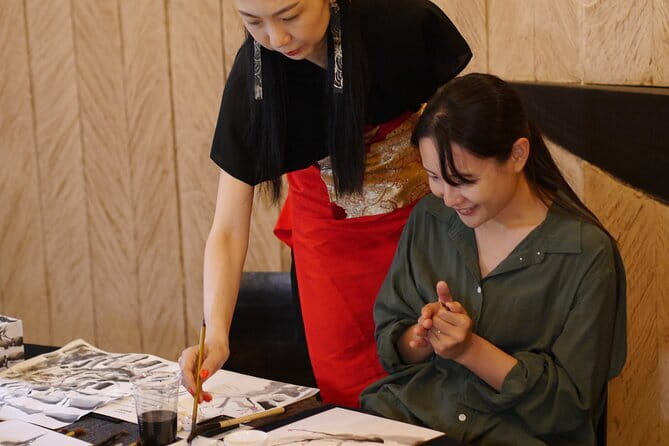
- Learn from artist Rensui: The class is led by an award-winning calligrapher and artist who teaches simple ink techniques.
- Paint with water and ink: Suiboku-ga uses washes, texture, and contrast rather than many layers of paint.
- Choose a traditional subject: Your theme may be pine, bamboo, plum, orchid, chrysanthemum, or Chinese kanji characters.
- Small group of eight or fewer: The limited size should give you a more personal class than a large craft demonstration.
- Take home two souvenirs: You keep your finished artwork and receive a packet of Japanese green tea.
- Meet near Tsukiji: The class begins and ends at Uogashi Meicha Chanomi Club, close to public transportation.
Why this one-hour class feels different from ordinary Tokyo sightseeing
Tokyo offers plenty of famous sights, but a short painting class gives you a different kind of memory. Instead of simply looking at Japanese art, you handle the brush and discover how much meaning can come from a very small number of marks.
Suiboku-ga is a form of sumi-e ink painting. It uses diluted and concentrated ink washes to create light, shade, texture, and contrast. The method does not rely on repeated layers of paint. A dark line cannot easily be hidden, so you have to pay attention before the brush touches the paper.
That directness connects the technique with the idea of painting from the heart. The finished work may be simple, but the brush movement reflects your control, patience, and mood. You do not need an art background to take part. In fact, the class can be more rewarding if you are willing to accept a few uneven lines and let the picture remain personal.
I especially like this as a break from Tokyo’s fast pace. The setting is a Japanese teahouse, the group is capped at eight, and the lesson includes green tea. Those details make the hour feel less like a rushed tourist activity and more like a small cultural meeting.
More calligraphy tables:
- Tokyo: Calligraphy on Kanji Fan & Scroll with Drink
★ 5.0 · 210 reviews - Let’s experience calligraphy in YANAKA, Taito-ku, TOKYO !!
★ 5.0 · 127 reviews - Experience all of Japanese culture and Japanese food experience classes “origami, udon, Japanese food, green tea, calligraphy” in 4 hours
★ 5.0 · 105 reviews
Meeting Rensui and settling into the teahouse
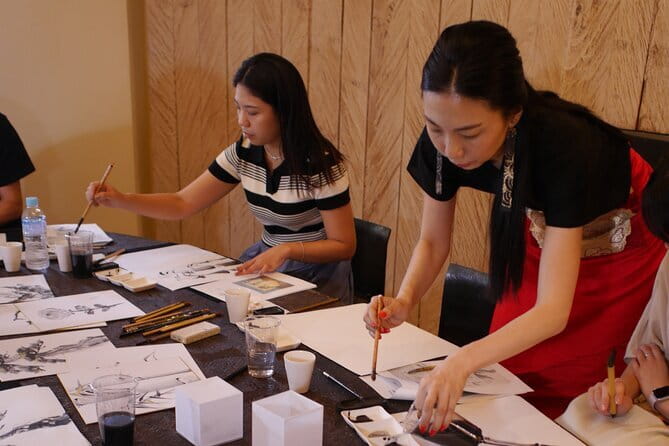
The experience begins at Uogashi Meicha Chanomi Club, at 2-chōme-11-12 Tsukiji, Chuo City, Tokyo. The activity returns to this same meeting point when the hour ends. It is near public transportation, which makes it practical to fit into a day around Tsukiji or other central Tokyo sights.
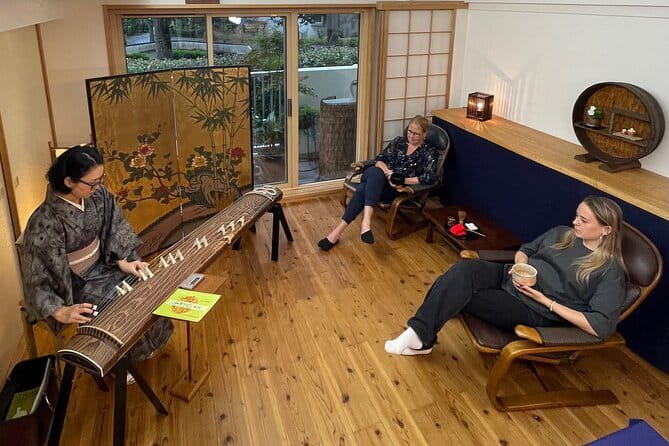
The setting matters. A teahouse gives the workshop a natural connection to the drink you are tasting and the calm, uncluttered mood often linked with Japanese arts. You are not being asked to paint in an anonymous conference room. You are learning in a place where tea and artistic practice belong together.
Rensui teaches the basic methods rather than expecting you to arrive with skill. The lesson focuses on the relationship between water and ink, including how a wash can become pale gray, deep black, or something between the two. That is the central trick of suiboku-ga. The brush is not just carrying ink. It is carrying different amounts of moisture as well.
The small group is a real advantage here. With a maximum of eight people, you should have a better chance to see the demonstration and receive help when a stroke goes wrong. A class this size also keeps the atmosphere personal without making you feel singled out.
Choosing between bamboo, pine, flowers, and kanji
At booking, you choose the type of object you would like to paint. The available themes include pine, bamboo, plum, orchid, chrysanthemum, and Chinese kanji characters. Each subject calls for a different brush approach.
Bamboo is often built from controlled lines and segments. Pine asks for a different feel, with attention to the shape and texture of its branches or needles. The flowers require more sensitivity to form, while kanji brings the discipline of calligraphy into the painting session.
This choice is useful because it gives the class a clear goal. You are not staring at a blank sheet and wondering what to do. Rensui can guide you toward a small number of marks that create a recognizable subject.
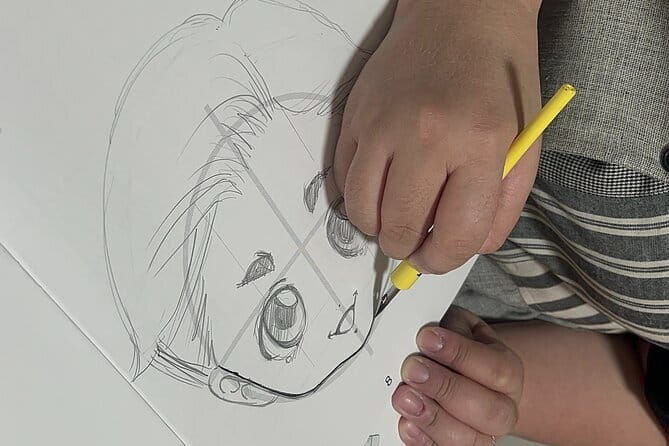
If you are booking for children, the class has shown flexibility. A family attending with boys aged seven and nine chose bamboo and pine, while the younger child asked to draw Snoopy. That does not mean every nontraditional subject is guaranteed, but it suggests that the teaching can work with family creativity rather than demanding perfect obedience to a formal model.
Still, you should prepare children for a quiet art lesson, not a free-form craft session. The technique depends on careful brush control. Older children who can follow a short demonstration may get the most from it, while younger children may need encouragement to enjoy the attempt rather than judge the final picture.
How the ink-wash lesson works
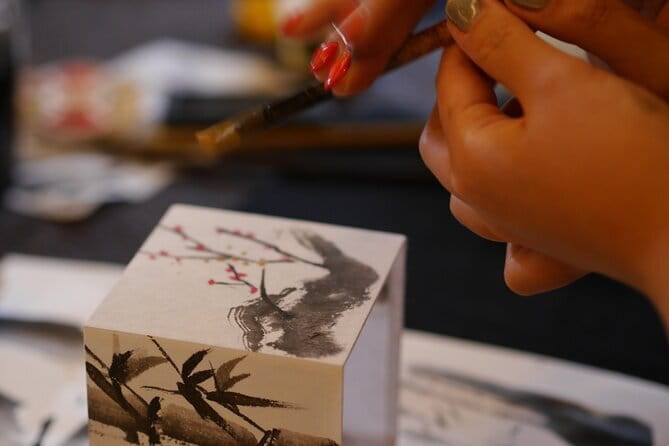
The class begins with the foundations of suiboku-ga. You learn how water changes the appearance of black ink and how pressure and brush angle affect a line. A heavy stroke can look bold and solid. A lighter touch may leave a thin mark or allow the paper to show through.
Rensui also teaches the idea of finishing with a single brushstroke. That sounds easy until you try it. The point is not to labor over every section, adding layer after layer. The point is to make a deliberate movement and accept what it creates.
This can be humbling. One participant discovered that ink painting was much harder than expected, yet still felt pleased with the finished work. That is a useful way to approach the session. Your painting may not match the example, and that does not make the class a failure. The character of suiboku-ga depends partly on the mark being made only once.
You will work toward a finished piece to take home. It becomes a personal souvenir rather than a mass-produced item bought in a station shop. You can keep it, show it to friends and family, or give it as a small gift.
The class is introductory, so do not expect a long study of Japanese painting or a full calligraphy course. You get a focused lesson in basic methods, followed by your own attempt. For a one-hour activity, that is the right scale.
More tea rooms worth booking:
- Matcha Making Class in Tokyo with Authentic Japanese Sweets Set
★ 5.0 · 744 reviews - Tokyo: Traditional Tea Ceremony with a Tea Master
★ 5.0 · 528 reviews - Tokyo: Matcha Making Experience with Mochi Sweets in Asakusa
★ 4.9 · 388 reviews - Tokyo: Matcha and Kimono Experience
★ 4.7 · 219 reviews
Tea, conversation, and the value of a handmade souvenir
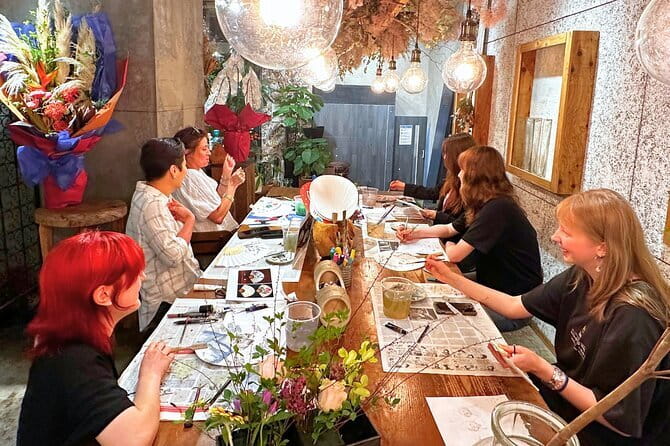
Green tea is part of the experience, not an afterthought. You receive a light green tea refreshment during the workshop and a packet of green tea to take home. The tea adds a gentle sensory element while you work and gives you a second souvenir from the session.
I like that the tea packet is practical. Your painting may be difficult to carry safely for the rest of a long trip, but the tea is easy to pack. Together, the two take-home items tell a fuller story: one is made by you, and the other connects you with Japanese tea culture.
The drink also gives the class a natural pause. You can listen, watch the demonstration, and work without the feeling that you are being pushed from one step to the next. The experience is still only about an hour, so the pace is not slow in an absolute sense. It simply has a calmer rhythm than most sightseeing stops.
Is $93.34 a fair price for one hour?
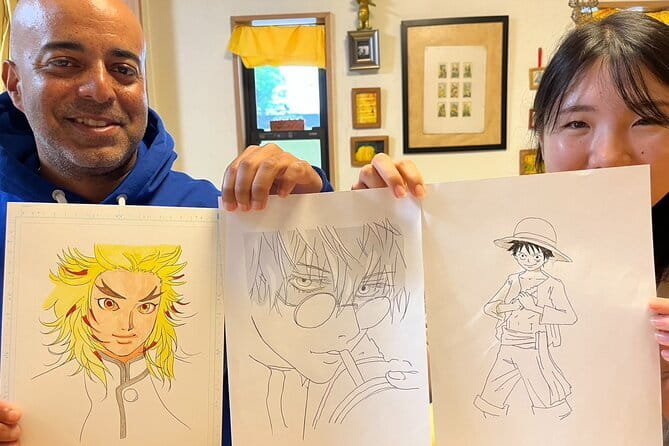
At $93.34 per person, this is not a cheap drop-in activity. You are paying more than the cost of materials and a cup of tea. The price reflects the small group, the instruction from Rensui, the teahouse setting, the prepared materials, and the finished artwork you take away.
The value depends on what you want from Tokyo. If you only need a quick souvenir, you can spend far less in a shop. If you want a major museum visit or a long guided tour, this one-hour class may seem expensive for its duration.
I see the price more favorably if you value personal instruction and a hands-on cultural activity. The group limit of eight matters here. A large workshop could offer the same paper and ink, but it would not necessarily give you the same chance to watch technique closely or ask for help.
It also works well as an addition to a full sightseeing day. You do not lose half a day, and the meeting point near Tsukiji makes the class fairly easy to combine with other plans. The activity ends where it begins, so there is no complicated final transfer.
You should also remember that the artwork is not just a purchased object. Its value comes from the fact that you made it during a particular hour in Tokyo. That will mean more to some people than the market value of the paper.
Who will enjoy this most?
I would recommend this workshop to art-lovers, curious first-time painters, couples, solo visitors, and families with children who can take part in a short guided class. It is especially good for anyone who wants a quieter activity between major Tokyo sights.
It also suits people who like souvenirs with a story. A brush mark made under Rensui’s guidance carries more meaning than a generic decorative item. You may not create a museum piece, but you will remember the effort behind it.
The workshop is a good option for a rainy day or for an afternoon when you want to sit down. The provided information says most people can participate, and no special skill is required. You should still be comfortable concentrating at a brush-and-paper activity for the length of the session.
I would be more cautious if you dislike structured instruction or want a long, open-ended art class. The lesson has a clear format and lasts about an hour. You will learn the basics, paint a selected theme, and finish with your work. It is not designed for extensive experimentation.
Practical details that affect your plans
The activity is confirmed within 48 hours of booking, subject to availability. It is commonly reserved about 25 days ahead, so I would avoid leaving it until the final day of your Tokyo planning if the timing matters to you.
You receive a mobile ticket, which is useful when you are moving around the city with a phone rather than a printed folder. Check the meeting address carefully: Uogashi Meicha Chanomi Club, 2-chōme-11-12 Tsukiji, Chuo City, Tokyo 104-0045.
The class has a maximum of eight people. Hotel pickup and drop-off are not included, so you arrange your own way to Tsukiji and back into your plans. Workshop materials, the light tea refreshment, the green tea souvenir, and the class itself are included.
Free cancellation is available if you cancel at least 24 hours before the start time. Cancellations made less than 24 hours ahead are not refunded, and last-minute changes are not accepted. The cut-off uses Tokyo local time, so check the clock carefully if you are changing plans from another time zone.
My call: book it for the experience, not perfection
I would book the Sumi-e Ink Painting Suiboku-ga Workshop if I wanted a personal, low-key cultural activity with a genuine creative result. The strongest reasons are the eight-person limit, Rensui’s guidance, the teahouse setting, and the artwork and tea you take home.
The price is high for one hour, and the painting may be harder than it first appears. That is the honest trade-off. You are paying for focused instruction and a memory you help create, not for a long tour or a guaranteed flawless picture.
Book it if you can enjoy a crooked line, a heavy brush mark, or an imperfect flower. Skip it if you want a passive activity or a bargain souvenir. For the right kind of visitor, this is a thoughtful way to slow down in Tokyo and leave with something no shop could provide: a small piece of your own effort.
FAQ
How long does the suiboku-ga workshop last?
The workshop lasts approximately one hour.
Where does the activity begin?
It begins at Uogashi Meicha Chanomi Club, 2-chōme-11-12 Tsukiji, Chuo City, Tokyo 104-0045, Japan.
Where does the activity end?
The activity ends back at the meeting point.
How many people can join the class?
The workshop has a maximum of eight participants.
Who teaches the painting class?
The class is taught by Rensui, an award-winning calligrapher and artist.
What will I learn during the workshop?
You will learn basic suiboku-ga techniques, including how to use water and ink to create texture and contrast. The class also includes simple brush methods, such as finishing with a single brushstroke.
What can I choose to paint?
The available themes include pine, bamboo, plum, orchid, chrysanthemum, and Chinese kanji characters.
Are painting materials included?
Yes. The workshop fee includes the required materials.
Do I receive tea during the activity?
Yes. A light green tea refreshment is included, and you also receive a packet of green tea as a souvenir.
Can I cancel for a full refund?
Yes, if you cancel at least 24 hours before the experience start time. Cancellations made less than 24 hours in advance are not refunded.
More Workshops in Tokyo
- Sushi Making Tokyo Roll and Authentic Japanese Sushi Class
★ 5.0 · 3,971 reviews - Tokyo: Roll and Authentic Sushi Making Class in Asakusa
★ 4.9 · 1,957 reviews - Tokyo Shinjuku Chopsticks Making Class
★ 5.0 · 1,763 reviews - Tokyo: Sushi Making Class in a Happi Coat near a Famous Spot
★ 4.9 · 1,377 reviews
New on our Tokyo list
- Sumi-e Experience in a relaxing green tea shop in Tokyo★ 5.0 · 3 reviews
- Tokyo : Kamikaze Street Drift Ride★ 5.0 · 3 reviews
- Private Zen Meditation in English in Shinjuku, Tokyo★ 5.0 · 3 reviews
- Onsen Spa in Tokyo and Asakusa Bar Hopping with Local Guide★ 5.0 · 3 reviews
- Easy for everyone! Now you can play handmade mini shamisen and show off to everyone! Musical instruments, sweets and live music★ 5.0 · 3 reviews
- Tokyo: Private Tsukiji Street Food & Sake with Local Guide★ 5.0 · 3 reviews
- Mt Fuji Exploration Tour with Free Japanese Kusa Mochi from Tokyo★ 4.5 · 3 reviews
- Tokyo Tsukiji Fish Market Walking and Exploring Hidden Gems Tour★ 5.0 · 3 reviews
Tea Ceremonies, compared.

Matcha Making Class in Tokyo with Authentic Japanese Sweets Set
Read our review →
Matcha Making Experience with Mochi Sweets in Asakusa
Read our review →
Tea Ceremony Workshop in Tokyo by the Experienced Instrucor
Read our review →

Make Traditional Nerikiri Sweets & Matcha experience in Shibuya
Read our review →Browse the lists this tour appears in