
Reviewed · JAPANESE COOKING CLASSES
Tokyo: Night Cooking Class: 5 Home-Cooked Japanese Dishes
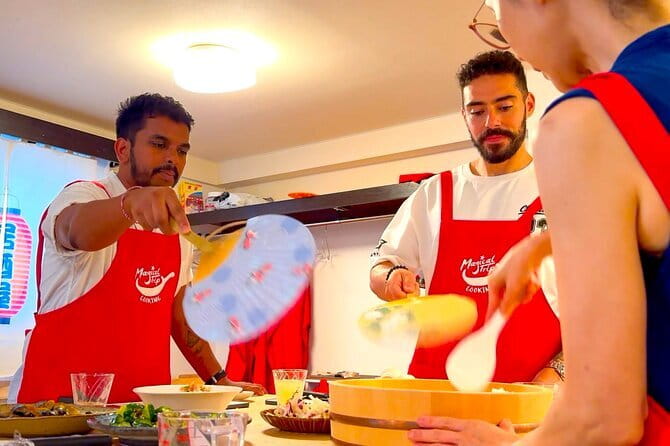
Tokyo’s best food lessons do not always happen in grand restaurants. This three-hour evening class takes you into the world of home-style izakaya cooking, where small dishes are made to match sake, beer, or soft drinks. You’ll prepare sushi hand rolls, wagyu or tofu steak, Japanese rolled omelette, and grilled eggplant with miso sauce, with savory skewers, tempura, and pickles also part of the cooking theme.
I like the small group of no more than six, since that gives you a fair shot at asking questions and handling the food yourself. I also like the practical recipes, which use ingredients you can usually find outside Japan, so the class can continue in your own kitchen. The main consideration is dietary fit: vegetarians can be accommodated, but the class is not suitable for vegans or people requiring gluten-free food, and allergy-free preparation cannot be guaranteed.
In This Review
- Key points to know before booking
- Why this class feels different from a standard cooking lesson
- Finding the class at Iriya Station Exit 2
- Starting with Japanese home drinking culture
- Sushi hand rolls: a useful first recipe
- Wagyu or tofu steak for a flexible main plate
- Japanese rolled egg, a small lesson in technique
- Miso eggplant, skewers, tempura, and pickles
- What the guides add to the evening
- Is $103 a fair price?
- Who should book this Tokyo cooking class?
- My verdict: book it for food skills, not just dinner
- FAQ
- How long does the Tokyo cooking class last?
- Where is the meeting point?
- What dishes are included?
- Are drinks included?
- Can children attend?
- Can I drink alcohol during the class?
- Is the class suitable for vegetarians?
- Is the class suitable for vegans or people who need gluten-free food?
- Is hotel pickup included?
Key points to know before booking
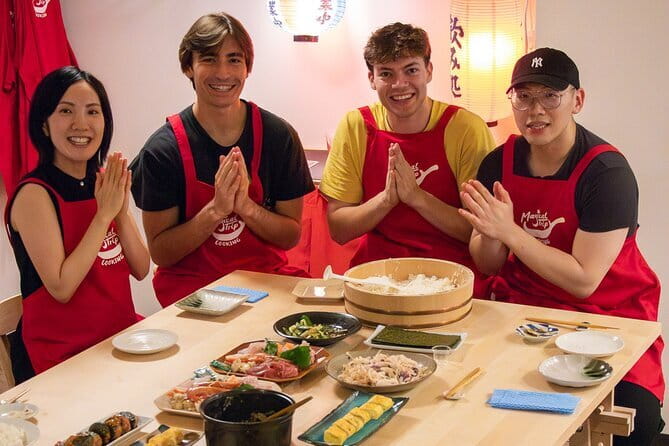
- Four named dishes anchor the class: Make sushi hand rolls, wagyu or tofu steak, Japanese rolled egg, and grilled eggplant with miso sauce.
- The evening follows izakaya habits: Small plates arrive alongside drinks, rather than as one large formal meal.
- Three drinks are included: Choose alcoholic or soft drinks, with alcohol available only to people aged 20 or older.
- The group is capped at six: That keeps the lesson personal and gives you more time at the work surface.
- The recipes are made for home use: Ingredients are selected with future cooking in mind, not just for a one-night demonstration.
- Iriya is the meeting point: Find the FamilyMart beside Gindako and Doutor Coffee near Exit 2, not the other FamilyMart at the station.
Why this class feels different from a standard cooking lesson
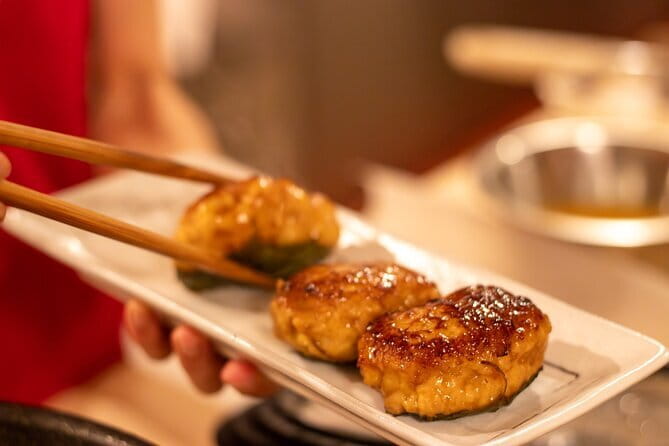
A typical cooking class may focus on one famous Japanese dish. This one takes a wider view. You learn how Japanese home drinking works through a table of small plates, each designed to go with a drink.
That format matters. Izakaya food is not meant to be eaten in a strict sequence. You might nibble on a pickle, take a sip of beer, return to a hot dish, then share another small plate. The class uses cooking to explain that rhythm, making the meal feel social rather than formal.
I like this approach because it gives you a better sense of everyday food culture. Sushi is familiar to many people, but sushi hand rolls are only one part of the meal. Steak, egg, eggplant, skewers, tempura, and pickles show how Japanese home cooking balances salty, sweet, crisp, soft, rich, and fresh flavors.
The class is also built around participation. You are not simply watching a chef work. You prepare the food and learn the steps needed to repeat the recipes at home. That makes the $103 price easier to assess. You are paying for a meal, drinks, ingredients, equipment, instruction, recipes, a guide, and photos, all within a three-hour session.
More cooking classes in Tokyo:
- Ramen & Gyoza Cooking Class in Tokyo with Local Supermarket Visit
★ 5.0 · 823 reviews - Tokyo: Easy Ramen Cooking Experience in Kabukicho, Shinjuku
★ 4.6 · 321 reviews - Ramen and Sushi Cooking Class with Sake Pairing Set in Tokyo
★ 5.0 · 291 reviews
Finding the class at Iriya Station Exit 2
The meeting point is specific, and you should take it seriously. There are two FamilyMart stores at Iriya Station. Go to the one beside the Gindako takoyaki shop and Doutor Coffee shop, in front of Exit 2.
This is the sort of detail that can save you an awkward start to the evening. Give yourself a little extra time to compare the nearby storefronts before the class begins. Hotel pickup and drop-off are not included, so you need to make your own way to Iriya.
The location also makes the class feel more connected to ordinary Tokyo life. You are not being collected at a hotel and taken to a staged dinner venue. You meet near a station, then move into a cooking setting for a lesson focused on local habits.
The class lasts three hours, but the exact starting time depends on availability. Check the available session before you book, especially if you are fitting the class around evening sightseeing or a later reservation.
Starting with Japanese home drinking culture
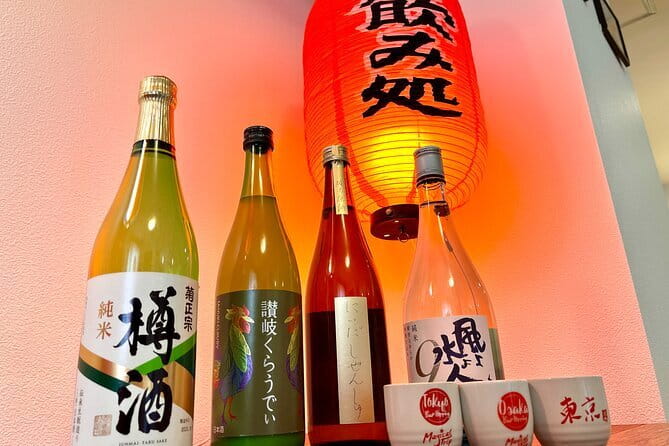
The first part of the experience sets the tone: this is an izakaya-style meal, not a restaurant etiquette lesson. You learn how small dishes work with drinks and how a Japanese nomikai, or drinking party, can center on shared food and conversation.
The drink pairing is not an afterthought. Three cans of alcoholic or soft drinks are included, and the class explains which drinks suit different dishes. Sake and Japanese beer are especially relevant, but you do not need to drink alcohol to take part.
I appreciate that the drinks are tied to the food rather than treated as a separate tasting. A rich steak, salty snack, crisp tempura, and tangy pickle each create a different match. The point is not to memorize strict rules. It is to notice how a drink changes the way a small dish tastes.
Alcohol is available only to people aged 20 or older, in line with Japanese law. If you are under 20, you can still enjoy the cooking and receive soft drinks instead.
Sushi hand rolls: a useful first recipe
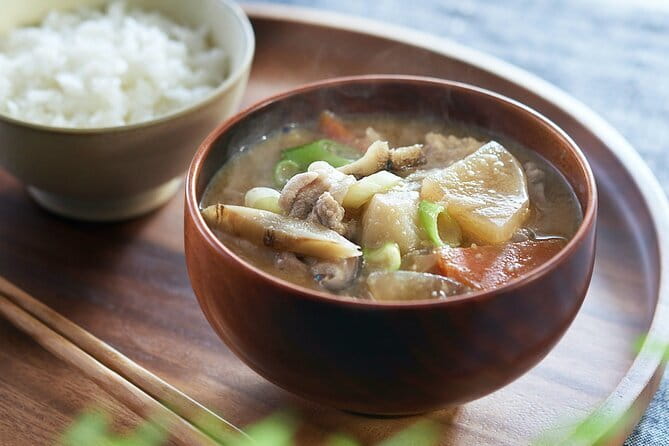
The sushi hand roll is one of the most approachable dishes in the class. It gives you a chance to work with Japanese flavors without requiring the precision of molded sushi or a long demonstration of knife technique.
Hand rolls also fit the izakaya idea well. They are casual, easy to eat, and suited to sharing. The recipe is practical for home parties because each person can assemble a roll rather than waiting for one cook to plate every portion.
This is a good place to pay attention to texture and balance. Japanese cooking often relies on contrast, and a hand roll can bring together soft rice, a filling, and the slight crispness of seaweed. The exact ingredients are prepared as part of the class, with the emphasis on techniques and combinations you can repeat later.
If you are new to Japanese cooking, this is likely one of the less intimidating sections. You get a clear finished dish early in the evening, then move on to recipes that involve more heat and timing.
A few more Tokyo bookings worth comparing
- Sushi Making Tokyo Roll and Authentic Japanese Sushi Class
★ 5.0 · 3,971 reviews - Tokyo: Roll and Authentic Sushi Making Class in Asakusa
★ 4.9 · 1,957 reviews - Tokyo Shinjuku Chopsticks Making Class
★ 5.0 · 1,763 reviews - Tokyo: Sushi Making Class in a Happi Coat near a Famous Spot
★ 4.9 · 1,377 reviews
Wagyu or tofu steak for a flexible main plate
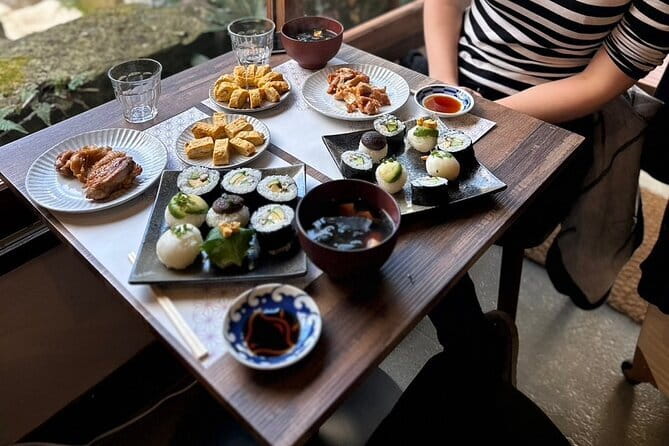
The steak course gives you a choice between wagyu and tofu. Wagyu offers a distinctly Japanese ingredient and a richer bite, while tofu makes the dish accessible to vegetarians.
That choice is useful for couples or small groups with different diets. You do not have to abandon the class because one person avoids meat. Vegetarian arrangements are available, and the cooking process can be adjusted for them.
Still, you should not confuse vegetarian with vegan here. The class welcomes vegetarians but does not accommodate vegan or gluten-free diets. If you have a serious allergy, the provider cannot promise an allergy-free kitchen, and substitutions may not always be possible.
The steak course also fits the drink-pairing theme. A rich dish gives you a clear reason to discuss which beverages work best with heavier flavors. You are learning more than how to cook the ingredient. You are learning how it functions on a Japanese drinking table.
Japanese rolled egg, a small lesson in technique
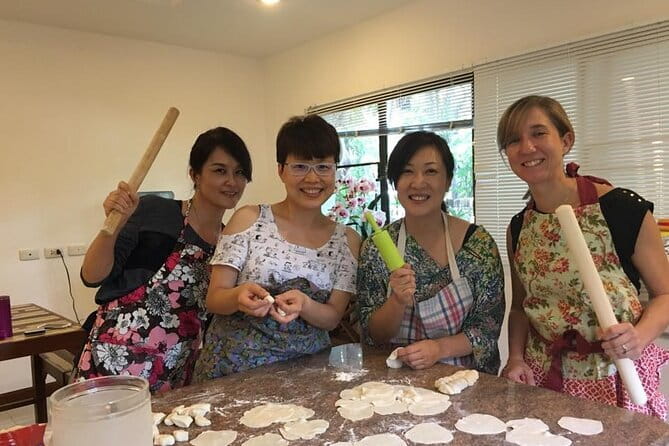
Japanese rolled omelette, often called tamagoyaki, looks simple until you try to make it neatly. The egg is cooked in layers and rolled into a compact shape, so heat control and timing matter.
This is one of the class’s most useful teaching moments. Eggs are inexpensive and easy to find, yet the technique makes the finished dish feel distinctly Japanese. It is the kind of recipe you can practice at home without buying special equipment.
The rolled egg also shows why this class works for complete beginners. You can learn a recognizable Japanese technique from a familiar ingredient. If your first roll is not perfect, the dish is still forgiving, and you leave with a method worth practicing.
Because knives and heat are involved, participants aged 12 and older may handle those steps under the supervision of a parent or guardian. Children aged 6 and above can attend, but the age rules make this less of a hands-on children’s cooking class than some families may expect.
Miso eggplant, skewers, tempura, and pickles
Grilled eggplant with miso sauce brings a soft vegetable dish to the table. The miso adds a savory sweetness that shows how a modest ingredient can become a satisfying small plate.
This is a useful recipe for home cooks because eggplant is easy to find in many countries. It also gives vegetarians a substantial dish rather than treating vegetables as a side thought.
The wider lesson includes savory skewers, crispy tempura, and tangy pickles. The exact order and preparation can vary, but the overall pattern is clear: you build a table of contrasting bites instead of one heavy entrée.
Tempura introduces crisp texture. Pickles provide acidity and relief from richer food. Skewers bring a casual, shareable format. Together, these dishes explain why izakaya meals feel varied even when the portions are small.
The drawback is that three hours can pass quickly when several dishes are involved. You should expect a guided introduction to each recipe, not a professional culinary qualification or a long, detailed study of every regional variation in Japan.
What the guides add to the evening
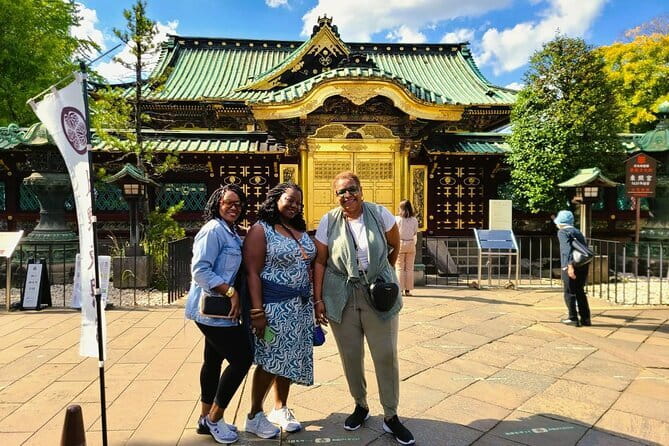
The class is led in English, and the guide is central to its success. Past sessions have been led by Alice, Masae, and Fuji, each described as warm, capable, and fun to work with.
Masae’s sessions have included a visit to a local supermarket before cooking, giving participants a look at Japanese ingredients before entering the cooking studio. That supermarket stop is not presented as a guaranteed part of every booking, so I would treat it as a possible extra rather than a promise.
Alice has been praised for making the evening lively while explaining the food clearly. Fuji has also led the class as both guide and cooking instructor. Since the assigned guide can vary, book this for the format and small group rather than for one particular person.
The guide also helps bridge the gap between recipe and culture. You learn why the dishes suit drinks, how a home drinking party works, and how to use ingredients that may be unfamiliar at first.
Is $103 a fair price?
At $103 per person, this is not a bargain meal. It can still be a fair buy if you value instruction and cultural context as much as the food itself.
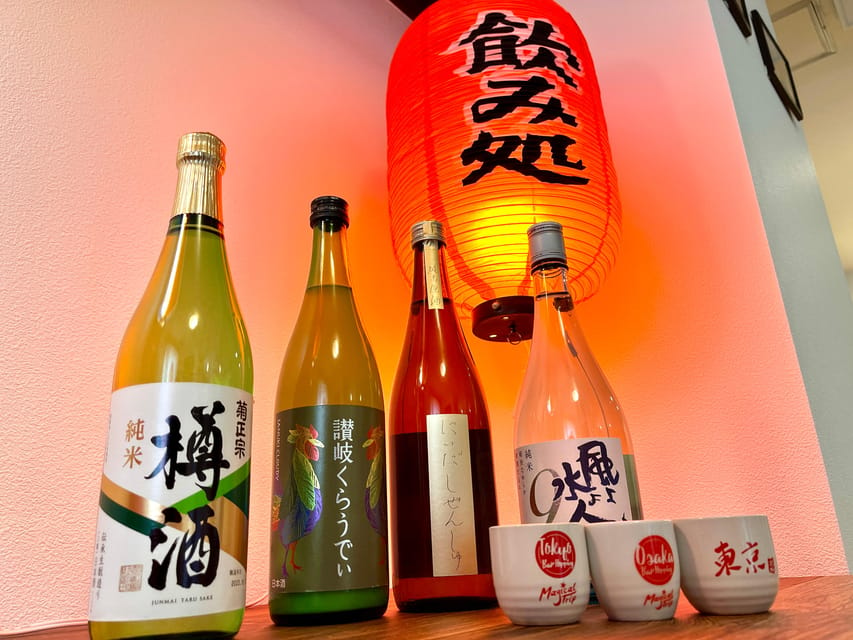
The price includes all ingredients, cooking equipment, three cans of alcoholic or soft drinks, recipes to take home, an English-speaking local guide, and tour photos. You are also getting a small class capped at six people, which usually means more direct practice than a large group demonstration.
The value is strongest for couples, friends, and solo visitors who would otherwise spend an evening eating at an izakaya without learning how the dishes are made. You leave with several recipes and a better understanding of how to recreate the style at home.
The value is weaker if you only want a quick dinner or if your diet prevents you from eating much of the menu. It is also less suitable if you dislike group activities, since other participants may join the session even when the group is small.
Free cancellation is available up to 24 hours before the class for a full refund, and you can reserve now and pay later. Those options help if your Tokyo schedule is still shifting.
Who should book this Tokyo cooking class?
I would point this class toward food-focused visitors who want something more active than another restaurant meal. It works particularly well for:
- Couples seeking a relaxed evening activity
- Friends who enjoy cooking and Japanese drinks
- Solo visitors hoping to meet a few people in a small group
- Beginners who want recipes they can repeat at home
- Vegetarians who can eat the arranged ingredients
- Families with children, provided they understand the knife and heat rules
You should think twice if you are vegan, gluten-free, pregnant, or managing serious allergies. The class is also not a good fit for anyone who needs wheelchair or stroller access throughout, since some parts of the activity are not accessible that way.
A kids’ playroom is available, which can help families enjoy the evening. Still, children under 12 cannot take part in knife or heat tasks, so parents should set expectations before booking.
My verdict: book it for food skills, not just dinner
I would book this class if you want to understand how Japanese food fits into a social evening. The mix of hand rolls, wagyu or tofu, rolled egg, miso eggplant, drinks, and small-plate customs gives you a broader lesson than a sushi-only workshop.
The strongest reasons to go are the six-person limit, the recipes you can use at home, and the guides’ friendly teaching style. The main reasons to skip it are the price, the limited dietary flexibility, and the fact that it is not designed as a fully hands-on children’s class.
Choose an alcoholic drink only if you are 20 or older. Arrive at the correct FamilyMart beside Gindako and Doutor near Iriya Exit 2. If those details suit you, this is a smart way to spend one Tokyo evening: cook several dishes, learn the social habits behind them, and leave with more than a full stomach.
FAQ
How long does the Tokyo cooking class last?
The class lasts three hours.
Where is the meeting point?
Meet in front of the FamilyMart beside Gindako takoyaki shop and Doutor Coffee shop at Iriya Station Exit 2. There are two FamilyMart stores at Iriya, so use these nearby shops to identify the correct one.
What dishes are included?
The hands-on class includes sushi hand rolls, wagyu or tofu steak, Japanese-style rolled egg, and grilled eggplant with miso sauce. The class also covers izakaya-style dishes such as skewers, tempura, and pickles.
Are drinks included?
Yes. Three cans of alcoholic or soft drinks are included.
Can children attend?
The activity is open to participants aged 6 and above. Knife and heat-related steps are limited to participants aged 12 and older under a parent or guardian’s supervision.
Can I drink alcohol during the class?
Alcoholic drinks are available only to people aged 20 and older, as required by Japanese law. Younger participants can have soft drinks.
Is the class suitable for vegetarians?
Yes. Vegetarian participants are welcome, and ingredients and cooking steps can be arranged for them.
Is the class suitable for vegans or people who need gluten-free food?
No. The class is not available for vegan or gluten-free diets. Allergy-free preparation and all dietary substitutions cannot be guaranteed.
Is hotel pickup included?
No. Hotel pickup and drop-off are not included, so you must travel to the meeting point at Iriya Station.
More Evening Experiences in Tokyo
- Tokyo Night Foodie Tour in Shinjuku – Seasonal Sushi, Wagyu Beef
★ 5.0 · 1,161 reviews - Tokyo: Daikoku JDM Car Meet & Night Car Culture Tour
★ 4.8 · 626 reviews - Tokyo After 5: Authentic Japanese Food & Drink Night Tour
★ 4.5 · 560 reviews - EVO, WRX, Skyline – JDM Night Run to Daikoku Car Meet
★ 4.9 · 478 reviews
New on our Tokyo list
- Sumi-e Experience in a relaxing green tea shop in Tokyo★ 5.0 · 3 reviews
- Tokyo : Kamikaze Street Drift Ride★ 5.0 · 3 reviews
- Private Zen Meditation in English in Shinjuku, Tokyo★ 5.0 · 3 reviews
- Onsen Spa in Tokyo and Asakusa Bar Hopping with Local Guide★ 5.0 · 3 reviews
- Easy for everyone! Now you can play handmade mini shamisen and show off to everyone! Musical instruments, sweets and live music★ 5.0 · 3 reviews
- Tokyo: Private Tsukiji Street Food & Sake with Local Guide★ 5.0 · 3 reviews
- Mt Fuji Exploration Tour with Free Japanese Kusa Mochi from Tokyo★ 4.5 · 3 reviews
- Tokyo Tsukiji Fish Market Walking and Exploring Hidden Gems Tour★ 5.0 · 3 reviews
Japanese Cooking Classes, compared.
Ramen & Gyoza Cooking Class in Tokyo with Local Supermarket Visit
Read our review →
Easy Ramen Cooking Experience in Kabukicho, Shinjuku
Read our review →
Ramen and Sushi Cooking Class with Sake Pairing Set in Tokyo
Read our review →
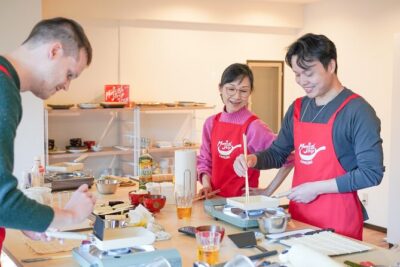
Tokyo Washoku 4-hour Cooking Class: From Market to Table
Read our review →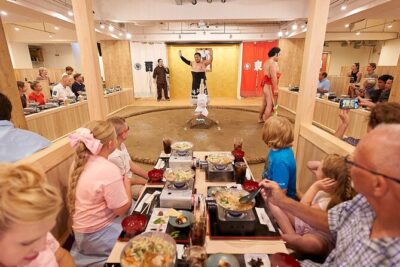
TokyoSumoShow, ChickenHotPot, and Mochi-Pounding by Pro Wrestlers
Read our review →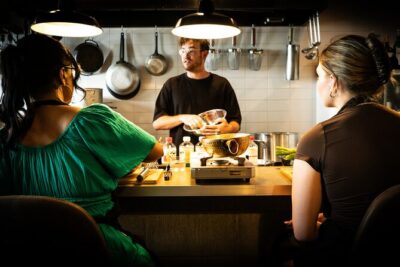
Professional Ramen & Gyoza with Ramen Chef in a restaurant!
Read our review →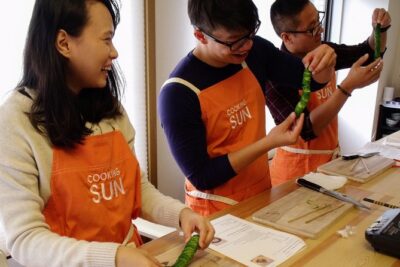
Small-Group Wagyu Beef and 7 Japanese Dishes Tokyo Cooking Class
Read our review →Browse the lists this tour appears in