
Reviewed · SUSHI EXPERIENCES
Tokyo Samurai Spirit: Create Sushi & Witness a Samurai Sword Show
The unusual hook here is simple: you make sushi in a room filled with armor, helmets, bamboo, swords, and torch-style decor, then watch a samurai sword performance. It is a compact way to pair a hands-on Japanese food lesson with theatrical culture in Asakusa.
I like the small maximum of 12 people, which should make it easier to follow the chef and get help at your seat. I also like the one-minute walk from Asakusa Station, plus the view toward Tokyo Skytree and the three-minute walk from Sensoji Temple.
The main caution is timing. At about 80 minutes, this is a brisk introduction rather than a serious sushi course or a full cultural show. The sword entertainment and dramatic setting are designed for fun, so visitors seeking a quiet, traditional sushi meal may prefer a different restaurant.
In This Review
- Key points at a glance
- Making sushi beside samurai armor in Asakusa
- What happens during the 80-minute course
- The donut sushi is the playful centerpiece
- Watching the chef work
- The samurai sword show and Sengoku-style room
- Why the small group size matters
- The Asakusa location makes planning easy
- Is $49 a fair price?
- Who will enjoy this most
- Booking and cancellation details to know
- Should you book Tokyo Samurai Spirit?
- FAQ
- Where does the experience take place?
- How long does the activity last?
- How much does it cost?
- What sushi will I make?
- Is a sushi chef present?
- Is the course available in English?
- Is the samurai sword show included?
- How many people can join the session?
- What is included in the price?
Key points at a glance
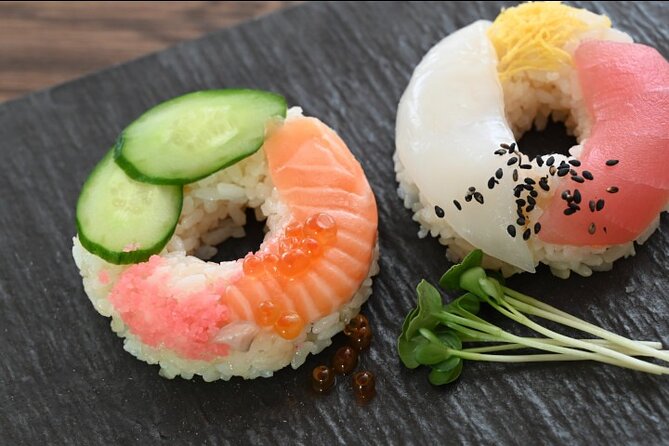
- Five nigiri pieces, one large roll, and donut sushi: You make several styles of sushi, not just one basic hand roll.
- A chef-led demonstration: The sushi chef shows you how to shape and prepare the pieces, with interactive instruction.
- Samurai-themed entertainment: Armor, swords, helmets, bamboo, music, and a sword show create a theatrical Sengoku setting.
- Small group size: The session accepts no more than 12 people, making personal instruction more realistic.
- Convenient Asakusa location: The venue is one minute from Asakusa Station and three minutes from Sensoji Temple.
- English-led with screen subtitles: The course is mainly in English, with Japanese, Chinese, and Korean subtitles on a monitor.
Making sushi beside samurai armor in Asakusa
This experience works because it joins two things that many visitors already want in Tokyo: sushi and samurai culture. You are not simply served a plate and sent on your way. The chef gives you an active role, then the room and performance add a dose of showmanship.
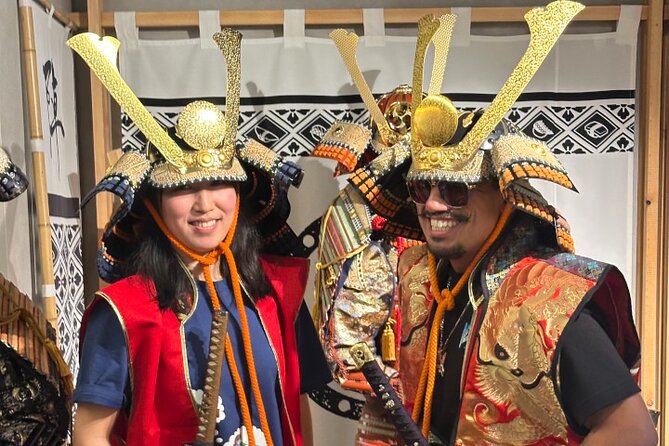
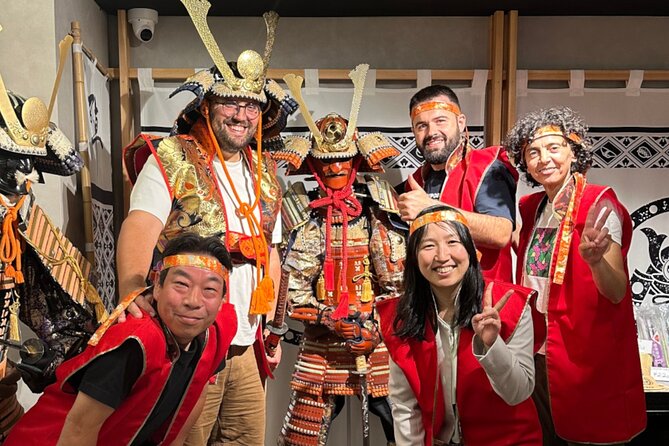
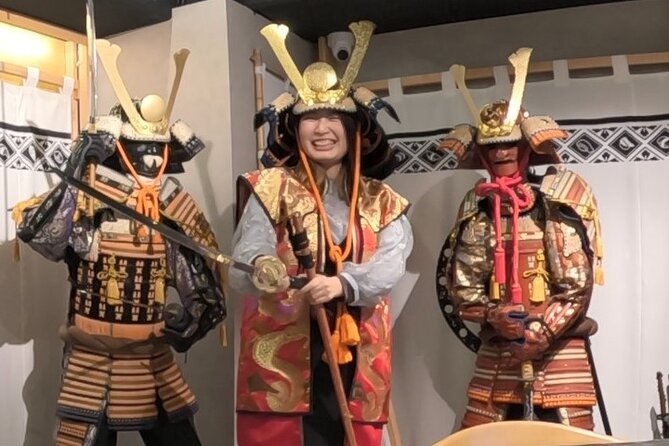
The setting is newly built and designed around Japan’s Sengoku period, the age associated with warlords, samurai, and ninjas. Expect decorative armor, helmets, swords, bamboo, and torch-like features. It is made for photographs, and the setting gives the sushi lesson a clear sense of place.
I would think of this as a cultural entertainment session rather than a formal lesson in Japanese history. The samurai theme is visual and theatrical. That is not a flaw, but it helps set the right expectation before you book.
The location also makes practical sense. After visiting Sensoji Temple, you can walk to the venue in about three minutes. Asakusa Station is about one minute away, and the room offers a panoramic view of Tokyo Skytree. If you are building a half-day around Asakusa, the short duration makes this easy to fit between other sights.
More samurai and ninja sessions:
- Tokyo: Samurai Ninja Museum Guided tour and Experience
★ 4.6 · 1,010 reviews - Tokyo: Samurai Sword & Archery Class from Samurai Descendant
★ 5.0 · 603 reviews - Best Samurai Experience in Tokyo
★ 5.0 · 458 reviews
What happens during the 80-minute course
The full session lasts about 80 minutes. The exact order of the food lesson and performance is not specified, but the course combines chef demonstrations, your own sushi-making, prepared food, and samurai sword entertainment in one sitting.
The food portion includes five types of nigiri sushi, five pieces in total. You also make one large rolled sushi and one donut sushi. That gives the class a useful mix of shapes and techniques rather than repeating the same task several times.
You will also see a large rolled sushi demonstration by the chef. This is one of the more visual parts of the food program, since a large roll is easier to watch being assembled than a small piece of nigiri. A dashimaki tamago performance is included as well. Dashimaki is Japanese rolled omelet, and seeing it grilled in front of you adds a hot, made-to-order element to the meal.
The sushi chef directly teaches the group how to make the pieces. The instruction is mainly in English, and a monitor provides subtitles in Japanese, Chinese, and Korean. That language support is useful in a food activity where hand movements matter as much as spoken explanation.
You should not expect to leave with professional sushi skills. The value is in learning enough to shape and assemble your own pieces, then eating what you made soon afterward. That makes the class easy for families and first-time sushi makers.
The donut sushi is the playful centerpiece
The donut sushi is the most distinctive food activity here. You design and decorate a sushi creation in a ring shape, making it colorful and photo-friendly. It is less about traditional sushi technique and more about giving you a creative project you can enjoy before eating.
I like this addition because it changes the pace. Five nigiri pieces and a large roll involve careful shaping, while the donut sushi lets you focus on appearance and personal style. It is likely to appeal especially to children, families, and anyone who enjoys taking food photos.
The playful design also explains part of the experience’s broad appeal. You are not required to know anything about sushi beforehand, and the task gives everyone something to do with their hands. If you are dining with a mixed-age group, that can be more successful than a long lecture or a passive demonstration.
There is a trade-off. Someone looking for a strictly traditional sushi lesson may find the donut format gimmicky. I would treat it as a fun Tokyo-only activity within a larger Japanese food experience, not as a classic sushi apprenticeship.
Watching the chef work
The chef’s role is central. You watch demonstrations, receive direct instructions, and then prepare sushi yourself. A staff member known as the taisho is specifically involved in explaining how to make the sushi. No individual guide name is provided, so do not book this expecting a named English-speaking host.
The performance element is not limited to raw sushi preparation. You also see dashimaki grilled in front of you. That matters because it gives you a glimpse of a different Japanese cooking skill, one that depends on timing and repeated folding.
A good food demonstration should make the finished dish more understandable. Here, you can see how the chef handles ingredients and shapes the food before trying it yourself. The session is likely to feel more satisfying than a meal where the preparation remains entirely behind the kitchen door.
Still, the 80-minute limit keeps things moving. With five nigiri pieces, a large roll, donut sushi, demonstrations, and the sword show, each part receives only a slice of the session. You will get an entertaining introduction, not extended one-on-one coaching.
More sushi mornings and classes:
- Sushi Making Tokyo Roll and Authentic Japanese Sushi Class
★ 5.0 · 3,971 reviews - Tokyo: Roll and Authentic Sushi Making Class in Asakusa
★ 4.9 · 1,957 reviews - Make Sushi and Create Unforgettable Memories in Tokyo
★ 5.0 · 1,413 reviews - Tokyo: Sushi Making Class in a Happi Coat near a Famous Spot
★ 4.9 · 1,377 reviews
The samurai sword show and Sengoku-style room
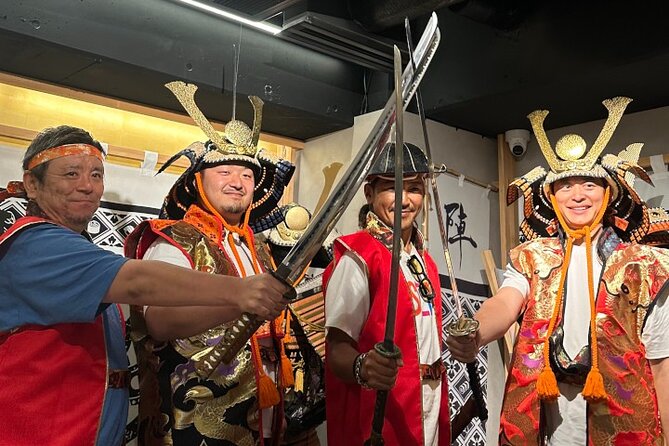
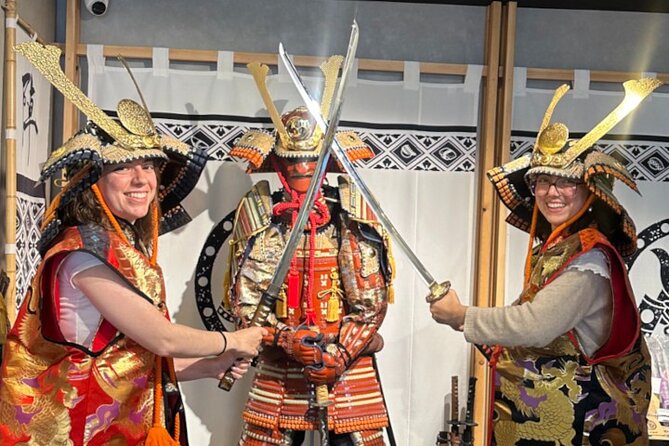
The sword show gives the meal its dramatic second half. The room is decorated with armor, helmets, swords, bamboo, and torch-style elements, so the performance fits the surroundings rather than feeling like a random add-on.
The setting is clearly built for atmosphere and photos. If you enjoy themed restaurants, the decor and music should give the session a strong visual identity. It is also a convenient way to add a samurai-themed activity without committing to a long museum visit or a full-day excursion.
The cultural content should be understood in that light. You will see samurai imagery and a sword performance, but the supplied details do not promise a detailed lesson on Sengoku politics, military history, or sword schools. I would not choose this as your only samurai-related activity if historical depth is your main goal.
For families and groups, the mix keeps the hour from feeling flat. One person can enjoy the food lesson, another can focus on photos and decor, and everyone has the sword show as a shared event. The interactive design also avoids the problem of a cultural presentation where younger children lose interest after a few minutes.
Why the small group size matters
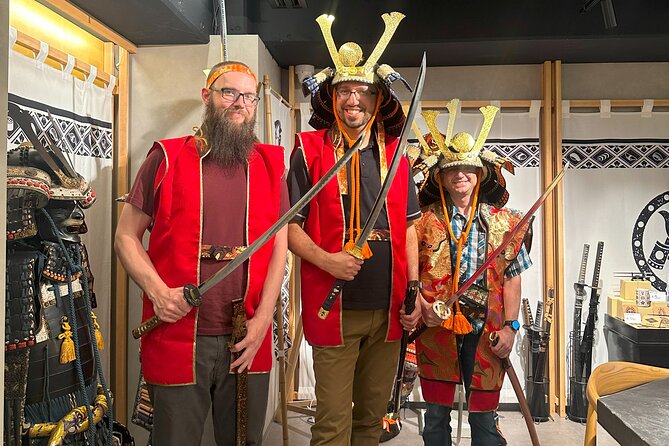
The maximum group size is 12 people. That is a helpful limit for an activity involving food preparation, since you need to see the chef’s hands and hear the instructions.
A group of 12 is not the same as private instruction. You may still need to watch closely and wait briefly for assistance. But it is more manageable than a large class, especially when the chef demonstrates several different sushi forms.
The small-group format also suits families and couples who want a shared activity without booking an expensive private session. The available comments describe the service as kind and the session as highly interactive, which matches the structure of a hands-on class.
The course is mainly conducted in English. Japanese, Chinese, and Korean subtitles appear on a monitor. That gives you an extra visual aid, though the information provided does not specify whether every part of the sword performance is translated in detail.
The Asakusa location makes planning easy
The meeting point is JIN-ASAKUSA, at CREAL Asakusa Skyview Square on the fourth floor, in Hanakawado, Taito City. The listed address is 1-chome 10-14, Tokyo 111-0033.
From Asakusa Station, the walk takes about one minute. Sensoji Temple is about three minutes away on foot. Those times make this a good add-on after temple sightseeing, or a fixed activity around which you plan the rest of your Asakusa visit.
The Tokyo Skytree view is another useful bonus. You are not booking a separate observation experience, but the venue’s panoramic outlook adds interest while you eat and work. The activity ends back at the meeting point, so there is no transport arrangement to manage afterward.
You must arrange your own public transportation to the venue. Water and hot Japanese tea are complimentary. Extra drinks, including alcohol, cost more, so the advertised price should be treated as covering the course and basic refreshments, not a full beverage package.
Is $49 a fair price?
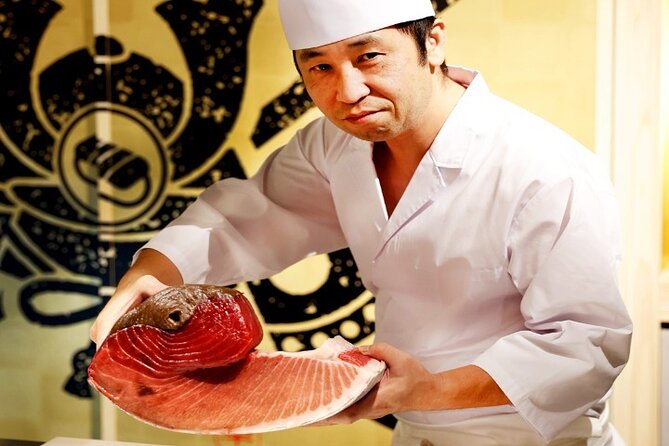
The cost is $49 per person. That includes the meal, service charge, and consumption tax, which makes the final cost easier to estimate. You also receive the sushi-making lesson, the chef’s demonstrations, the dashimaki performance, the donut sushi activity, and the samurai sword show.
For Tokyo, the value depends on what you want from the hour. If you only want to eat sushi, $49 is not a bargain meal price. You are paying for instruction, entertainment, a themed venue, and the convenience of a short activity near major Asakusa sights.
I consider the price reasonable for families, first-time visitors, and anyone who wants several Japanese experiences in one compact booking. The small group cap strengthens the value because the class is not built around a huge audience.
It is less convincing for serious food enthusiasts who want a long sushi workshop or a refined omakase meal. The food list is generous enough for a short course, but the format is clearly designed around participation and spectacle.
Who will enjoy this most
I would recommend this activity to:
- Families who want a hands-on food activity with a visual show
- First-time visitors who want an easy introduction to sushi-making
- Couples and friends who enjoy themed settings and food photography
- Visitors spending a short time in Asakusa
- People who want English-led instruction with additional subtitle support
- Anyone looking for a compact cultural activity rather than a full-day tour
Children may find the donut sushi and samurai setting especially appealing, though the supplied information does not give a minimum age or specific child policy. If you need those details, confirm them before booking.
I would be more cautious if you dislike theatrical restaurants, want a quiet meal, or expect a serious history lecture. The best fit is someone who enjoys a little show with lunch and does not mind that the cultural presentation is concise.
Booking and cancellation details to know
Your confirmation is provided at booking, and the activity is near public transportation. A mobile ticket is available, so you can keep the booking on your phone rather than print it.
The activity allows free cancellation up to 24 hours before the start time for a full refund. Cancellations or changes made less than 24 hours before the start time are not accepted for a refund. The cut-off uses Tokyo local time, so check the time carefully if you are arranging plans from another time zone.
The venue is the start and end point. Since the activity lasts about 80 minutes, you can plan a nearby meal, shopping, or temple visit before or after without giving up most of your day.
Should you book Tokyo Samurai Spirit?
Book it if you want hands-on sushi-making, samurai-themed entertainment, and a convenient Asakusa location in one short session. The five nigiri pieces, large roll, donut sushi, chef demonstrations, and dashimaki performance give you plenty to do, while the sword show adds a memorable visual finish.
I especially like it for families and visitors with limited time. The $49 price is fair when you count the food, instruction, show, taxes, and service charge together. Just keep your expectations in the right place: this is a lively cultural food activity, not an advanced sushi school or a detailed samurai history course.
If that balance sounds right, the easy walk from Sensoji Temple and the 12-person limit make it a practical Asakusa choice.
FAQ
Where does the experience take place?
It takes place at JIN-ASAKUSA, CREAL Asakusa Skyview Square, 4F, Hanakawado 1-chome 10-14, Taito City, Tokyo 111-0033.
How long does the activity last?
The session lasts approximately 1 hour and 20 minutes.
How much does it cost?
The listed price is $49 per person.
What sushi will I make?
The course includes five types of nigiri sushi, five pieces in total, one large rolled sushi, and one donut sushi.
Is a sushi chef present?
Yes. A Japanese sushi chef demonstrates the preparation and directly teaches you how to make sushi.
Is the course available in English?
The course is conducted mainly in English. A monitor provides subtitles in Japanese, Chinese, and Korean.
Is the samurai sword show included?
Yes. The experience includes a samurai sword performance along with its Sengoku-themed setting.
How many people can join the session?
The maximum group size is 12 travelers.
What is included in the price?
Meal costs, the service charge, and consumption tax are included. Water and hot Japanese tea are complimentary, while additional beverages and alcohol are not included.
More Show in Tokyo
- Mt Fuji & Hakone Cruise, Drum Show Bullet Train 1 Day from Tokyo
★ 4.0 · 7,413 reviews - Tokyo: Sumo Show Experience with Chicken Hot Pot and a Photo
★ 4.8 · 6,678 reviews - Tokyo: Sumo Show and Dining Experience
★ 4.8 · 2,742 reviews - the SUMO show
★ 5.0 · 1,960 reviews
New on our Tokyo list
- Sumi-e Experience in a relaxing green tea shop in Tokyo★ 5.0 · 3 reviews
- Tokyo : Kamikaze Street Drift Ride★ 5.0 · 3 reviews
- Private Zen Meditation in English in Shinjuku, Tokyo★ 5.0 · 3 reviews
- Easy for everyone! Now you can play handmade mini shamisen and show off to everyone! Musical instruments, sweets and live music★ 5.0 · 3 reviews
- Onsen Spa in Tokyo and Asakusa Bar Hopping with Local Guide★ 5.0 · 3 reviews
- Tokyo: Private Tsukiji Street Food & Sake with Local Guide★ 5.0 · 3 reviews
- Mt Fuji Exploration Tour with Free Japanese Kusa Mochi from Tokyo★ 4.5 · 3 reviews
- Tokyo Tsukiji Fish Market Walking and Exploring Hidden Gems Tour★ 5.0 · 3 reviews
Sushi Experiences, compared.
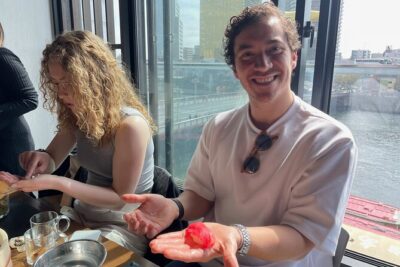
Sushi Making Tokyo Roll and Authentic Japanese Sushi Class
Read our review →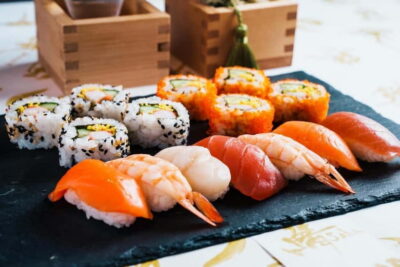
Roll and Authentic Sushi Making Class in Asakusa
Read our review →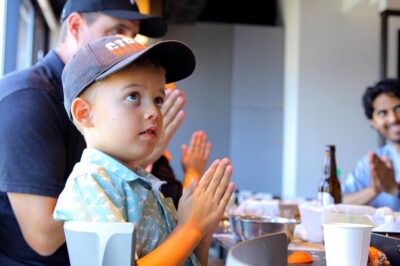
Make Sushi and Create Unforgettable Memories in Tokyo
Read our review →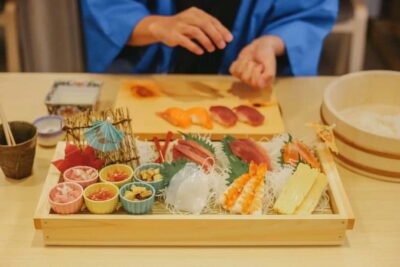
Sushi Making Class in a Happi Coat near a Famous Spot
Read our review →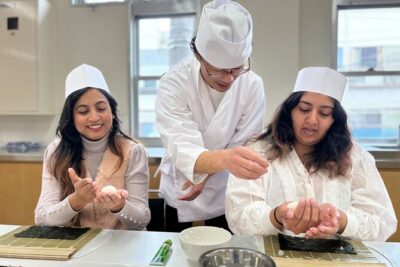
Tokyo Sushi Making Class in Tsukiji with Professional Chef
Read our review →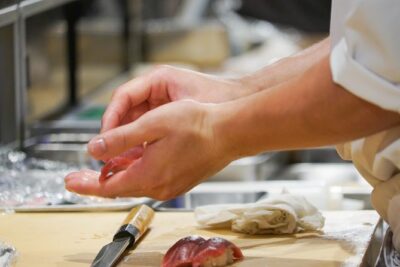
Tokyo Night Foodie Tour in Shinjuku – Seasonal Sushi, Wagyu Beef
Read our review →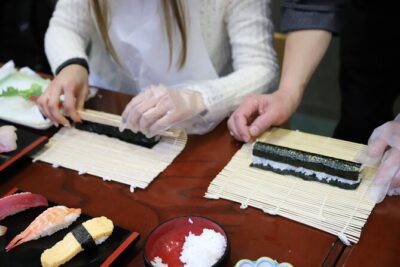
Tsukiji Fish Market Guided Tour and Sushi Making with Pro Chef
Read our review →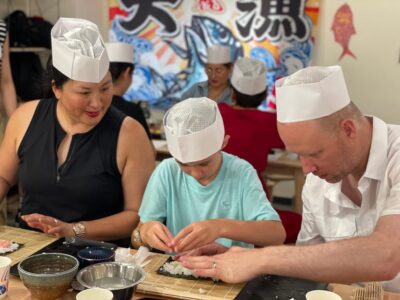
Tsukiji Fish Market Sushi Making Class with Pro Chef
Read our review →Browse the lists this tour appears in