
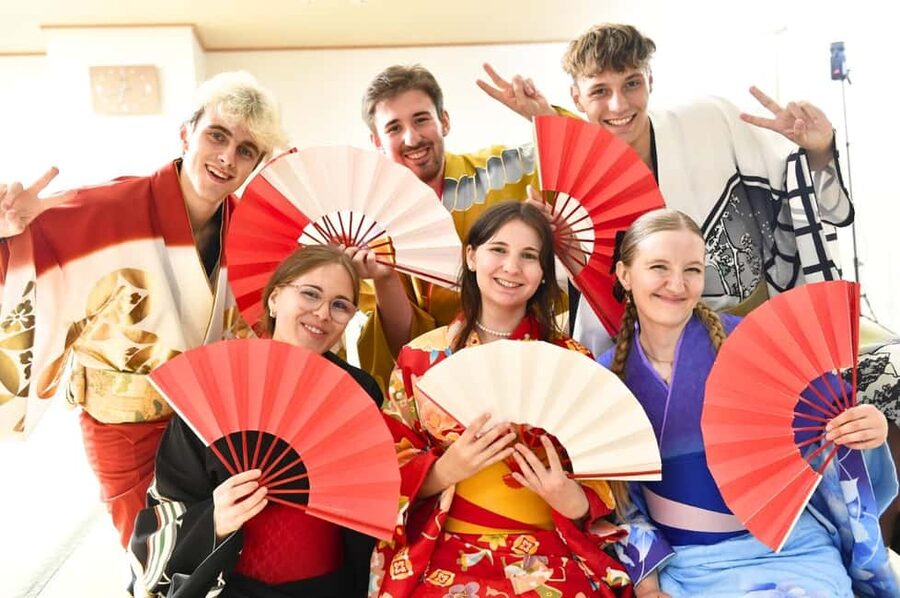
Reviewed · KIMONO EXPERIENCES
Tokyo: Taishu Engeki Show with Kimono and Sword Lesson
The most unusual part of this Asakusa experience is the quick change from audience member to stage performer. You watch professional Taishu Engeki at Mokubakan Theater, then put on a kimono and learn a short routine with a folding fan and samurai sword. It is traditional theater with a hands-on twist, not just another seat in a show.
I like the small group limit of six, which gives the instructor room to help each person. I also like the low $12 price. For three hours, that is an unusually good deal in Tokyo, especially since the fee includes the show, workshop, kimono dressing, and photos. The main consideration is that the theater uses flashing lights and loud sounds, and the workshop is physically active. Pregnant women should not book this activity.
In This Review
- Key points to know before booking
- Why Taishu Engeki is worth your time
- Starting at Mokubakan Theater in Asakusa
- The live show: drama, swordplay, and dance
- A short walk to a very different kind of activity
- Wearing a kimono for the workshop
- Fan dance and samurai swordplay
- The photo session and what you take home
- Is $12 a good value in Tokyo?
- Who should book this experience?
- Timing, cancellation, and practical cautions
- My verdict: book it for active cultural context
- FAQ
- Where does the Taishu Engeki experience take place?
- How long does the experience last?
- What time does the afternoon program meet?
- What time does the evening program meet?
- Does the order change between afternoon and evening?
- What languages are available?
- How large is the group?
- Do I get to wear a kimono?
- Is the sword lesson suitable for beginners?
- Are there any health or sensory concerns?
Key points to know before booking
- Taishu Engeki is close, colorful theater: Expect drama, music, expressive dance, swordplay, and male actors performing female roles.
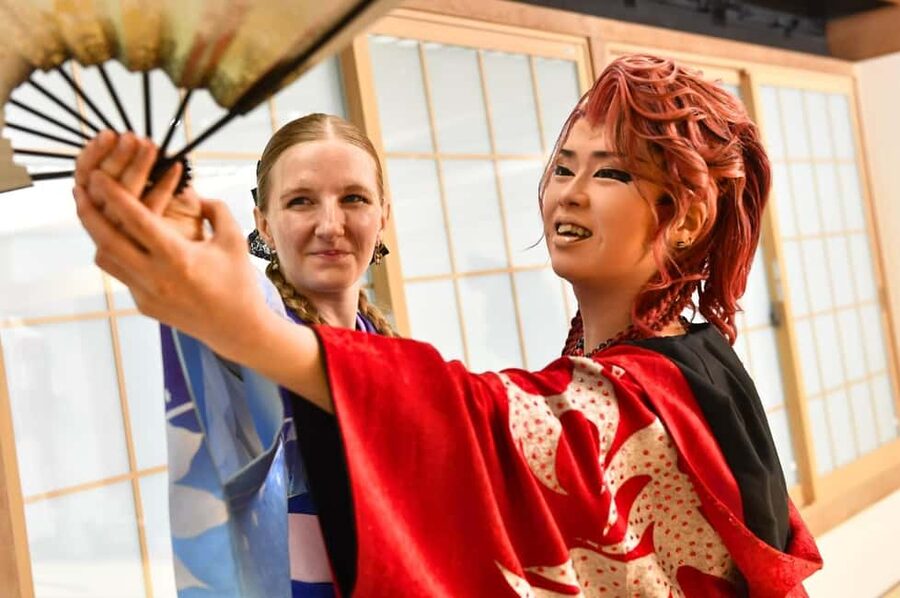
- You do more than watch: After the show, you dress in a traditional kimono and learn beginner-level fan and sword movements.
- The workshop is made for newcomers: The focus is enjoyment and choreographed movement, not difficult formal training.
- The schedule depends on your booking: The afternoon program begins at 2:20 p.m. with the show. The evening program meets at 5:40 p.m. and does the workshop first.
- Mokubakan Theater is central to the experience: This Asakusa venue has been devoted to Taishu Engeki since 1977.
- Budget value is excellent: At $12 per person, the package costs less than many Tokyo theater tickets and adds a cultural lesson and photo session.
Why Taishu Engeki is worth your time
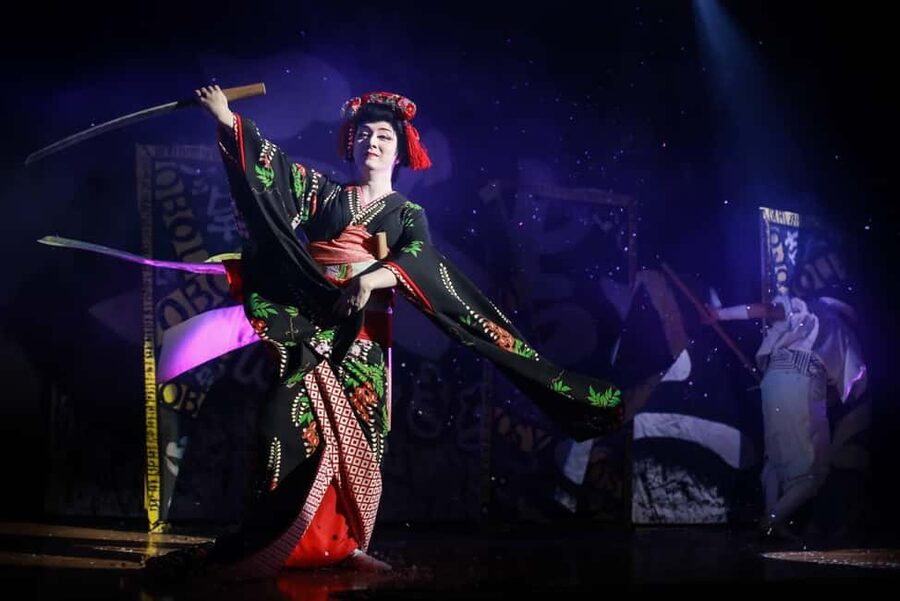
Taishu Engeki is often described as popular theater, and that is useful context. It is less formal than Kabuki or Noh, with a direct style built around emotion, music, dance, costume, and action. You do not need to understand every spoken line to follow the main mood.
The show uses expressive body language and visual storytelling. A sword fight is easy to read as a sword fight. A graceful dance sequence communicates mood through posture, hand movements, and music. That makes this a sensible choice if you want traditional Japanese theater but worry about a language barrier.
The performance also includes onnagata, the tradition of male actors portraying female characters. Their gestures, balance, costume, and facial expression are part of the art. You will see a polished stage style that is very different from a museum display or a standard cultural lecture.
The theater experience is close and personal. One review described being close enough to feel the performers’ steps and jumps. That detail matters. Mokubakan is not presented as a distant, grand concert hall. The action has a physical presence, which helps explain why this form of theater remains appealing to local audiences.
More kimono fittings and strolls:
- Let’s make kimono !(Kimono is a gift for you
★ 5.0 · 252 reviews - Tokyo: Matcha and Kimono Experience
★ 4.7 · 219 reviews - Tokyo: Asakusa Kimono Dressing and Matcha Experience
★ 4.9 · 173 reviews
Starting at Mokubakan Theater in Asakusa
Your program leader meets you in front of Asakusa Mokubakan Theater at the stated meeting time. The leader speaks English or German and gives an introduction to the venue and Taishu Engeki before the program begins.
For the afternoon slot, the meeting time is 2:20 p.m. You watch the show first, then walk five to seven minutes to a separate cultural venue for the kimono and movement workshop.
The evening schedule is reversed. You meet at 5:40 p.m., begin with the workshop, and attend the theater performance afterward. Check your selected time carefully, since the order changes and the evening meeting point is listed separately at 1 Chome-38-6 Asakusa, Taito City.
Arrive on time. This is a small-group program with several linked parts, so a late arrival could cut into your theater time or workshop. The leader will be in front of the theater with a Meeting Point sign.
The live show: drama, swordplay, and dance
The first major part of the afternoon schedule is the professional Taishu Engeki performance. You watch the same general type of show enjoyed by Japanese audiences, rather than a shortened demonstration made only for tourists.
Expect a blend of dramatic scenes, music, dance, and swordplay. The visual action is a major strength. Even if you do not understand all the dialogue, the performers use movement and expression to keep the story readable.
The content and schedule can change without notice, so you should not arrive expecting one fixed plot or exact running order. That flexibility is normal for a live theater program, but it is worth knowing if you prefer a tightly predictable attraction.
Flashing or strobe lights and loud sounds are used during the professional performance. If those conditions affect you, contact the operator before booking. The effects are limited to the theater portion, so you can still take part in the workshop and photo session if those are comfortable for you.
The program fee includes a small token of appreciation. You are also guided through the local custom of offering a small gift or tip to a favorite performer, known as ohana o okuru. This is a useful cultural touch, since it shows you one way local theater supporters express thanks. It is not simply a matter of watching and leaving.
A short walk to a very different kind of activity
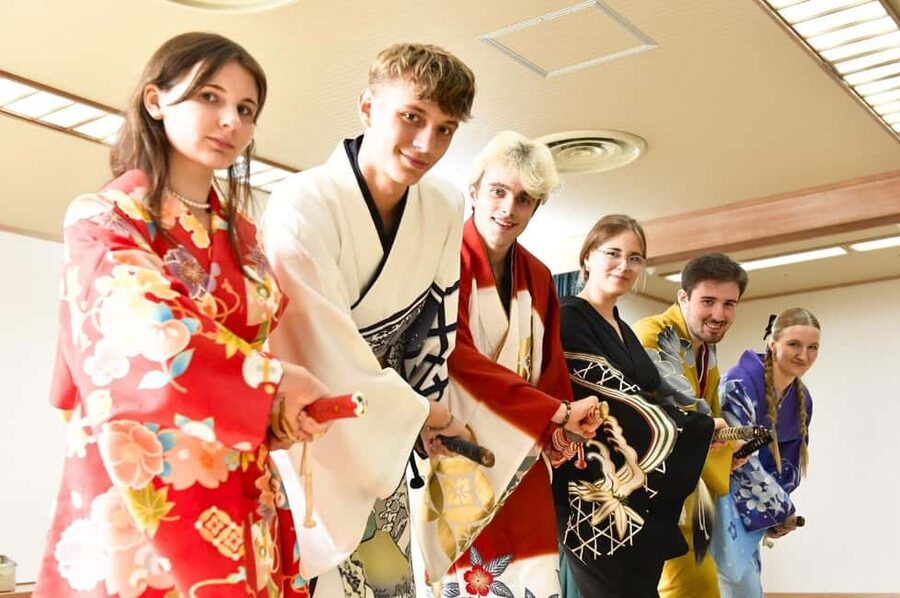
After the performance in the afternoon schedule, your group walks five to seven minutes to the cultural venue. The distance is short, but the change in mood is striking. You move from watching professionals on stage to taking part in a traditional performance style yourself.
The small-group format works especially well here. With no more than six participants, the instructor can keep the routine manageable and help you with basic positions and timing. Several reviews specifically praised the patient staff and the easy-to-follow sword lesson.
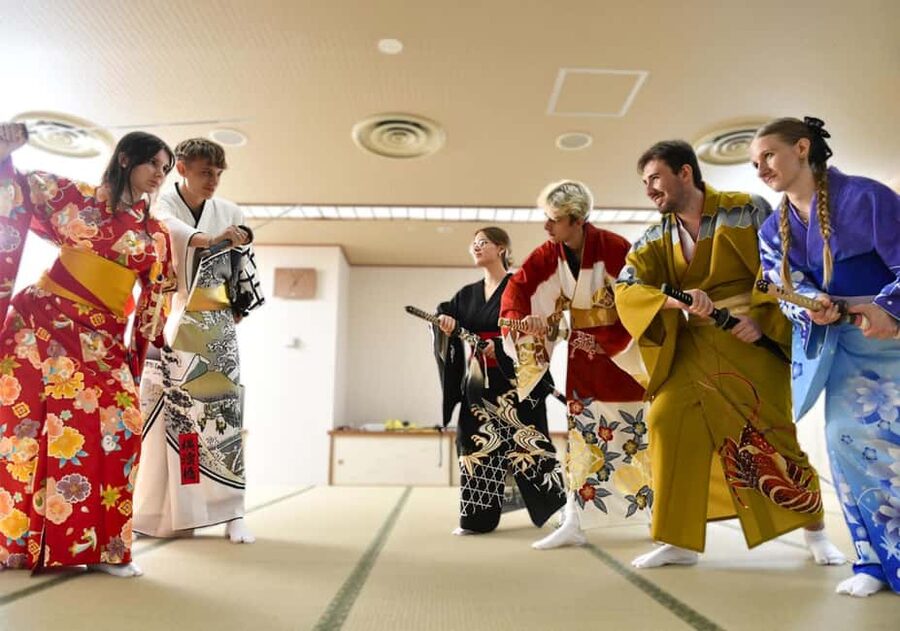
Do not expect formal martial arts instruction. The sword segment is choreographed combat dance, often called chanbara in this context. The emphasis is on theatrical movement and enjoyment, not fighting technique or difficult choreography.
That distinction makes the activity suitable for many first-time participants. You are learning how stage movement looks and feels, not preparing for a samurai battle. Still, it is a physically active workshop. If you feel dizzy, sick, or unwell, tell the staff immediately.
A few more Tokyo bookings worth comparing
- Sushi Making Tokyo Roll and Authentic Japanese Sushi Class
★ 5.0 · 3,971 reviews - Tokyo: Roll and Authentic Sushi Making Class in Asakusa
★ 4.9 · 1,957 reviews - Tokyo Shinjuku Chopsticks Making Class
★ 5.0 · 1,763 reviews - Tokyo: Sushi Making Class in a Happi Coat near a Famous Spot
★ 4.9 · 1,377 reviews
Wearing a kimono for the workshop
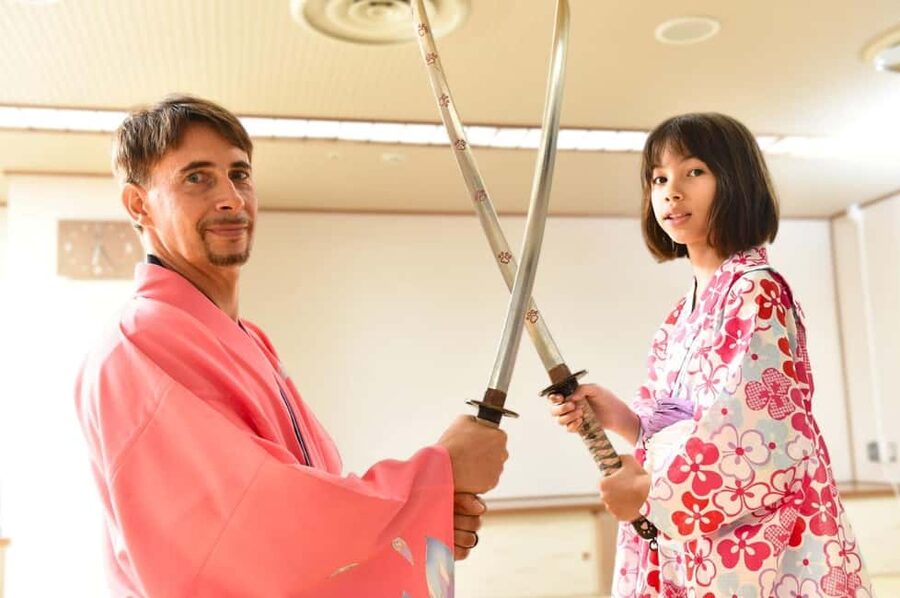
The kimono dressing is more than a photo prop. It changes the way you move. A traditional garment encourages smaller steps, careful posture, and deliberate arm movements, which helps you understand why fan dance depends so much on controlled gestures.
The dressing takes place before the lesson, and you then enter a traditional tatami room. That setting gives the activity a stronger cultural sense than a generic studio class. You are not just holding a fan in ordinary clothes. You are learning stage movements while dressed for the part.
The practical tradeoff is time. Kimono dressing, instruction, practice, and photos all share the three-hour program with the theater show. This is an introduction, not an in-depth costume or dance course. You should book it for the complete experience, not for extended instruction in either art.
The outfits are described as beautiful and elegant, and the photo session gives you a record of the day. Staff are also reported to be willing to help with photos and videos, although the exact amount of media support is not specified as a formal deliverable. Bring a cooperative attitude and be ready for a group activity rather than a private studio portrait session.
Fan dance and samurai swordplay
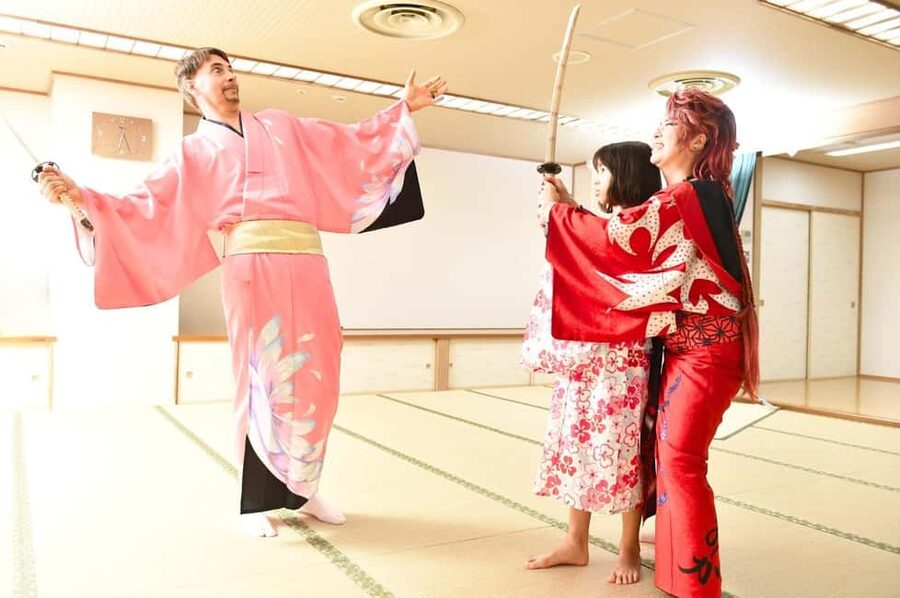
The fan lesson is graceful and surprisingly theatrical. A folding fan, or sensu, can suggest a range of moods through simple changes in angle, speed, and posture. The instructor guides you through accessible movements so you can perform a short sequence without needing prior dance experience.
The sword lesson has a different energy. The instructor demonstrates choreographed samurai movements, and you follow along with controlled steps and poses. The aim is to make you feel part of the stage world you just watched.
This is where the program earns its modest price. A theater ticket gives you an audience view. Here, you get a little understanding of the physical work behind the show. You learn that a dramatic sword exchange depends on timing, clear gestures, and theatrical precision rather than random swinging.
The lesson is beginner-friendly, but it is not passive. You will be standing, moving, and repeating actions. Wear clothing and shoes that make it easy for you to arrive, change, and take part. The provided information does not specify shoe rules or changing-room details, so avoid assuming that every personal item can be stored on site.
The photo session and what you take home
The program finishes with commemorative photos in your kimono. This is a practical ending because the clothing, fan, and sword create a visual record that a standard theater ticket cannot provide.
The session also gives you a chance to repeat a movement after the lesson. If you are traveling with friends, you can capture group images. If you are alone, the small group and staff assistance can still make photos possible.
Think of the photographs as a memento included in the activity, not as a separate professional portrait package with a guaranteed number of edited images. The details provided do not specify delivery method, image count, or whether all photos are supplied digitally.
Is $12 a good value in Tokyo?
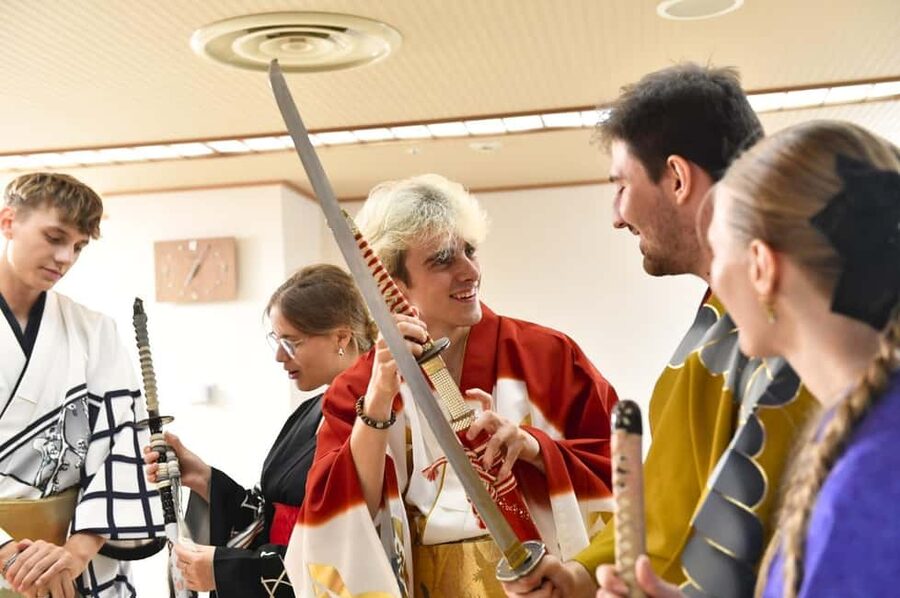
At $12 per person, this is one of the strongest value propositions in the Asakusa cultural-experience category. The price covers roughly three hours, a professional theater performance, a program leader, a kimono workshop, fan dance, swordplay, and commemorative photos.
You should keep the low price in perspective. This is an introduction to several traditions, not a full evening of theater followed by a long private lesson. The show schedule may change, the workshop is short enough to fit into a combined program, and the kimono experience is designed for participation rather than expert instruction.
Even with those limits, the package gives you variety. You see a live art form, learn a few movements, dress in traditional clothing, and receive guidance in English or German. For a first look at Japanese performance culture, that is a lot of activity for the cost.
The experience is also small rather than mass-market. A maximum of six participants can make the instruction more personal and reduce the awkwardness that sometimes comes with cultural workshops. If you want a large-scale spectacle, this is not the right format. If you want a compact, active introduction, the value is clear.
Who should book this experience?
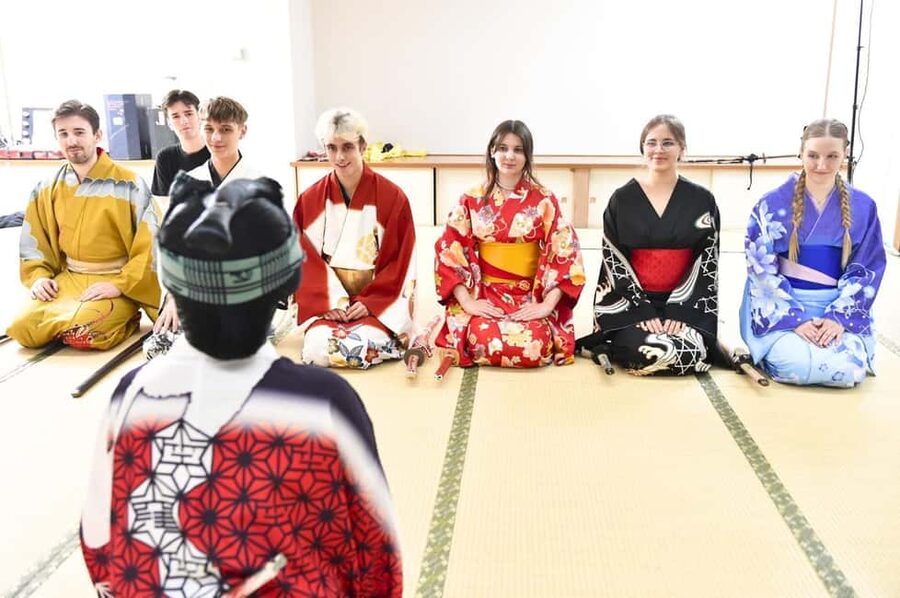
I would recommend it to first-time visitors who want a traditional Japanese activity with more energy than a museum visit. It also suits people who enjoy dance, theater, costume, photography, or hands-on workshops.
Families should consider the physical activity and the use of loud sounds and flashing lights during the show. The available information does not give a child age minimum, so ask the provider if you are booking for children.
Solo visitors can book, since the group is limited to six and the instructor leads the activities. Couples and friends may especially enjoy the photo session and the playful shift from watching a performance to appearing in one.
This is less suitable for anyone seeking a quiet, strictly formal theater evening. The program is active and social, and the performance may include sensory effects. It is also specifically listed as unsuitable for pregnant women.
Timing, cancellation, and practical cautions
The full program lasts three hours. Afternoon participants meet at 2:20 p.m. for the theater first. Evening participants meet at 5:40 p.m. and begin with the cultural workshop.
The evening meeting point is different from the standard theater meeting point, so confirm the address on your booking. Your leader meets you outside the Asakusa Mokubakan Theater with a Meeting Point sign.
The activity is offered in English and German. Alcohol and drugs are not allowed. Harassment, offensive conduct, behavior that makes others uncomfortable, or intentional property damage can end your participation immediately.
You can cancel up to 24 hours in advance for a full refund, and the reserve-now, pay-later option lets you hold a place without paying at once. Availability and starting times should still be checked for your chosen date.
My verdict: book it for active cultural context
Book this Taishu Engeki experience if you want more than a quick glimpse of traditional Japan. The theater is the anchor, but the kimono, fan, sword, and photos help you understand the performance from the inside.
I especially like the balance between watching professionals and trying a simplified version yourself. The small group, friendly instruction, and low price make the activity easy to recommend, provided you are comfortable with loud sounds, flashing lights, and movement.
Skip it if you want a long, formal theater production with no participation. For everyone else, this is a smart Asakusa choice: compact, affordable, visually memorable, and genuinely connected to a Japanese stage tradition.
FAQ
Where does the Taishu Engeki experience take place?
The theater portion takes place at Mokubakan Theater in Asakusa, Tokyo. The theater has been dedicated to Taishu Engeki since 1977, and the workshop takes place at a separate cultural venue a five to seven minute walk away.
How long does the experience last?
The program lasts three hours.
What time does the afternoon program meet?
The afternoon program has a meeting time of 2:20 p.m.
What time does the evening program meet?
The evening program has a meeting time of 5:40 p.m. The evening meeting point is listed at 1 Chome-38-6 Asakusa, Taito City, Tokyo 111-0032.
Does the order change between afternoon and evening?
Yes. The afternoon program watches the theater performance first and then goes to the workshop. The evening program does the workshop first and attends the performance afterward.
What languages are available?
The program is offered in English and German.
How large is the group?
The experience is limited to six participants.
Do I get to wear a kimono?
Yes. The workshop includes kimono dressing, followed by fan dance and choreographed samurai swordplay in a traditional tatami room.
Is the sword lesson suitable for beginners?
Yes. The lesson is designed as an easy introduction to choreographed combat dance, with the focus on enjoyment rather than difficult choreography.
Are there any health or sensory concerns?
The theater performance uses flashing or strobe lights and loud sounds. The workshop is physically active, and you should notify staff if you feel dizzy, sick, or unwell. The activity is not suitable for pregnant women.
More Show in Tokyo
- Mt Fuji & Hakone Cruise, Drum Show Bullet Train 1 Day from Tokyo
★ 4.0 · 7,413 reviews - Tokyo: Sumo Show Experience with Chicken Hot Pot and a Photo
★ 4.8 · 6,678 reviews - Tokyo: Sumo Show and Dining Experience
★ 4.8 · 2,742 reviews - the SUMO show
★ 5.0 · 1,960 reviews
New on our Tokyo list
- Sumi-e Experience in a relaxing green tea shop in Tokyo★ 5.0 · 3 reviews
- Tokyo : Kamikaze Street Drift Ride★ 5.0 · 3 reviews
- Private Zen Meditation in English in Shinjuku, Tokyo★ 5.0 · 3 reviews
- Onsen Spa in Tokyo and Asakusa Bar Hopping with Local Guide★ 5.0 · 3 reviews
- Easy for everyone! Now you can play handmade mini shamisen and show off to everyone! Musical instruments, sweets and live music★ 5.0 · 3 reviews
- Tokyo: Private Tsukiji Street Food & Sake with Local Guide★ 5.0 · 3 reviews
- Mt Fuji Exploration Tour with Free Japanese Kusa Mochi from Tokyo★ 4.5 · 3 reviews
- Tokyo Tsukiji Fish Market Walking and Exploring Hidden Gems Tour★ 5.0 · 3 reviews
Kimono Experiences, compared.

Tokyo Asakusa: Traditional Kimono Rental Experience at Wargo
Read our review →
Tokyo Asakusa: Miu Kimono Rental and Optional Photoshoot
Read our review →
Tokyo Authentic Kimono Rental in Asakusa with Photography Option
Read our review →Browse the lists this tour appears in