
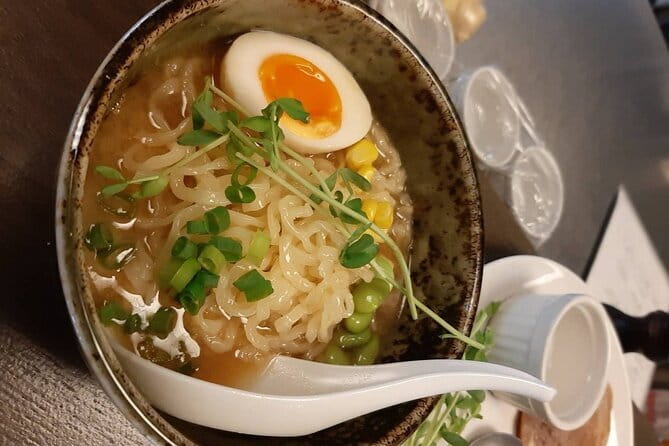
Reviewed · JAPANESE COOKING CLASSES
Ramen and Gyoza Cooking Class in Tokyo
Ramen and gyoza are not simply dishes to eat in Tokyo. They are foods with regional styles, changing ingredients, and a distinctly Japanese way of turning everyday cooking into a careful craft. This 90-minute class in Yanaka gives you a useful food lesson as well as a hands-on meal.
I like two things right away: you make three types of gyoza, including cheese and kimchi, and the ramen lesson helps you understand how noodles and broth vary around Japan. The class also works well for vegans, with kelp and vegetable broth available. The main consideration is timing: this is a short, focused class, not a leisurely half-day cooking school.
In This Review
- Key points to know before booking
- Why ramen and gyoza make a smart first food class
- Meeting Shoji in Yanaka at 11:00 am
- The opening food lesson: regional ramen, Japanese-style gyoza
- Making three kinds of gyoza by hand
- Building miso ramen with kelp-based broth
- What makes the private format worthwhile
- Price, value, and the 90-minute schedule
- Who should book this Yanaka cooking class
- Booking details and cancellation
- Should you book it?
- FAQ
- Where does the ramen and gyoza class take place?
- What time does the experience start?
- How long does the cooking class last?
- What foods will I make?
- Is a vegan version available?
- What broth is used for the standard ramen?
- Is this a private activity?
- How far in advance can I cancel for a full refund?
Key points to know before booking
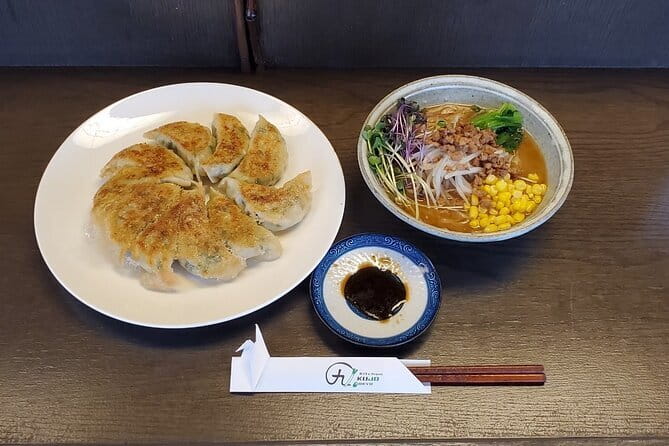
- Three gyoza fillings and one bowl of ramen: Make regular fried dumplings, cheese gyoza, kimchi gyoza, and miso ramen with toppings.
- A practical ramen guide for Japan: Learn how noodles, soup bases, and regional habits differ across the country.
- Vegan cooking is available: Vegan participants receive miso ramen made with kelp and vegetable broth.
- A private class in a Japanese-style home: Only your group takes part, making this a good choice for families and adult groups.
- Easy Yanaka location: Meet at Yanaka Space in Taito City, close to Ueno Station and Nippori.
- Host support for English-speaking visitors: Shoji leads the experience, with a translator helping communication when needed.
Why ramen and gyoza make a smart first food class
This class begins with a short talk about how ramen and gyoza became part of Japanese food culture. That context matters. Both foods came to Japan from elsewhere, then changed over time into dishes with local styles and strong Japanese identities.
You will learn that ramen is not one fixed recipe. Broth, noodles, and toppings vary from place to place. Miso ramen is the focus here, but the lesson gives you a way to notice differences when you eat ramen elsewhere in Japan. A bowl in Tokyo may feel quite different from one in Hokkaido, Kyushu, or another region.
Gyoza offers the same lesson on a smaller scale. The class shows how one basic dumpling can change with its filling and cooking style. You make a regular fried version, then add cheese and kimchi for two more playful variations.
I like this balance. You are not only copying a recipe. You are learning why these foods matter and how to think about them when you order them later. The teaching also seems aimed at beginners, so you do not need serious kitchen experience to take part.
More ramen stops:
- Eat and Drink Like a Local: Tokyo Ueno Food Tour-Taverns&Ramen
★ 5.0 · 957 reviews - Ramen & Gyoza Cooking Class in Tokyo with Local Supermarket Visit
★ 5.0 · 823 reviews - Tokyo: Ramen Tasting Tour with 6 Mini Bowls of Ramen
★ 4.9 · 432 reviews
Meeting Shoji in Yanaka at 11:00 am
The class starts at 11:00 am at Yanaka Space, 1-chome 2-10 Yanaka, Taito City, Tokyo 110-0001. Yanaka is near both Ueno Station and Nippori, and the meeting point is close to public transportation.
That location makes the class easy to pair with a morning in the Ueno or Yanaka area. You could schedule it early in your Tokyo stay, then use what you learn as you eat your way around Japan. Starting at 11:00 am also puts the cooking close to lunchtime, which makes practical sense for a food activity.
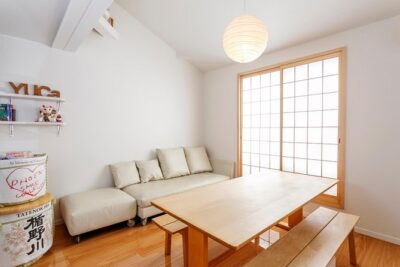
The setting is a Japanese-style home rather than a large commercial cooking studio. You can expect a more personal format, with only your own group participating. That private setup is especially useful if you are traveling with children, relatives, or friends who cook at different speeds.
Shoji leads the session, and a translator can assist with communication. One useful point for English-speaking visitors is that the class is built around active instruction, not just a demonstration. You can ask questions as you work and follow the recipe with help.
The experience requires at least two participants. It is not designed as a solo drop-in class, so check your booking carefully if you are traveling alone.
The opening food lesson: regional ramen, Japanese-style gyoza
Before cooking, you receive a short history lesson on ramen and gyoza in Japan. It is not meant to be an academic lecture. Instead, it gives you a quick framework for understanding two foods you are likely to encounter often.
For ramen, pay attention to the three parts that shape a bowl:
- The noodles, which can vary in thickness and texture
- The broth, which may rely on ingredients such as kelp, chicken, seafood, vegetables, or other bases
- The toppings, which change the character of the finished bowl
The class uses miso ramen, giving you a hearty and familiar Japanese style to work with. The broth is made from kelp and chicken or scallops, depending on the preparation. Vegan participants receive kelp and vegetable broth instead.
That ingredient choice is helpful because it shows how Japanese soup often builds flavor from a few basic elements. Kelp provides a savory foundation, while chicken, scallops, or vegetables create a different finish. You will not leave with a full survey of every ramen style in Japan, but you will have a better idea of what to notice when you visit ramen shops.
The gyoza discussion adds another useful comparison. Gyoza may look simple, but the filling and cooking method affect the result. The class uses fried dumplings, then lets you compare the classic version with cheese and kimchi. The contrast should make the lesson easy to remember.
Making three kinds of gyoza by hand

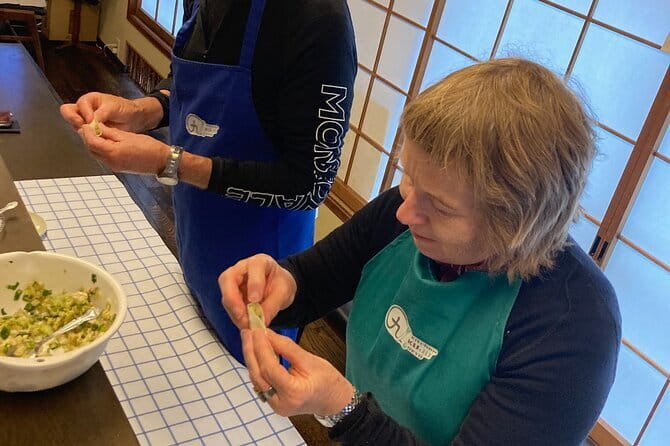
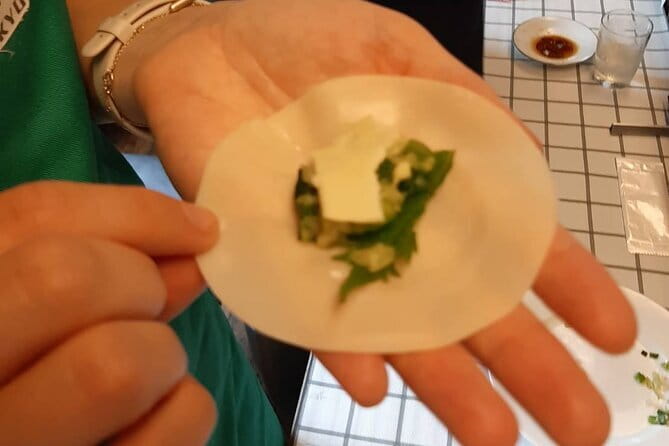
The gyoza portion is likely the most playful part of the class. You make three styles: regular fried gyoza, cheese gyoza, and kimchi gyoza.
The regular dumpling gives you the basic reference point. It is the version to focus on if you want to recreate the dish at home. Once you understand that preparation, the cheese and kimchi fillings show how easily you can change the recipe.
This is also where a private class has real value. Dumpling folding can feel awkward the first time, and you may need a correction or two before the shape looks right. With Shoji and the translator nearby, you can get direct help instead of trying to keep up with a large room.
Do not expect a professional culinary qualification from 90 minutes of instruction. You will get an introduction to the process, not a long course in dough making, filling ratios, or advanced frying techniques. Still, the class seems designed to leave you with recipes you can actually repeat at home.
That practical quality comes through in the way the class is taught. Participants have found the recipes simple enough to try after returning home, and the host encourages you to make your own versions. If you enjoy bringing food skills home from a trip, this is more useful than a cooking demonstration where you only watch.
More cooking classes in Tokyo:
- Tokyo: Easy Ramen Cooking Experience in Kabukicho, Shinjuku
★ 4.6 · 321 reviews - Ramen and Sushi Cooking Class with Sake Pairing Set in Tokyo
★ 5.0 · 291 reviews - Tokyo: Wagyu and 7 Japanese Dishes Cooking Class
★ 4.9 · 273 reviews - Tokyo Washoku 4-hour Cooking Class: From Market to Table
★ 5.0 · 253 reviews
Building miso ramen with kelp-based broth

After the gyoza work, you make miso ramen using the class’s original soup. The broth may use kelp with chicken or scallops, while the vegan version uses kelp and vegetables. You then finish the bowl with toppings.
The appeal here is not just eating a warm bowl at the end. You can see how the soup comes together and learn how a broth base affects the final taste. Miso brings a strong, salty, savory flavor, so understanding the supporting ingredients helps you make sense of the dish.
The class also gives you a useful vocabulary for later meals. When you visit a ramen shop in another city, you can pay closer attention to the broth and noodle style instead of treating every bowl as the same. That is a small lesson, but it can improve a food-focused trip around Japan.
The vegan provision deserves special attention. The class does not simply remove meat from the standard recipe. It uses kelp and vegetables to create a separate broth. That makes the experience a stronger option for mixed groups, especially when some people eat vegan food and others do not.
You should still communicate your dietary needs during booking or before the class. The experience specifically offers a vegan version, but the information does not list every possible allergy or dietary adjustment.
What makes the private format worthwhile
Only your group participates, which changes the mood and pace. You can cook with family or friends without sharing the lesson with a large class of strangers. For children, that relaxed setting may make it easier to take part in folding gyoza and assembling ramen.
The home setting also connects the food to ordinary Japanese life. You are not only eating ramen in a shop. You are learning how these familiar dishes can be prepared in a domestic setting and adapted to different tastes.
I would choose this format for a group that wants conversation and direct help. It is less suited to someone searching for a formal chef-led course with restaurant-level technique. The class is friendly and accessible rather than technical and intensive.
The host’s personality seems to be part of the experience. Shoji is described as patient, welcoming, and happy to see participants continue cooking at home. A translator supports communication, which reduces the worry that language differences will make the instructions hard to follow.
Price, value, and the 90-minute schedule

At $91.76 per person, this is not the cheapest way to eat ramen in Tokyo. You could buy a bowl and gyoza at a restaurant for far less. The value comes from the private instruction, the meal you prepare, the cultural explanation, and the recipes you can use again.
The short duration keeps the experience easy to fit into a busy Tokyo plan. You start at 11:00 am and finish after about an hour and a half, so you still have most of the day for sightseeing. The tradeoff is that the class cannot cover every detail of ramen and gyoza preparation.
I see the price making the most sense for three kinds of people:
- You want a hands-on food activity, not just a restaurant meal.
- You are curious about regional ramen and want guidance for eating elsewhere in Japan.
- You want a class that includes vegan participants without splitting up the group.
It is also good value if you plan to cook at home afterward. A simple recipe that you repeat several times can be more useful than a one-time tasting. The class is built around that idea, giving you techniques and combinations you can adjust in your own kitchen.
Because the activity is often booked about 37 days ahead, you should reserve early if your Tokyo dates are fixed. Confirmation arrives within 48 hours, subject to availability. That wait is worth noting when you are arranging a tight itinerary.
Who should book this Yanaka cooking class
I would recommend it to first-time visitors who want an easy introduction to Japanese food culture. The short history lesson gives you context, while the cooking keeps the experience active. You learn something, eat something, and finish with recipes rather than souvenirs.
Families should also consider it. The private setting allows a group to work together, and the class welcomes groups ranging from adults to families with children. The information does not specify a minimum age, so ask before booking if you are traveling with very young children.
Vegetarians and vegans have a clear reason to consider this class. Vegan miso ramen uses kelp and vegetable broth, and the host has experience accommodating vegan participants. You should state your needs clearly in advance, especially if you have allergies.
Food-focused visitors will get the most from the ramen lesson. The class does not merely teach one bowl. It gives you a way to compare ramen around Japan by looking at the soup, noodles, and toppings.
I would be less likely to choose it if you have already taken several Japanese cooking classes or want advanced knife skills and restaurant techniques. The format is compact and beginner-friendly. Its strength is approachability, not culinary depth.
Booking details and cancellation
The experience includes a mobile ticket, and you meet at Yanaka Space in Taito City. It ends back at the meeting point, so there is no separate return transfer to arrange.
Free cancellation is available if you cancel at least 24 hours before the 11:00 am start time. A cancellation made less than 24 hours ahead is not refundable, and late changes are not accepted. The activity also needs a minimum number of participants. If that minimum is not met and the class is canceled, you are offered another date or experience, or a full refund.
Should you book it?
Book this class if you want to understand Japanese ramen and gyoza while making a meal yourself. The best parts are the private home setting, three gyoza styles, the regional ramen lesson, and the thoughtful vegan broth option.
Skip it if you only want a cheap lunch or a long, technical cooking course. At $91.76, the class costs more than eating the finished dishes at a restaurant, but it gives you a skill you can take home and a better guide for ordering ramen across Japan.
For most food-curious visitors, I would schedule it early in the trip. You can use the lesson right away, comparing ramen shops and noticing how each bowl handles broth, noodles, and toppings.
FAQ
Where does the ramen and gyoza class take place?
The class takes place at Yanaka Space, 1-chome 2-10 Yanaka, Taito City, Tokyo 110-0001. It is near public transportation and close to Ueno Station or Nippori.
What time does the experience start?
The class starts at 11:00 am.
How long does the cooking class last?
The experience lasts approximately 1 hour and 30 minutes.
What foods will I make?
You will make miso ramen and three types of fried gyoza: regular gyoza, cheese gyoza, and kimchi gyoza.
Is a vegan version available?
Yes. Vegan participants can make miso ramen with broth made from kelp and vegetables.
What broth is used for the standard ramen?
The standard miso ramen uses broth made from kelp and chicken or scallops.
Is this a private activity?
Yes. Only your group participates in the activity.
How far in advance can I cancel for a full refund?
You can cancel for a full refund up to 24 hours before the experience start time. Cancellations made less than 24 hours before the start are not refunded.
More Workshops in Tokyo
- Sushi Making Tokyo Roll and Authentic Japanese Sushi Class
★ 5.0 · 3,971 reviews - Tokyo: Roll and Authentic Sushi Making Class in Asakusa
★ 4.9 · 1,957 reviews - Tokyo Shinjuku Chopsticks Making Class
★ 5.0 · 1,763 reviews - Tokyo: Sushi Making Class in a Happi Coat near a Famous Spot
★ 4.9 · 1,377 reviews
New on our Tokyo list
- Sumi-e Experience in a relaxing green tea shop in Tokyo★ 5.0 · 3 reviews
- Tokyo : Kamikaze Street Drift Ride★ 5.0 · 3 reviews
- Private Zen Meditation in English in Shinjuku, Tokyo★ 5.0 · 3 reviews
- Onsen Spa in Tokyo and Asakusa Bar Hopping with Local Guide★ 5.0 · 3 reviews
- Easy for everyone! Now you can play handmade mini shamisen and show off to everyone! Musical instruments, sweets and live music★ 5.0 · 3 reviews
- Tokyo: Private Tsukiji Street Food & Sake with Local Guide★ 5.0 · 3 reviews
- Mt Fuji Exploration Tour with Free Japanese Kusa Mochi from Tokyo★ 4.5 · 3 reviews
- Tokyo Tsukiji Fish Market Walking and Exploring Hidden Gems Tour★ 5.0 · 3 reviews
Japanese Cooking Classes, compared.
Ramen & Gyoza Cooking Class in Tokyo with Local Supermarket Visit
Read our review →
Easy Ramen Cooking Experience in Kabukicho, Shinjuku
Read our review →
Ramen and Sushi Cooking Class with Sake Pairing Set in Tokyo
Read our review →
Tokyo Washoku 4-hour Cooking Class: From Market to Table
Read our review →
TokyoSumoShow, ChickenHotPot, and Mochi-Pounding by Pro Wrestlers
Read our review →
Professional Ramen & Gyoza with Ramen Chef in a restaurant!
Read our review →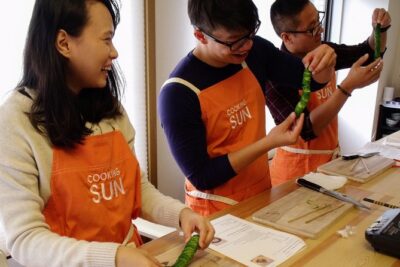
Small-Group Wagyu Beef and 7 Japanese Dishes Tokyo Cooking Class
Read our review →Browse the lists this tour appears in