
Reviewed · JAPANESE COOKING CLASSES
Ramen Making from Scratch – Tokyo Ultimate Cooking Class
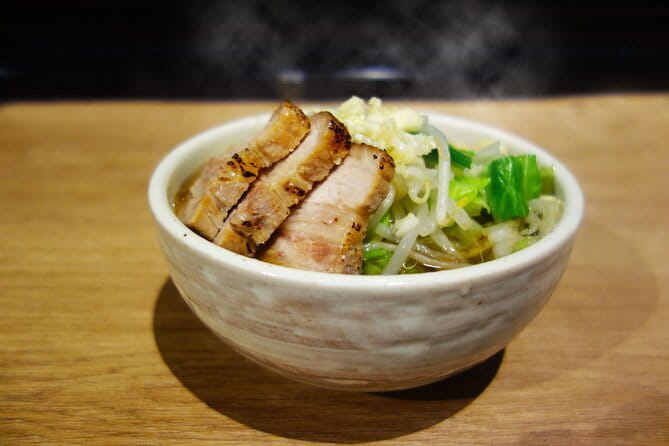
Jiro-style ramen is all about thick noodles, garlic-heavy soup, generous pork, and vegetables piled high. In this Tokyo class, you make the dish from flour and basic ingredients, then sit down to eat the bowl you built yourself.
I like two things right away: you learn the whole process rather than just adding toppings to prepared noodles, and you receive a recipe so the meal can return to your own kitchen. The family-friendly format also gets warm marks for flexible staff and a delicious lunch.
The main drawback is the short cooking window. The class lasts about two hours, and the hands-on cooking runs for only about an hour before tasting begins. Vegetarian and vegan diners cannot be accommodated, and the minimum booking is two people.
In This Review
- Key points at a glance
- Making Jiro-style ramen from the ground up
- What happens between 12:20 and lunchtime
- Turning flour into thick ramen noodles
- Building garlic soup, chashu, and toppings
- The final bowl is your lunch
- Photos and the recipe add value after Tokyo
- The $91.45 price and the group size
- Who should book this ramen class
- Practical details before you reserve
- Should you book Ramen Making from Scratch?
- FAQ
- How long does the ramen-making experience last?
- What type of ramen will I make?
- Are the noodles made from scratch?
- Is lunch included?
- Are photographs included?
- Can the pork be changed to chicken?
- Does the class include an Akihabara walking tour?
- Can I cancel for a full refund?
Key points at a glance
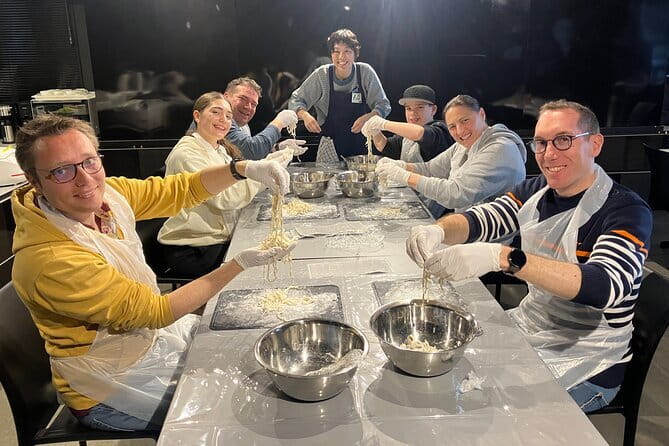
- Fresh noodles from flour: You make the thick noodles that define Jiro-style ramen rather than using a ready-made packet.
- Garlic-infused soup and chashu: The class covers the main elements of the bowl, including broth, pork, vegetables, and toppings.
- Your own finished lunch: The final tasting is not a demonstration from the sidelines. You assemble and eat the ramen you prepared.
- A recipe to use at home: The cooking lesson has practical value after Tokyo, since the recipe can help you repeat the dish.
- Small maximum group: The class accepts no more than 12 participants, though the exact class size may vary.
- Short midday schedule: Meet at 12:20, cook from 12:30 to 13:30, and eat from 13:30 onward.
Making Jiro-style ramen from the ground up
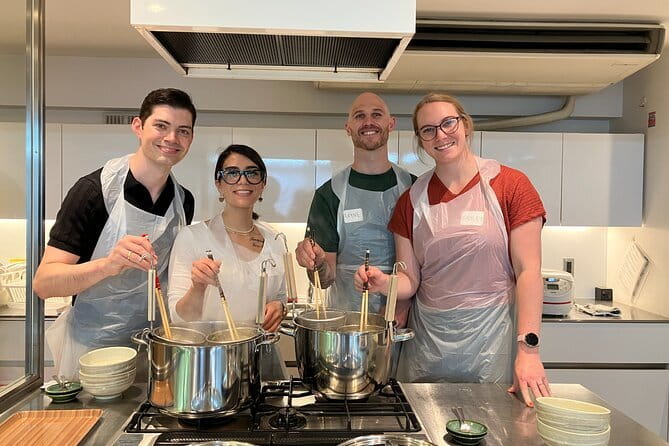
This is not a quick lesson in dropping noodles into boiling water. The appeal is learning the structure of a famous ramen style from the start: thick noodles, a strong garlic presence, a full soup, sliced chashu pork, and a large serving of vegetables.
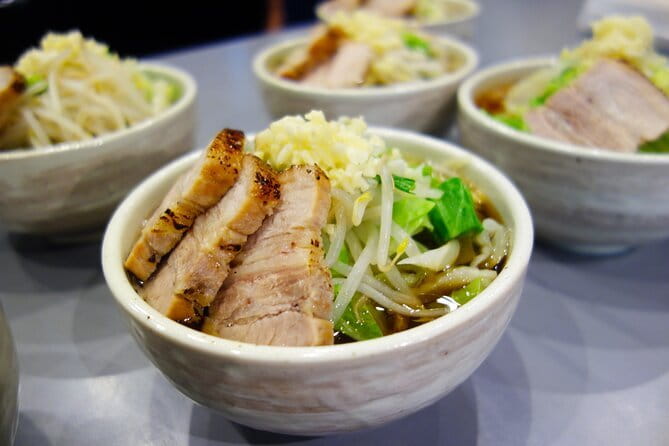
Jiro-style ramen is known for its substantial proportions. It is not delicate noodle soup. The noodles have weight, the broth has a strong garlic flavor, and the toppings make the finished bowl feel like a full meal. That makes this class a good choice if you want to understand what gives the dish its identity.
The cooking experience covers three important parts: preparing the noodles from flour, making the garlic-infused soup, and cooking the chashu pork. You also prepare the toppings and bring everything together at the end.
I like this complete approach because it gives you more than a pleasant lunch. You learn the parts that are hardest to understand from a restaurant meal alone. The recipe adds another layer of value, especially if you enjoy cooking after returning home.
The supplied details do not name individual instructors, so you should not book this expecting a class led by a particular celebrity chef. The focus is the food and the practical process.
More ramen stops:
- Eat and Drink Like a Local: Tokyo Ueno Food Tour-Taverns&Ramen
★ 5.0 · 957 reviews - Ramen & Gyoza Cooking Class in Tokyo with Local Supermarket Visit
★ 5.0 · 823 reviews - Tokyo: Ramen Tasting Tour with 6 Mini Bowls of Ramen
★ 4.9 · 432 reviews
What happens between 12:20 and lunchtime
The schedule is tight and easy to follow. You meet in Tokyo at 12:20, with the cooking session beginning at 12:30. The class itself runs until about 13:30, followed by tasting time.
That timing works well with a sightseeing day. You can use the morning for another Tokyo activity, then make this your midday meal. Since the experience ends back at the meeting point, you also avoid the need to arrange a separate restaurant afterward.
The one-hour cooking segment means the instructor needs to keep the group moving. You should expect a focused lesson rather than a slow, highly customized workshop. Ingredients and tasks need to be organized in advance so the noodles, soup, pork, and toppings are ready for the final bowl.
The format suits you if you want a clear introduction without giving up half a day. It may feel brief if you hoped to spend several hours studying broth technique or experimenting with several ramen styles.
Turning flour into thick ramen noodles
Fresh noodles are the most distinctive hands-on part of the class. You begin with flour and work toward the thick noodles associated with Jiro-style ramen.
The value here is simple: texture matters. A bowl can have a fine soup and good toppings, but the noodles define how the meal eats. Thick noodles give the broth something substantial to cling to, and they help create the hearty character this style is known for.
You should pay close attention to the method, since this is the part you are most likely to want to repeat at home. The experience promises that you can recreate the full dish later, but the exact tools and ingredient measurements are not provided in the tour details. The take-home recipe should help, though you may need to adapt it to your own kitchen.
Making noodles from scratch also gives the lesson a clear sense of progress. You start with a basic ingredient and finish with a bowl that feels personal. That is more satisfying than simply watching an instructor prepare everything.
Building garlic soup, chashu, and toppings
The broth is prepared with a strong garlic flavor, one of the key traits of Jiro-style ramen. If you prefer mild, subtle soups, this may not be your ideal ramen lesson. If you enjoy bold flavor, the garlic is part of the point.
The class also includes chashu pork, prepared and cooked as part of the meal. Generous slices of pork help turn the ramen into a filling lunch rather than a small tasting portion. Vegetables are included as well, adding volume and completing the familiar Jiro-style presentation.
I appreciate that the class does not treat toppings as decoration. Pork, vegetables, soup, and noodles all play a role in the finished dish. You learn how the bowl is assembled, not only how one ingredient is made.
A useful dietary note: the standard class is not vegetarian or vegan. If you do not eat pork but do eat chicken, you can request a chicken replacement if you contact the provider more than 48 hours in advance. Last-minute changes are not accepted within 48 hours, so this request needs planning.
More cooking classes in Tokyo:
- Tokyo: Easy Ramen Cooking Experience in Kabukicho, Shinjuku
★ 4.6 · 321 reviews - Ramen and Sushi Cooking Class with Sake Pairing Set in Tokyo
★ 5.0 · 291 reviews - Tokyo: Wagyu and 7 Japanese Dishes Cooking Class
★ 4.9 · 273 reviews - Tokyo Washoku 4-hour Cooking Class: From Market to Table
★ 5.0 · 253 reviews
The final bowl is your lunch
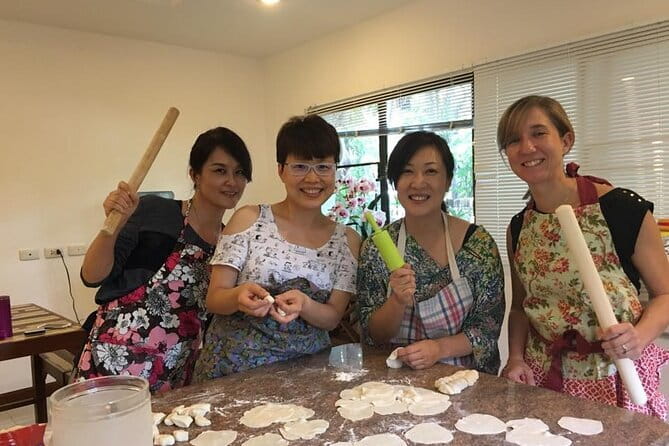
At about 13:30, the cooking gives way to tasting time. You prepare your own ramen and then eat it as lunch. This is the best part for many people because the work has a clear reward.
The experience includes lunch in the price, so you are not paying for a lesson and then needing to buy another meal. The dish is also substantial by design, with thick noodles, a strong soup, chashu, and vegetables.
I like the shared nature of this finish. The class works particularly well for families and couples who want an activity with a meal built in. One family-focused review praised the staff as flexible and pleasant, and specifically called out the delicious lunch. Another described the experience of making a bowl with bare hands as satisfying and good for the soul.
Those comments point to the real strength of the class: it is both a lesson and a social meal. You have something to do with your hands, something to talk about, and a finished dish to enjoy together.
Photos and the recipe add value after Tokyo
Downloadable photographs are included after the experience. That is a useful extra for a hands-on class, since you may not want to stop cooking to take pictures yourself.
The photos can help preserve the steps and the finished bowl, while the recipe gives the class value beyond the day itself. Many cooking activities are enjoyable in the moment but hard to repeat. Here, the stated aim is that you can make the entire dish at home.
I would still keep expectations practical. Recreating restaurant-style ramen requires ingredients, time, and kitchen equipment, and the tour details do not list the exact home setup required. The recipe is a helpful starting point, not a guarantee that your first home attempt will match the Tokyo bowl.
Still, the take-home material makes the $91.45 cost easier to assess. You are paying for lunch, instruction, ingredients, photos, and a recipe. For someone who wants only a bowl of ramen, that is expensive. For someone who wants a cooking activity and a usable skill, the price is more defensible.
The $91.45 price and the group size
At $91.45 per person, this is not a budget meal. The price makes the most sense when you value the activity itself, not just the food.
You receive a two-hour experience, a hands-on cooking lesson, lunch, downloadable photos, and a recipe. A maximum of 12 people keeps the class from becoming a huge production, though 12 is still large enough that you may not receive one-on-one attention throughout.
The minimum booking is two people. That is important if you are traveling alone, since a solo reservation may not be possible under the stated booking rule. The experience is also commonly reserved well ahead, about 46 days in advance on average, so I would not leave it until the last day of a Tokyo trip if the timing matters.
The 4.9 rating from 11 ratings and a 100 percent recommendation record are encouraging, especially alongside the specific praise for the food, staff, and family experience. The sample is small, though, so I would treat those numbers as a positive signal rather than a promise that every class will be identical.
Who should book this ramen class
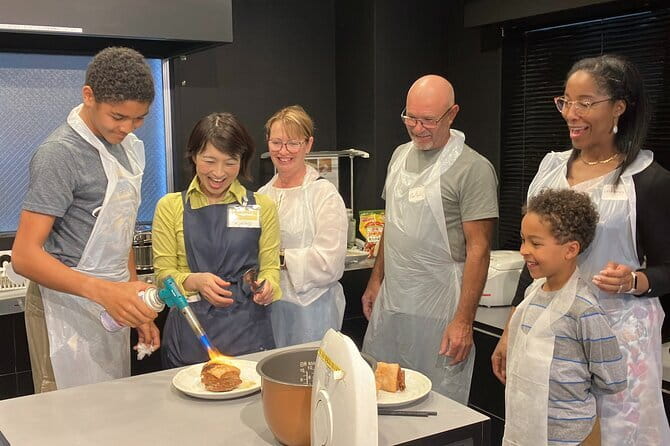
I would recommend it most strongly to:
- Families looking for a shared activity with lunch included
- Couples who enjoy cooking together
- Ramen fans who want to learn the dish rather than simply order it
- Visitors who want a two-hour midday activity
- Home cooks who will use the recipe after returning home
You should think twice if you are vegan or vegetarian, since those options are not available. You may also want a different experience if your main goal is an Akihabara walking tour. This class does not include that walk.
There is a separate experience called Ramen Making Experience: Entirely From Scratch! + Supermarket that combines ramen making with an Akihabara walking tour. You need to book that specific option if you want both activities.
Practical details before you reserve
The meeting point is in Tokyo, and the activity ends there. It is near public transportation, but the supplied information does not give a detailed street address or a named station, so check the confirmed booking information before setting out.
A mobile ticket is included, and confirmation is provided at booking. The scheduled meeting time is 12:20, even though the listed start time is 12:30. I would use the earlier time as your real arrival target. A cooking class has little room for late arrivals once the ingredients and steps are underway.
Hotel pickup and drop-off are not included. You need to make your own way to the meeting point and return from it afterward.
Free cancellation is available if you cancel at least 24 hours before the local start time. Changes or cancellations inside that window are not accepted for a refund. The experience can also be canceled if the minimum number of participants is not reached, or due to poor weather, in which case you are offered another date or a full refund.
The weather condition is unusual for an indoor cooking activity, so check any provider notice carefully if the forecast is poor.
Should you book Ramen Making from Scratch?
Book this class if you want a meal you helped create, not just a restaurant stop. The fresh noodles, garlic soup, chashu pork, vegetables, recipe, and lunch give the experience a clear purpose, and the two-hour length fits neatly into a busy Tokyo day.
I would skip it if you need vegetarian food, want a solo booking, or are mainly seeking an Akihabara walk. At $91.45, the value depends on your interest in cooking. For ramen fans, families, and hands-on food lovers, it offers a memorable way to understand one of Japan’s boldest noodle styles and try it again at home.
FAQ
How long does the ramen-making experience last?
The activity lasts about two hours. You meet at 12:20, cook from 12:30 to 13:30, and then have tasting time.
What type of ramen will I make?
You will make Jiro-style ramen, known for thick noodles, garlic-infused soup, chashu pork, and generous vegetables.
Are the noodles made from scratch?
Yes. The class begins with flour and includes making the fresh noodles used in the final bowl.
Is lunch included?
Yes. Lunch is included, and you eat the ramen you prepare during the tasting portion.
Are photographs included?
Yes. Photographs taken during the experience can be downloaded later.
Can the pork be changed to chicken?
Yes, but you must request the change more than 48 hours in advance. Vegetarian and vegan options are not available.
Does the class include an Akihabara walking tour?
No. This ramen experience does not include the Akihabara walking tour. A separate tour combines ramen making with a supermarket visit and Akihabara walking tour.
Can I cancel for a full refund?
Yes, if you cancel at least 24 hours before the experience start time. Cancellations or changes made less than 24 hours in advance are not accepted for a refund.
More Workshops in Tokyo
- Sushi Making Tokyo Roll and Authentic Japanese Sushi Class
★ 5.0 · 3,971 reviews - Tokyo: Roll and Authentic Sushi Making Class in Asakusa
★ 4.9 · 1,957 reviews - Tokyo Shinjuku Chopsticks Making Class
★ 5.0 · 1,763 reviews - Tokyo: Sushi Making Class in a Happi Coat near a Famous Spot
★ 4.9 · 1,377 reviews
New on our Tokyo list
- Sumi-e Experience in a relaxing green tea shop in Tokyo★ 5.0 · 3 reviews
- Tokyo : Kamikaze Street Drift Ride★ 5.0 · 3 reviews
- Private Zen Meditation in English in Shinjuku, Tokyo★ 5.0 · 3 reviews
- Onsen Spa in Tokyo and Asakusa Bar Hopping with Local Guide★ 5.0 · 3 reviews
- Easy for everyone! Now you can play handmade mini shamisen and show off to everyone! Musical instruments, sweets and live music★ 5.0 · 3 reviews
- Tokyo: Private Tsukiji Street Food & Sake with Local Guide★ 5.0 · 3 reviews
- Mt Fuji Exploration Tour with Free Japanese Kusa Mochi from Tokyo★ 4.5 · 3 reviews
- Tokyo Tsukiji Fish Market Walking and Exploring Hidden Gems Tour★ 5.0 · 3 reviews
Japanese Cooking Classes, compared.
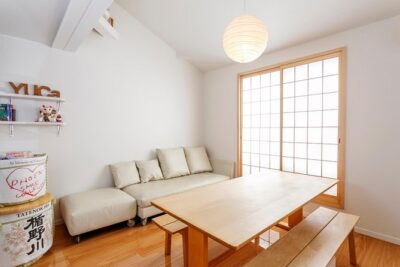
Ramen & Gyoza Cooking Class in Tokyo with Local Supermarket Visit
Read our review →
Easy Ramen Cooking Experience in Kabukicho, Shinjuku
Read our review →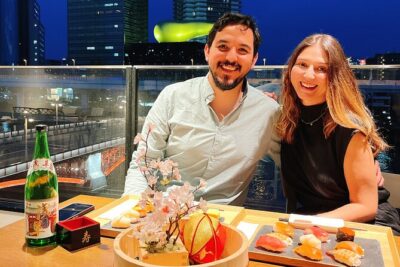
Ramen and Sushi Cooking Class with Sake Pairing Set in Tokyo
Read our review →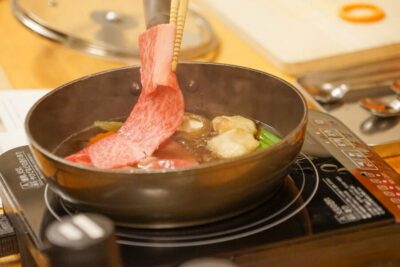
Tokyo Washoku 4-hour Cooking Class: From Market to Table
Read our review →
TokyoSumoShow, ChickenHotPot, and Mochi-Pounding by Pro Wrestlers
Read our review →
Professional Ramen & Gyoza with Ramen Chef in a restaurant!
Read our review →
Small-Group Wagyu Beef and 7 Japanese Dishes Tokyo Cooking Class
Read our review →Browse the lists this tour appears in