
Reviewed · TEMPLE & SHRINE TOURS
Tokyo Morning Tour : Meiji Shrine, Asakusa and Fish Market
Tokyo is at its best in the morning, before the city fully hits its stride. This four-hour tour gives you a smart first look: quiet shrine paths at Meiji Jingu, fresh food at Tsukiji, and the grand entrance to Senso-ji in Asakusa. The mix of culture and eating is the main appeal.
I like the small maximum of eight people, which should make it easier to hear your guide and ask questions. I also like the route’s variety: sushi, mochi, sweet potato, and savory cutlet give the morning a local flavor rather than turning it into a parade of landmarks.
The main drawback is the short running time. You get an introduction to three major areas, not a slow, detailed visit to each one. You will also pay your own public transport fare, about 550 yen, and the food you sample is not listed among the included costs.
In This Review
- Key points to know before booking
- Why this four-hour route works in Tokyo
- Meiji Jingu: a quiet start beneath the torii gates
- Tsukiji Jogai Market: Tokyo on a plate
- Small bites between the major stops
- Senso-ji: a grand finish in Asakusa
- What the guides add to the morning
- Timing, transport, and group size
- Who will get the most from this tour
- Booking, cancellation, and the final call
- FAQ
- How long does the Tokyo Morning Tour last?
- Where does the tour begin?
- Where does the tour end?
- Is public transportation included?
- What food will I try?
- How many people can join the tour?
Key points to know before booking
- A three-part Tokyo introduction: Meiji Shrine, Tsukiji Jogai Market, and Senso-ji cover religion, food, and old Tokyo in one morning.
- Maximum group of eight: The small group should help with questions, photos, and keeping the guide close in crowded areas.
- Food is part of the experience: Expect sushi or sashimi at Tsukiji, plus mochi, sweet potato, and a savory cutlet in Asakusa.
- Guides receive especially strong praise: Shoma Sato and Yosuke are named for clear explanations, patience, and flexible pacing, though a particular guide is not guaranteed.
- Ends at Asakusa Station: You finish in a useful part of town, with easy access to the rest of Asakusa after the formal tour ends.
- Budget beyond the tour price: The $72.67 fee covers the guide, photos, historical explanations, and listed admissions, but not about 550 yen in transport or your food purchases.
Why this four-hour route works in Tokyo
Tokyo can feel like several cities stitched together. One neighborhood has shrine gates and wooded paths, another has seafood counters, and another has an enormous Buddhist temple surrounded by souvenir shops. This tour puts those contrasts into a single morning.
The order makes sense. Meiji Jingu gives you a calm start. Tsukiji then supplies the food-focused middle section. Senso-ji closes the route with a memorable temple and a lively shopping street. You are not spending the entire morning inside one museum or on a bus. Instead, you move through three distinct parts of the city.
At $72.67 per person, this is not the cheapest way to walk around Tokyo. The value depends on how much help you want. You are paying for an English-speaking guide, explanations of local customs and history, photos taken during the tour, and a compact route that can save you from piecing together three separate visits.
I see the strongest value for a first-time visitor with limited time. If you have only a day or two in Tokyo, a guided morning can help you get your bearings fast. If you already know the city well, or prefer to set your own food budget and pace, you may find the price harder to justify.
More temples and shrines near Tokyo:
- Tokyo: Meiji Shrine, Asakusa, Skytree Bus Tour and Cruise
★ 4.7 · 1,986 reviews - Tokyo: Asakusa Walking Tour with Sensoji Temple Visit
★ 4.8 · 1,583 reviews - Nikko: Kegon Falls, Lake Chuzenji & Toshogu Temple
★ 4.6 · 1,577 reviews
Meiji Jingu: a quiet start beneath the torii gates
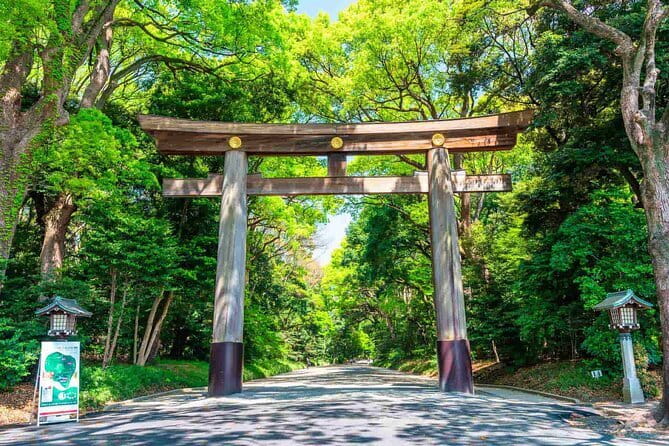
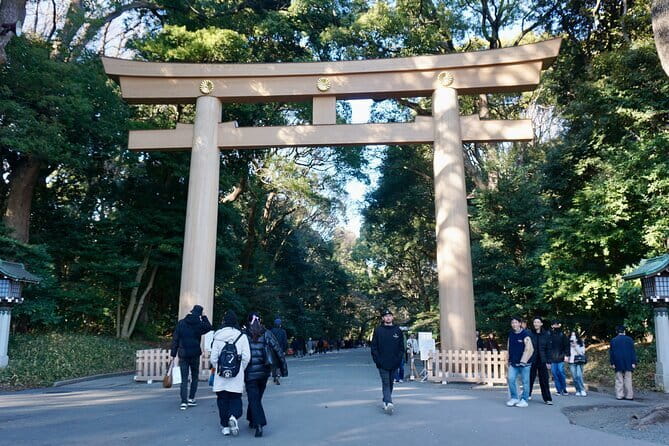
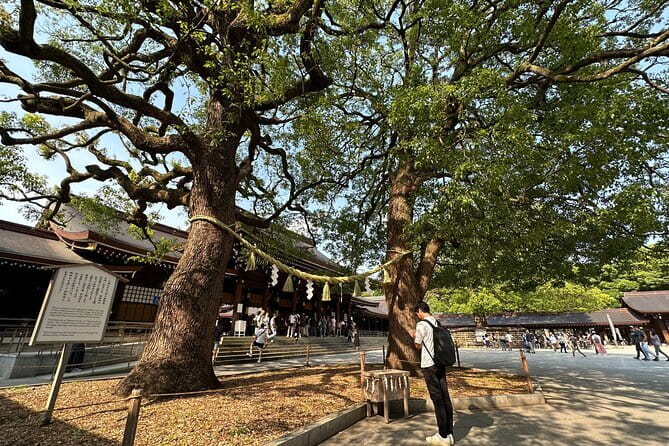
The morning begins at Meiji Jingu, Tokyo’s major Shinto shrine dedicated to Emperor Meiji and Empress Shoken. The approach leads through forested paths and beneath tall torii gates, creating a sharp change from the surrounding Harajuku area.
That contrast is what makes this first stop effective. You are near one of Tokyo’s busiest shopping districts, yet the shrine grounds offer a slower opening to the day. Your guide can explain the role of the shrine and the basic customs connected with a Shinto visit, giving the architecture and rituals a little more meaning than a quick photo stop.
The listed time here is about one hour. That should be enough for a guided introduction and a walk through the main areas, but not enough for every corner of the grounds. The shrine itself is free to enter, and admission is included in the tour details.
I would wear comfortable shoes and arrive ready to walk. The forest paths are part of the appeal, but this is not a sit-down sightseeing stop. The experience is about the approach, the gates, the quiet setting, and the cultural context your guide provides.
The meeting point is at IKEA Swedish Café Harajuku, at 1-14-29 Jingumae, Shibuya, Tokyo 150-0001. Check the exact location carefully before leaving your hotel, since a clear start sets the tone for a short tour. Confirmation is provided when you book.
Tsukiji Jogai Market: Tokyo on a plate
The second major stop is Tsukiji Jogai Market, the outer market area of the former Tsukiji wholesale fish market. The wholesale auction operation moved to Toyosu, but Tsukiji’s outer market remains a food destination with stalls and small businesses focused on seafood and Japanese cooking.
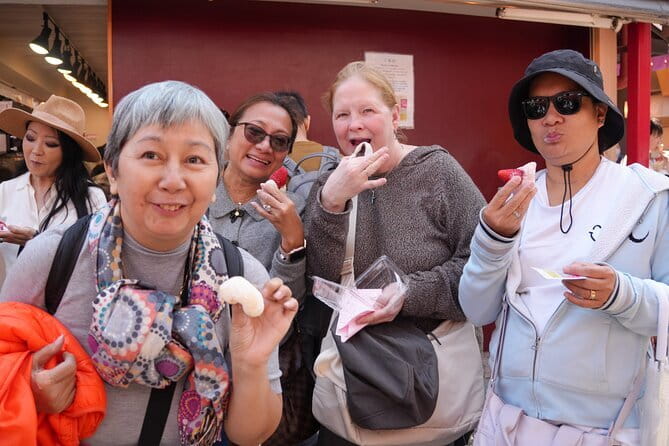
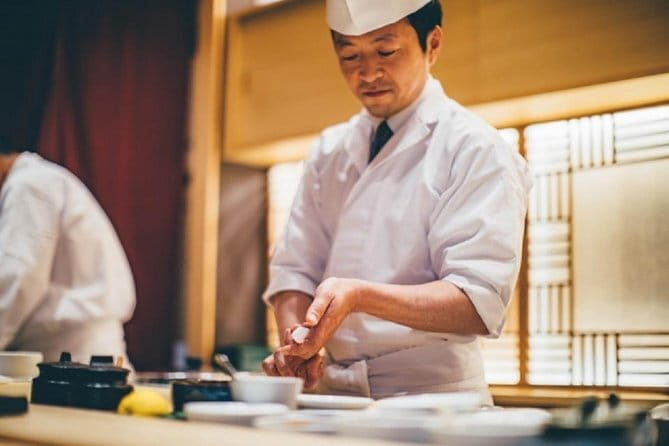
This is where the tour shifts from quiet observation to tasting. The experience calls for fresh sushi and sashimi from market stalls, followed by street foods such as sweet mochi, sweet potato, and a savory cutlet. These stops give you more than a landmark photograph. They let you compare textures and flavors while your guide explains what you are seeing.
You should treat the food as an additional expense. The tour price includes an English-speaking guide and listed admissions, but food purchases are not specified as included. Bring enough Japanese yen or a payment method accepted by the individual stalls, and keep your expectations flexible. Market selections and prices can vary.
The scheduled time at Tsukiji is about one hour. That is enough for a focused taste of the area, but you will not have unlimited time to browse every counter. If you are serious about seafood, you may want to return on your own after the tour. The guided visit gives you an introduction, not a full morning of independent market shopping.
There is also a practical point here: market streets can be tight and busy. A group of no more than eight is helpful, since it is easier to stay together without blocking walkways. Listen for instructions about where to meet after a purchase, especially if you stop to look at more than one stall.
Small bites between the major stops
The food portion is not limited to seafood. Sweet mochi, sweet potato, and a savory cutlet add a useful range to the morning. Mochi gives you a traditional sweet made from rice, while sweet potato offers a simple snack with a different texture. The cutlet brings a salty, crisp contrast.
I like this part of the plan because it avoids making Tokyo food seem like one single thing. Sushi is famous, but street snacks and sweets are just as useful when you are learning how people eat between meals. Your guide can also help connect the foods to the neighborhoods you are walking through.
Still, you should not book this as a full breakfast unless the operator clearly confirms the amount of food provided. The description says you will enjoy and try these foods, but the included section does not promise a set meal. If you need a substantial breakfast, eat something beforehand or plan to buy more at the market.
Food preferences and restrictions are another point to check directly before booking. The supplied tour information does not state how dietary needs are handled, so do not assume every stop will have a suitable alternative.
More Asakusa visits:
- Tokyo: Japanese Dance Cabaret Theater Asakusa-Kaguwa Ticket
★ 4.8 · 2,270 reviews - Tokyo: Roll and Authentic Sushi Making Class in Asakusa
★ 4.9 · 1,957 reviews - Tokyo Asakusa Rickshaw Tour
★ 5.0 · 1,375 reviews - Tokyo Panoramic 1 Day: Meiji Shrine, Asakusa, Odaiba and SKYTREE®
★ 4.5 · 1,222 reviews
Senso-ji: a grand finish in Asakusa
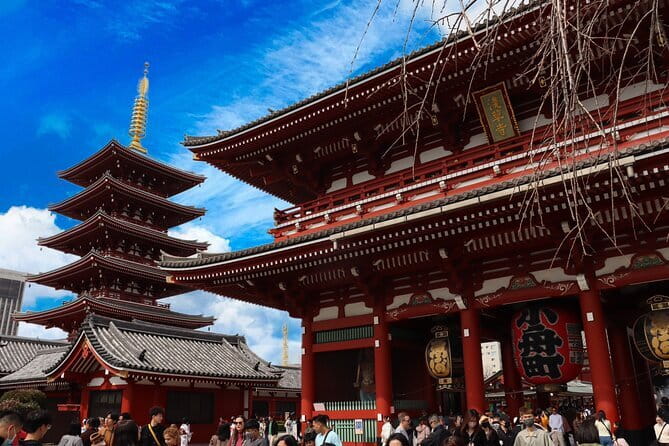
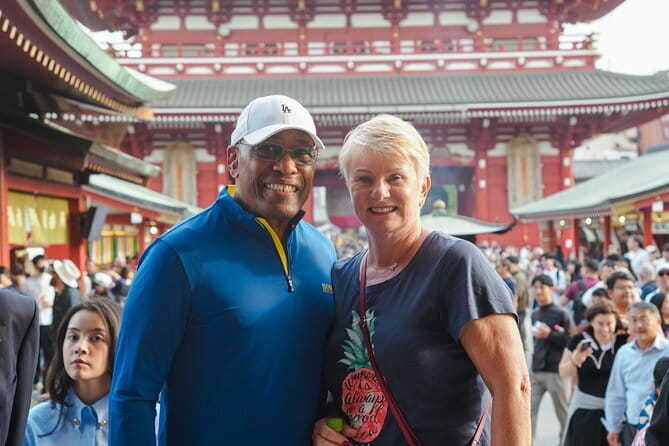
The tour finishes at Senso-ji, Tokyo’s oldest Buddhist temple, in Asakusa. You enter through Kaminarimon, the Thunder Gate, one of the city’s most recognizable gateways. From there, Nakamise-dori leads toward the temple, lined with shops selling souvenirs, sweets, and traditional goods.
After the forest calm of Meiji Jingu and the food stalls at Tsukiji, Asakusa feels like a fitting finale. The area is full of movement, color, and activity, but the temple gives the visit a clear focus. Your guide can explain the meaning of the gate, the temple grounds, and the customs you may see along the way.
The scheduled time at Senso-ji is about one hour. That should cover the main entrance, Nakamise-dori, and the central temple area. You may want to stay longer afterward, especially if you enjoy shopping or want more photographs. Since the formal tour ends at Asakusa Station, you can continue exploring without having to return to the starting point.
This ending is particularly useful for independent plans. You could have lunch in Asakusa, visit more of the district, or use the station to continue elsewhere in Tokyo. The tour does not end back in Harajuku, so make sure that one-way route fits your day.
What the guides add to the morning
A route like this depends heavily on the guide. Three famous places are easy to visit on your own, but the links between them are harder to understand without context. The included historical insights are therefore a key part of the price.
Shoma Sato is specifically praised for explaining what the group saw, showing patience, and making an effort to suit everyone on the tour. Yosuke is also described as a pleasant companion who added explanations of history, philosophy, and customs. Those details matter because they suggest the tour is not only about moving from one stop to the next.
You should not book on the assumption that you will receive one particular guide. Names such as Shoma Sato and Yosuke give you a sense of the guide style associated with the experience, but guide assignment can vary.
Photos taken during the tour are included. That is a small but useful touch if you are traveling with family or friends and want a record of the morning without asking strangers to take pictures. It also lets you pay more attention during explanations instead of constantly holding up your phone.
The overall rating is 5 out of 5 from 102 reviews, with 100 percent recommending the experience. That is unusually strong feedback, and the most repeated strengths are clear guiding, patience, good pacing, and the personal feel of a small group. I would still keep the time limit in mind. A highly praised four-hour tour remains a four-hour tour.
Timing, transport, and group size
The tour lasts approximately four hours. Public transport is not included, and the expected fare is around 550 yen. That cost is modest compared with the tour price, but it is still worth carrying separately in your day’s budget.
Because the itinerary crosses different parts of Tokyo, you should expect transport between stops. The exact train or subway arrangements are not provided in the tour details, so follow the meeting instructions from the operator and allow enough time to reach the Harajuku starting point.
The maximum group size is eight. That is one of the best practical features here. Large groups can become awkward around market stalls and temple entrances, while a small group can stop for explanations without taking over the walkway.
Most people can participate, and the tour is near public transportation. No special accessibility details are provided, so contact the provider if you have mobility concerns or need a specific arrangement.
Who will get the most from this tour
I would recommend this experience to:
- First-time visitors who want a guided orientation to Tokyo
- People with a short stay who want several major sights in one morning
- Solo visitors who prefer company and a guide for the first day
- Couples and families who enjoy food mixed with cultural sites
- Anyone who values explanations of customs, philosophy, and local history
- Visitors who want to finish in Asakusa and continue sightseeing independently
It may be less suitable if you want a long, unhurried visit at each location. Food-focused travelers who want to spend hours browsing Tsukiji may also prefer a separate market visit. And if you dislike fixed routes, the four-hour schedule may feel brisk.
The tour is conducted in English, and the guide takes photos during the outing. Those points make it useful for international visitors who want more than a self-guided checklist of famous places.
Booking, cancellation, and the final call
You can cancel for a full refund up to 24 hours before the local start time. Changes or cancellations inside that 24-hour window are not accepted for a refund. The experience also requires a minimum number of participants, so if the operator cancels for that reason, you will be offered another date or experience, or a full refund.
Should you book it? I would say yes if you have limited time and want a friendly, well-paced introduction to three very different Tokyo districts. The combination of Meiji Jingu, Tsukiji food, and Senso-ji is strong, and the small group makes the $72.67 price easier to defend.
Book it with two expectations: you will pay extra for transport and likely for food, and you will get a sampling of each area rather than a full exploration. For a first Tokyo morning, that is a fair trade. For a repeat visit, use the tour as a starting point, then return on your own to the place that catches your interest most.
FAQ
How long does the Tokyo Morning Tour last?
The tour lasts approximately four hours.
Where does the tour begin?
It begins at IKEA Swedish Café Harajuku, at 1-14-29 Jingumae, Shibuya, Tokyo 150-0001, Japan.
Where does the tour end?
The tour ends at Asakusa Station in Taito City, Tokyo.
Is public transportation included?
No. Public transportation is not included. The expected fare is around 550 yen.
What food will I try?
The food portion includes fresh sushi and sashimi from Tsukiji, along with street foods such as sweet mochi, sweet potato, and a savory cutlet. Food costs are not listed among the included tour features.
How many people can join the tour?
The maximum group size is eight travelers.
More Shopping Tours in Tokyo
- Tokyo: Tsukiji Fish Market Food and Culture Walking Tour
★ 4.7 · 757 reviews - Tsukiji Fish Market: Street Food & Culture Walking Tour
★ 5.0 · 669 reviews - Tsukiji Fish Market Small-Group Food Walking Tour
★ 5.0 · 621 reviews - Tokyo: Tsukiji Fish Market Sushi Making Class with Pro Chef
★ 4.9 · 506 reviews
More Markets in Tokyo
- Tokyo Tsukiji Fish Market Food and Culture Walking Tour
★ 5.0 · 3,184 reviews - Tokyo: Tsukiji Fish Market Food and Walking tour
★ 5.0 · 1,724 reviews - Tokyo: Tsukiji Fish Market Guided Walking Tour
★ 4.9 · 1,397 reviews - Tsukiji Fish Market Guided Tour and Sushi Making with Pro Chef
★ 5.0 · 775 reviews
New on our Tokyo list
- From Tokyo: Mount Fuji & Hakone Full Day Private Tour★ 4.9 · 25 reviews
- Tokyo Spectacular View Day-Cruise in 90 Minutes★ 5.0 · 25 reviews
- 2.5 Hour-Guided Cycle Tour in the Central Tokyo★ 5.0 · 25 reviews
- Real Tokyo Runner Club : Daikoku Car Meet Night Tour with JDM Car★ 5.0 · 25 reviews
- Ramen Making from Scratch +Akihabara Tour –Cooking Class★ 5.0 · 25 reviews
- [Self-Drive] Tokyo & Daikoku Custom Car Driving Tour★ 4.9 · 25 reviews
- Tokyo: 2-Hour Night Bike Tour of the City’s Hidden Gems★ 4.9 · 25 reviews
- Samurai themed Entertainment show in Shinjuku★ 4.5 · 25 reviews
Temple & Shrine Tours, compared.
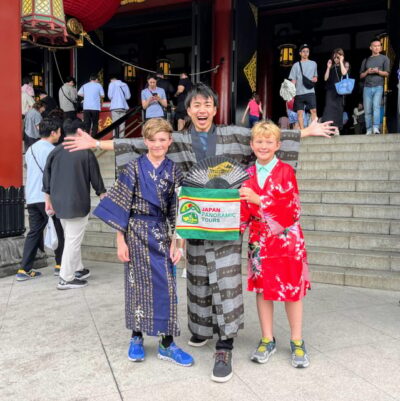
Meiji Shrine, Asakusa, Skytree Bus Tour and Cruise
Read our review →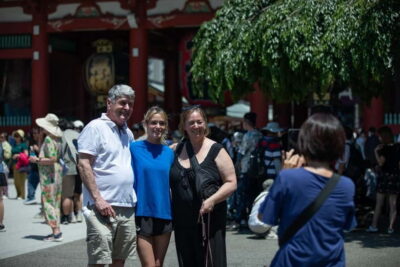
Asakusa Walking Tour with Sensoji Temple Visit
Read our review →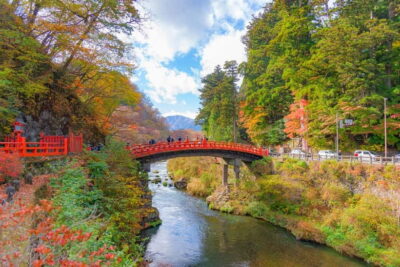
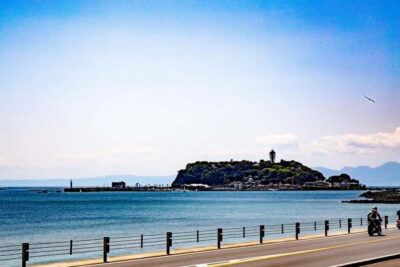
Kamakura & Enoshima Day Trip including Temple Tickets
Read our review →
Nikko Toshogu Shrine and Kegon Waterfall Tour
Read our review →
Tokyo Panoramic 1 Day: Meiji Shrine, Asakusa, Odaiba and SKYTREE®
Read our review →
Mt. Fuji Heritage Tour: Traditional Villages, Lakes & Shrine
Read our review →Browse the lists this tour appears in