
Reviewed · TEMPLE & SHRINE TOURS
Tokyo Morning Tour: Meiji Shrine, Asakusa & Fish Market
Tokyo makes a strong first impression before breakfast. This 270-minute morning tour moves from the quiet forest paths of Meiji Shrine to the seafood counters of Tsukiji, then finishes among the old temples and snack stalls of Asakusa. It is a smart way to see three very different sides of the city without spending your whole day on trains.
I like the mix of spiritual sights and everyday food, and I like having an English-speaking guide explain customs that are easy to miss on your own. Guides named Yosuke, Lex, Lax, Yo yo, Remu, and Ken have led departures, with Yosuke especially praised for clear explanations and warm care for families. The main drawback is the pace: three major districts in four and a half hours means limited free time, and you will need to pay about 550 yen for public transportation.
In This Review
- Key points at a glance
- Start at IKEA Harajuku, then leave modern Tokyo behind
- Meiji Shrine: a calm first hour in Tokyo
- Tsukiji Outer Market: the tour’s main food stop
- Asakusa: temple views, croquettes, and sweets
- What the guide adds to the morning
- Pace, transport, and group comfort
- Is $83 a fair price?
- Who should book this Tokyo morning tour?
- Final call: book it for variety and context
- FAQ
- How long does the Tokyo morning tour last?
- Where does the tour begin?
- Where does the tour finish?
- Which places are included?
- Is an English-speaking guide included?
- Is public transportation included?
- Are food tastings included?
- Are admission fees included?
- Can I cancel the booking?
Key points at a glance
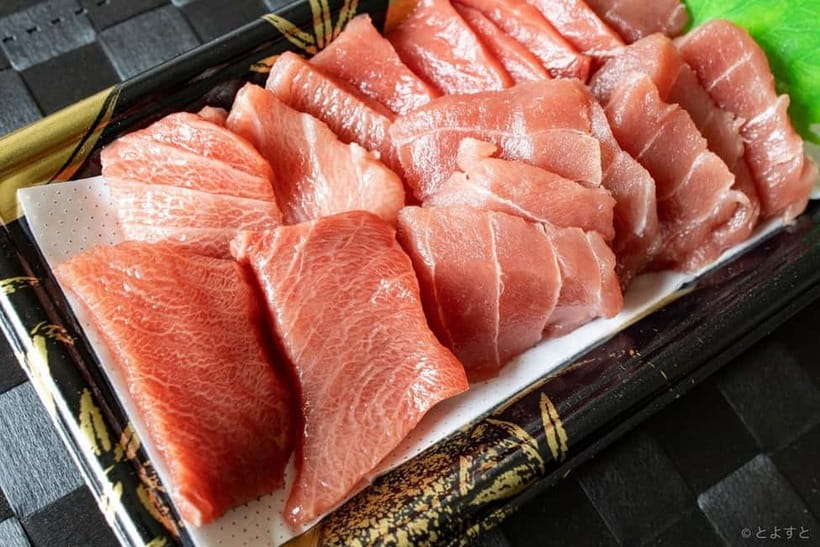
- Fresh sushi early in the day: Tsukiji Outer Market is the food center of the tour, with fresh sushi and sashimi included among the tasting highlights.
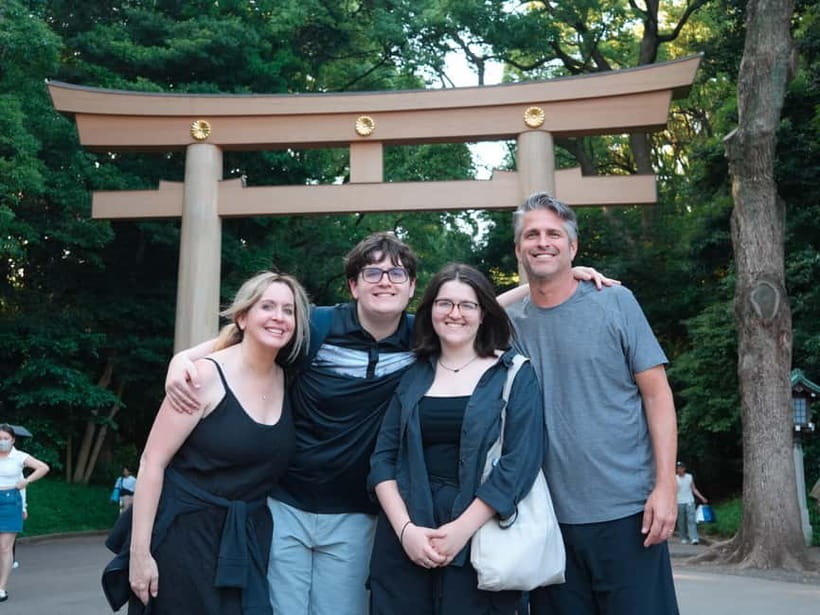
- Meiji Shrine before the crowds: The morning setting suits this peaceful Shinto shrine and gives you time to learn about Japanese customs.
- Asakusa by foot: Croquettes, traditional sweets, Senso-ji Temple, and historic streets give the final hour a more relaxed, snack-filled feel.
- Guides who add cultural context: Yosuke, Lex, Lax, Yo yo, Remu, and Ken are named guides connected with the experience.
- A compact Tokyo introduction: You see Harajuku, Tsukiji, and Asakusa in one morning, but public transport and walking are part of the deal.
- Flexible booking: You can reserve now and pay later, with free cancellation up to 24 hours before the tour.
Start at IKEA Harajuku, then leave modern Tokyo behind
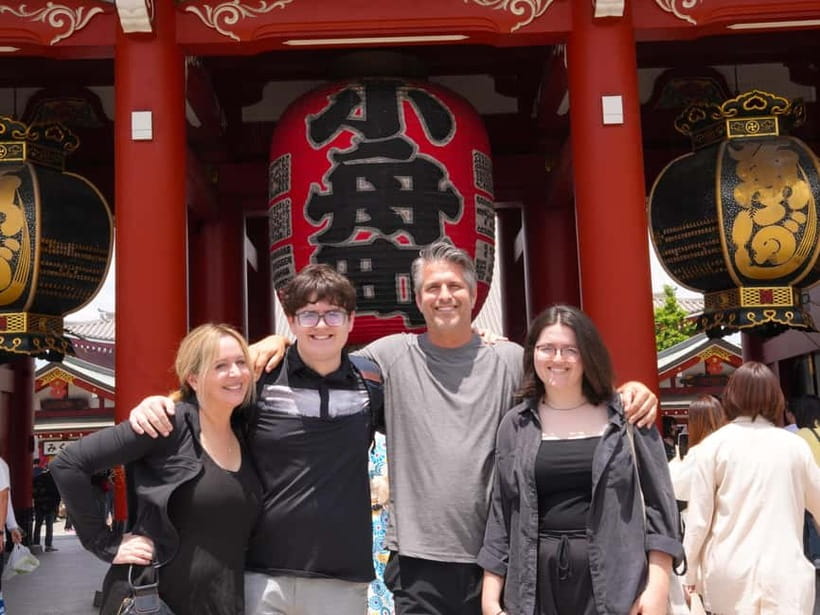
The meeting point is in front of IKEA HARAJUKU. This is a useful, recognizable place in a busy part of Tokyo, but give yourself enough time to find the exact front entrance and arrive ready to move. The tour does not finish where it begins. You end in Asakusa, which is helpful if you plan to continue sightseeing there or want lunch in the area.
The tour is listed at $83 per person and lasts 270 minutes. That price is not simply paying for transportation between famous places. It covers a live English-speaking guide, historical explanations, photos taken during the tour, and admissions connected with Meiji Jingu Shrine, Tsukiji Fish Market, and Senso-ji Temple.
You should still budget about 550 yen for public transportation. Food tastings are part of the appeal, but the details of how much food is provided are not specified, so I would carry extra yen if you expect a full breakfast or want to buy more at Tsukiji and Asakusa.
More temples and shrines near Tokyo:
- Tokyo: Meiji Shrine, Asakusa, Skytree Bus Tour and Cruise
★ 4.7 · 1,986 reviews - Tokyo: Asakusa Walking Tour with Sensoji Temple Visit
★ 4.8 · 1,583 reviews - Nikko: Kegon Falls, Lake Chuzenji & Toshogu Temple
★ 4.6 · 1,577 reviews
Meiji Shrine: a calm first hour in Tokyo
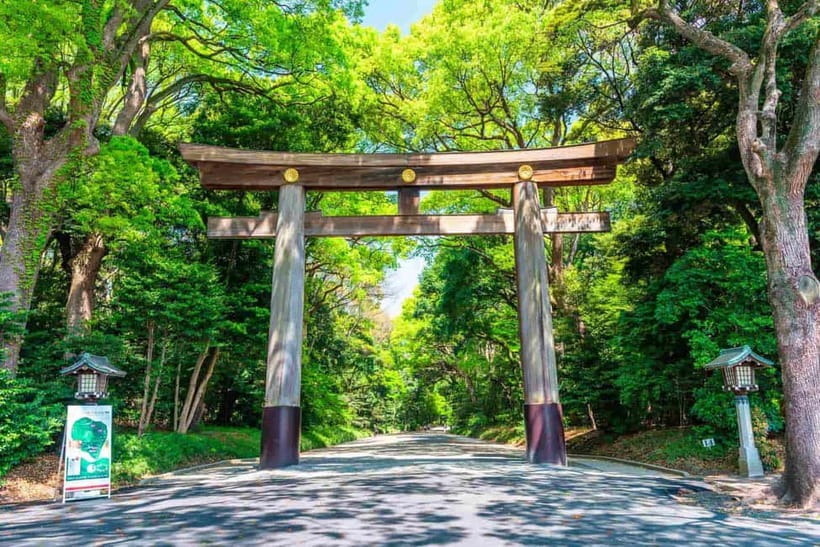
Meiji Shrine is the opening visit, scheduled for about one hour. That timing works well. In the morning, the shrine gives you a quiet introduction to Japan before the sharper sounds and tighter crowds of the market.
The approach to the shrine is known for its broad paths and wooded setting, but the most useful part of a guided visit is learning how to behave at a Shinto shrine. Your guide can explain the difference between Shinto and Buddhism, how shrine customs work, and why the site matters. Guides Remu and Lex were particularly associated with explanations of Japanese religion and shrine traditions, while several guests described the visit as peaceful, spiritual, and informative.
You may also encounter a fire ceremony on some departures. This is not listed as a guaranteed part of every itinerary, so do not book solely for that event. If it takes place during your visit, it can add a striking ritual element to the morning. The tour information and guide accounts connect it with explanations of Shinto, Buddhism, and the way the two traditions have influenced Japanese life.
This stop suits you if you want more than a photograph at a famous gate. It is less useful if your priority is shopping or maximizing the number of neighborhoods seen. One hour is enough for an introduction, not a slow, private examination of every corner.
Tsukiji Outer Market: the tour’s main food stop
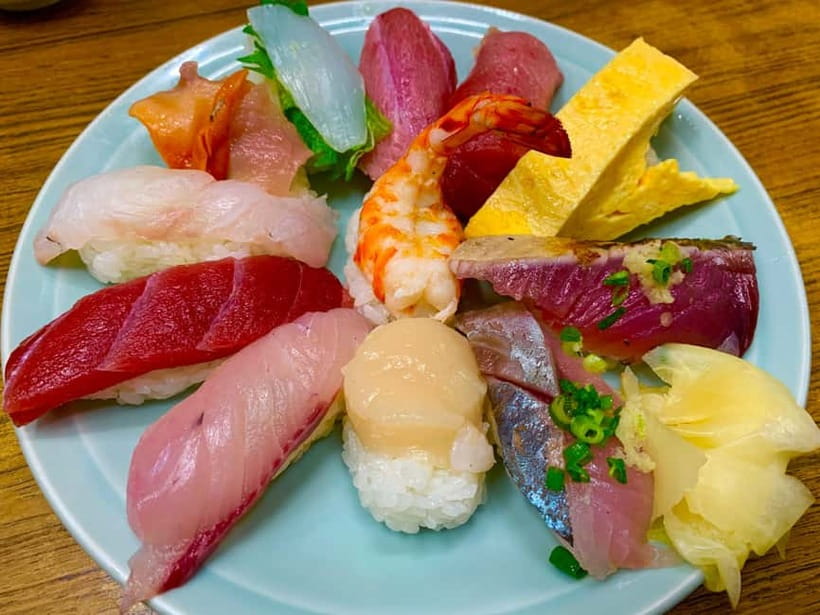
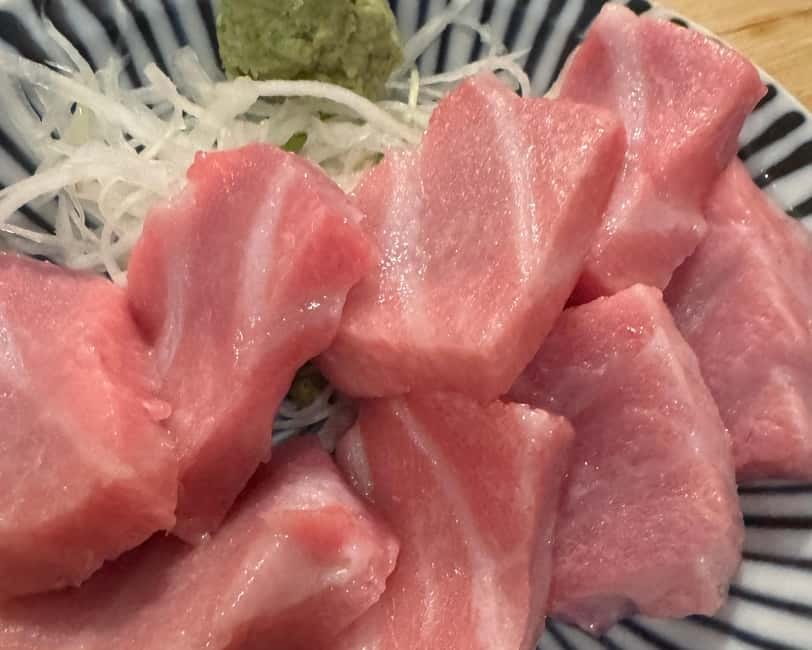
The longest stop is Tsukiji Outer Market, with about 110 minutes for sightseeing. This is where the tour shifts from quiet ceremony to food, movement, and conversation. You are set up to taste fresh sushi and sashimi, while the guide helps you make sense of the market’s stalls and traditions.
The distinction matters: this experience visits Tsukiji Outer Market, not the former wholesale auction area that many people associate with the old Tsukiji name. The outer market is the place for shops, prepared food, seafood, and small bites. It is a better fit for a walking food visit than for watching a wholesale auction.
I like the generous time allocation here. Compared with a quick photo stop, 110 minutes gives you room to look at the food stalls, ask questions, and eat without racing immediately to the next train. The market is also the part of the tour where a guide can be most useful. A good guide can point out what you are seeing, explain unfamiliar foods, and help the visit feel less like a random walk through shopfronts.
Yosuke is described as offering clear explanations about Japanese culture, religion, and history, while other named guides, including Lax and Yo yo, are praised for their energy and care. That range matters at Tsukiji because the experience depends heavily on how well the guide connects the food to daily life.
Be realistic about the food. The tour highlights sushi, sashimi, croquettes, and sweets, but it does not provide a detailed tasting menu. You should not expect a formal sit-down meal unless the guide arranges one, and you may want to bring money for extra purchases. Anyone with seafood allergies or strong food restrictions should ask before booking because the advertised food focus is clearly seafood-led.
The market is also the least serene part of the morning. Even in early hours, you may find narrow passages, many people, and plenty of visual noise. Keep your group together and listen for meeting instructions. This is a food market visit, not a leisurely museum tour.
Asakusa: temple views, croquettes, and sweets
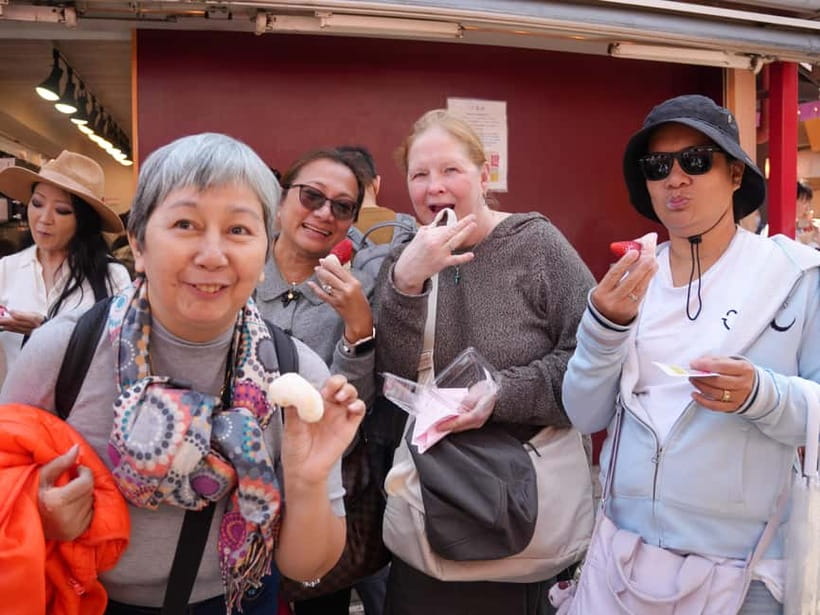
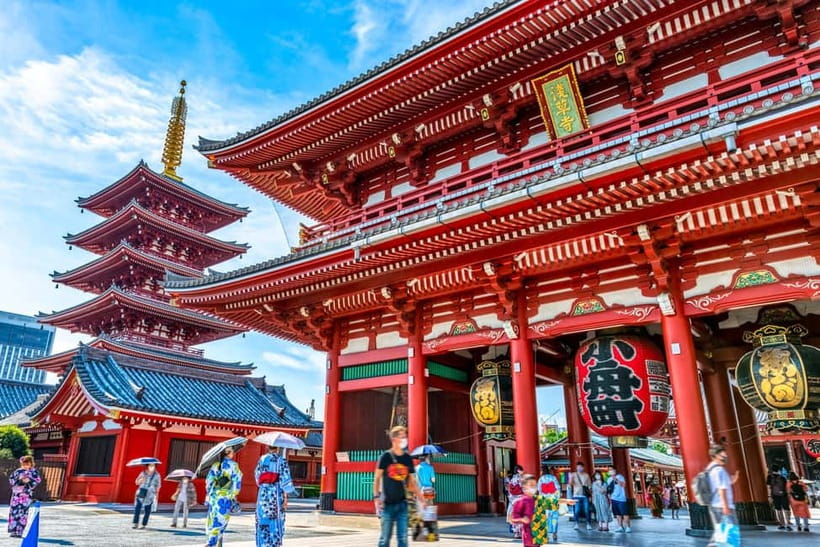
The final stop lasts about one hour and combines a visit, shopping, sightseeing, and walking. Asakusa gives you a different face of Tokyo from both Meiji Shrine and Tsukiji. Here, the focus is on historic streets, traditional snacks, and Senso-ji Temple.
The tour includes admission to Senso-ji, so you can see one of Asakusa’s best-known religious sites with background from the guide. The area is especially good for understanding how Buddhist spaces, shopping streets, and popular food traditions sit side by side.
The food here is casual and approachable. You can try crispy croquettes and traditional Japanese sweets while walking through the district. That makes Asakusa a good finish because you are not simply looking at buildings. You are using your senses, stopping for small bites, and seeing how an old neighborhood functions as part of modern Tokyo.
One hour goes quickly. You should expect a guided introduction rather than a long shopping session. If you want to browse every stall, visit additional temples, or take your time around Senso-ji, you will need to return on your own. The tour finishes in Asakusa, so that is easy to do.
This is also the point where the tour becomes especially useful for first-time visitors. You finish with a clear sense of three Tokyo districts: Harajuku’s modern starting point, Tsukiji’s food culture, and Asakusa’s temple-centered streets.
More Asakusa visits:
- Tokyo: Japanese Dance Cabaret Theater Asakusa-Kaguwa Ticket
★ 4.8 · 2,270 reviews - Tokyo: Roll and Authentic Sushi Making Class in Asakusa
★ 4.9 · 1,957 reviews - Tokyo Asakusa Rickshaw Tour
★ 5.0 · 1,375 reviews - Tokyo Panoramic 1 Day: Meiji Shrine, Asakusa, Odaiba and SKYTREE®
★ 4.5 · 1,222 reviews
What the guide adds to the morning
The guide is the reason to choose this experience instead of copying the route from a map. The tour is not built around rare access or a long private meal. Its value comes from interpretation, timing, and help moving between districts.
The named guides have different strengths. Yosuke is repeatedly described as active, kind, fluent in English, and eager to answer questions. Lax is praised for thoughtful conversation and engaging explanations. Lex is associated with clear information about Meiji Shrine, while Yo yo is described as warm, passionate, and attentive to families. Remu and Ken are also connected with cultural explanations and friendly guiding.
You should not assume you will receive a particular guide unless the booking page confirms it. Still, the pattern gives you a useful idea of the guiding style: English-language cultural explanation, plenty of questions, and a personal effort to keep the group comfortable.
Photos taken during the tour are included. That is a small but practical benefit. You can pay attention to the shrine, market, and temple instead of constantly asking someone to take pictures, though you should not expect a professional photo session.
Pace, transport, and group comfort
The tour covers a lot of ground for a half-day outing. The stated visits add up to roughly four and a half hours, but that total includes movement between districts. You should expect walking, standing, public transportation, and short transitions rather than a coach that carries you from door to door.
The transportation fare of around 550 yen is not included. The route itself is not provided in enough detail to name every train line or station, so check the starting time and allow a cushion before meeting at IKEA Harajuku.
Families can do this tour, and Yosuke is specifically praised for taking care with a parent and child. Still, the market and transport sections may feel tiring for very young children. The tour also suits solo visitors and couples who want company and explanation, but the experience may be less appealing if you prefer to set your own pace.
The early start is a genuine advantage. Meiji Shrine feels more restful, the market is built around morning activity, and Asakusa is easier to appreciate before a full day of sightseeing has worn you down. Bring comfortable shoes and keep your schedule after the tour reasonably open if you want to continue exploring Asakusa.
Is $83 a fair price?
At $83, this is not the cheapest way to visit the three areas. You can reach the shrines, market, and temple on your own for less, especially if you skip guided tastings and already understand Japanese customs.
The price becomes more reasonable if you value local explanation and efficient routing. You receive a live English-speaking guide, photos, cultural background, and the chance to taste food at two different stops. The route also solves a common Tokyo problem: deciding how to connect districts that are far apart and then figuring out what to do once you arrive.
The value is strongest for a first morning in Tokyo. You get orientation, food ideas, religious context, and a finish in Asakusa, where you can continue independently. It is weaker for repeat visitors who know the city, speak Japanese, or want long, unhurried time at one market.
Remember that the $83 does not cover public transportation, and the food inclusions are described by type rather than by a detailed list. I would treat the price as payment for the guide-led route and tastings, then carry extra money for anything else you want to eat or buy.
Who should book this Tokyo morning tour?
I would choose this tour if you want a well-shaped first morning rather than a single attraction. It suits people interested in Japanese religion, food, neighborhood life, and practical orientation.
It is a particularly good match for:
- First-time visitors with limited time in Tokyo
- Families who prefer a guide to explain customs and handle the route
- Solo visitors who want company
- People who enjoy small food tastings more than formal dining
- Anyone curious about the difference between Shinto and Buddhism
- Visitors who want to end near Senso-ji and continue in Asakusa
I would look elsewhere if you want a deep food tour, a private luxury experience, or a slow visit to each district. The itinerary is broad, and its strength is variety. You see a lot, but you will not have hours to linger at each stop.
Final call: book it for variety and context
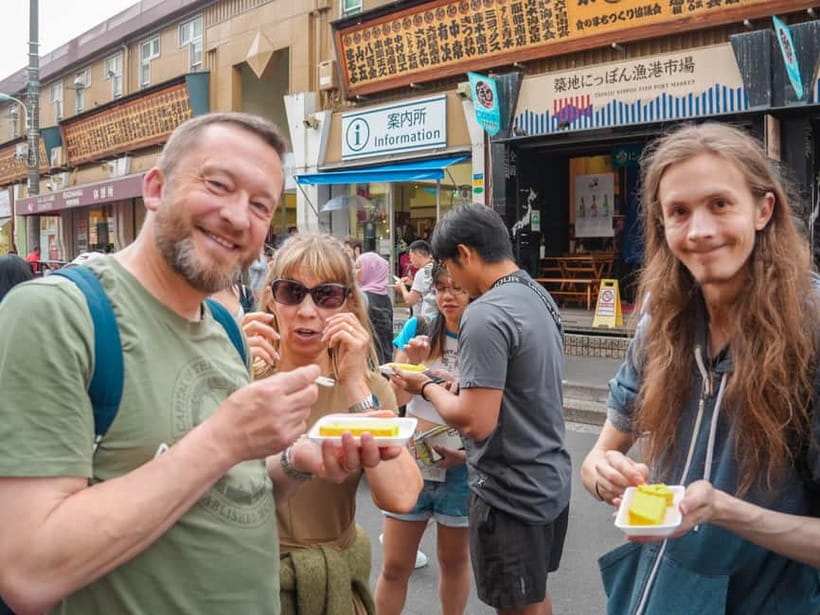
Book this tour if your ideal Tokyo morning includes a peaceful shrine, fresh seafood, traditional sweets, and a guide who can explain what you are seeing. The combination is practical and memorable, especially at the start of a Japan trip.
Skip it if you already know Meiji Shrine, Tsukiji, and Asakusa well or if you dislike fixed timing. For everyone else, the tour offers a useful balance of culture, food, and neighborhood walking, with enough free time afterward to make Asakusa your own.
FAQ
How long does the Tokyo morning tour last?
The tour lasts 270 minutes, or four and a half hours.
Where does the tour begin?
Meet in front of IKEA HARAJUKU.
Where does the tour finish?
The tour finishes in Asakusa.
Which places are included?
The tour visits Meiji Shrine, Tsukiji Outer Market, and Asakusa, including Senso-ji Temple.
Is an English-speaking guide included?
Yes. The tour includes a live English-speaking guide.
Is public transportation included?
No. Public transportation costs about 550 yen and are not included in the tour price.
Are food tastings included?
The experience highlights fresh sushi and sashimi at Tsukiji, plus croquettes and traditional sweets in Asakusa. A detailed list of tasting portions is not provided.
Are admission fees included?
Admission to Meiji Jingu Shrine, Tsukiji Fish Market, and Senso-ji Temple is included in the stated tour details.
Can I cancel the booking?
You can cancel up to 24 hours in advance for a full refund. The reserve-now, pay-later option lets you hold a place without paying immediately.
More Shopping Tours in Tokyo
- Tokyo: Tsukiji Fish Market Food and Culture Walking Tour
★ 4.7 · 757 reviews - Tsukiji Fish Market: Street Food & Culture Walking Tour
★ 5.0 · 669 reviews - Tsukiji Fish Market Small-Group Food Walking Tour
★ 5.0 · 621 reviews - Tokyo: Tsukiji Fish Market Sushi Making Class with Pro Chef
★ 4.9 · 506 reviews
More Markets in Tokyo
- Tokyo Tsukiji Fish Market Food and Culture Walking Tour
★ 5.0 · 3,184 reviews - Tokyo: Tsukiji Fish Market Food and Walking tour
★ 5.0 · 1,724 reviews - Tokyo: Tsukiji Fish Market Guided Walking Tour
★ 4.9 · 1,397 reviews - Tsukiji Fish Market Guided Tour and Sushi Making with Pro Chef
★ 5.0 · 775 reviews
New on our Tokyo list
- From Tokyo: Mount Fuji & Hakone Full Day Private Tour★ 4.9 · 25 reviews
- Tokyo Spectacular View Day-Cruise in 90 Minutes★ 5.0 · 25 reviews
- 2.5 Hour-Guided Cycle Tour in the Central Tokyo★ 5.0 · 25 reviews
- Real Tokyo Runner Club : Daikoku Car Meet Night Tour with JDM Car★ 5.0 · 25 reviews
- Ramen Making from Scratch +Akihabara Tour –Cooking Class★ 5.0 · 25 reviews
- [Self-Drive] Tokyo & Daikoku Custom Car Driving Tour★ 4.9 · 25 reviews
- Tokyo: 2-Hour Night Bike Tour of the City’s Hidden Gems★ 4.9 · 25 reviews
- Samurai themed Entertainment show in Shinjuku★ 4.5 · 25 reviews
Temple & Shrine Tours, compared.
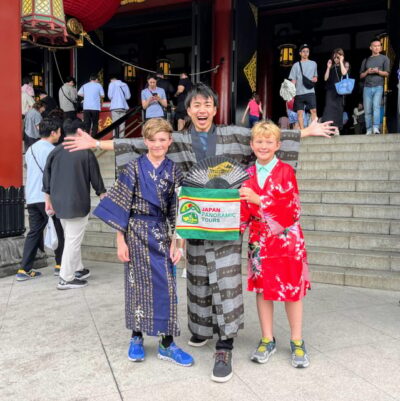
Meiji Shrine, Asakusa, Skytree Bus Tour and Cruise
Read our review →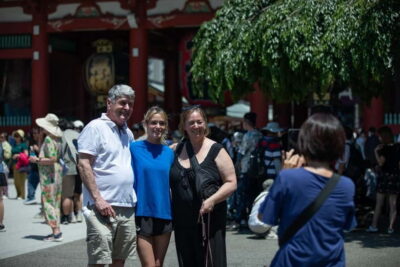
Asakusa Walking Tour with Sensoji Temple Visit
Read our review →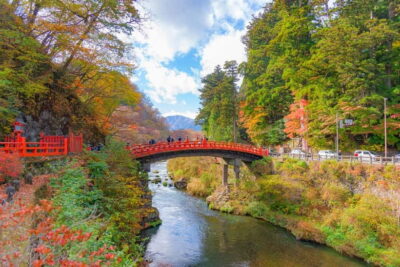
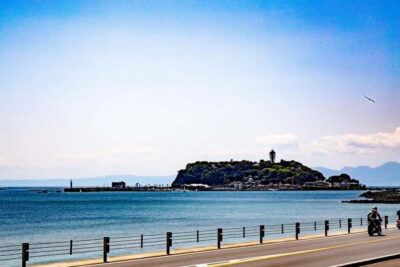
Kamakura & Enoshima Day Trip including Temple Tickets
Read our review →
Nikko Toshogu Shrine and Kegon Waterfall Tour
Read our review →
Tokyo Panoramic 1 Day: Meiji Shrine, Asakusa, Odaiba and SKYTREE®
Read our review →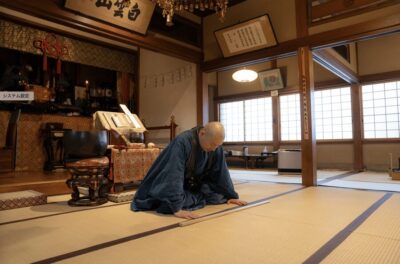
Mt. Fuji Heritage Tour: Traditional Villages, Lakes & Shrine
Read our review →Browse the lists this tour appears in