Reviewed · TOKYO FOOD TOURS
Historic Kamakura: Temples, Shrines and Street Food Private Walking Tour
Kamakura gives you Japan in a compact, walkable package: quiet temple grounds, a major Shinto shrine, a cool bamboo grove, old streets, and the famous bronze Great Buddha. This six-hour private tour ties those pieces together without making you figure out the route or the food stops yourself.
I like the way it mixes formal sights with ordinary pleasures. Street-food sampling on Komachi-dori keeps the day from becoming a parade of temple gates, while green tea at Hokoku-ji gives you a calm pause among the bamboo. The guides Simon and Chuck also bring a personal touch, with Simon praised for helping parents, children, and honeymooners enjoy the day at their own pace.
The main drawback is cost: at $220.22 per person, this is not a budget outing, especially since transportation to and from the meeting point is extra. You are paying for a private guide, included food and admissions, and a flexible day, so the value improves for families or small groups who want personal attention.
In This Review
- Key points to know before booking
- Why Kamakura works so well as a day trip from Tokyo
- Engaku-ji and the climb toward the tengu statues
- Tsurugaoka Hachimangu, Kamakura’s central shrine
- Komachi-dori turns lunch into part of the tour
- Hokoku-ji and green tea among the bamboo
- The Great Buddha provides a memorable finish
- What a private guide adds to the day
- Price, inclusions, and the real value
- Who should book this Kamakura tour
- Practical details that shape the day
- Should you book it?
- FAQ
- How long does the Kamakura tour last?
- Where does the tour start?
- What time does the tour begin?
- Where does the tour end?
- Is transportation included?
- Is this a private activity?
- What food and drinks are included?
- Are entrance fees included?
- Can I cancel for a refund?
Key points to know before booking
- Start at Kita-Kamakura Station: The tour begins at 9:00 a.m. and ends at Kamakura Station, making the route useful for a day trip from Tokyo.
- Engaku-ji includes a climb: You’ll see the temple complex, a wooden Buddha statue, and tengu figures on the slopes above the main grounds.
- Komachi-dori is lunch with a local-food focus: Snacks, lunch, drinks, bottled water, soda, and alcoholic beverages are included.
- Hokoku-ji provides the quietest break: A cup of green tea is served at a teahouse in the bamboo grove.
- It is private: Only your group takes part, with guides such as Simon or Chuck leading the day.
- The finish is convenient: The tour ends at Kamakura Station after the Great Buddha visit.
Why Kamakura works so well as a day trip from Tokyo
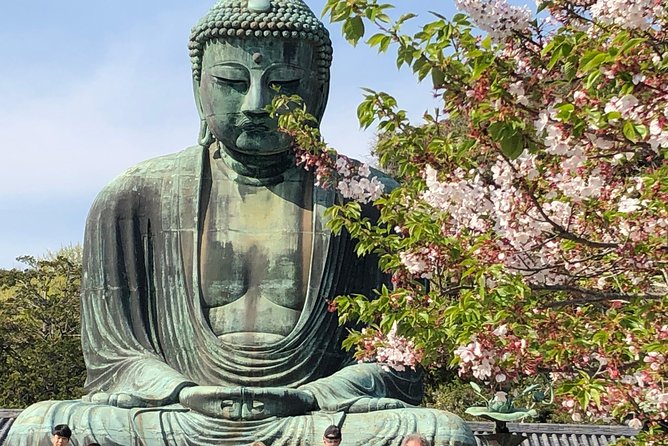
Kamakura is a good choice when you want temples and shrines without spending several days moving between distant parts of Japan. This tour starts at Kita-Kamakura Station, a useful location for reaching the northern temple area, then works south toward Kamakura Station.
That one-way pattern matters. You are not sent back and forth across town, and the final stop is near the station where the tour ends. Transportation is not included, so you will need to budget separately for getting to Kita-Kamakura and for your onward journey from Kamakura Station.
The 9:00 a.m. start gives you a full morning and afternoon in town. Six hours is enough time for the main stops, food, and short pauses, but this is still a walking day rather than a relaxed coach excursion. You should be comfortable on your feet and ready for some uneven paths and slopes, especially at Engaku-ji.
Because the tour is private, your day can feel less rigid than a large group outing. The experience is best for people who want to ask questions, pause for photos, or let a guide judge when it is time to move on. One account specifically praised the guide’s ability to keep the group moving without making the visit feel rushed.
More Private Tours in Kamakura
- Kamakura Private Tour: Temples, Nature, and the Great Buddha
★ 5.0 · 121 reviews - Kamakura 8 hr Private Walking Tour with Licensed Guide from Tokyo
★ 5.0 · 80 reviews - Kamakura: Private Guided Walking Tour with Local Guide
★ 4.8 · 60 reviews
Engaku-ji and the climb toward the tengu statues
Engaku-ji is the first major stop, with about 45 minutes set aside for the temple complex. You will see the Busudan hall, home to a wooden Buddha statue, and take in the buildings, gates, and grounds that make this opening stop feel formal and peaceful.
The most distinctive part comes when you climb the slopes behind the temple. The route brings views over the area and leads to tengu statues. These long-nosed figures belong to Japanese folklore and give the visit a more unusual edge than simply photographing another wooden hall.
I like beginning here because the tour starts with a strong sense of place. You get architecture, religious art, trees, and a view before heading into Kamakura’s busier streets. The climb also gives the first stop some physical variety.
The time allocation is fairly brisk. Forty-five minutes can cover the main points, but it will not allow an unhurried exploration of every corner. If you have mobility concerns, tell your guide early. The tour asks for moderate physical fitness, and the slope behind the temple is an important part of the stop rather than an optional detail.
Tsurugaoka Hachimangu, Kamakura’s central shrine
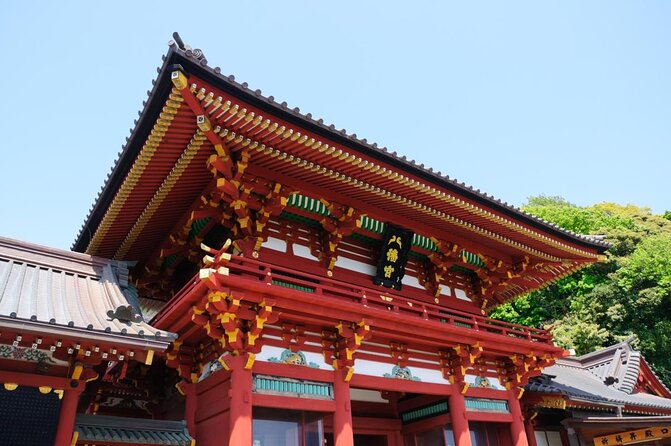
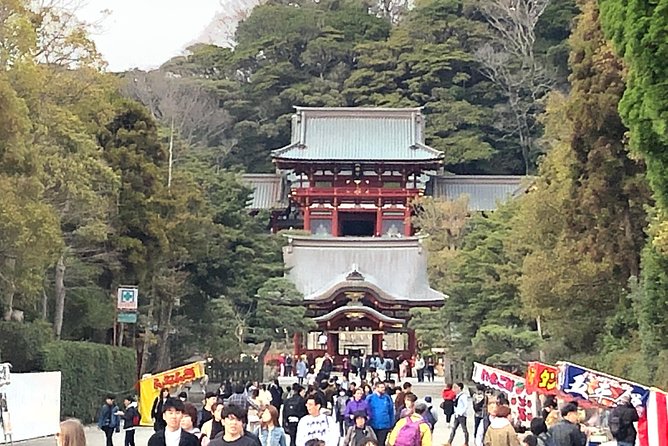
Next comes Tsurugaoka Hachimangu, described as Kamakura’s most important Shinto shrine. You will see its torii gates, the main hall, and a small museum of treasures during the 30-minute visit.
This stop gives you a useful contrast with Engaku-ji. The first site is a Buddhist temple complex, while Tsurugaoka Hachimangu introduces Shinto spaces and shrine customs. The approach through torii gates helps you understand how the shrine is arranged, and the main hall gives the visit a clear focus.
Thirty minutes is enough for an overview, especially with a guide explaining what you are seeing. It is not enough for a slow museum visit or a long period of quiet observation. That tradeoff makes sense in a six-hour tour, since the day must also include lunch, tea, and the Great Buddha.
A private guide can be particularly useful here. Shrine details are easy to pass over if you are unfamiliar with Japanese religious traditions. You can ask about the gates, the hall, and the objects in the museum instead of simply walking through and taking pictures.
Komachi-dori turns lunch into part of the tour
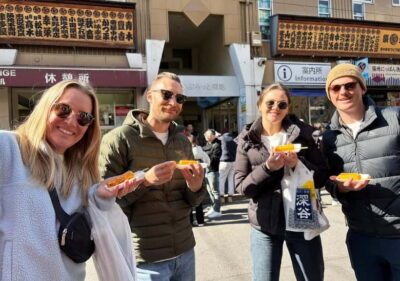
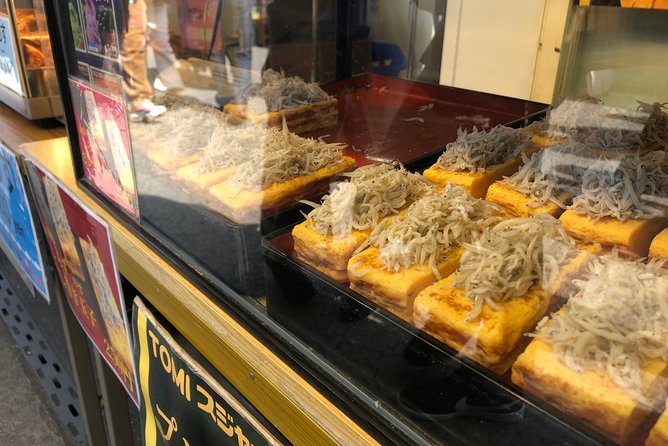
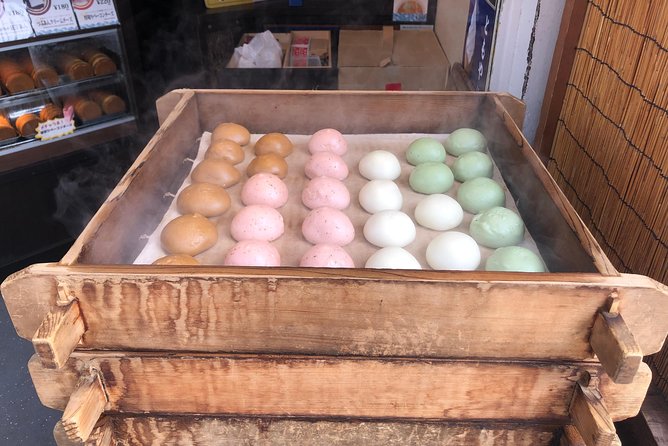
The one-hour stop on Komachi-dori is where the day becomes especially hands-on. This famous shopping street is lined with eateries and stalls selling sweet and savory food, and the tour includes a selection of lunch, snacks, and drinks.
The exact food choices can vary, and the supplied description only identifies local delicacies in general. That is actually part of the appeal: you are not locked into one formal restaurant meal. You get to try several small portions and see what catches your eye.
I like this format for two reasons. First, it breaks up the sightseeing with food at street level. Second, it lets the guide help you choose items you might otherwise ignore. One family said Simon pointed out street food they would not have tried alone, helping them feel more comfortable ordering unfamiliar things.
Included drinks cover bottled water, soda, and alcoholic beverages, along with lunch and snacks. Alcohol may not suit every group, of course, and you should not feel obliged to drink simply because it is included. The important point is that you are not paying for every small bite as the hour progresses.
Komachi-dori can be busy, and a street lined with popular food stalls is not the place for a slow, private meal. If you prefer a quiet restaurant and a fixed menu, this section may feel scattered. If you like tasting several things and walking as you eat, it is one of the tour’s best features.
More Temple & Shrine Tours in Kamakura
- Tokyo: Kamakura & Enoshima Day Trip including Temple Tickets
★ 4.5 · 1,375 reviews - Kamakura Historical Walking Tour with the Great Buddha
★ 5.0 · 129 reviews - From Tokyo Kamakura, Hachimangu Shrine and Enoshima Full Day Tour
★ 4.5 · 36 reviews - Day Trip to Kamakura & Enoshima: Shrines, Seaside, Temples & Tea
★ 5.0 · 32 reviews
Hokoku-ji and green tea among the bamboo
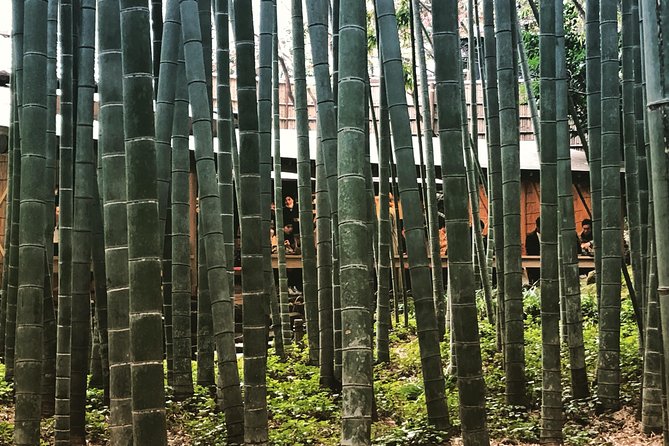
Hokoku-ji, often called the bamboo temple, receives about an hour. You will enter the bamboo grove, enjoy the cooler shade, and sit with a traditional cup of green tea at the teahouse.
This is likely the most restful stop of the day. After the temple grounds and the street food, the bamboo grove changes the pace. The tea is not just another included drink. It gives you a reason to sit still and notice the setting.
The visit also adds a sensory contrast to the earlier stops. Engaku-ji and Tsurugaoka Hachimangu focus on buildings, gates, and religious spaces. Hokoku-ji brings in the tall bamboo, filtered light, and the simple ritual of tea.
An hour should allow time for the grove and the teahouse, though the description does not promise a tea ceremony or a lesson in tea preparation. You should expect traditional green tea in a peaceful setting, not a formal performance.
This stop is a strong reason to choose the tour over a simple list of Kamakura landmarks. You are not only checking off a temple. You are getting a pause that makes the day feel more balanced.
The Great Buddha provides a memorable finish
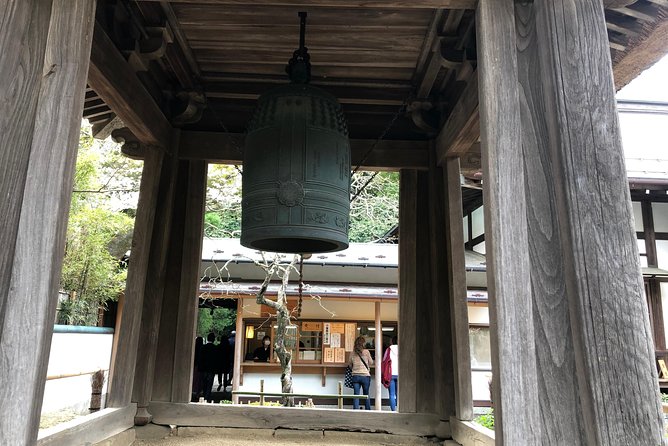
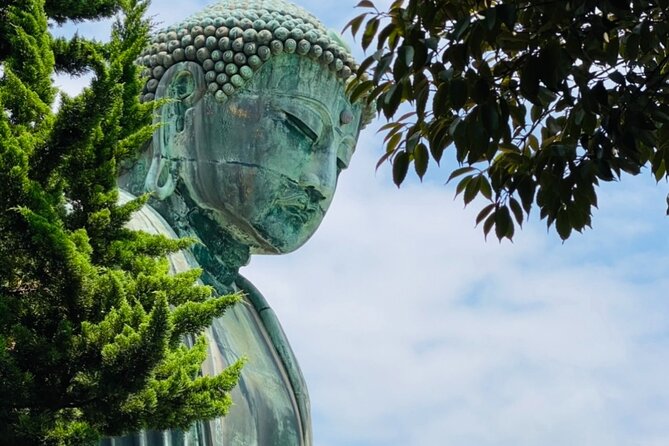
The final sightseeing stop is the Great Buddha of Kamakura, described as Japan’s second-largest bronze Buddha. About 30 minutes is planned here.
The statue is the day’s most instantly recognizable sight, and placing it near the end gives the route a satisfying finish. After smaller temple halls, shrine buildings, and bamboo paths, the scale of the bronze Buddha changes your sense of proportion.
Half an hour works for seeing the statue, taking photographs, and hearing the main points from your guide. It may feel short if you want to linger or explore every nearby detail, but the tour still has to reach its final drop-off at Kamakura Station.
The supplied information uses Daibutsukiritoshi for this stop, while also identifying the attraction as the Great Buddha of Kamakura. Since the tour ends at Kamakura Station, you should confirm the exact walking route and timing with the operator if the distinction matters to you.
What a private guide adds to the day
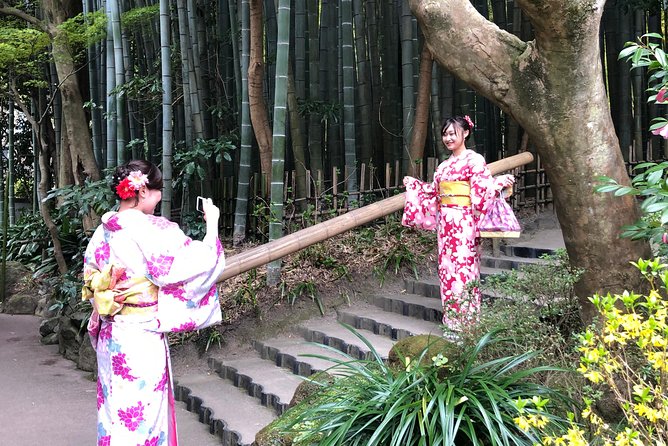
The strongest part of this experience is not simply the list of sights. It is the chance to have one guide interpret the day for your group.
Simon is the guide named most often in the supplied material. He is described as friendly, polite, helpful, and good with both children and older parents. One family found that he adjusted the day to suit their parents, while another family appreciated his help with a young child.
Chuck is also named as a local guide. He is described as good fun and able to judge when to move on without rushing the group. That is a useful skill in Kamakura, where it would be easy to spend too long at the first temple and then hurry through the final stops.
The tour is private, so only your group participates. That can make a real difference if your interests are specific. You might want more time on temple architecture, ancient trees, folklore, food, or photography. The supplied experiences indicate that Simon listens for those interests and shapes the conversation around them.
Do keep expectations realistic. A private tour does not mean every stop becomes unlimited. The published schedule still gives fixed blocks of time, and the total duration remains about six hours.
Price, inclusions, and the real value
At $220.22 per person, this is a premium half-day experience. You are also responsible for transportation costs, so the final amount is higher than the advertised tour price.
The value depends heavily on your group. A solo visitor may find the price difficult to justify. A couple celebrating a honeymoon, parents traveling with children, or a small family group may find the personal service more worthwhile.
Several costs are covered:
- Entrance fees
- Lunch and snacks
- Alcoholic beverages
- Bottled water and soda
- A private guide
That list removes much of the small-payment hassle during the day. You can focus on tasting food and visiting the sights instead of constantly reaching for your wallet. Still, included food does not mean you should expect an elaborate restaurant lunch, and the supplied details do not specify the number or size of tastings.
Group discounts are available, which may improve the price for a larger private party. Since the activity is commonly booked well ahead of time, around 95 days in advance on average, you should not leave planning until the last minute if your Tokyo dates are fixed.
Who should book this Kamakura tour
I would recommend this tour most strongly if you want a guided introduction to Kamakura and value ease over the lowest possible price.
It suits:
- Families who want help with food choices and pacing
- Couples who prefer a private day rather than a large group
- First-time visitors who want temple, shrine, food, and Buddha highlights
- People who enjoy sampling several snacks instead of having one fixed lunch
- Visitors interested in both Buddhist and Shinto sites
- Anyone who wants a guide to explain local details along the way
It is less suitable if you want a slow temple study, a full formal tea ceremony, or lots of free time for shopping. It may also be a poor match if you dislike walking, slopes, or moving between several attractions in one day.
The tour requires moderate physical fitness. Wear comfortable shoes, leave room for walking, and remember that weather matters. If poor weather cancels the activity, you are offered another date or a full refund.
Practical details that shape the day
You meet at Kita-Kamakura Station in Yamanouchi at 9:00 a.m. The tour ends at Kamakura Station, at 1-chome-1-15 Onarimachi.
Transportation between Tokyo and Kamakura is not included. You should plan that separately and allow enough time to reach the 9:00 a.m. meeting point. The tour is near public transportation, and the end point at Kamakura Station makes it simple to continue your day after the final stop.
Confirmation is provided when you book. Free cancellation is available if you cancel at least 24 hours before the start time. Changes or cancellations made inside that period are not accepted for a refund, and the cut-off uses local time.
Should you book it?
Book this Kamakura tour if you want a well-shaped day with personal guiding, included tastings, and a calm tea stop. The mix is its strength: Engaku-ji and Tsurugaoka Hachimangu provide temples and shrine culture, Komachi-dori adds food and movement, Hokoku-ji gives you bamboo and tea, and the Great Buddha supplies the grand finale.
The price is the main question. If you are comfortable paying for private attention and do not want to manage tickets, food choices, timing, and route planning yourself, the package offers solid value. If you are traveling on a tight budget or prefer wandering alone, you can likely see Kamakura more cheaply without a private guide.
For families, honeymooners, and small groups who want a guide willing to adjust the pace, Simon or Chuck could make the extra cost worthwhile. Just arrive ready to walk, budget separately for transportation, and treat the street-food stop as a tasting hour rather than a sit-down lunch.
FAQ
How long does the Kamakura tour last?
The tour lasts approximately six hours.
Where does the tour start?
It starts at Kita-Kamakura Station in Yamanouchi, Kamakura, Kanagawa.
What time does the tour begin?
The scheduled start time is 9:00 a.m.
Where does the tour end?
The drop-off point is Kamakura Station at 1-chome-1-15 Onarimachi.
Is transportation included?
No. Transportation costs are not included in the tour price.
Is this a private activity?
Yes. Only your group participates in the private tour.
What food and drinks are included?
Lunch, snacks, alcoholic beverages, bottled water, and soda are included.
Are entrance fees included?
Yes. Entrance fees for the listed attractions are included.
Can I cancel for a refund?
You can cancel at least 24 hours before the experience starts for a full refund. Cancellations or changes made less than 24 hours before the start time are not accepted, and poor-weather cancellations offer a different date or a full refund.
More Food Crawls in Tokyo
- Tokyo: Shinjuku Food Tour (13 Dishes at 4 Local Eateries)
★ 5.0 · 6,603 reviews - Tokyo: Shinjuku Food Tour (15 Dishes and 4 Eateries)
★ 4.9 · 2,033 reviews - Best of Shinjuku: Izakaya Food Tour (4 Stops, 14+ Tastings)
★ 5.0 · 1,863 reviews - Tokyo Night Foodie Tour in Shinjuku – Seasonal Sushi, Wagyu Beef
★ 5.0 · 1,161 reviews
More Walking Tours in Kamakura
- Kamakura Walking Tour – The City of Shogun
★ 5.0 · 100 reviews - Kamakura 6hr Private Walking Tour with Government-Licensed Guide
★ 5.0 · 42 reviews - Buddha, Bamboo & Zen – Bespoke Kamakura Private Walking Tours
★ 5.0 · 25 reviews - Kamakura Full Day Walking Tour with Local Expert Guide and Pickup
★ 4.5 · 16 reviews
New on our Tokyo list
- Sumi-e Experience in a relaxing green tea shop in Tokyo★ 5.0 · 3 reviews
- Tokyo : Kamikaze Street Drift Ride★ 5.0 · 3 reviews
- Private Zen Meditation in English in Shinjuku, Tokyo★ 5.0 · 3 reviews
- Onsen Spa in Tokyo and Asakusa Bar Hopping with Local Guide★ 5.0 · 3 reviews
- Easy for everyone! Now you can play handmade mini shamisen and show off to everyone! Musical instruments, sweets and live music★ 5.0 · 3 reviews
- Tokyo: Private Tsukiji Street Food & Sake with Local Guide★ 5.0 · 3 reviews
- Mt Fuji Exploration Tour with Free Japanese Kusa Mochi from Tokyo★ 4.5 · 3 reviews
- Tokyo Tsukiji Fish Market Walking and Exploring Hidden Gems Tour★ 5.0 · 3 reviews
Tokyo Food Tours, compared.
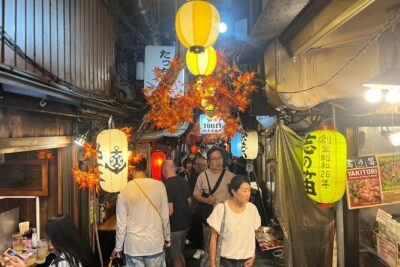
Shinjuku Food Tour (13 Dishes at 4 Local Eateries)
Read our review →
Shinjuku Food Tour (15 Dishes and 4 Eateries)
Read our review →
Best of Shinjuku: Izakaya Food Tour (4 Stops, 14+ Tastings)
Read our review →
Tokyo Night Foodie Tour in Shinjuku – Seasonal Sushi, Wagyu Beef
Read our review →
Eat and Drink Like a Local: Tokyo Ueno Food Tour-Taverns&Ramen
Read our review →