
Reviewed · JAPANESE COOKING CLASSES
Small Group Sushi roll and Tempura Cooking Class in Nakano
The best part of this Tokyo cooking class is that you do not simply sit down to eat sushi and tempura. You learn how to make both dishes in Eri’s home, using her guidance and practical tips. The class covers three sushi rolls, seafood and vegetable tempura, sushi rice, cutting, and Japanese ingredients such as dashi and nori.
I like the small, private setting, which gives you room to ask questions and get help with each roll and batch of tempura. I also like that you can choose some of the ingredients, then leave with recipes and techniques you can repeat at home. The main consideration is the $160 price for about two and a half hours, so this makes the most sense if you value personal instruction and a local home setting more than a quick meal.
In This Review
- Key points to know before booking
- Learning sushi in a Tokyo home
- Why the sushi instruction is worth your time
- Crisp tempura with seafood and vegetables
- Setting the table for an early meal
- Meeting Eri near Asagaya Station
- A private class with personal guidance
- Vegetarian and dietary adjustments
- What the host adds to the experience
- How the price compares with the time involved
- Who should book this class
- Booking, cancellation, and practical planning
- Should you book the Asagaya sushi and tempura class?
- FAQ
- Where does the sushi and tempura class meet?
- Where does the cooking class take place?
- How long does the cooking class last?
- What will I learn to cook?
- Can vegetarian or other dietary needs be accommodated?
- Is the activity private?
Key points to know before booking
- Three sushi rolls, not just one: You practice filling, rolling, and cutting several types of sushi.
- Tempura is hands-on: You prepare fluffy, crisp fried seafood and vegetables with Eri’s support.
- A real home setting: The class takes place in Eri’s home, offering a look at everyday Tokyo life.
- Meet at Asagaya Station: The meeting point is NewDaysJapan outside the JR station ticket gates.
- Dietary adjustments are possible: Vegetarian needs and other restrictions can be accommodated for both dishes.
- Private and recipe-focused: Only your group participates, and you can take the methods home.
Learning sushi in a Tokyo home
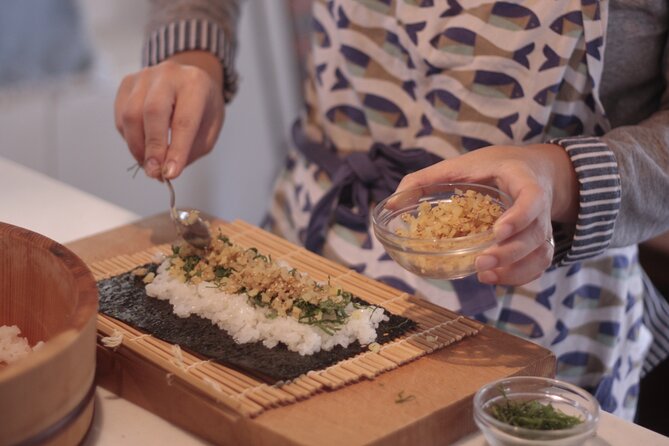
This class begins with an explanation of basic Japanese ingredients. You will learn about sushi rice, dashi, and nori, the sheets of seaweed used to wrap sushi. That opening matters because good sushi depends on more than the filling. Rice texture, seasoning, moisture, and the way the nori is handled all affect the final bite.
Eri first shows you how to make sushi rice taste right. This is one of the most useful parts of the class because rice is the foundation of a sushi roll, yet it is easy to rush through at home. You also learn how to roll neatly, an appealing skill for anyone who has struggled with loose or uneven maki.
The class then moves into practice. You choose what to use for the sushi rolls from the available ingredients, and Eri supports you as you assemble and roll them. The freedom to make choices adds a pleasant personal touch, but you should not expect a fixed restaurant-style tasting menu with a long list of named sushi varieties. The focus is on technique, choice, and learning by doing.
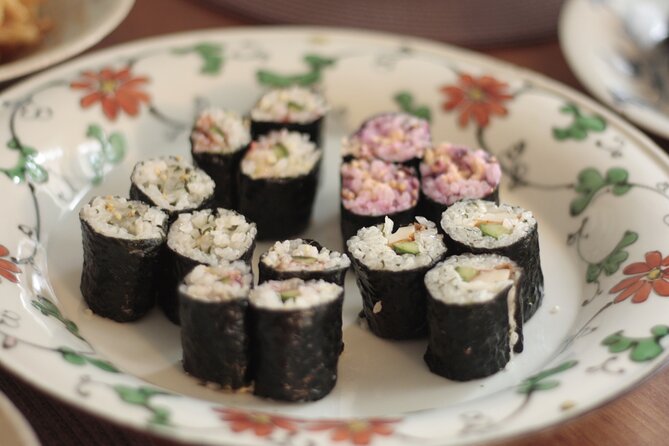
You prepare three kinds of sushi roll. After rolling, Eri shows you how to cut them attractively. This is another small detail that makes a difference. A roll can taste fine and still look untidy if the knife work is poor. By learning how to cut evenly, you gain a skill that transfers well to home cooking and entertaining.
More sushi mornings and classes:
- Sushi Making Tokyo Roll and Authentic Japanese Sushi Class
★ 5.0 · 3,971 reviews - Tokyo: Roll and Authentic Sushi Making Class in Asakusa
★ 4.9 · 1,957 reviews - Make Sushi and Create Unforgettable Memories in Tokyo
★ 5.0 · 1,413 reviews
Why the sushi instruction is worth your time
I like that the class treats sushi as a set of manageable steps rather than a mysterious specialty. You learn the rice, the rolling, the filling, and the cutting in sequence. That gives you a clearer sense of how the dish comes together than ordering a finished plate in a restaurant.
The home setting also gives the lesson a more personal feel. You are not watching a chef work from several meters away. In a small private group, Eri can guide your hands and answer questions as you go. One particularly useful point is the chance to choose ingredients for the rolls. If you have particular tastes or dietary needs, that flexibility can make the meal more enjoyable.
The class is also suited to different levels of cooking confidence. You might already know how to make rice but need help rolling. Or you might be starting with very little experience. The format allows Eri to support you during the practical work, rather than leaving you to copy a demonstration without help.
Do keep your expectations sensible. This is a short cooking class, not professional culinary training. You will learn useful home techniques, but the session is not presented as an advanced course in knife skills or sushi-making theory.
Crisp tempura with seafood and vegetables
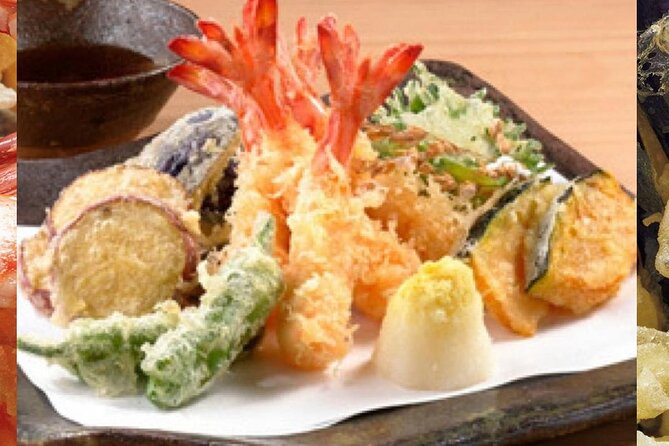
The second part covers tempura. You can choose what to use, with seafood and vegetables included among the options described for the class. Eri makes the tempura with you, helping you work toward the light, crisp texture that makes this dish so appealing.
Tempura looks simple on a menu, but the result depends on preparation and handling. A coating that is too heavy can make the food greasy or dense. A coating that is not handled well may lose its crispness. The class gives you a chance to see the process directly and practice it under guidance.
This is a strong pairing with the sushi lesson. Sushi teaches careful assembly and clean presentation. Tempura adds heat, timing, and frying technique. You get two very different Japanese cooking methods in one sitting, which helps the class feel varied despite its compact length.
The activity information does not provide a detailed list of every ingredient, frying step, or recipe measurement. You should therefore think of the tempura section as guided practical instruction rather than a fully specified cooking school syllabus. Its value comes from learning alongside Eri and trying the technique yourself.
Setting the table for an early meal
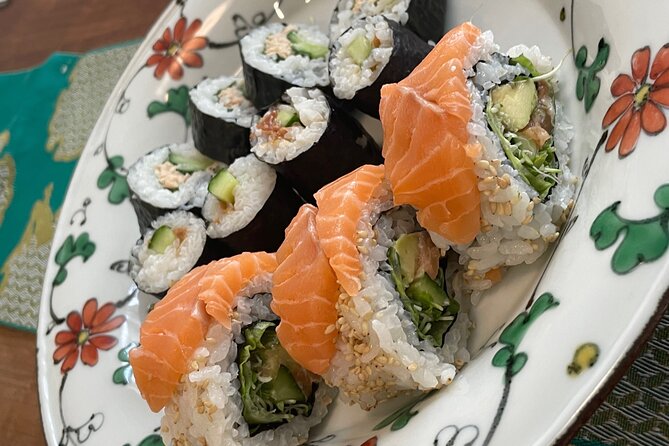
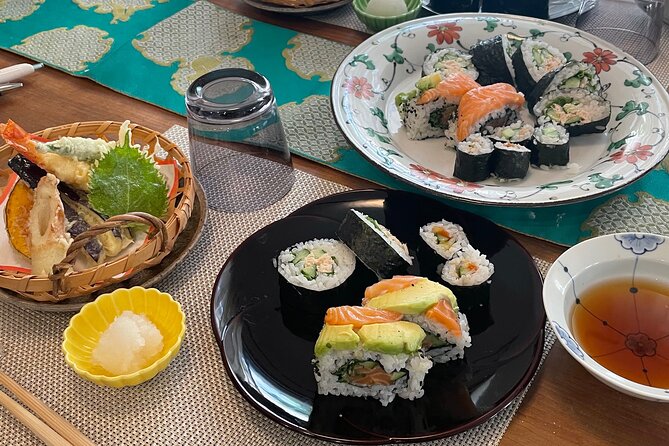
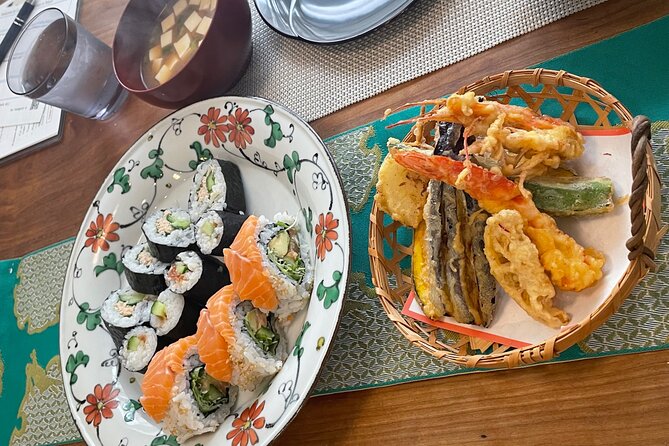
Once the sushi and tempura are ready, you set the table in Japanese style. The class ends with Itadakimasu, the phrase traditionally said before eating, and you sit down to enjoy what you prepared.
That shared meal is more than a final reward. It gives you time to see how the dishes work together and to taste the results while the cooking is still fresh in your mind. It also brings a little ceremony into the class without making the activity feel formal.
I like this structure because the meal is connected to the work. You are not simply handed a prepared dish at the end. You have made the rice, rolled the sushi, cut it, and helped prepare the tempura. That makes it easier to remember the techniques later.
The pace is about two hours and thirty minutes, so expect a focused session rather than a long afternoon. You will have enough time for instruction, hands-on work, and eating, but you should not plan another major activity that depends on the class ending at an exact minute.
More cooking classes in Tokyo:
- Ramen & Gyoza Cooking Class in Tokyo with Local Supermarket Visit
★ 5.0 · 823 reviews - Tokyo: Easy Ramen Cooking Experience in Kabukicho, Shinjuku
★ 4.6 · 321 reviews - Ramen and Sushi Cooking Class with Sake Pairing Set in Tokyo
★ 5.0 · 291 reviews - Tokyo: Wagyu and 7 Japanese Dishes Cooking Class
★ 4.9 · 273 reviews
Meeting Eri near Asagaya Station
The meeting point is NewDaysJapan outside the JR Asagaya Station ticket gates, in the outside concourse area. The listed address is in Suginami City, Tokyo, and the location is near public transportation.
This detail deserves attention because the experience is described as a Nakano-area class, while the meeting point is at Asagaya Station. Asagaya is the place you should use when planning your route and arrival time. Do not rely only on the broad Nakano label when checking a map.
Arrive with enough time to find the station meeting point. Eri has been described as providing clear instructions before the class and arriving on time, which is useful when you are trying to navigate Tokyo rail stations. You will then continue to her home for the cooking session.
The activity returns to the same meeting point at the end. That makes the transport plan simpler, especially if you are fitting the class between other Tokyo plans. Still, allow time for the class to run slightly over, since cooking and group meals can take longer than expected.
A private class with personal guidance
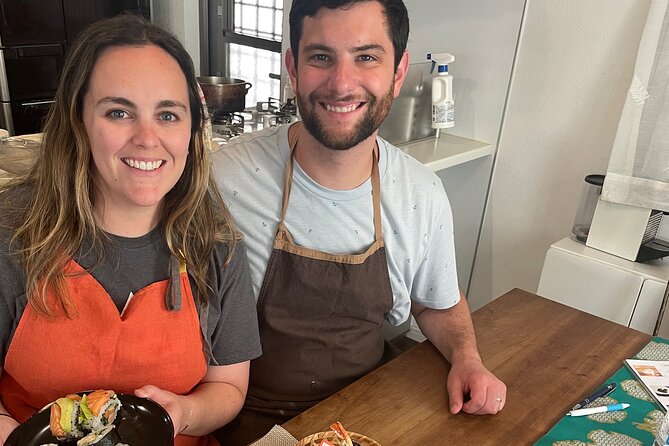
This is a private activity, meaning only your group participates. The experience is also described as small-group, so it suits people who prefer direct help instead of a large demonstration.
That distinction matters at the cooking station. Rolling sushi neatly or judging tempura texture can be awkward the first time. In a large class, you may have to wait for an instructor to reach you. Here, Eri can focus on your group and adjust the level of help as needed.
A private format is especially useful for families, couples, and friends who want to cook together. It can also work well for people who feel shy about asking basic questions in a public class. You have a more relaxed setting for making mistakes, trying again, and asking why a particular step matters.
The tradeoff is cost. At $160 per person, this is not a bargain meal. You are paying for instruction, ingredients, a private home setting, and time with the host. The value improves when several people in your group care about cooking and will use the recipes afterward. If you mainly want to eat sushi and tempura, a restaurant will cost less and take less time.
Vegetarian and dietary adjustments
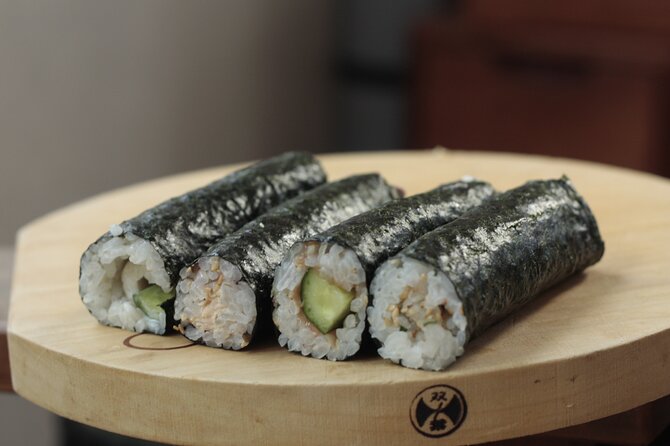
Adjustments can be made for vegetarian participants and other dietary restrictions for both sushi rolls and tempura. You should raise those needs when booking so Eri has time to plan suitable ingredients.
This flexibility is important because sushi and tempura can involve a wide range of fillings and dipping ingredients. The class allows you to choose what to use, but the available choices and exact substitutions are not specified in the information provided. Ask clearly about your needs rather than assuming every restriction can be handled without advance notice.
The same advice applies to allergies. The class takes place in a home kitchen, and the details of separate preparation areas or ingredient controls are not provided. If your restriction is serious, explain it in advance and confirm what adjustments can be made.
What the host adds to the experience
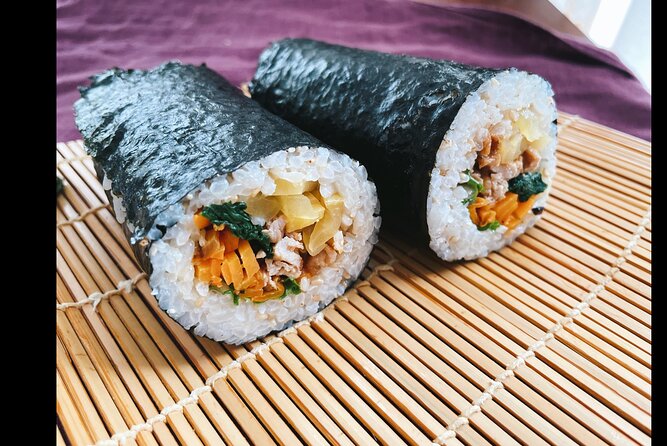
Eri is the host and instructor. Her role is not limited to giving a short demonstration. She explains the ingredients, shows how to prepare the rice, helps with rolling and cutting, and makes tempura with you.
Her communication before the class is a practical advantage. Clear directions to the station meeting point can reduce the stress of reaching a private home in an unfamiliar part of Tokyo. Being on time also helps the class start smoothly.
The home setting gives you a view of Tokyo life that a commercial kitchen cannot provide. You are not visiting a staged attraction or watching a restaurant production line. You are entering a personal space to cook a familiar Japanese meal with someone who lives in the city.
That also means the tone may feel more informal than a professional cooking school. If you want polished demonstrations, extensive equipment, or a formal certificate, this is probably not the right choice. If you want conversation, direct help, and food you can make again, the home format has real appeal.
How the price compares with the time involved
The $160 per person cost is high for a two-and-a-half-hour activity, particularly if your main goal is lunch. The important question is what you want to take away.
You receive a private class, instruction in two well-known Japanese dishes, ingredient guidance, practical work with sushi and tempura, a meal, and recipes to use at home. You also avoid the distance that often exists between diner and cook. You see the process and taste your own results.
I would judge the price by your interest in participation. For a food-focused visitor, this can be a useful part of a Tokyo itinerary because the lesson continues after you leave. You can make the dishes for family or friends and remember the city through the techniques.
For a large group, ask about group discounts before booking. The activity advertises group discounts, but the exact savings are not provided. Since the class is private, splitting the cost among several people may make the experience feel more worthwhile, especially if everyone wants to cook.
Who should book this class
I would recommend this class to you if you want more than a standard food tour. It suits people who enjoy learning a practical skill, asking questions, and eating a meal they helped prepare.
It is a good match for:
- Couples looking for a hands-on Tokyo activity
- Families who want a shared cooking project
- Friends with an interest in Japanese food
- Home cooks who want sushi and tempura techniques
- Visitors needing vegetarian or other dietary adjustments
- People who prefer a private class to a large public group
You may want to skip it if you have very limited time, dislike cooking, or are mainly seeking an inexpensive meal. The class needs about two and a half hours, plus the time required to reach Asagaya Station. It also asks you to take part rather than simply watch.
Booking, cancellation, and practical planning
Confirmation is normally provided at booking. If you book within nine hours of the activity, confirmation may arrive later and remains subject to availability. That makes advance booking the safer choice, particularly if your Tokyo schedule is tight.
Free cancellation is available up to 24 hours before the start time for a full refund. Cancellations within 24 hours are not refunded, and changes made during that period are not accepted. The cut-off follows Tokyo local time.
Bring a willingness to practice, not just an appetite. The most valuable part of the class is the repetition: handling rice, filling the nori, rolling with care, cutting cleanly, and helping with the tempura. If you pay attention to those steps, the recipes become useful souvenirs rather than paper to pack away.
Should you book the Asagaya sushi and tempura class?
Book it if you want a personal food lesson in a Tokyo home and appreciate learning dishes you can repeat later. The combination of three sushi rolls, tempura, ingredient guidance, and a shared Japanese-style meal gives the class a clear purpose.
I especially like the private format, Eri’s direct support, the ability to choose ingredients, and the option to request dietary adjustments. The main drawbacks are the fairly high price and the need to travel to Asagaya rather than meeting in a central tourist district.
For a food lover, the cost can be justified by the hands-on instruction and recipes. For someone who only wants to sample sushi and tempura, choose a restaurant instead. Check the meeting point carefully, confirm any dietary needs ahead of time, and allow the full two and a half hours. If those conditions suit you, this is a friendly, practical way to bring a little Tokyo cooking home.
FAQ
Where does the sushi and tempura class meet?
The meeting point is NewDaysJapan outside the JR Asagaya Station ticket gates, in the outside concourse. The listed address is in Suginami City, Tokyo.
Where does the cooking class take place?
The class takes place in the host Eri’s home. The activity begins at the Asagaya Station meeting point and ends back there.
How long does the cooking class last?
The class lasts approximately two hours and thirty minutes.
What will I learn to cook?
You will learn about Japanese ingredients such as rice, dashi, and nori, then prepare three kinds of sushi roll and crisp tempura using seafood and vegetables.
Can vegetarian or other dietary needs be accommodated?
Yes. Adjustments can be made for vegetarian participants and other dietary restrictions for both the sushi rolls and tempura. Share your needs when booking.
Is the activity private?
Yes. Only your group participates in this private activity. Group discounts are also available, though the exact discount amount is not specified.
More Workshops in Tokyo
- Tokyo Shinjuku Chopsticks Making Class
★ 5.0 · 1,763 reviews - Tokyo: Sushi Making Class in a Happi Coat near a Famous Spot
★ 4.9 · 1,377 reviews - Chopstick Making Workshop in Ginza
★ 4.8 · 1,366 reviews - Tokyo Sushi Making Class in Tsukiji with Professional Chef
★ 5.0 · 1,177 reviews
New on our Tokyo list
- Sumi-e Experience in a relaxing green tea shop in Tokyo★ 5.0 · 3 reviews
- Tokyo : Kamikaze Street Drift Ride★ 5.0 · 3 reviews
- Private Zen Meditation in English in Shinjuku, Tokyo★ 5.0 · 3 reviews
- Onsen Spa in Tokyo and Asakusa Bar Hopping with Local Guide★ 5.0 · 3 reviews
- Easy for everyone! Now you can play handmade mini shamisen and show off to everyone! Musical instruments, sweets and live music★ 5.0 · 3 reviews
- Tokyo: Private Tsukiji Street Food & Sake with Local Guide★ 5.0 · 3 reviews
- Mt Fuji Exploration Tour with Free Japanese Kusa Mochi from Tokyo★ 4.5 · 3 reviews
- Tokyo Tsukiji Fish Market Walking and Exploring Hidden Gems Tour★ 5.0 · 3 reviews
Japanese Cooking Classes, compared.
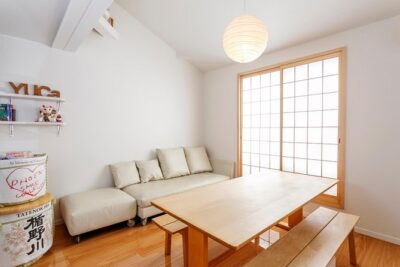
Ramen & Gyoza Cooking Class in Tokyo with Local Supermarket Visit
Read our review →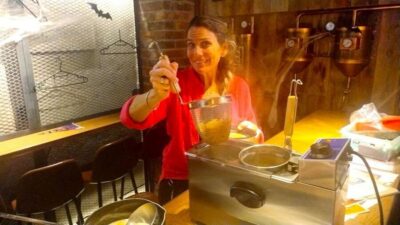
Easy Ramen Cooking Experience in Kabukicho, Shinjuku
Read our review →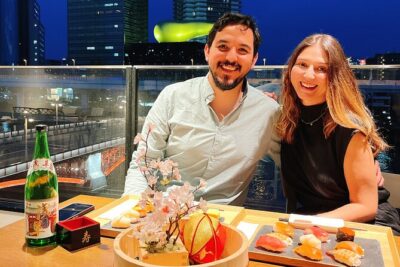
Ramen and Sushi Cooking Class with Sake Pairing Set in Tokyo
Read our review →
Tokyo Washoku 4-hour Cooking Class: From Market to Table
Read our review →
TokyoSumoShow, ChickenHotPot, and Mochi-Pounding by Pro Wrestlers
Read our review →
Professional Ramen & Gyoza with Ramen Chef in a restaurant!
Read our review →
Small-Group Wagyu Beef and 7 Japanese Dishes Tokyo Cooking Class
Read our review →Browse the lists this tour appears in