
Reviewed · JAPANESE COOKING CLASSES
Sushi Cooking Class: AKEMI’s SUSHiKiTCHEN in Tokyo
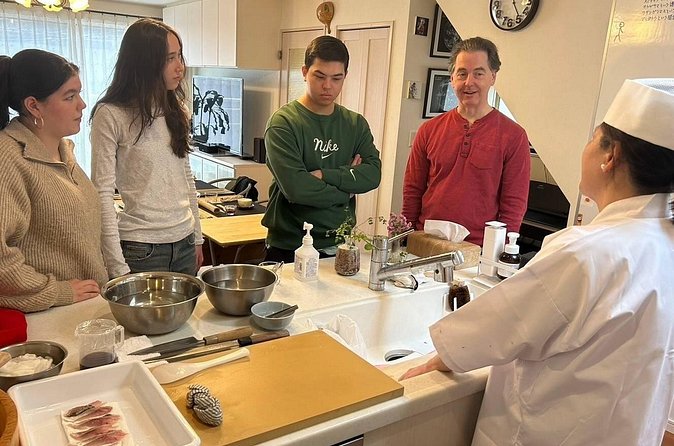
Sushi here is more than a meal at a counter. Chef Akemi welcomes you into her Tokyo home, where you learn four kinds of sushi, hear the story behind the dish, and eat what you prepare. I like the small-group format and the care put into the ingredients, especially rice ordered from Kyoto’s Hachidaime Gihey, founded in 1787. I also like that Akemi’s partner, Dan, helps create a warm, relaxed setting.
The main drawback is the price: $105.68 per person is a serious sum for two and a half hours. You also need to reach the meeting point in Sasazuka, a residential part of Shibuya rather than one of Tokyo’s main sightseeing zones. Still, the meal, instruction, cultural background, and personal attention make this a stronger value than a basic demonstration.
In This Review
- Key points to know before booking
- Entering Akemi’s Tokyo home in Sasazuka
- The first lesson: sushi is more than raw fish
- Four types of sushi, taught by hand
- Why the rice and fish make a difference
- A small class with room for questions
- The final meal you made yourself
- What makes this different from eating at a sushi restaurant
- Timing, transport, and practical planning
- Who should book this sushi lesson
- Is Akemi’s Sushi Kitchen worth $105.68?
- FAQ
- How long does the sushi cooking class last?
- Where does the experience begin?
- Where does the class end?
- How much does the sushi class cost?
- How many people can join the class?
- What will I learn during the class?
- What ingredients are used?
- Can I cancel for a full refund?
Key points to know before booking
- A real home kitchen in Sasazuka: You learn in a quiet residential part of Tokyo, not in a large cooking school.
- Four kinds of sushi: The class includes hands-on preparation, followed by a meal made by you.
- Restaurant-trained instruction: Akemi has seven years of restaurant experience in Japan and completed the Edomae Sushi Technique Acquisition Course at Tokyo Sushi School.
- Carefully sourced ingredients: Rice comes from Kyoto’s Hachidaime Gihey, while fish is sourced from Toyosu and Tsukiji markets.
- A small class: The lesson is limited to five students, though the booking information gives a maximum of six participants.
- Flexible cancellation: You can receive a full refund if you cancel at least 24 hours before the start time.
Entering Akemi’s Tokyo home in Sasazuka
The experience begins at Tamanosato Sasazukaten, 1-chōme-56-18 Sasazuka, Shibuya, Tokyo 151-0073. The address places you in a quiet residential part of Tokyo, close to public transportation but away from the city’s major tourist streets.
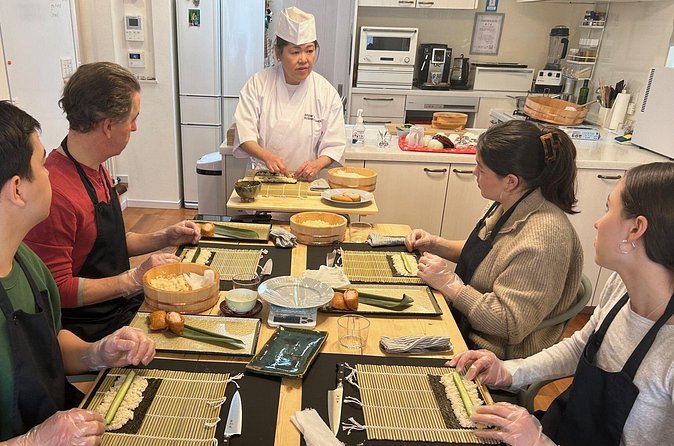
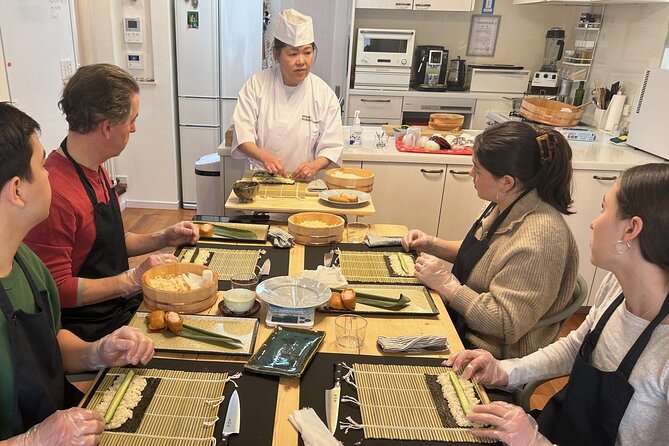
That setting matters. You are not walking into a restaurant built for quick service or a polished studio designed to look traditional. You are stepping into the home of the person teaching you. The result should feel more personal and less staged, with the cooking lesson taking place in the same kind of domestic setting where Japanese food is prepared every day.
The meeting point is also worth checking carefully before you leave. Sasazuka is in Shibuya Ward, but it is not the same as being beside Shibuya Crossing or Harajuku. Give yourself enough time to reach the address, especially if you are carrying luggage or changing trains.
Akemi and Dan host the class together. Akemi leads the sushi instruction, drawing on seven years in Japan’s restaurant industry and formal study of Edomae sushi technique at Tokyo Sushi School. Dan adds to the friendly home setting, a detail that helps the class feel social as well as instructional.
More sushi mornings and classes:
- Sushi Making Tokyo Roll and Authentic Japanese Sushi Class
★ 5.0 · 3,971 reviews - Tokyo: Roll and Authentic Sushi Making Class in Asakusa
★ 4.9 · 1,957 reviews - Make Sushi and Create Unforgettable Memories in Tokyo
★ 5.0 · 1,413 reviews
The first lesson: sushi is more than raw fish
A useful part of the class is the introduction to sushi culture before you start shaping food. Akemi explains the history of sushi, the terms used in sushi restaurants, and basic eating etiquette.
That background helps clear up a common misunderstanding. Sushi is not simply raw fish placed on rice. The rice, seasoning, knife work, shape, temperature, and handling all matter. Even the language used at a sushi counter can feel unfamiliar, so learning a few basic terms gives you a better sense of what you are eating later in your Japan trip.
The etiquette section is practical rather than decorative. You learn how sushi is traditionally approached and eaten, which can make a future visit to a sushi restaurant feel less intimidating. The information also gives you a better way to notice the work behind a small piece of food.
I like this part because it turns lunch into a lesson in Japanese food culture. You are not only copying hand movements. You are learning why sushi has its own customs and vocabulary.
Four types of sushi, taught by hand
The main activity is making four types of sushi. The exact names and recipes are not provided in the tour details, so you should not book this expecting a fixed list of specific pieces. What is clear is that you receive direct instruction as you work through several forms of sushi rather than watching one short demonstration.
The class is intended for beginners. You do not need previous sushi-making experience, and the small size allows Akemi to guide each person through the process. That personal attention is especially useful when your rice shape is uneven, your filling shifts, or your finished piece looks less tidy than the chef’s example.
Cooking classes can vary widely in how much you actually do. Here, the meal is prepared by the participants, so you have a clear reason to pay attention. You will handle the ingredients, practice the techniques, and then eat the result.
The class lasts about two hours and thirty minutes. That is enough time for instruction, preparation, cultural explanation, and the final meal, but it is not an all-day cooking course. You should expect a focused introduction to sushi rather than a complete professional training program.
Why the rice and fish make a difference
Akemi sources the ingredients with unusual care for a home-based class. The sushi rice is a special blend ordered from Hachidaime Gihey in Kyoto, a company established in 1787. Rice is the base of every sushi piece, so this is not a minor detail. A good topping cannot rescue poorly prepared rice.
Fresh fish, known as neta, comes directly from fish markets in Toyosu and Tsukiji. Those names are important in Tokyo’s food world, but the practical point is simpler: the ingredients are sourced from established markets rather than treated as an afterthought.
You may find that this changes how you judge sushi. A restaurant meal can make the finished piece seem effortless. In the kitchen, you see how much depends on the rice and on the quality of the fish before any shaping begins.
The use of fresh ingredients also supports the price. At $105.68, this is not a budget meal, and you should compare it with the cost of a casual restaurant lunch. The class includes instruction, a meal, ingredient costs, and cultural context. You are paying for an activity and dinner or lunch in one package, not just for a plate of sushi.
That does not make it automatically good value for every budget. If your goal is simply to eat sushi, a restaurant will cost less. If you want to understand how sushi is made and leave with techniques you can repeat, the fee makes more sense.
More cooking classes in Tokyo:
- Ramen & Gyoza Cooking Class in Tokyo with Local Supermarket Visit
★ 5.0 · 823 reviews - Tokyo: Easy Ramen Cooking Experience in Kabukicho, Shinjuku
★ 4.6 · 321 reviews - Ramen and Sushi Cooking Class with Sake Pairing Set in Tokyo
★ 5.0 · 291 reviews - Tokyo: Wagyu and 7 Japanese Dishes Cooking Class
★ 4.9 · 273 reviews
A small class with room for questions
The lesson is limited to a maximum of five students according to the class description. The additional booking information gives a maximum of six travelers, so it is wise to understand that the group may be as large as six people.
Either way, this is a small setting compared with a large cooking workshop. You should have a better chance to ask questions, watch the demonstrations clearly, and receive corrections while your hands are still working.
Small groups also affect the mood. A home class can feel awkward if there are too many people around a kitchen table. The limited size helps preserve the personal quality that makes this experience different from a standard food tour.
The tradeoff is that small classes often sell out. The experience is booked on average 49 days ahead, which is a useful planning signal. If the date matters to you, book well before your Tokyo visit rather than waiting until the last few days.
The final meal you made yourself
The lesson ends with a meal of the sushi you prepared. This is the satisfying payoff, but it is also part of the teaching method. You can taste the result while the steps are still fresh in your mind.
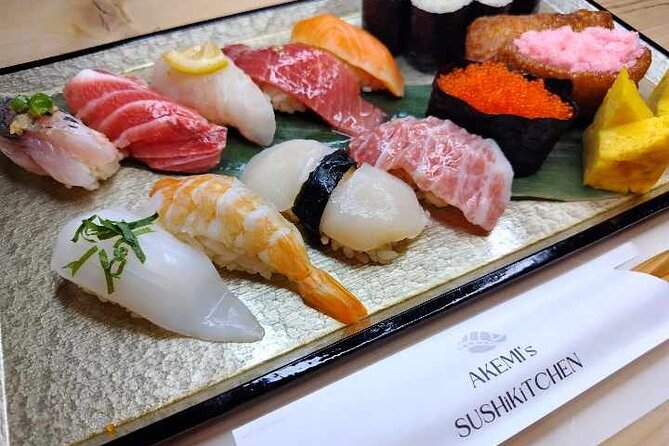
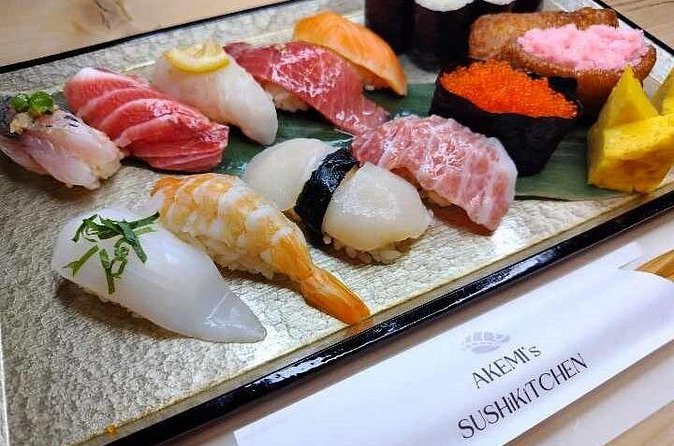
Fresh fish and carefully prepared rice give the meal a stronger foundation than a casual practice session using ordinary supermarket ingredients. You also get to see how technique affects the finished piece. A sushi roll that looks simple may require careful pressure, even filling, and proper handling of the rice.
Do not expect the polish of a trained sushi chef on your first try. That is not a flaw in the experience. The point is to learn the process and gain enough confidence to understand what you are seeing at a sushi counter.
The home setting adds another layer to the meal. You are eating in the same place where the class took place, with Akemi and Dan nearby rather than leaving immediately after a formal restaurant service. That gives the ending a more relaxed feel.
What makes this different from eating at a sushi restaurant
A restaurant gives you speed, presentation, and access to a wider menu. This class gives you context and participation. You learn why the food is made a certain way instead of only seeing the final result arrive on a plate.
I especially like the chance to learn sushi vocabulary and etiquette. Those details can help you later when ordering at a traditional sushi counter. You will have a better idea of what you are hearing and why certain actions matter.
The class can also suit people who are cautious about sushi. You still need to be comfortable with the ingredients being served, but the lesson gives you a closer look at how the food is handled. That can make the meal feel less mysterious.
It is also a useful choice for Japanese visitors or anyone who has eaten sushi many times but never learned the basics. Akemi’s lessons are designed to teach food culture, not just a recipe. The material can be valuable even if sushi is already familiar to you.
Timing, transport, and practical planning
The class takes about two and a half hours, and it ends back at the meeting point. That makes it easy to plan as a contained activity rather than a full-day outing.
Because the class is held in a residential area, avoid pairing it with a tight reservation on the opposite side of Tokyo. Allow time for public transportation and for finding the exact meeting point. The activity is near public transport, but no specific station or walking time is provided, so check your route before departure.
A mobile ticket is included. Confirmation arrives when you book, which is useful for keeping the address and reservation details on your phone.
The experience allows service animals. No other accessibility details are provided, so you should contact the provider directly if you need information about kitchen access, seating, or other physical requirements.
Cancellation is free up to 24 hours before the start time. Cancel later than that and the amount paid is not refunded. Changes made within 24 hours are also not accepted, with all cut-off times based on Tokyo local time.
Who should book this sushi lesson
I would recommend it to you if food is one of the main reasons you visit Japan. It suits curious beginners, couples, small families, and anyone who prefers meeting a local host in a home rather than joining a large commercial class.
It is also a good pick for people who want a quieter side of Tokyo. Sasazuka does not provide the big-city spectacle of Shibuya’s center, but the residential setting is part of the appeal.
You should think twice if your budget is tight or if you only want a quick meal. At more than $100 per person, the class needs to provide more than food to feel worthwhile. It does, but only if you value instruction, culture, and personal contact.
The class may also be less suitable for a schedule packed with major attractions. The two-and-a-half-hour lesson, plus transport to and from Sasazuka, requires a real block of time. Plan it as a main activity, not as something to squeeze between two distant sightseeing stops.
Is Akemi’s Sushi Kitchen worth $105.68?
For a basic sushi lunch, no. You can spend less at a restaurant and avoid the time commitment.
For a small, hands-on class using fish from Toyosu and Tsukiji, special Kyoto rice, and instruction from a chef with formal Edomae training, the cost is easier to justify. You receive a meal, four sushi-making lessons, food history, terminology, etiquette, and time to ask questions. The highly positive rating, with 100 percent recommended and 48 five-star reviews listed, also fits the clear strengths of the format: fresh food, warm hosting, and personal guidance.
I would book this if you want to understand sushi instead of simply ordering it. Choose another activity if you are seeking a low-cost meal, a large menu, or a class with a detailed published recipe list. For an intimate introduction to sushi in a real Tokyo home, Akemi’s Sushi Kitchen offers a focused and useful experience.
FAQ
How long does the sushi cooking class last?
The class lasts approximately two hours and thirty minutes.
Where does the experience begin?
It begins at Tamanosato Sasazukaten, 1-chōme-56-18 Sasazuka, Shibuya, Tokyo 151-0073, Japan.
Where does the class end?
The activity ends back at the meeting point.
How much does the sushi class cost?
The listed price is $105.68 per person.
How many people can join the class?
The class description says lessons are limited to a maximum of five students. The additional booking information gives a maximum of six travelers.
What will I learn during the class?
You will learn how to make four types of sushi, along with sushi history, essential terminology, and Japanese sushi-eating etiquette.
What ingredients are used?
Akemi uses a blended rice specially ordered from Hachidaime Gihey in Kyoto and fresh fish sourced from the Toyosu and Tsukiji markets.
Can I cancel for a full refund?
Yes. You can cancel at least 24 hours before the experience start time for a full refund. Cancellations made less than 24 hours in advance are not refunded.
More Workshops in Tokyo
- Tokyo Shinjuku Chopsticks Making Class
★ 5.0 · 1,763 reviews - Tokyo: Sushi Making Class in a Happi Coat near a Famous Spot
★ 4.9 · 1,377 reviews - Chopstick Making Workshop in Ginza
★ 4.8 · 1,366 reviews - Tokyo Sushi Making Class in Tsukiji with Professional Chef
★ 5.0 · 1,177 reviews
New on our Tokyo list
- From Tokyo: Mount Fuji & Hakone Full Day Private Tour★ 4.9 · 25 reviews
- Tokyo Spectacular View Day-Cruise in 90 Minutes★ 5.0 · 25 reviews
- Real Tokyo Runner Club : Daikoku Car Meet Night Tour with JDM Car★ 5.0 · 25 reviews
- 2.5 Hour-Guided Cycle Tour in the Central Tokyo★ 5.0 · 25 reviews
- Tokyo: 2-Hour Night Bike Tour of the City’s Hidden Gems★ 4.9 · 25 reviews
- Ramen Making from Scratch +Akihabara Tour –Cooking Class★ 5.0 · 25 reviews
- [Self-Drive] Tokyo & Daikoku Custom Car Driving Tour★ 4.9 · 25 reviews
- Samurai themed Entertainment show in Shinjuku★ 4.5 · 25 reviews
Japanese Cooking Classes, compared.
Ramen & Gyoza Cooking Class in Tokyo with Local Supermarket Visit
Read our review →
Easy Ramen Cooking Experience in Kabukicho, Shinjuku
Read our review →
Ramen and Sushi Cooking Class with Sake Pairing Set in Tokyo
Read our review →
Tokyo Washoku 4-hour Cooking Class: From Market to Table
Read our review →
TokyoSumoShow, ChickenHotPot, and Mochi-Pounding by Pro Wrestlers
Read our review →
Professional Ramen & Gyoza with Ramen Chef in a restaurant!
Read our review →
Small-Group Wagyu Beef and 7 Japanese Dishes Tokyo Cooking Class
Read our review →Browse the lists this tour appears in