
Reviewed · SUMO EXPERIENCES
Tokyo: Family Sumo Workshop & Live Wrestling Show with Lunch
The best part of this Ryogoku sumo workshop is the close range. You are not watching tiny figures across a huge arena. You sit near former professional wrestlers, hear the slap of a strike, watch their training drills, and can step onto the clay dohyo yourself. The bilingual presentation turns an unfamiliar sport into something you can follow quickly.
I like two things in particular. First, the lesson is active: you learn shiko, teppo, and suri-ashi before the exhibition bout, so the rituals have meaning instead of being empty stage business. Second, the chanko hotpot lunch is generous and practical, with vegetarian, vegan, pork-free, and allergy-friendly arrangements available when requested in advance.
The main consideration is that the wrestling challenge is optional, but volunteers need to be in good health. The event may also be canceled if the minimum number is not reached, so a private reservation is the safer choice if this is a must-do.
In This Review
- Key points at a glance
- Why this Ryogoku sumo experience works
- Entering the dohyo and learning the basics
- The exhibition bout brings the power
- A lunch that explains sumo life
- The value of $60 in Tokyo
- Who should book this experience
- What to wear and how to prepare
- The tone, the hosts, and the group feel
- How this compares with watching sumo in a stadium
- Should you book it?
- FAQ
- How long does the sumo workshop last?
- What is included in the price?
- Do I have to wrestle a sumo wrestler?
- What should I wear?
- Can children join the experience?
- Can the meal be made vegetarian, vegan, or allergy-friendly?
- Is the venue wheelchair accessible?
- What happens if the minimum number of participants is not reached?
Key points at a glance
- Former pros in a small ring: Meet wrestlers up close in Ryogoku, Tokyo’s sumo district, rather than watching from the back of a stadium.
- Three real training basics: Try shiko leg stomps, teppo pushing practice, and suri-ashi sliding footwork with guidance.
- A proper audience challenge: Watch an exhibition bout, then enter the ring in a padded suit to test your strength against a wrestler.
- Food with cultural meaning: Eat mini chanko nabe, the protein-filled hotpot linked with a sumo wrestler’s daily diet.
- Family-friendly participation: Children and adults can watch, train, take photos, or simply cheer from their seats.
- Good value at $60: For 105 minutes of instruction, showmanship, ring access, photos, and lunch, the price is reasonable for Tokyo.
Why this Ryogoku sumo experience works
Sumo can seem hard to approach. The rules are simple at first glance, but the ceremony, hand gestures, salt, clothing, and ring customs carry meaning. This session gives you a friendly way in without asking you to sit through a full tournament or learn the sport from a distance.
The English-speaking host explains what is happening as the wrestlers demonstrate. Hosts have included Alyssa, Alisa, Rio, Ko, Yo, and others, so the individual presenter can change. The strongest part of the format is the mix of explanation and action. You hear about the sport, then see the movement immediately.
I also like the scale. A large stadium gives you the thrill of an official contest, but this workshop lets you see the wrestlers’ footwork, balance, and comic timing close up. You can bring your own phone or camera for photos, and parents can film children during the activities.
This is not a full professional tournament. It is an educational demonstration with audience participation, performed by former professionals. That distinction matters. Book it for access, humor, and hands-on fun, not as a substitute for attending a Grand Sumo Tournament.
More sumo mornings:
- Tokyo: Sumo Show Experience with Chicken Hot Pot and a Photo
★ 4.8 · 6,678 reviews - Tokyo: Sumo Show and Dining Experience
★ 4.8 · 2,742 reviews - the SUMO show
★ 5.0 · 1,960 reviews
Entering the dohyo and learning the basics
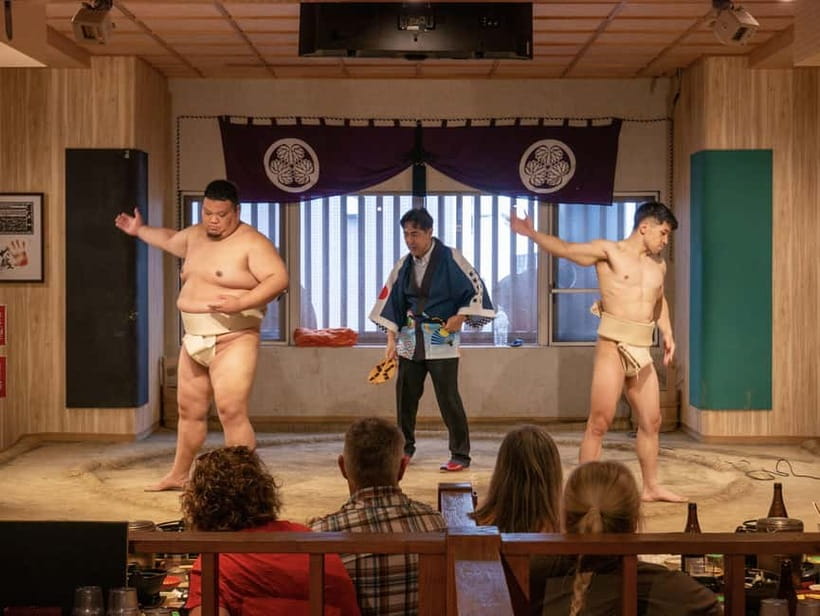
The first hour begins with an introduction to the ring and its customs. You remove your shoes before stepping onto the dohyo, and loose sportswear makes the physical parts easier. You can stay seated throughout if you prefer, but the ring access is the feature that makes this more than a standard stage show.
The wrestlers demonstrate shiko, the distinctive leg lift and stomp. It looks theatrical, but the movement also shows the controlled balance and strength needed in sumo. The host explains the traditional idea that the stomping helps drive away evil spirits, giving a cultural reason for a movement you might otherwise see as simple exercise.
Next comes teppo, a pushing drill performed against a support. You learn how a wrestler uses the hands, arms, and body together rather than relying only on size. Then you try suri-ashi, the low sliding walk that keeps the feet close to the ground.
These drills are short and approachable. You do not need sumo experience, and you do not have to perform every exercise. For children, the movements are easy to copy and funny enough to hold attention. For adults, they offer a quick reminder that sumo is built on technique, balance, repetition, and timing.
The demonstrations also include the pre-bout routines. You see salt tossing, ring preparation, and the gestures that give sumo its formal character. The host translates these actions into plain English, so you get more than a photo opportunity.
The exhibition bout brings the power
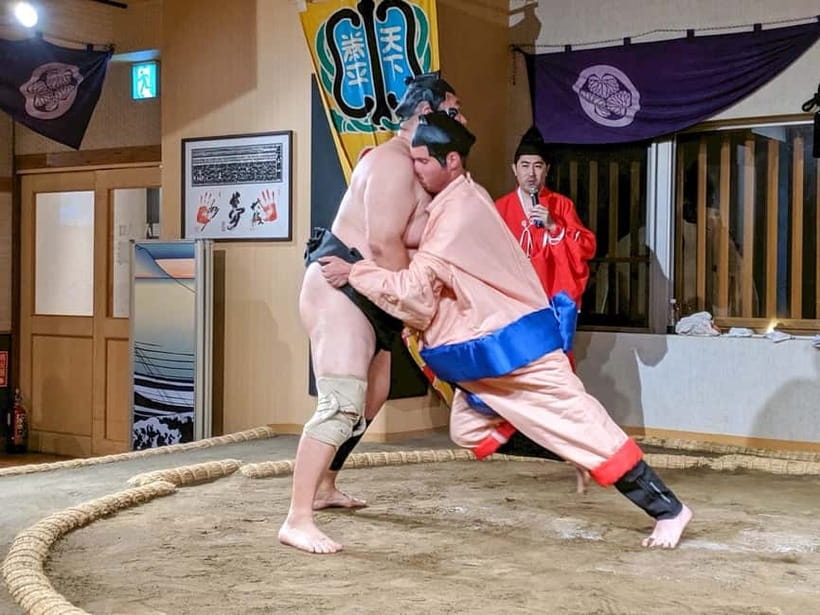
After the drills, the wrestlers show what the movements look like at full speed. The contrast is striking. The exercises can look slow and deliberate, but the bout produces a sudden collision, loud slaps, and quick changes in balance.
The event describes the wrestlers as former professionals, and the demonstrations show why the sport is so physical. The force of a charge is easy to underestimate until you see the wrestlers meet in the ring. Even in a lighthearted setting, the bout gives you a real sense of timing and impact.
The tone is playful rather than solemn. The MC keeps the audience involved, explains the rules, and uses humor to make the action accessible. That balance is important for families. Younger children may not follow every rule, but they can understand the basic goal: push your opponent out of the ring.
After the demonstration, audience volunteers can challenge a wrestler. A padded sumo suit is provided for the person entering the ring, making the activity safer and funnier. You will not overpower a 160-kilogram wrestler, but that is not the point. The challenge lets you feel the difference between ordinary strength and a trained body built for controlled pushing.
You can also choose not to participate. Spectators may remain seated, cheer, and record the action. This makes the activity work for mixed groups where one person wants to wrestle and another would rather take photos.
A lunch that explains sumo life
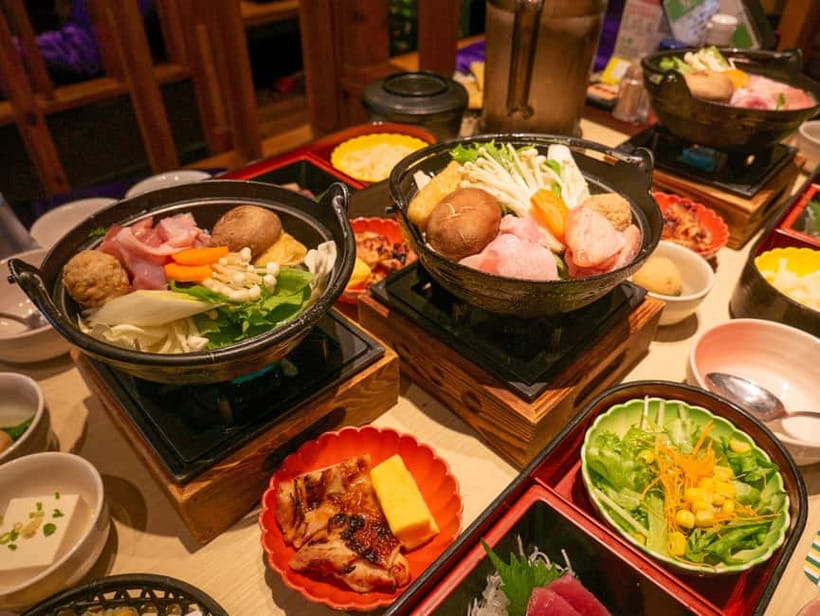
The second part centers on chanko nabe, the hotpot associated with sumo wrestlers. It is served as a mini portion, but the meal is described as filling, and the menu includes meat and fresh vegetables in a steaming broth.
The food is not just a convenient add-on. It helps explain how wrestlers eat to support intense training and large bodies. The host gives context about the role of chanko in a wrestler’s diet, turning lunch into another part of the cultural lesson.
You should not plan a large breakfast before this experience. The meal has been described as plentiful, and one useful practical tip is to arrive hungry. Alcohol is not included, and additional menu items or alcoholic drinks cost extra if ordered on site.
Dietary planning is possible, but you need to do it properly. Vegetarian, vegan, and allergy-friendly meals can be arranged if you provide the request at least 48 hours ahead. Pork-free and alcohol-free meals can also be prepared, but the venue does not hold official Halal certification.
If you require strict protection from cross-contamination, this may not be suitable. The kitchen can avoid pork and alcohol, but that is the full extent of the stated accommodation. Ask clearly before booking if your dietary needs are medically strict.
A few more Tokyo bookings worth comparing
- Tokyo: Mt.Fuji & Lake Kawaguchiko 1-Day Bus Tour w/Optional Lunch
★ 4.5 · 839 reviews - Tokyo: Sumo Experience and Chanko Nabe Lunch
★ 4.8 · 257 reviews - Tokyo: Tsukiji Fish Market Tour with 6 Stops & Seafood Lunch
★ 4.5 · 165 reviews - Tokyo: 1 Day Bus Tour with Meiji-Jingu,Odaiba,lunch&Skytree
★ 4.6 · 156 reviews
The value of $60 in Tokyo
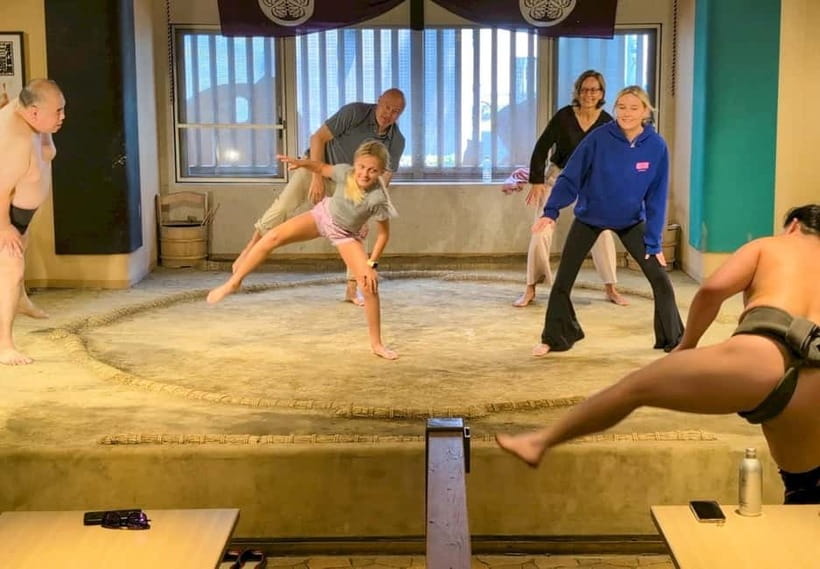
At $60 per person, this is a strong value if you want an activity rather than a passive performance. Your fee covers admission, access to the ring, former professional wrestlers, English commentary, the interactive drills, the padded challenge equipment, photo time, and lunch.
Tokyo offers plenty of expensive attractions that last only a short time. Here, the 105-minute session has a clear structure and several separate elements. You get cultural explanation, live athletic action, personal participation, and a substantial meal in one booking.
The value is strongest for a family. Parents do not need to arrange a separate activity for children, and non-participants can watch while others enter the ring. A solo visitor can also fit in easily. One person attending alone can still join the group atmosphere, ask questions, and volunteer for the challenge.
The value is less obvious if you already plan to attend a full sumo tournament and want only official competition. This workshop does not offer the atmosphere, scale, or stakes of a tournament day. It gives you access and interaction instead.
Who should book this experience
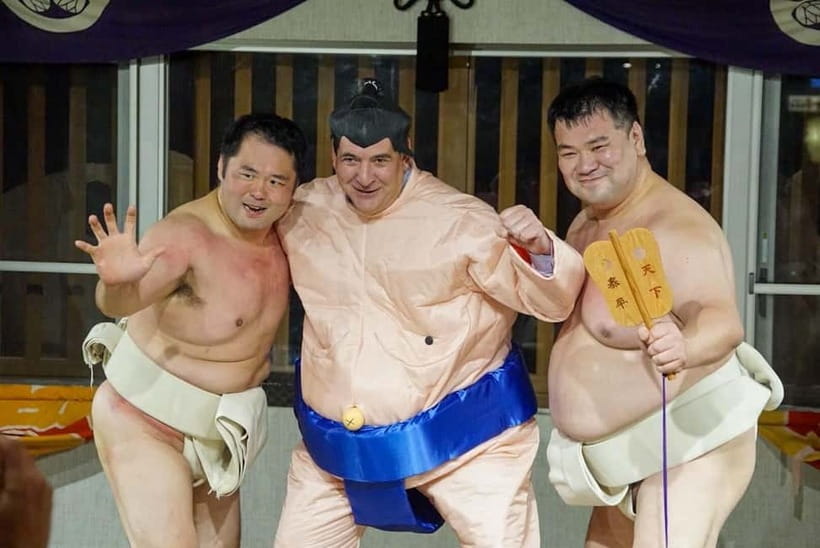
I would recommend it to families with school-age children, first-time visitors to Japan, and anyone who wants a cultural activity with a physical twist. The explanations are designed for an English-speaking audience, and the humor keeps the formal aspects from becoming dry.
It also suits people who are unsure about sumo. You do not need to know the divisions, rankings, or tournament calendar. The host explains the basic rules and training movements as you go.
Young children have enjoyed the show and the chance to try the movements, but meal rules need attention. Children under five do not receive meals under the child rate. If a child under five needs lunch, book that child at the adult rate. Children aged six and older cannot use the child rate.
The activity is wheelchair accessible, which makes it more practical for mixed-age groups. Still, the ring drills involve standing, sliding steps, and physical contact, so anyone with mobility or health concerns should plan to watch rather than participate.
What to wear and how to prepare
Wear loose sportswear. You will remove your shoes before entering the ring, and clothes that allow easy movement will make the drills more comfortable.
Bring a phone or camera if you want your own photos. Photo time with the wrestlers is included, and parents may film the ring activities. Ask before moving into the action, and keep in mind that the wrestling challenge is for volunteers who are in good health.
The meeting point is in front of the face-in-hole photo board at the shop. Look for the person holding a smartphone displaying AlvaJapan. You are asked to wait outside the store and not enter before 10:00 AM. If you lose your way, WhatsApp support is available from the guide.
Transport is not included, so allow time to reach Ryogoku on your own. The location is in Honshu, in the Tokyo district closely associated with sumo. Check the available start time when booking, since the exact schedule can vary.
The tour uses an English-speaking instructor. If you want the activity to happen for certain, consider a private reservation, since the event may not run if the minimum group size is not met.
The tone, the hosts, and the group feel
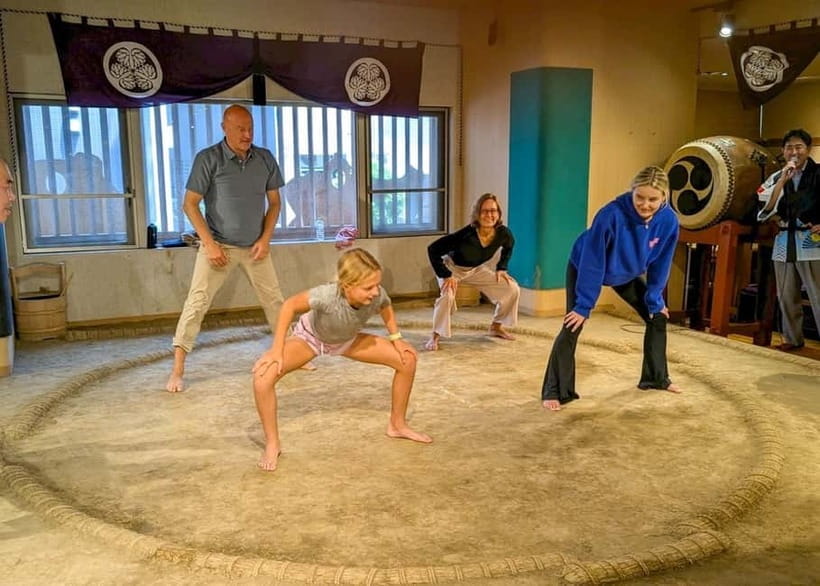
The hosts have an important job here. They need to explain Japanese customs without turning the session into a lecture, keep children involved, and make the wrestling challenge feel safe. The strongest feedback names hosts such as Alyssa, Alisa, Rio, Ko, Yo, and Yuto as friendly, funny, and clear in English.
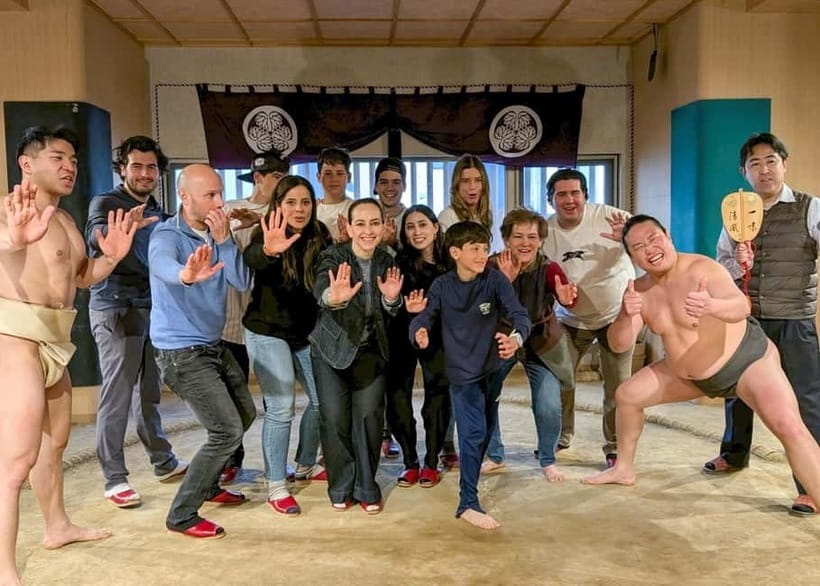
The wrestlers are not distant performers. They answer questions, pose for photos, demonstrate their skills, and encourage volunteers. That personal contact is a big reason the session works for people who know little about sumo.
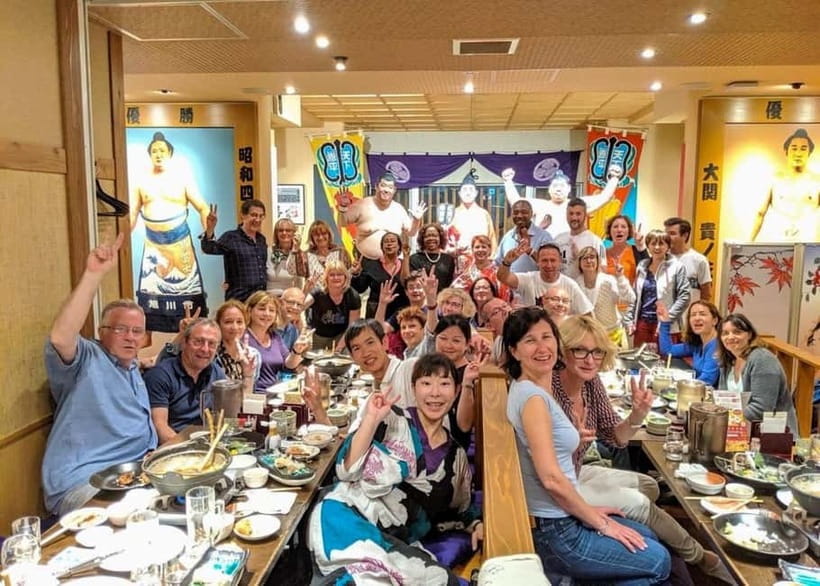
The group setting adds to the fun. You cheer for volunteers, laugh when a confident challenger discovers how hard it is to move a trained wrestler, and share the excitement of the bout. If you are traveling alone, the format still gives you an easy way to take part without needing your own private group.
The only trade-off is that the exact host and wrestlers are not guaranteed by name. Treat the listed names as examples of the team rather than a promise that a particular person will lead your session.
How this compares with watching sumo in a stadium
A tournament gives you official bouts, rankings, strict ceremony, and the thrill of a real sporting contest. It also demands more time and usually gives you a more distant view of the wrestlers.
This workshop gives you the opposite experience. You learn the basic movements, hear the physical impact nearby, ask questions, take photos, and possibly enter the ring. The exhibition is designed to entertain and teach, so it has more explanation and audience contact than a tournament.
I would choose the workshop if you have only a short time in Tokyo, are visiting with children, or want an activity that combines food and culture. I would choose the tournament if your main goal is serious sumo competition and you are willing to plan around the official schedule.
Should you book it?
Book this workshop if you want close access, simple English explanations, plenty of laughter, and the chance to test yourself against a former pro in a padded suit. The ring challenge and hotpot lunch give the 105-minute session more substance than a standard cultural show.
Skip it if you need strict Halal kitchen controls, cannot take part in an event with possible minimum-group cancellation, or want only official tournament wrestling. For most families and first-time sumo fans, $60 is a fair price for an active morning in Ryogoku, especially when lunch, photos, instruction, and ring access are included.
FAQ
How long does the sumo workshop last?
The experience lasts 105 minutes. The ring presentation, demonstrations, training, and wrestling challenge take about 60 minutes, followed by about 60 minutes focused on chanko hotpot lunch.
What is included in the price?
The price includes admission to the sumo venue, ring access, English and Japanese commentary from or with former professional wrestlers, training activities, padded challenge equipment, mini chanko hotpot lunch, and photo time using your own camera or phone.
Do I have to wrestle a sumo wrestler?
No. Ring drills and the wrestling challenge are optional. You can remain seated, watch the demonstrations, cheer for volunteers, and film the action.
What should I wear?
Loose sportswear is recommended. You remove your shoes before entering the ring, so choose clothing that lets you move comfortably during the drills.
Can children join the experience?
Yes. The activity is designed for families, and children can watch, learn the basic movements, and take part when appropriate. Children under five do not receive meals under the child rate. If they need a meal, book them at the adult rate. Children aged six and older cannot be booked at the child rate.
Can the meal be made vegetarian, vegan, or allergy-friendly?
Yes, those requests can be arranged when made at least 48 hours before the experience. The venue can also avoid pork and alcohol, but it does not hold official Halal certification.
Is the venue wheelchair accessible?
Yes, the activity is wheelchair accessible. Ring drills remain optional, so you can watch from your seat if the physical activities are not suitable.
What happens if the minimum number of participants is not reached?
The event may not be held if the minimum number is not met. If you definitely want the activity to run, choose the private reservation option.
More Show in Tokyo
- Mt Fuji & Hakone Cruise, Drum Show Bullet Train 1 Day from Tokyo
★ 4.0 · 7,413 reviews - Tokyo Shinjuku Sumo Show & Experience with Photo
★ 5.0 · 1,750 reviews - Mt Fuji & Hakone Cruise, Drum Show Bus 1 Day from Tokyo
★ 4.0 · 1,287 reviews - Tokyo: Sumo Show and Experience in Shinjuku
★ 4.8 · 1,001 reviews
More Workshops in Tokyo
- Sushi Making Tokyo Roll and Authentic Japanese Sushi Class
★ 5.0 · 3,971 reviews - Tokyo: Roll and Authentic Sushi Making Class in Asakusa
★ 4.9 · 1,957 reviews - Tokyo Shinjuku Chopsticks Making Class
★ 5.0 · 1,763 reviews - Tokyo: Sushi Making Class in a Happi Coat near a Famous Spot
★ 4.9 · 1,377 reviews
New on our Tokyo list
- Tokyo Spectacular View Day-Cruise in 90 Minutes★ 5.0 · 25 reviews
- From Tokyo: Mount Fuji & Hakone Full Day Private Tour★ 4.9 · 25 reviews
- Real Tokyo Runner Club : Daikoku Car Meet Night Tour with JDM Car★ 5.0 · 25 reviews
- 2.5 Hour-Guided Cycle Tour in the Central Tokyo★ 5.0 · 25 reviews
- Ramen Making from Scratch +Akihabara Tour –Cooking Class★ 5.0 · 25 reviews
- [Self-Drive] Tokyo & Daikoku Custom Car Driving Tour★ 4.9 · 25 reviews
- Tokyo: 2-Hour Night Bike Tour of the City’s Hidden Gems★ 4.9 · 25 reviews
- Samurai themed Entertainment show in Shinjuku★ 4.5 · 25 reviews
Sumo Experiences, compared.
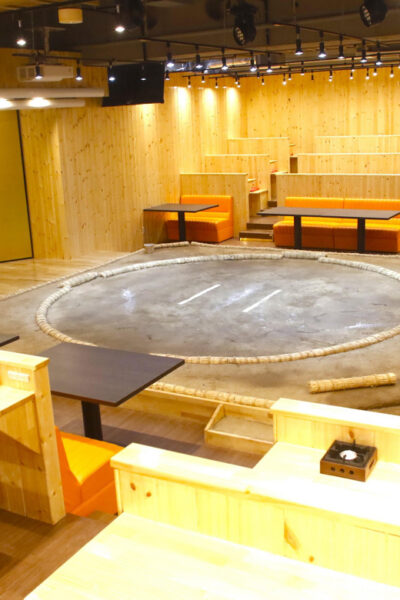
Sumo Show Experience with Chicken Hot Pot and a Photo
Read our review →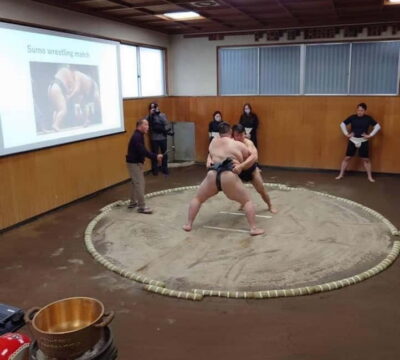
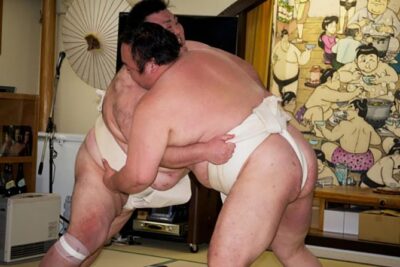
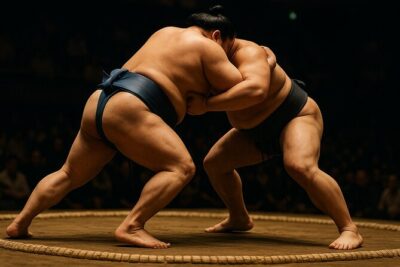
Tokyo Shinjuku Sumo Show & Experience with Photo
Read our review →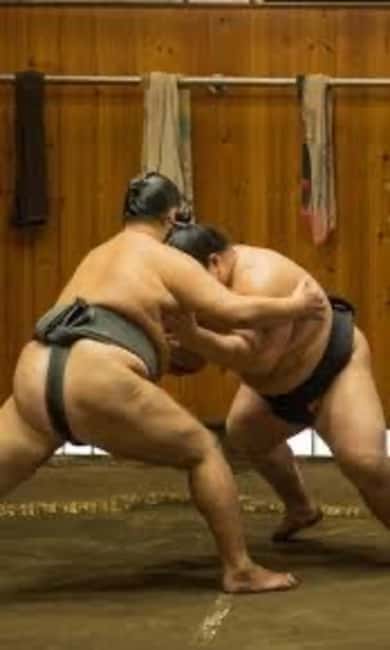
Authentic Sumo Experience in Tokyo: Enter the Sanctuary
Read our review →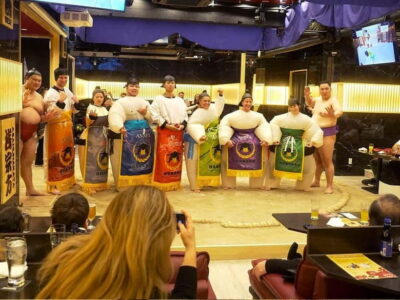
Luxury Sumo Show Experience & Japanese cuisine & Drink
Read our review →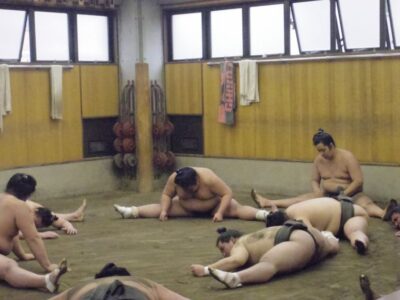
Browse the lists this tour appears in