
Reviewed · TOKYO FOOD TOURS
Kimono and Tea Ceremony in Asakusa Private Food Tour With Guide
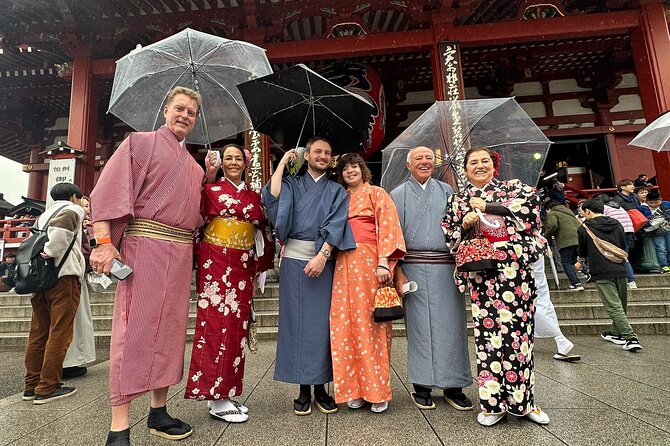
Asakusa is at its most memorable when you are dressed for the setting. This four-hour experience helps you put on a kimono, complete with an obi sash and wooden sandals, then leads you through Senso-ji, Nakamise Shopping Street, and Kaminarimon before or around a Japanese tea ceremony. The small group, limited to eight people, keeps the outing personal.
I like the combination of hands-on dressing and neighborhood sightseeing, since you are not simply watching a cultural demonstration. I also like that tea, two soft drinks, water, A5 Wagyu, ice cream, and local desserts are included. The main consideration is the price: at $290 per person, this is not a casual walking tour, and the experience makes the most sense if you value the kimono, food, and guide together.
In This Review
- Key points at a glance
- Why a Kimono Changes Your Asakusa Visit
- Dressing for the Ceremony and the Streets
- Senso-ji Temple: Tokyo’s Oldest Temple Setting
- Nakamise Shopping Street and Kaminarimon
- Tea Ceremony With More Than a Photo Opportunity
- Adam and the Value of a Personal Guide
- Is $290 Per Person a Fair Price?
- Who Should Book This Asakusa Experience?
- My Verdict on the Kimono and Tea Tour
- FAQ
- How long does the kimono and tea ceremony tour last?
- Where does the tour begin?
- Where does the activity finish?
- How many people can join the tour?
- What food and drinks are included?
- Is hairstyling included with the kimono?
- Can I cancel for a full refund?
Key points at a glance
- Kimono dressing in Asakusa: Choose a traditional or modern kimono, then add the obi sash and wooden sandals.
- A small group of up to eight: The limited size allows room for questions and personal attention.
- Three major Asakusa sights: The route includes Senso-ji Temple, Nakamise Shopping Street, and Kaminarimon.
- Food is part of the experience: A5 Wagyu, tea, soft drinks, ice cream, and local desserts are included.
- Guide-led cultural context: Adam is specifically praised for explaining life in Japan and adding small facts along the route.
- Optional extras: Hairstyling and overnight kimono rental cost more.
Why a Kimono Changes Your Asakusa Visit
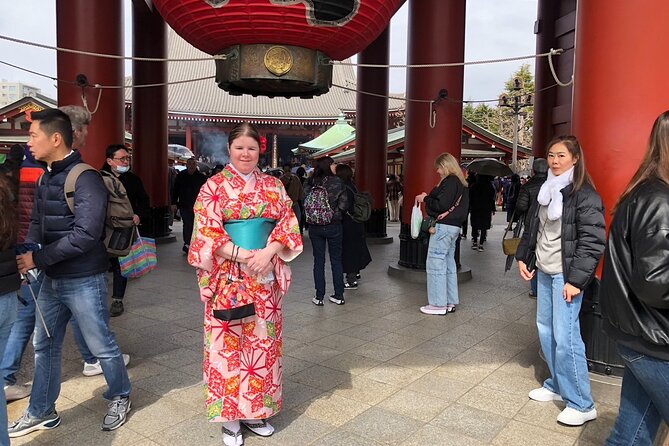
A kimono turns an ordinary temple visit into a more deliberate experience. You are not just passing through Asakusa with a camera. You are taking time to dress in Japanese clothing, learn how the outfit is put together, and walk through one of Tokyo’s best-known historic districts in a way that invites closer attention.
The dressing portion includes your choice of traditional or modern kimono, an obi sash, and wooden sandals. That matters because the clothing is not a costume added for a quick photograph. It gives the outing a clear cultural focus, even if you should still think of this as an introduction rather than a full study of kimono etiquette or tea ceremony practice.
The experience is especially well suited to first-time visitors who want several Japanese traditions in one half-day. You get a cultural activity, a food walk, famous sights, and plenty of chances for pictures without giving up the rest of your afternoon.
The outfit can also affect your pace. Wooden sandals and formal clothing are not ideal for rushing across Tokyo, so the four-hour schedule works in your favor. You have time to walk through Asakusa without treating the kimono portion as a race.
More tea rooms worth booking:
- Matcha Making Class in Tokyo with Authentic Japanese Sweets Set
★ 5.0 · 744 reviews - Tokyo: Traditional Tea Ceremony with a Tea Master
★ 5.0 · 528 reviews - Tokyo: Matcha Making Experience with Mochi Sweets in Asakusa
★ 4.9 · 388 reviews
Dressing for the Ceremony and the Streets
The tour begins at 11:00 a.m. at the Asakusa Culture Tourist Information Center, located at 2-chome-18-9 Kaminarimon in Taito City. This is a practical meeting point near public transportation and close to the main sights.
Expect the kimono preparation to be a central part of the day. You receive help choosing and putting on the clothing, then complete the look with the obi and wooden sandals. If hairstyling matters to you, it is available at an additional cost. Ask about that option when booking rather than assuming it is included.
You can also arrange an overnight kimono rental for an extra fee. That may suit you if you want more time for photographs or another outing after the tour, but it changes the cost and requires more care with the clothing. The basic experience only covers the tour period.
The practical clothing tip is simple: do not arrive expecting to wear jeans and sneakers during the activity. The tour provides the kimono, but comfortable underlayers and a willingness to walk at a measured pace will make the experience easier. The supplied information does not specify a dress code beneath the kimono, so you should ask the operator if you need precise guidance.
Senso-ji Temple: Tokyo’s Oldest Temple Setting
The first major stop is Senso-ji, Tokyo’s oldest Buddhist temple and one of the city’s most important religious sites. You receive about an hour here, with no separate admission fee listed.
Senso-ji gives the kimono experience its strongest sense of place. The temple is not an isolated attraction. It is the center of Asakusa, and its grounds provide the setting for learning how an old Buddhist temple fits into modern Tokyo.
A guide can help you look beyond the usual photograph. Ask about the temple’s Buddhist connection, its role in Asakusa, and the difference between visiting a religious site and simply treating it as a backdrop. The tour description promises a culture walking tour, so the value here comes from the explanations as much as from the buildings.
The main limitation is that Senso-ji is one of Tokyo’s most popular sights. You should expect a public tourist area rather than a quiet private temple visit. The kimono helps you connect with the setting, but it does not remove the crowds or turn the temple into a secluded stop.
Still, an hour is a sensible amount of time. You can see the main areas, take photographs, and listen to the guide without using the whole day on one attraction.
Nakamise Shopping Street and Kaminarimon
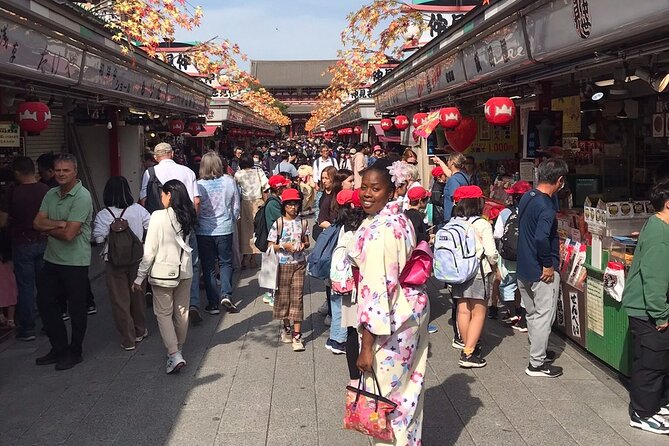
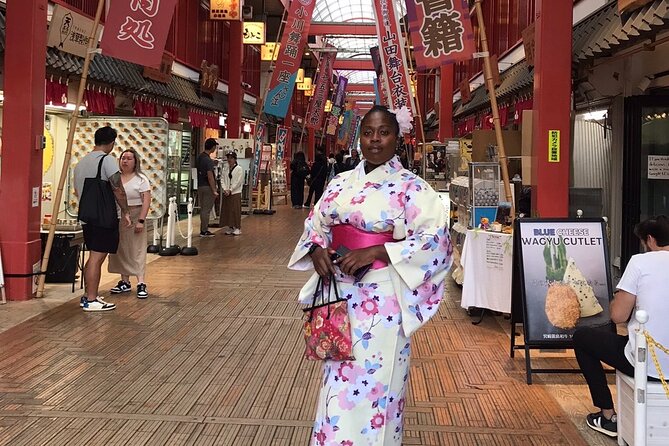
The route continues through Nakamise Shopping Street, the 250-meter approach to Senso-ji. Shops line both sides, selling traditional souvenirs, snacks, and sweets. The listed timing allows about two hours here, which is the longest portion of the outing.
That extra time matters. Nakamise is not just a corridor between the station and the temple. It is where the food side of the experience makes the most sense. You can sample Japanese treats, look at small souvenirs, and receive guidance about what you are eating instead of treating every snack as a random purchase.
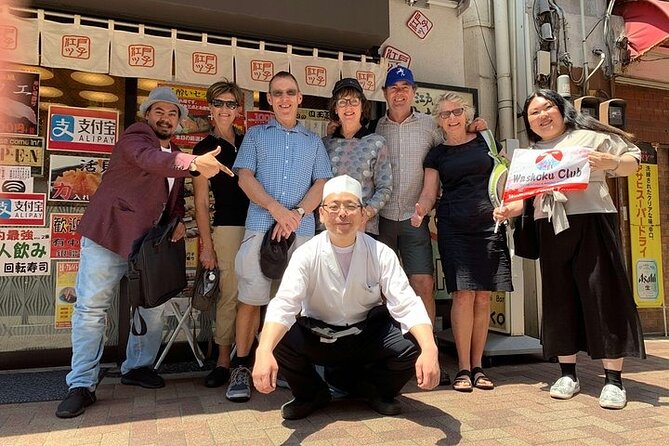
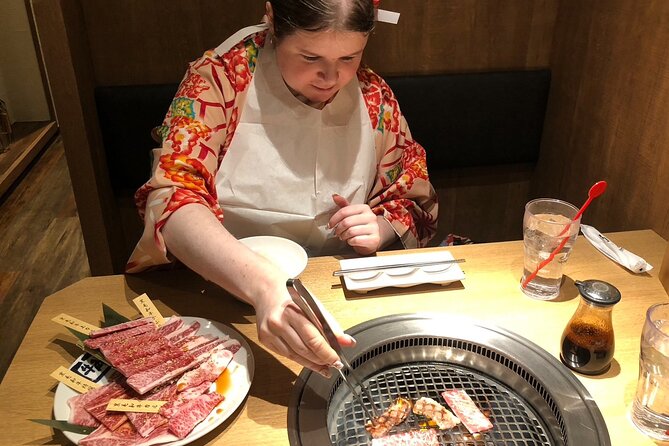
The included food gives the tour more value than a simple sightseeing walk. Tea, two soft drinks, water, ice cream, and local desserts are covered, along with an A5 Wagyu experience. Alcohol is not included, though it can be purchased by participants aged 18 and above.
The food list is generous, but you should clarify how the A5 Wagyu and other tastings are served if portion size matters to you. The description identifies the items included, but it does not give serving sizes or name specific shops. Think of the food as a series of cultural samples rather than a full restaurant meal.
Nakamise is also where the kimono creates the most practical friction. You will want time for pictures and browsing, but the clothing and sandals may make long, fast walking less appealing. The schedule allows for a slower pace, and the guide can help keep the outing moving without forcing you to hurry through every shop.
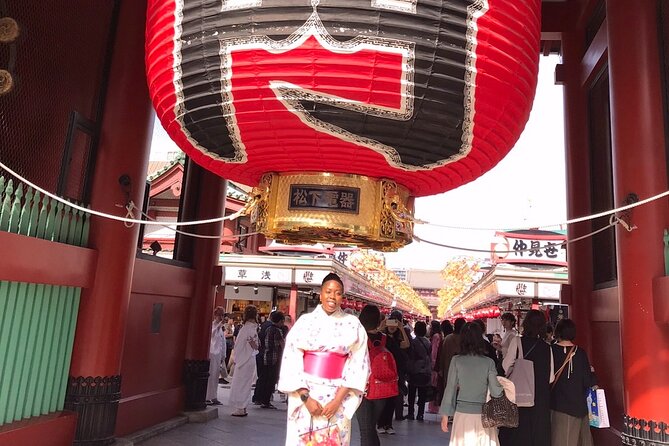
Kaminarimon, the outer gate leading toward Senso-ji, is another key photo stop. Its large lantern and statues make it one of Asakusa’s most recognizable sights. The gate is about 11.7 meters tall and 11.4 meters wide, so it is hard to miss and easy to use as a visual marker for the neighborhood.
The itinerary allocates about an hour to Kaminarimon, although the gate is close to the other stops. That time likely works as part of the wider walking route, photo opportunities, and explanations rather than as a full hour spent staring at one structure.
More kimono fittings and strolls:
- Let’s make kimono !(Kimono is a gift for you
★ 5.0 · 252 reviews - Tokyo: Matcha and Kimono Experience
★ 4.7 · 219 reviews - Tokyo: Asakusa Kimono Dressing and Matcha Experience
★ 4.9 · 173 reviews - Asakusa: Kimono Tea Ceremony with Matcha and Sweet
★ 4.9 · 153 reviews
Tea Ceremony With More Than a Photo Opportunity
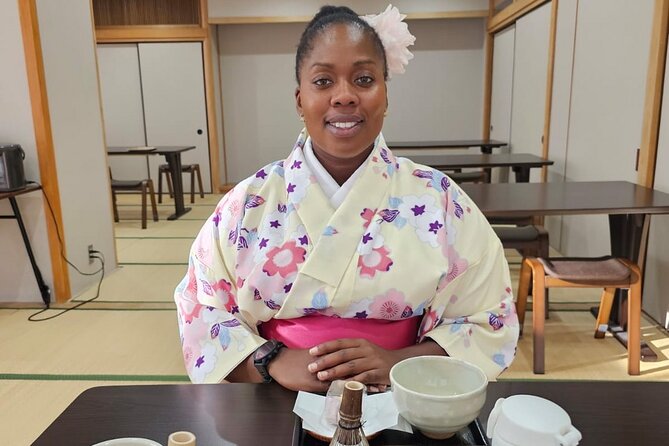
The tea ceremony is the heart of the experience, but it is woven into the wider walking tour rather than listed as a separate timed stop. You should expect an introduction to the ceremony and the chance to take part, not a lengthy formal training course.
That distinction is useful when deciding if the tour suits you. If you want a brief, approachable first look at Japanese tea culture, the format should fit. If you already study tea ceremony or want a highly formal session with extensive instruction, you may find this outing too broad.
The tea is paired with the kimono experience, which gives the ceremony a stronger sense of occasion. You learn through participation, clothing, food, and setting rather than through a lecture alone. The guide can explain what is happening and help you avoid feeling lost during the ceremony.
Tea and other Japanese treats are included, so you do not need to budget separately for the refreshments listed in the tour. Soft drinks and water are also provided. Alcohol is the only stated beverage exclusion.
Photography is clearly part of the appeal. You can take pictures at the temple, along Nakamise, at Kaminarimon, and during the wider cultural experience. Be respectful around religious spaces and ask before photographing people or ceremony details. The tour promises photo opportunities, but it does not promise a professional photographer or edited images.
Adam and the Value of a Personal Guide
Adam is the guide name connected with the strongest praise in the supplied feedback. His role appears to extend beyond pointing out famous buildings. He shares background about living in Japan and adds small facts that make the walk more interesting.
That personal angle can make a major difference in Asakusa. The main route is easy to find, but a guide helps connect the sights, food, clothing, and customs. You can ask questions as they arise instead of trying to sort out every detail from a guidebook while balancing a camera and a plate of snacks.
The group limit of eight is another practical advantage. It is small enough for a guide to notice if you need help with the kimono, want a photo, or have a question about a food item. It also makes the outing more social without the scale of a large coach group.
The experience may also allow some flexibility. One published account describes an itinerary change in which an onsen visit was skipped to make time for other activities. An onsen is not included in the stated itinerary, so do not book this tour expecting one. The useful point is that the guide may be able to adjust the day when circumstances allow, though you should confirm any special request in advance.
Is $290 Per Person a Fair Price?
At $290 per person, this is a premium half-day activity. You are paying for more than admission to Senso-ji, which is free, or access to Nakamise and Kaminarimon, which are public areas.
The price includes the kimono experience, tea ceremony, culture walk, guide, two soft drinks, water, A5 Wagyu, ice cream, and local desserts. It also buys you a limited group of no more than eight people and a planned route through several major Asakusa sights.
I would judge the value by your priorities. If you want to rent a kimono independently, visit the temple on your own, and choose your own meals, you could spend less and control the timing. You would also have to arrange the clothing, manage the route, and provide your own cultural context.
If you prefer one organized experience that combines clothing, food, tea, and sightseeing, the price is easier to defend. The half-day length is helpful too. You can finish around the early afternoon and still have time for another Tokyo neighborhood, shopping, or dinner plans.
Hairstyling and overnight rental are extra, so include those costs before booking if they are important to you. The base price is already substantial, and optional add-ons can quickly change the total.
Who Should Book This Asakusa Experience?
I would recommend this tour to first-time Tokyo visitors who want an easy introduction to several Japanese customs at once. It is also a strong fit for couples, small groups of friends, and families who care about photographs and shared activities more than a fast checklist of sights.
Food-focused visitors will appreciate the included tastings, especially the combination of A5 Wagyu, sweets, ice cream, and tea. You should not expect a full multi-course meal, but the food gives the walking route a clear purpose.
The tour is also a good choice if you want a guide who can explain daily life in Japan. Adam is specifically associated with that kind of commentary, and the small group leaves more room for conversation.
I would think twice if you dislike dressing up, have trouble walking in wooden sandals, or want a completely private schedule. The group is small but not private, and the experience is built around being seen in a kimono while moving through public Asakusa.
Confirmation is provided at booking, and most people can participate. Hotel pickup and drop-off are not included, so you need to reach the meeting point yourself. The activity ends back at that same meeting point.
Free cancellation is available if you cancel at least 24 hours before the 11:00 a.m. start time. Changes or cancellations made less than 24 hours before the experience are not accepted for a refund.
My Verdict on the Kimono and Tea Tour
Book this if you want Asakusa to feel like more than a temple-and-shopping stop. The kimono, tea ceremony, food tastings, and small group work well together, and a guide such as Adam can add the local detail that public sightseeing often lacks.
Skip it if $290 feels high for a four-hour activity or if you would rather explore independently. For the right person, the value is in the complete package: getting dressed, learning as you go, eating Japanese treats, and seeing Senso-ji from a more thoughtful angle.
FAQ
How long does the kimono and tea ceremony tour last?
The experience lasts approximately four hours and begins at 11:00 a.m.
Where does the tour begin?
It begins at the Asakusa Culture Tourist Information Center, 2-chome-18-9 Kaminarimon, Taito City, Tokyo 111-0034, Japan.
Where does the activity finish?
The activity ends back at the meeting point.
How many people can join the tour?
The group is limited to a maximum of eight participants.
What food and drinks are included?
The inclusions are tea, two soft drinks, water, an A5 Wagyu experience, ice cream, and local desserts.
Is hairstyling included with the kimono?
No. Hairstyling is available at an additional cost.
Can I cancel for a full refund?
Yes, if you cancel at least 24 hours before the local start time. Cancellations or changes made less than 24 hours before the experience are not eligible for a refund.
More Asakusa Visits
- Tokyo: Japanese Dance Cabaret Theater Asakusa-Kaguwa Ticket
★ 4.8 · 2,270 reviews - Tokyo: Meiji Shrine, Asakusa, Skytree Bus Tour and Cruise
★ 4.7 · 1,986 reviews - Tokyo: Roll and Authentic Sushi Making Class in Asakusa
★ 4.9 · 1,957 reviews - Tokyo: Asakusa Walking Tour with Sensoji Temple Visit
★ 4.8 · 1,583 reviews
More Food Crawls in Tokyo
- Tokyo: Shinjuku Food Tour (13 Dishes at 4 Local Eateries)
★ 5.0 · 6,603 reviews - Tokyo: Shinjuku Food Tour (15 Dishes and 4 Eateries)
★ 4.9 · 2,033 reviews - Best of Shinjuku: Izakaya Food Tour (4 Stops, 14+ Tastings)
★ 5.0 · 1,863 reviews - Tokyo Night Foodie Tour in Shinjuku – Seasonal Sushi, Wagyu Beef
★ 5.0 · 1,161 reviews
New on our Tokyo list
- Sumi-e Experience in a relaxing green tea shop in Tokyo★ 5.0 · 3 reviews
- Tokyo : Kamikaze Street Drift Ride★ 5.0 · 3 reviews
- Private Zen Meditation in English in Shinjuku, Tokyo★ 5.0 · 3 reviews
- Onsen Spa in Tokyo and Asakusa Bar Hopping with Local Guide★ 5.0 · 3 reviews
- Easy for everyone! Now you can play handmade mini shamisen and show off to everyone! Musical instruments, sweets and live music★ 5.0 · 3 reviews
- Tokyo: Private Tsukiji Street Food & Sake with Local Guide★ 5.0 · 3 reviews
- Mt Fuji Exploration Tour with Free Japanese Kusa Mochi from Tokyo★ 4.5 · 3 reviews
- Tokyo Tsukiji Fish Market Walking and Exploring Hidden Gems Tour★ 5.0 · 3 reviews
Tokyo Food Tours, compared.
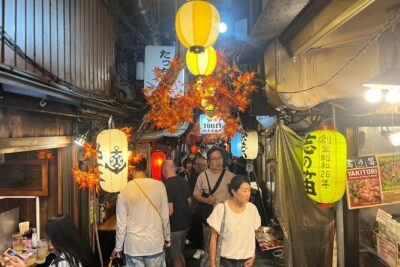
Shinjuku Food Tour (13 Dishes at 4 Local Eateries)
Read our review →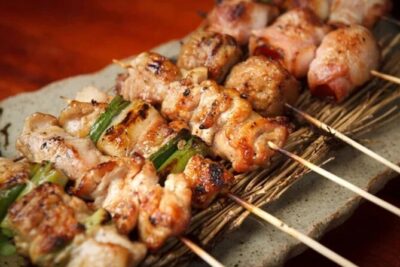
Shinjuku Food Tour (15 Dishes and 4 Eateries)
Read our review →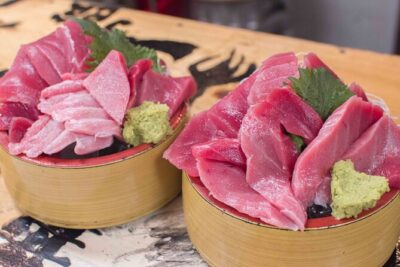
Best of Shinjuku: Izakaya Food Tour (4 Stops, 14+ Tastings)
Read our review →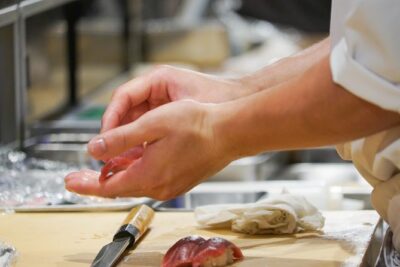
Tokyo Night Foodie Tour in Shinjuku – Seasonal Sushi, Wagyu Beef
Read our review →
Eat and Drink Like a Local: Tokyo Ueno Food Tour-Taverns&Ramen
Read our review →
Tsukiji Fish Market: Street Food & Culture Walking Tour
Read our review →Shinjuku Food Tour – 15 Dishes, 3 Drinks, 4 Eateries
Read our review →Browse the lists this tour appears in