
Reviewed · JAPANESE COOKING CLASSES
Tokyo Small-Group Ramen, Gyoza & Matcha Class with a Pro Chef
The best part of this Tokyo class is that you do not simply sit down to eat ramen. You learn the building blocks behind it, from making authentic dashi to shaping gyoza and preparing matcha with seasonal sweets. I like the small four-person limit, which gives the chef room to answer questions and adjust the pace.
I also like that the $104.51 price includes a full dinner, matcha, Japanese sweets, recipes, an apron, and photos from the class. The main drawback is firm: vegetarian, vegan, halal, and gluten-free diets cannot be accommodated, so this is only a good fit if you can eat the set menu.
In This Review
- Key points at a glance
- What the two-hour class actually gives you
- Starting with dashi and miso ramen
- Shaping gyoza and making the meal feel complete
- A quiet matcha finish with Japanese sweets
- Why the four-person limit changes the experience
- The Zoshigaya location and what to do afterward
- Is $104.51 a fair price?
- Who will get the most from this class?
- What to bring and how to prepare
- Should you book the ramen, gyoza, and matcha class?
- FAQ
- Where does the cooking class meet?
- How long does the experience last?
- What food and drinks are included?
- Are vegetarian, vegan, halal, or gluten-free menus available?
- How many people can join the class?
- Is transportation included?
Key points at a glance
- Four-person maximum: Expect close instruction rather than a large demonstration.
- A full Japanese meal: You make and eat miso ramen and gyoza during the two-hour class.
- Dashi is part of the lesson: You learn an important base for Japanese cooking, not just a quick noodle recipe.
- Matcha adds a second skill: Prepare green tea and enjoy it with seasonal Japanese sweets.
- Useful take-home materials: Recipes, an apron, and class photos are included.
- Easy post-class plans: The Zoshigaya meeting point is near Ikebukuro, Kishimo Shrine, and major shopping areas.
What the two-hour class actually gives you
This is a compact cooking lesson with a clear payoff: you sit down to eat what you prepared. The class takes place in Zoshigaya, close to Ikebukuro, and is led by an experienced chef with English-language guidance.
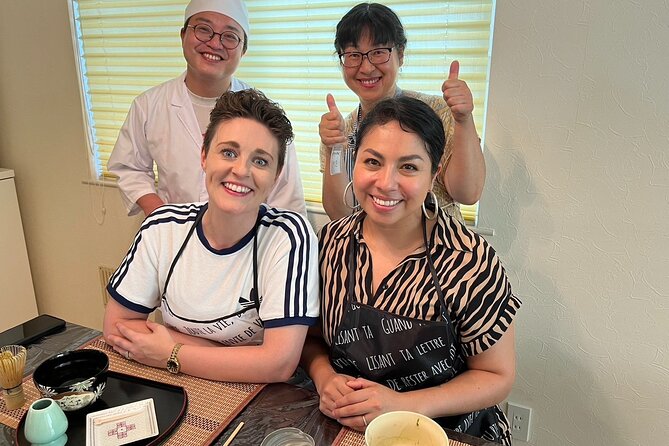
The small group matters. With no more than four people, you can ask about ingredients, cooking methods, and the steps that confuse you. You are not lost at the back of a crowded room while the chef works on a counter several feet away.
The pace is also designed to be flexible. That makes the class a good choice for a mixed group, such as grandparents cooking with a young adult. One shared experience involved grandparents and their 19-year-old foodie grandson, and the group found the food delicious, had its questions answered, and felt the timing was well managed.
At two hours, this is not a full-day culinary course. You will not cover every branch of Japanese food. Instead, you get a focused introduction to ramen, gyoza, dashi, matcha, and a few techniques you can try again at home.
More tea rooms worth booking:
- Matcha Making Class in Tokyo with Authentic Japanese Sweets Set
★ 5.0 · 744 reviews - Tokyo: Traditional Tea Ceremony with a Tea Master
★ 5.0 · 528 reviews - Tokyo: Matcha Making Experience with Mochi Sweets in Asakusa
★ 4.9 · 388 reviews
Starting with dashi and miso ramen
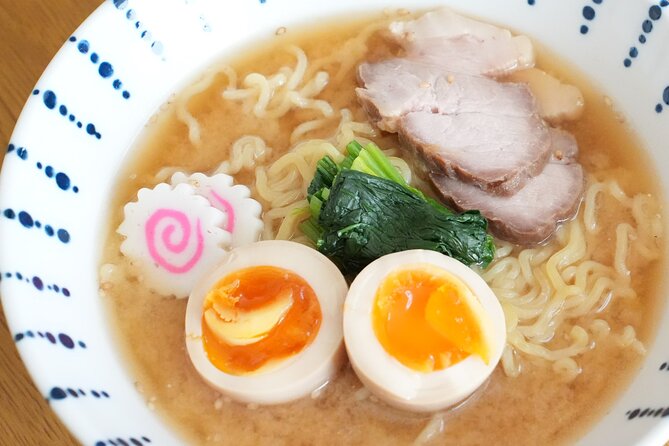
Ramen can look simple in a restaurant bowl, but the flavor depends on several steps. This class begins with the foundations, including the preparation of dashi, the savory stock used throughout Japanese cooking.
That detail gives the lesson more value than a basic noodle assembly session. You learn why the broth tastes the way it does, then use it as part of a miso ramen meal. The class also teaches techniques rather than handing you a finished bowl, so you can take the method home through the supplied recipes.
Miso ramen brings a hearty, savory character to the meal. It is a practical dish to learn because it can become a complete dinner, especially when paired with gyoza. The lesson is useful for anyone who wants to recreate a Japanese meal in a home kitchen, though the exact ingredients and equipment available at home may differ.
The chef provides step-by-step instruction in English. You should expect explanations of the ingredients and methods as you work, rather than a silent cooking demonstration. If you have questions, the four-person format gives you a fair chance to ask them at the right moment.
The class ends with eating, so you are not trying to judge your cooking while hungry. Dinner includes the miso ramen and gyoza you prepare.
Shaping gyoza and making the meal feel complete
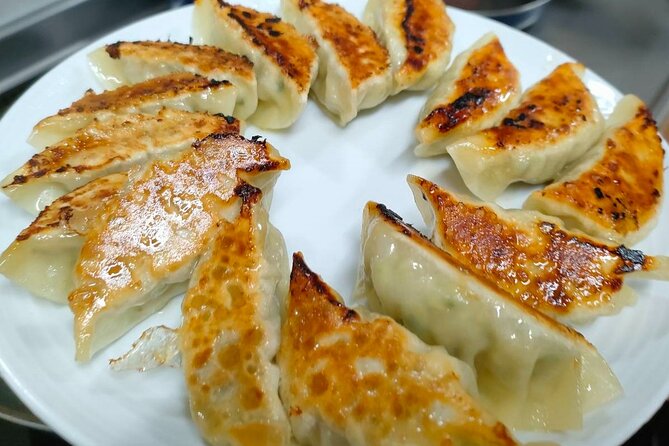
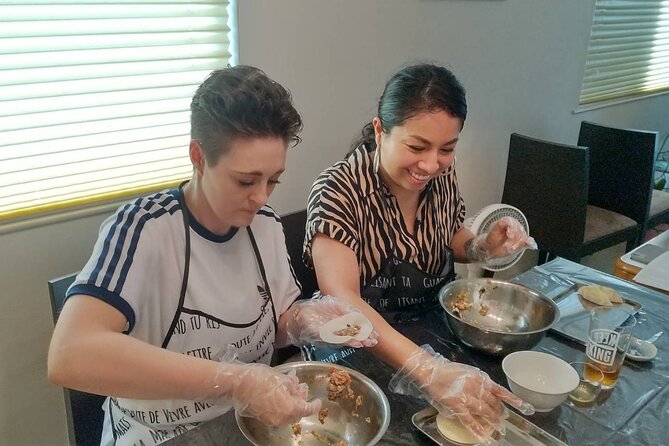
Gyoza gives the class a hands-on contrast to ramen. Ramen centers on stock, seasoning, and timing. Gyoza adds filling, wrapping, and the challenge of making each dumpling hold together.
The tour description promises juicy gyoza, but you should think of the lesson as practice as much as performance. Your first few wrappers may not look perfect. That is part of the fun, and the chef can show you how to handle the process at a comfortable pace.
Learning gyoza alongside ramen is a smart pairing. You get a bowl-based dish and a dumpling dish, with different techniques and textures. The result feels like a proper Japanese dinner rather than a single recipe stretched across two hours.
You also receive recipes to take home. That is useful because cooking classes move quickly. Even with clear instruction, you may not remember every ingredient or sequence later. The recipes let you revisit the meal without relying on memory.
A practical point: the lesson does not include private transportation. You are responsible for reaching the meeting point at 3-chōme-1-7 Zōshigaya, Toshima City. Check your route before class and allow enough time to find the exact location.
A quiet matcha finish with Japanese sweets
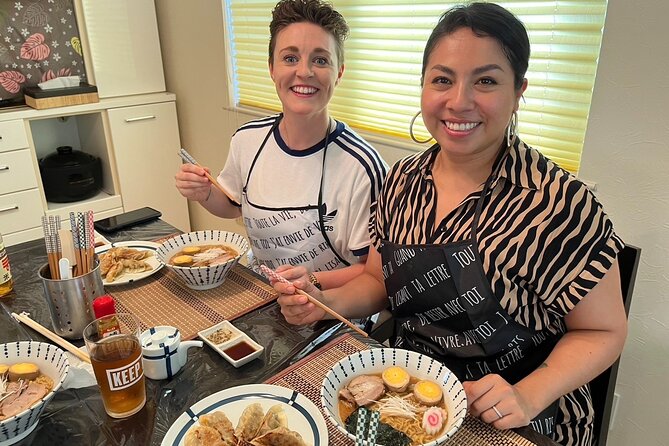
The matcha portion changes the mood of the class. After the savory food, you prepare your own matcha and enjoy it with seasonal Japanese sweets.
This is more than an extra drink. Matcha has its own preparation method and place in Japanese food culture, so the lesson gives you a short introduction to a different side of the cuisine. It also creates a natural finish after the heavier ramen and gyoza.
The sweets are seasonal, but no specific type is promised. That means you should treat them as a pleasant part of the class rather than booking this for one particular confection. You will have matcha tea and Japanese sweets included in the price.
The class does not include soda or soft drinks. If you want alcohol with dinner, sake and beer are available for an additional 500 yen each, payable in cash. The listed choices are Hakkaisan sake, served in a 180-milliliter portion, and Kirin Ichiban Shibori beer, served in a 350-milliliter portion.
More ramen stops:
- Eat and Drink Like a Local: Tokyo Ueno Food Tour-Taverns&Ramen
★ 5.0 · 957 reviews - Ramen & Gyoza Cooking Class in Tokyo with Local Supermarket Visit
★ 5.0 · 823 reviews - Tokyo: Ramen Tasting Tour with 6 Mini Bowls of Ramen
★ 4.9 · 432 reviews - Tokyo: Easy Ramen Cooking Experience in Kabukicho, Shinjuku
★ 4.6 · 321 reviews
Why the four-person limit changes the experience
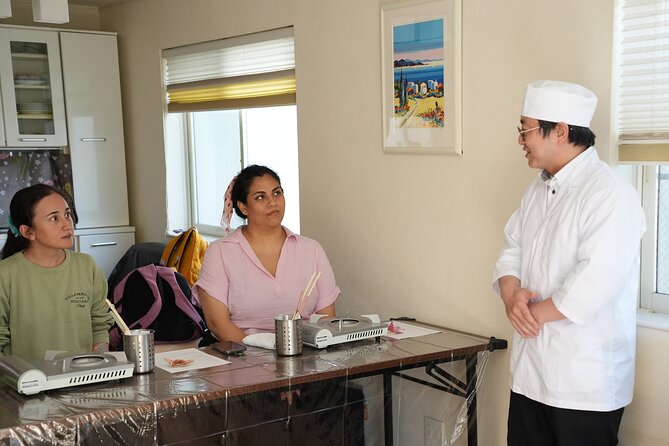
A maximum of four people is one of the strongest reasons to consider this class. Cooking lessons can become frustrating when everyone has to wait for one set of tools or copy a demonstration from across the room. A tiny group makes it easier to see what the chef is doing and receive help with your own work.
It also suits groups with different skill levels. A confident home cook can ask about technique, while a beginner can slow down and check each step. The stated format allows the chef to work at each participant’s pace.
That does not mean the class is private. Other participants may join, and the experience requires a minimum number of people to operate. If that minimum is not met, the class may be canceled, with a different date or experience offered, or a full refund provided.
The English-speaking instruction is important for international visitors. Food terms and cooking directions can be hard to follow when translated quickly. Here, the chef is expected to explain the ingredients and techniques clearly in English.
The Zoshigaya location and what to do afterward
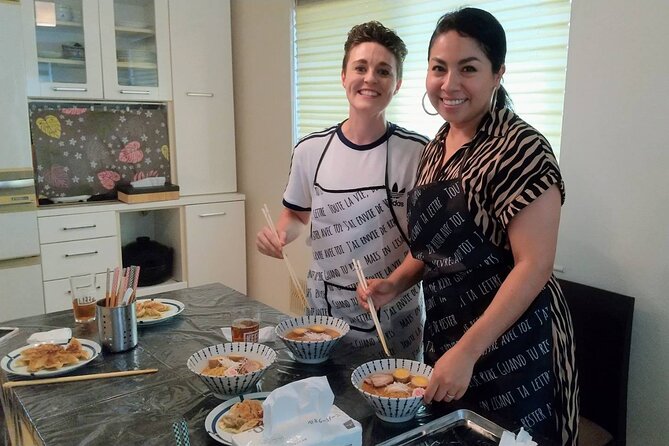
The classroom is in Zoshigaya, with access from the Ikebukuro area. From Shibuya, the Fukutoshin Line provides a direct connection toward the area, and the route passes by Meiji Shrine and Shinjuku.
The location works well if you want to pair the class with time in northwest central Tokyo. Ikebukuro offers shopping and entertainment, including Animate, the Pokémon Center, and electronics stores. You can plan the cooking class as the central activity, then spend the rest of the day shopping or exploring nearby.
There is also Kishimo Shrine near the classroom. Its red torii gates make it a fitting short walk before or after the lesson. The shrine is a useful reminder that Tokyo changes character quickly. A major shopping district can be close to a quieter religious site and a residential neighborhood.
You should not expect the class to include a guided sightseeing walk. The food lesson ends back at the meeting point, and private transportation is not included. Plan your own route and any extra sightseeing separately.
Is $104.51 a fair price?
At $104.51 per person, this is not the cheapest way to eat ramen in Tokyo. A restaurant meal costs far less, and you can find inexpensive gyoza and noodles across the city.
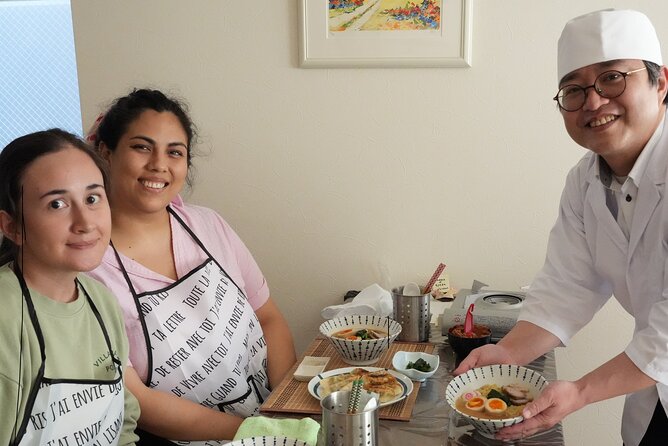
The comparison changes when you count what is included. You receive roughly two hours of instruction, a full dinner of miso ramen and gyoza, matcha and sweets, recipes, an apron, and photos from the class. You are paying for the meal plus the chance to learn how it is made.
The small group also supports the price. A four-person maximum is a more personal setup than a large group demonstration. If you value direct help from the chef and want to repeat the recipes at home, the cost is easier to justify.
I would not book it purely for quantity. The class is short, and the menu is fixed. You are paying for focused instruction and a cultural activity, not a long tasting menu or a broad survey of Japanese cuisine.
Alcohol costs extra, and payment for sake or beer must be made in cash. Soda and other soft drinks are not included. Build those details into your budget if you want something besides the included matcha.
Who will get the most from this class?
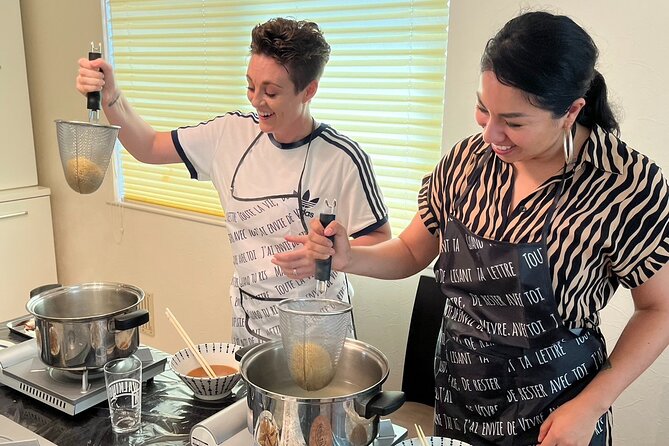
I would recommend this experience to several kinds of visitors:
- First-time Tokyo visitors: You get a structured introduction to familiar Japanese foods and a local neighborhood near Ikebukuro.
- Food-focused couples and families: The class gives you something to do together, with a meal at the end.
- Home cooks: The recipes and lessons on dashi, ramen, and gyoza give you a practical starting point for cooking at home.
- Small groups with mixed ages: The chef can adjust the pace, and the experience suits both beginners and more experienced cooks.
- Visitors staying near Shibuya or Shinjuku: The location is reachable by the Fukutoshin Line, making it easy to fit into a day of sightseeing.
I would skip it if you want a flexible menu, a vegetarian meal, or a lesson built around advanced culinary training. The food restrictions are not minor. No vegetarian, vegan, halal, or gluten-free options are available.
I would also reconsider if you want a class with a named celebrity chef or a formal tea ceremony. The supplied information identifies an experienced chef and English-speaking guide, but no individual guide name or formal tea ceremony is promised.
What to bring and how to prepare
Aprons are provided, so you do not need to pack special cooking clothing. Wear something comfortable and practical, since the experience involves preparing food rather than simply watching.
Bring cash if you want sake or beer. Each is 500 yen, and those drinks are paid for on the day. Your mobile ticket is accepted for the activity, and confirmation is sent within 48 hours of booking, subject to availability.
Give yourself extra time to reach the Zoshigaya meeting point. The class lasts about two hours and ends where it starts, so arriving late could reduce the time available for the cooking steps.
Before booking, check the menu against your dietary needs. The class cannot accommodate halal, vegetarian, vegan, or gluten-free requirements. This is the most important practical issue for many people.
Free cancellation is available up to 24 hours before the start time for a full refund. Changes or cancellations made inside that 24-hour window are not accepted or refunded, and the cut-off uses Tokyo local time.
Should you book the ramen, gyoza, and matcha class?
Book it if you want to do more than photograph a bowl of noodles. The combination of dashi, miso ramen, gyoza, matcha, and sweets gives you several useful Japanese cooking skills in one compact session.
The strongest reasons to choose it are the four-person limit, English instruction, included dinner, and take-home recipes. The positive feedback is especially strong, with a 5.0 rating from 12 reviews and 100 percent recommendation, including a family group spanning grandparents and a 19-year-old food lover.
Skip it if you need dietary flexibility or prefer an open-ended food tour. For everyone else, the price is reasonable for a small class that feeds you, teaches you, and leaves you with recipes to try again after Tokyo.
FAQ
Where does the cooking class meet?
The meeting point is 3-chōme-1-7 Zōshigaya, Toshima City, Tokyo 171-0032, Japan. The activity ends back at the same meeting point.
How long does the experience last?
The class lasts approximately two hours.
What food and drinks are included?
The included meal is miso ramen and gyoza, followed by matcha tea and Japanese sweets. Sake and beer are available for an additional 500 yen each, payable in cash.
Are vegetarian, vegan, halal, or gluten-free menus available?
No. The class cannot accommodate vegetarian, vegan, halal, or gluten-free dietary requirements.
How many people can join the class?
The activity has a maximum of four participants.
Is transportation included?
No. Private transportation is not included. The class is near public transportation and can be reached from the Ikebukuro area, with access from Shibuya via the Fukutoshin Line.
More Workshops in Tokyo
- Sushi Making Tokyo Roll and Authentic Japanese Sushi Class
★ 5.0 · 3,971 reviews - Tokyo: Roll and Authentic Sushi Making Class in Asakusa
★ 4.9 · 1,957 reviews - Tokyo Shinjuku Chopsticks Making Class
★ 5.0 · 1,763 reviews - Tokyo: Sushi Making Class in a Happi Coat near a Famous Spot
★ 4.9 · 1,377 reviews
More Cooking Classes in Tokyo
- Ramen and Sushi Cooking Class with Sake Pairing Set in Tokyo
★ 5.0 · 291 reviews - Tokyo: Wagyu and 7 Japanese Dishes Cooking Class
★ 4.9 · 273 reviews - Tokyo Washoku 4-hour Cooking Class: From Market to Table
★ 5.0 · 253 reviews - TokyoSumoShow, ChickenHotPot, and Mochi-Pounding by Pro Wrestlers
★ 5.0 · 226 reviews
New on our Tokyo list
- Sumi-e Experience in a relaxing green tea shop in Tokyo★ 5.0 · 3 reviews
- Tokyo : Kamikaze Street Drift Ride★ 5.0 · 3 reviews
- Private Zen Meditation in English in Shinjuku, Tokyo★ 5.0 · 3 reviews
- Onsen Spa in Tokyo and Asakusa Bar Hopping with Local Guide★ 5.0 · 3 reviews
- Easy for everyone! Now you can play handmade mini shamisen and show off to everyone! Musical instruments, sweets and live music★ 5.0 · 3 reviews
- Tokyo: Private Tsukiji Street Food & Sake with Local Guide★ 5.0 · 3 reviews
- Mt Fuji Exploration Tour with Free Japanese Kusa Mochi from Tokyo★ 4.5 · 3 reviews
- Tokyo Tsukiji Fish Market Walking and Exploring Hidden Gems Tour★ 5.0 · 3 reviews
Japanese Cooking Classes, compared.
Ramen & Gyoza Cooking Class in Tokyo with Local Supermarket Visit
Read our review →
Easy Ramen Cooking Experience in Kabukicho, Shinjuku
Read our review →
Ramen and Sushi Cooking Class with Sake Pairing Set in Tokyo
Read our review →
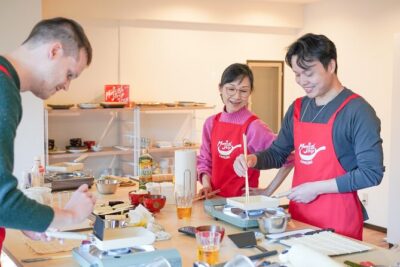
Tokyo Washoku 4-hour Cooking Class: From Market to Table
Read our review →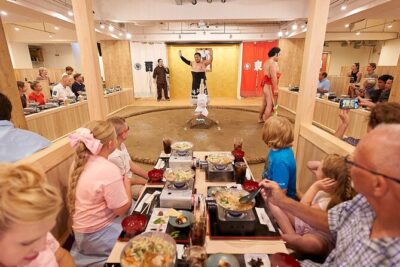
TokyoSumoShow, ChickenHotPot, and Mochi-Pounding by Pro Wrestlers
Read our review →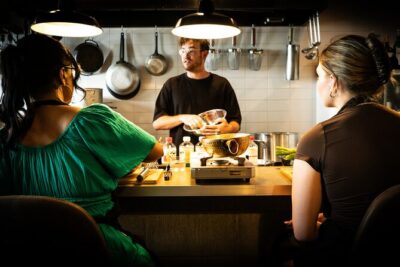
Professional Ramen & Gyoza with Ramen Chef in a restaurant!
Read our review →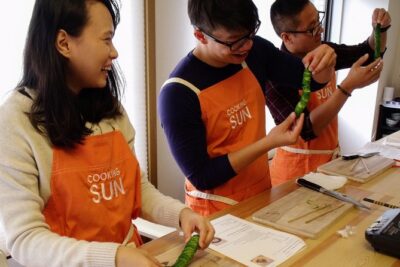
Small-Group Wagyu Beef and 7 Japanese Dishes Tokyo Cooking Class
Read our review →Browse the lists this tour appears in