
Reviewed · SUMO EXPERIENCES
Tokyo Walking Tour : Sumo, Sushi, Tea, Temples and Tokyo Tower
Tokyo’s appeal comes into focus when you move between its old and new sides in a single day. This tour begins with the quiet discipline of sumo training, then shifts to market food, a garden tea house, Buddhist rituals, and the city view from Tokyo Tower. It is a strong choice if you want more than a parade of famous sights.
I especially like the chance to watch sumo in a real training room, where the wrestlers are working rather than performing for an audience. I also like the gentle change of pace at Hama Rikyu Gardens, with tea and a traditional sweet after the noise and movement of Tsukiji. The main consideration is stamina: this is an eight-hour outing with several hours on foot, outdoors, and on public transport.
In This Review
- Key points to know before booking
- A full day that links Tokyo’s old and new
- Watching real sumo practice at Arashio Beya
- Tasting your way through Tsukiji Outer Market
- Finding quiet at Hama Rikyu Gardens
- Entering Zojoji Temple and copying a sutra
- Taking in Tokyo Tower from the top
- Walking, trains, and the practical side of the day
- Who will get the most from this Tokyo tour
- Should you book this experience?
- FAQ
- How long does the Tokyo walking tour last?
- Where does the tour start?
- Where does the tour finish?
- Is transportation included?
- Is food included at Tsukiji Outer Market?
- Is the Hama Rikyu Gardens tea experience included?
- Is Tokyo Tower admission included?
- Can you always see sumo training?
- How many people can join the tour?
Key points to know before booking
- Sumo practice comes first: You may watch training at Arashio Beya, but the schedule can change, and practice is closed during certain tournament weeks.
- Tsukiji food is extra: Your guide leads you through the Outer Market, but you pay separately for food and drinks.
- Tea is included: The Hama Rikyu Gardens visit includes admission, a tea house experience, and a traditional sweet.
- The temple visit has a hands-on element: At Zojoji Temple, you get an introduction to the complex and try copying a Buddhist sutra.
- Tokyo Tower finishes the day: The admission ticket is included, and the tour ends near Akabanebashi Station.
- Public transport is part of the day: The only listed train fare is from Ningyocho Station to Tsukiji Station. Transport before and after the tour is not included.
A full day that links Tokyo’s old and new
At $166.85 per person, this is not a cheap walking tour. Yet the price includes a local English-speaking guide, Hama Rikyu Gardens admission, the tea house visit, the sutra copying fee, Tokyo Tower admission, and the listed train fare between Ningyocho and Tsukiji.
The value depends on how you like to see a city. If you want a guide to handle the flow between several districts and explain the customs behind each stop, the package makes sense. You are not simply paying for entry tickets. You are paying for a carefully ordered day that connects sports, food, gardens, religion, and architecture.
You should also budget for snacks and drinks at Tsukiji. Food is not included, which is reasonable because the market gives you choices rather than forcing one set meal. Still, the final cost will be higher than the advertised tour price if you sample several items.
The group can be as large as 15 people. That is small enough for a personal feel in most settings, though the group may need extra time to move through crowded streets and public stations. A past tour guide named Jade was praised for blending personal anecdotes with Japanese history. If Jade leads your outing, expect that kind of storytelling, though guide assignments can vary.
More sumo mornings:
- Tokyo: Sumo Show Experience with Chicken Hot Pot and a Photo
★ 4.8 · 6,678 reviews - Tokyo: Sumo Show and Dining Experience
★ 4.8 · 2,742 reviews - the SUMO show
★ 5.0 · 1,960 reviews
Watching real sumo practice at Arashio Beya
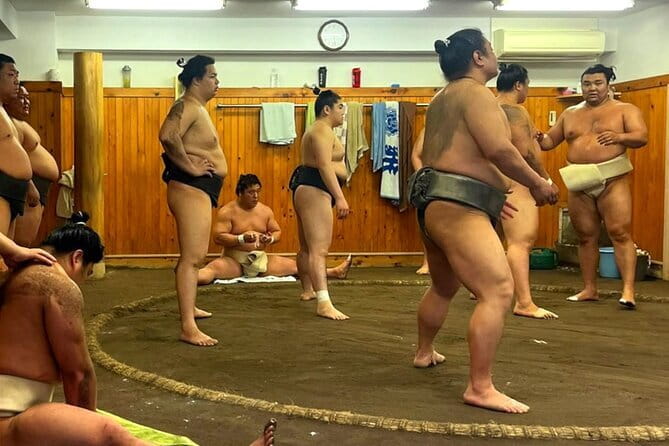
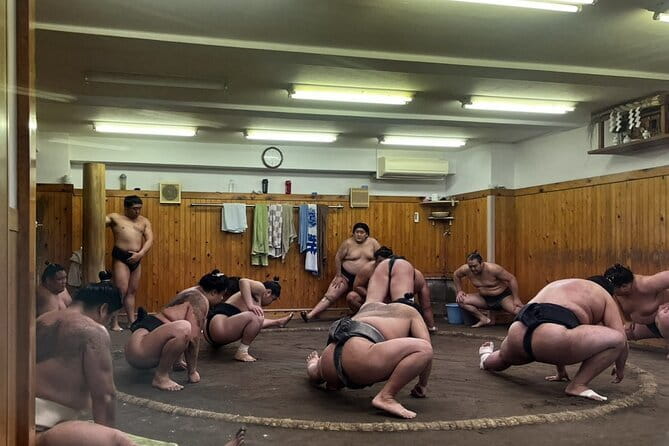
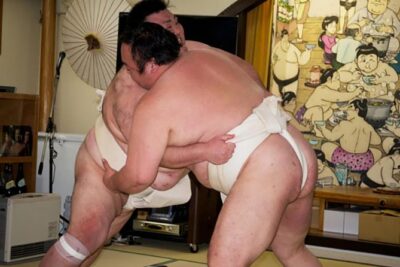
The first stop is Arashio Beya, a traditional sumo stable, often called a beya. This is where wrestlers train, not where they put on a show for sightseers. That difference matters.
You will be expected to watch quietly and avoid disturbing the wrestlers. The appeal is the chance to see a serious part of daily sumo life from close range, with the focus on practice rather than ceremony or staged demonstrations. For many people, this will be the most unusual stop of the day.
There is an important uncertainty here. The sumo schedule can change, and the wrestlers may not be training when you arrive. Practice is also closed during certain weeks when the Grand Sumo Tournaments take place in January, May, and September. The tour information specifically warns that you might not be able to see sumo.
That warning should shape your booking decision. Do not buy this tour only because you demand a guaranteed sumo session. Think of the stable as a valuable possibility within a wider Tokyo day. The other stops still provide a full program if training is unavailable, but the first hour will feel different.
The visit lasts about 1 hour and 10 minutes. Since this is real training, there may be stretches when you are simply observing in silence. That is part of the experience, not a flaw. Sumo is built on repetition, control, and routine, and the quiet setting lets you see that side of the sport.
Tasting your way through Tsukiji Outer Market
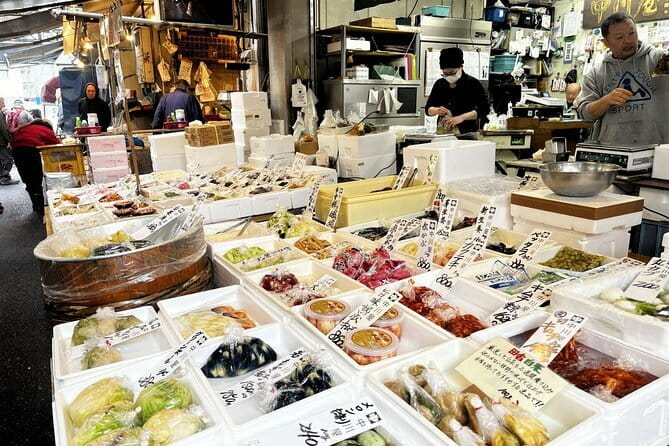
From sumo, the tour moves to Tsukiji Outer Market. The guided visit lasts about 1 hour and 30 minutes, giving you time to learn your way around, sample foods, take photographs, and shop at your own pace.
Tsukiji is best approached with an appetite and a little curiosity. Your guide can point out the many foods on offer and help give the market some shape. After the guided portion, you have free time, so you are not locked into one narrow route.
The food is not included in the tour price. That may sound like a drawback, but it gives you control. You can buy only a small bite, or you can spend more on several tastings. The supplied description highlights sushi and street food, so this is the place to reserve part of your budget for eating.
The stop also breaks up the sightseeing rhythm. Instead of looking at another monument, you get to use your senses and make your own choices. If you are not interested in seafood, you may find the market less rewarding, although the tour does refer broadly to the range of foods available.
Keep an eye on the clock. Ninety minutes can pass quickly when you are eating, shopping, and taking pictures. I would treat the guided introduction as the part that helps you understand the market, then use your free time for one or two deliberate choices rather than trying to sample everything.
Finding quiet at Hama Rikyu Gardens
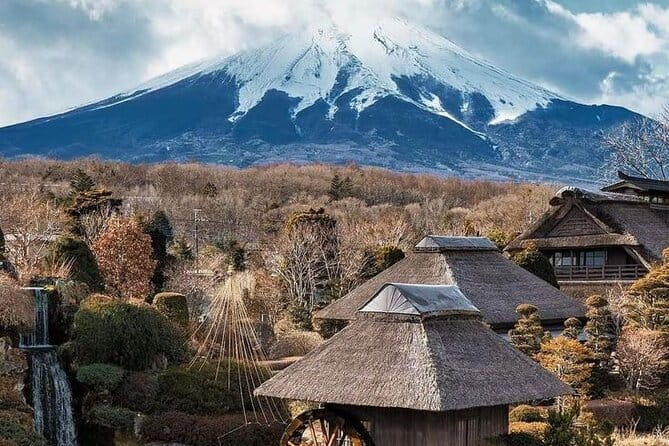
After Tsukiji, Hama Rikyu Gardens gives you a welcome change of pace. The guide introduces the garden and its history, then you have free time before meeting again for tea and a traditional sweet in a tea house.
The garden is one of the tour’s best-balanced stops because it combines explanation with breathing room. You receive context from the guide, but you are not required to spend every minute walking in a tight group. You can pause, take photographs, and enjoy the setting at your own speed.
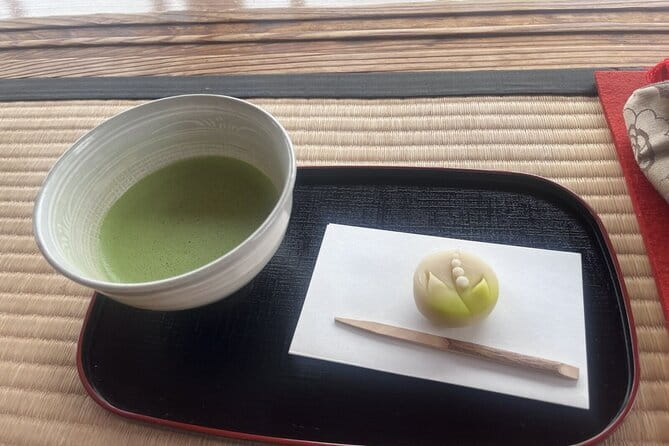
The tea house experience is included, along with garden admission. That helps the tour’s value, since you are receiving more than a quick walk past a landscaped public space. Tea also gives the day a cultural pause. You are asked to slow down and take part in a simple tradition rather than only collecting pictures.
Do not expect a long formal tea ceremony unless the guide specifically describes one on the day. The information promises a traditional tea and sweet experience in a tea house, not a full ceremony with an extended lesson in every step.
The stop lasts about 1 hour and 20 minutes. You will need to keep track of the meeting time after your free period. As with the rest of the day, the garden visit involves outdoor walking, so comfortable shoes and weather-appropriate clothing matter.
More sushi mornings and classes:
- Sushi Making Tokyo Roll and Authentic Japanese Sushi Class
★ 5.0 · 3,971 reviews - Tokyo: Roll and Authentic Sushi Making Class in Asakusa
★ 4.9 · 1,957 reviews - Make Sushi and Create Unforgettable Memories in Tokyo
★ 5.0 · 1,413 reviews - Tokyo: Sushi Making Class in a Happi Coat near a Famous Spot
★ 4.9 · 1,377 reviews
Entering Zojoji Temple and copying a sutra
Zojoji Temple brings the tour into an historic Buddhist setting. The guide explains the temple and its history, then the group takes part in a sutra copying experience.
Copying a sutra is a quiet activity that changes the tempo again. You do not need to be religious to find value in the exercise. The point is concentration and calm, a useful contrast after the market and the steady movement through Tokyo.
The fee for the sutra copying experience is included. That is a thoughtful detail because it removes the need to decide on the spot whether an additional cultural activity is worth paying for. You can simply take part and see how the ritual feels to you.
The temple visit lasts about one hour. That is enough time for an introduction and the copying activity, but not enough for an exhaustive examination of every part of the complex. The tour is designed as a broad city experience, so this stop offers a focused taste rather than a specialist temple study.
You should also remember that a temple is a place of worship, not just a sightseeing backdrop. Quiet behavior and respect for the setting are especially important during the sutra activity. Your guide can help explain what is happening, but the experience works best when you approach it with patience.
Taking in Tokyo Tower from the top
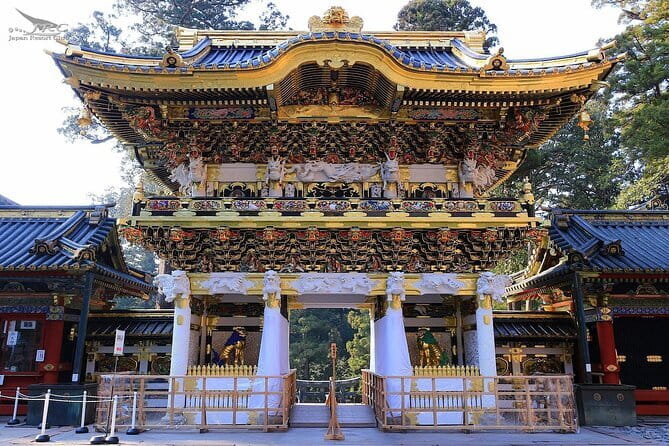
Tokyo Tower is the final major stop, with about 1 hour and 15 minutes allocated for the visit. Admission is included, so you can go directly to the observation experience without buying another ticket.
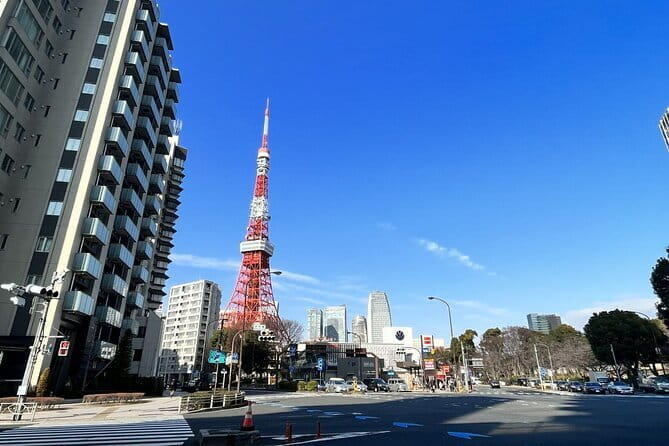
The tower gives the day a strong visual finish. Earlier, you have seen Tokyo at street level through food stalls, gardens, a temple complex, and train travel. From the observation deck, those separate parts become part of one huge city view.
The tour also points to the tower’s retro architectural feel. That is worth noticing. Tokyo Tower is not only a place to look outward. Its structure and old-fashioned character offer a different mood from the newer high-rise districts around it.
The amount of time here should be comfortable for taking in the view and photographs. Visibility can affect what you see, but no weather guarantee is provided, so it is best to think of the ticket as access rather than a promise of perfect scenery.
The day concludes near Akabanebashi Station. Your guide can help with questions about getting back to your hotel or continuing to your next destination. That is useful after a long day, especially if Tokyo’s train system is still unfamiliar to you.
Walking, trains, and the practical side of the day

The tour begins at 8:15 a.m. at Hamacho Station, at 2-chome-59-3 Nihonbashihamacho in Chuo City. It ends near Akabanebashi Station in Minato City. You are responsible for getting to the starting point and arranging transport after the tour.
The tour does not use a private vehicle. Public transport is part of the experience, and the included train fare covers the journey from Ningyocho Station to Tsukiji Station. Other trains and transport before and after the tour are not included.
This setup has two effects. First, you see how Tokyo actually functions, rather than passing between sights inside a tour bus. Second, you must be ready for station walking, transfers, and keeping up with the group. If you prefer door-to-door transport, this is not the right format.
The day lasts about 8 hours and 15 minutes. Several hours are spent walking outdoors, so wear shoes you can trust and bring what you need for the weather. The tour information says most people can participate, but it does not promise a vehicle or a low-walking route.
The early start is sensible. It gives you the best chance of catching sumo practice and leaves enough time for all five parts of the day. It also means you should plan your morning route carefully and arrive at Hamacho Station with time to spare.
Who will get the most from this Tokyo tour

I would recommend this experience to a first-time Tokyo visitor who wants a broad introduction without spending the day on a coach. You get food culture, traditional arts, religion, a garden, sport, and a major city viewpoint in one organized route.
It also suits people who enjoy guided context. The stops are more rewarding when you understand why a sumo stable requires silence, what makes a tea house visit different from an ordinary drink, and why sutra copying is offered at the temple. A guide helps connect those details.
This is a good fit if you like a full schedule. It is not ideal if you want long, unplanned time at one museum, market, or temple. The day keeps moving, and the group needs to follow the meeting times.
Families and older visitors should consider the walking requirement carefully. The information says most people can participate, but the tour includes several hours outdoors and public transport. Anyone who finds long periods on foot difficult should ask the provider for more detail before booking.
Food-focused visitors should remember that the market stop is guided, but the food bill is separate. That is a benefit if you like choosing what to eat. It is less convenient if you prefer a prepaid meal with no decisions during the day.
Should you book this experience?
Book it if you want one well-packed day that shows Tokyo through several different lenses. The combination of sumo practice, Tsukiji, Hama Rikyu Gardens, tea, Zojoji Temple, and Tokyo Tower gives you a useful first look at the city, and the included admissions make the $166.85 price easier to justify.
Book with realistic expectations about the sumo stop. Training is not guaranteed, and it closes during certain Grand Sumo Tournament weeks in January, May, and September. The tour is still worthwhile without it, but you should not treat that part as certain.
Skip it if you dislike public transport, long walks, early starts, or a fixed schedule. For everyone else, this is a thoughtful way to see both Tokyo’s everyday traditions and its famous skyline in one long, active day. Free cancellation is available up to 24 hours before the start time, which gives you some flexibility if your plans change.
FAQ
How long does the Tokyo walking tour last?
The tour lasts approximately 8 hours and 15 minutes. It begins at 8:15 a.m.
Where does the tour start?
The meeting point is Hamacho Station, at 2-chome-59-3 Nihonbashihamacho, Chuo City, Tokyo 103-0007, Japan.
Where does the tour finish?
The tour ends near Akabanebashi Station in Minato City. The guide can help with questions about transport to your hotel or next destination.
Is transportation included?
The listed train fare from Ningyocho Station to Tsukiji Station is included. Transport before the tour, after the tour, and other unlisted trains are not included.
Is food included at Tsukiji Outer Market?
No. Food and drinks are not included, so you should bring extra money if you want to sample or buy items at the market.
Is the Hama Rikyu Gardens tea experience included?
Yes. Admission to Hama Rikyu Gardens and the tea house experience are included. The experience also includes a traditional sweet.
Is Tokyo Tower admission included?
Yes. The Tokyo Tower ticket is included in the tour price.
Can you always see sumo training?
No. The sumo schedule can change, and training may not take place during your visit. Training is also closed during certain weeks when the Grand Sumo Tournaments are held in January, May, and September.
How many people can join the tour?
The maximum group size is 15 people. The tour uses public transportation rather than a private vehicle, and most people can participate, though it involves several hours of outdoor walking.
More Walking Tours in Tokyo
- Tokyo Tsukiji Fish Market Food and Culture Walking Tour
★ 5.0 · 3,184 reviews - Tokyo: Imperial Palace and Shogun Historical Walking Tour
★ 5.0 · 2,251 reviews - Tokyo: Shinjuku Local Bar and Izakaya Guided Walking Tour
★ 4.9 · 1,794 reviews - Tokyo: Tsukiji Fish Market Food and Walking tour
★ 5.0 · 1,724 reviews
More Temple and Shrine Visits
- Tokyo: Meiji Shrine, Asakusa, Skytree Bus Tour and Cruise
★ 4.7 · 1,986 reviews - Tokyo: Asakusa Walking Tour with Sensoji Temple Visit
★ 4.8 · 1,583 reviews - Nikko: Kegon Falls, Lake Chuzenji & Toshogu Temple
★ 4.6 · 1,577 reviews - Tokyo: Kamakura & Enoshima Day Trip including Temple Tickets
★ 4.5 · 1,375 reviews
New on our Tokyo list
- Sumi-e Experience in a relaxing green tea shop in Tokyo★ 5.0 · 3 reviews
- Tokyo : Kamikaze Street Drift Ride★ 5.0 · 3 reviews
- Private Zen Meditation in English in Shinjuku, Tokyo★ 5.0 · 3 reviews
- Onsen Spa in Tokyo and Asakusa Bar Hopping with Local Guide★ 5.0 · 3 reviews
- Easy for everyone! Now you can play handmade mini shamisen and show off to everyone! Musical instruments, sweets and live music★ 5.0 · 3 reviews
- Tokyo: Private Tsukiji Street Food & Sake with Local Guide★ 5.0 · 3 reviews
- Mt Fuji Exploration Tour with Free Japanese Kusa Mochi from Tokyo★ 4.5 · 3 reviews
- Tokyo Tsukiji Fish Market Walking and Exploring Hidden Gems Tour★ 5.0 · 3 reviews
Sumo Experiences, compared.
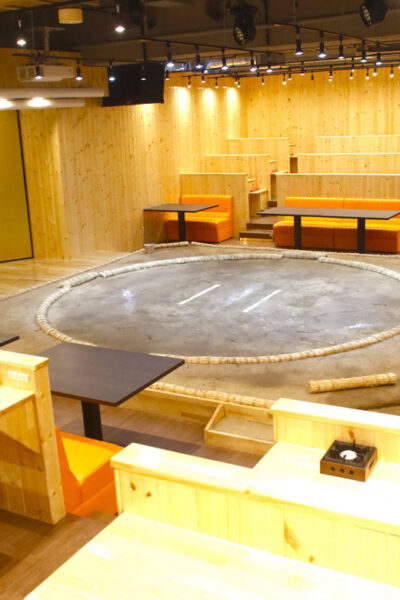
Sumo Show Experience with Chicken Hot Pot and a Photo
Read our review →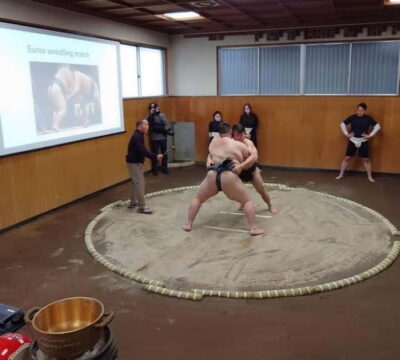
Tokyo Shinjuku Sumo Show & Experience with Photo
Read our review →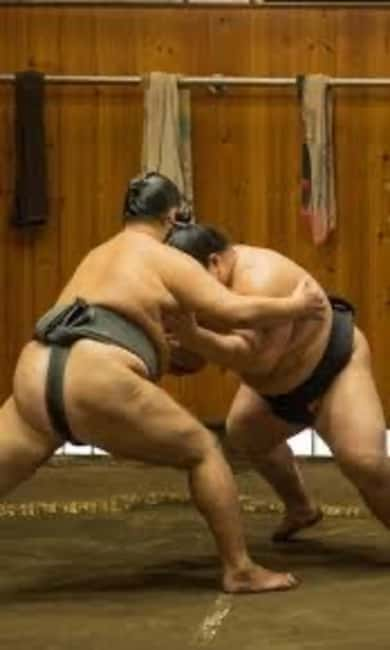

Authentic Sumo Experience in Tokyo: Enter the Sanctuary
Read our review →
Luxury Sumo Show Experience & Japanese cuisine & Drink
Read our review →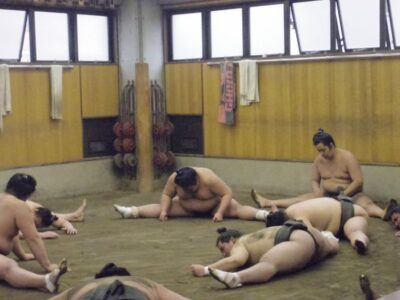
Browse the lists this tour appears in